
Hot Tub Biofilm Removal Service in Denver: A Complete Guide
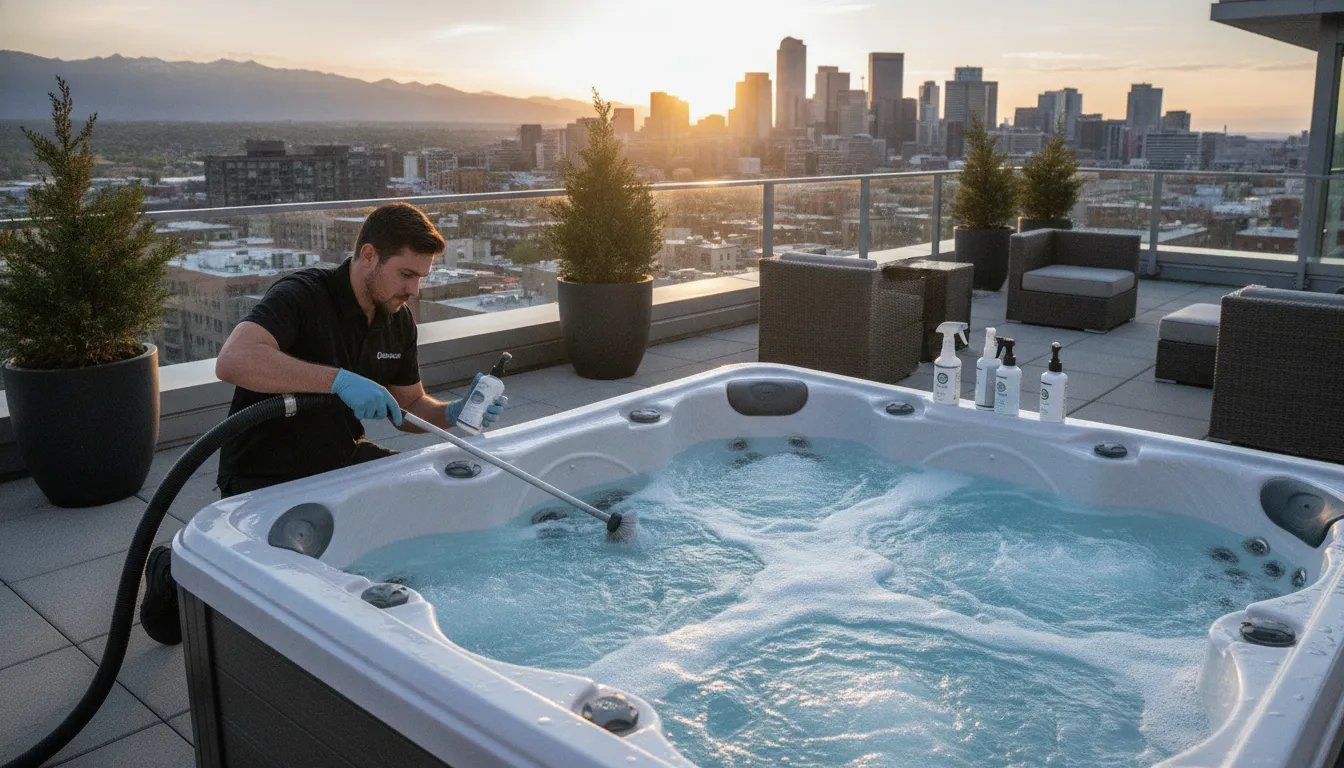
Recurring hot tub problems often have more than one cause. Cloudy water may result from unbalanced chemistry or a dirty filter, but it can also signal residue inside the plumbing. Weak jets may point to a clogged filter, trapped air, a blocked line, or pump trouble. Biofilm can contribute to several of these symptoms by collecting in hidden circulation paths. A hot tub biofilm removal service in Denver can help separate contamination from mechanical or water-balance concerns. Instead of repeatedly draining the spa or adding more sanitizer, a professional can inspect the system, flush hard-to-reach areas, clean the accessible surfaces, and explain how to prevent the problem from returning.
Ready for a cleaner pool?
Denver's trusted pool care professionals since 1982. Get started today.
Schedule ServiceKey Takeaways
- Watch for recurring symptoms: Cloudy water, foam, unusual odors, slippery surfaces, flakes, low sanitizer, and weak jets may signal hidden buildup or equipment trouble.
- Clean beyond the visible surfaces: A complete treatment may include plumbing purging, jet circulation, draining, filter cleaning, shell care, equipment checks, and fresh water balancing.
- Prevent buildup with consistent care: Test water, clean filters, maintain circulation, rinse before soaking, protect the cover, track service, and contact a Denver spa professional when problems return.
What Is Hot Tub Biofilm and Why Does It Matter?
Hot tub biofilm is a sticky layer of microorganisms, organic matter, and other contaminants that attaches to wet surfaces. It can develop when bacteria and residue settle in places that are difficult to reach, including plumbing lines, jet fittings, filters, and circulation components. Because much of the buildup remains hidden, a spa can look clean while biofilm continues to affect the water and equipment.
Biofilm matters because it can protect microorganisms from normal sanitation. It may also contribute to recurring odors, foam, cloudy water, clogged filters, and water-balance problems. These symptoms do not always point to biofilm, but repeated issues deserve more than another dose of sanitizer. A thorough inspection can help determine whether the cause is contamination, poor circulation, equipment trouble, or a combination of problems.
Denver’s changing temperatures, dry conditions, and seasonal spa use can also affect maintenance needs. A cover that does not seal properly may allow debris into the water, while long periods without use can leave stagnant water in plumbing lines. If you suspect a deeper sanitation problem, Neptune Pools’ spa services can help assess the condition of your hot tub and recommend appropriate care.
How biofilm shelters microorganisms and contaminants
Biofilm acts as a protective layer around bacteria and other microorganisms. Once it forms, chlorine or bromine may not reach every contaminant trapped within the film. As a result, the water can show a normal sanitizer reading while buildup remains inside the plumbing or around jet components.
This does not mean every hot tub with biofilm will cause illness. However, contaminated water may contribute to skin irritation, eye discomfort, respiratory symptoms, or infections, especially for people with sensitive skin, open wounds, or weakened immune systems. The CDC’s guidance for hot tubs and spas recommends consistent disinfection, circulation, and water testing to reduce these concerns.
A persistent problem should not be addressed by simply adding more sanitizer. Excessive chemical use can irritate bathers and damage spa components without removing the protective layer. A proper treatment plan may require purging the plumbing, draining the water, cleaning the shell and filters, and balancing the fresh fill.
Where biofilm hides in the shell, plumbing, jets, filters, and waterline
Biofilm can form on visible surfaces, such as the shell, waterline, seats, pillows, and jet faces. It may feel slippery or leave a dull residue that returns after wiping. The more difficult buildup often sits inside plumbing lines, jet bodies, suction fittings, and circulation pathways, where routine scrubbing cannot reach.
Filters can also collect body oils, dirt, hair, and other organic material. If they are not rinsed and cleaned regularly, residue may move back into the water or remain in areas connected to the circulation system. Pumps, heaters, and small internal passages may hold contaminated water when flow is weak or the spa sits unused.
Draining the tub and wiping the shell is useful, but it may not remove buildup hidden behind the jets or inside the pipes. A complete inspection should include the shell, waterline, filters, jet flow, circulation system, and related equipment.
How oils, lotions, debris, and poor circulation cause buildup
Bathers introduce body oils, sweat, lotion, dirt, hair, and fabric fibers into the water. Sunscreen and other personal-care products can add more residue. Leaves, dust, and insects may enter when the cover is open or does not fit securely. Over time, this organic material gives microorganisms something to cling to and can collect inside filters and plumbing.
Poor circulation makes the problem more likely. Low flow allows residue to settle instead of moving toward the filter. A clogged filter, blocked suction fitting, weak pump, or closed valve can reduce circulation throughout the spa. Incorrect pH and total alkalinity can also make chlorine or bromine less effective.
Routine care helps limit new buildup. Rinsing filters, testing water, wiping the waterline, keeping the cover clean, and asking bathers to shower before use all reduce the amount of debris entering the tub. These steps may not remove established biofilm, so recurring problems call for a closer look at the entire system.
Why chlorine and bromine may not remove established biofilm
Chlorine and bromine play an important role in hot tub sanitation, but they may not remove mature biofilm on their own. The protective layer can shield microorganisms and trap oils or debris, allowing contamination to remain inside plumbing even when sanitizer is present in the water.
Adding a large amount of sanitizer is not a safe replacement for cleaning. Too much chlorine or bromine can damage covers and equipment, irritate the skin and eyes, and leave the water unsuitable for bathing. It may also fail to address the buildup causing the problem.
A professional treatment may include a plumbing purge or another product compatible with the spa’s materials, followed by jet circulation, draining, rinsing, shell cleaning, and filter care. The water should then be refilled and tested. Neptune Pools provides equipment repairs and servicing, which can help identify circulation or equipment issues that allow contamination to return.
Why cloudy water may have causes other than biofilm
Cloudy water can be a sign of biofilm, but cloudiness alone does not confirm it. Low sanitizer levels, incorrect pH, high total alkalinity, excess calcium, dirty filters, and suspended debris can all reduce water clarity. Air in the plumbing or residue left after a chemical treatment may also make the water appear hazy.
Clear water does not guarantee that hidden plumbing is free of contamination, either. Pay attention to the full pattern: Does the cloudiness return shortly after treatment? Do you notice foam, odors, flakes, slippery surfaces, or weak jets? Do sanitizer and pH readings keep falling out of range?
Water testing, filter inspection, and equipment checks can help separate a chemistry problem from a circulation or contamination problem. If the same symptoms continue after routine care, a professional can inspect the plumbing and equipment before you repeat the same drain-and-clean cycle. This approach helps identify the underlying issue and supports a safer, more reliable spa care plan.
What Signs Point to a Hot Tub Biofilm Problem?
Hot tub biofilm can be difficult to identify because its signs often resemble ordinary water-care or equipment problems. Bacteria and organic residue may remain inside plumbing lines, jets, filters, and other areas that are difficult to reach, even when the shell looks clean. One symptom does not confirm biofilm, but several recurring problems deserve a closer inspection.
Pay attention to issues that return soon after treatment, draining, or cleaning. Keep notes about water-test results, chemical additions, filter cleaning, and when symptoms appear. This information can help a technician identify the cause. Neptune Pools provides professional spa services throughout the Denver Metro area for homeowners and property managers who need help with hot tub care.
Cloudy water that returns after treatment or draining
Cloudy water may result from poor water balance, a dirty filter, excess body oils, or inadequate circulation. It can also indicate residue inside plumbing lines and jets. If the water clears after treatment but becomes cloudy again shortly afterward, hidden buildup may still be affecting the system.
Draining the spa may offer only temporary relief when contamination remains in areas that fresh water does not clean. Clear water does not prove that the system is free of bacteria or biofilm. Avoid repeatedly adding chemicals without identifying the cause. Instead, record when the cloudiness returns, how often the spa is used, and which treatments you tried. The CDC’s hot tub guidance explains why consistent water treatment and maintenance matter for safer spa use.
Slippery seats, shells, pillows, and jets
A slippery surface may indicate more than a small amount of soap or body oil in the water. Biofilm can create a slick layer on seats, shell surfaces, pillows, and jet fittings. You may notice the texture while wiping the spa or feel it when sitting down, even if the water still appears clear.
Check areas that stay damp or receive limited circulation, including beneath pillows and around jet openings. If the slick feeling returns after scrubbing, the source may be inside the plumbing rather than only on the shell. Do not respond by adding larger amounts of sanitizer without testing first. Excess chemicals can irritate skin while failing to remove established residue. A technician can assess the surfaces, water chemistry, filters, and circulation system together.
Persistent odors, foam, or unusual water texture
A strong chemical smell does not necessarily mean the water is properly sanitized. It may point to chloramines, poor water balance, excess organic material, or hidden buildup. Musty, sour, or otherwise unusual odors deserve attention when they return soon after a drain and refill.
Excessive foam may also result from oils, lotions, cleaning products, or residue moving through the plumbing. Foam after heavy use is not always evidence of biofilm, but persistent foam can signal contamination, poor filtration, or water-care problems. Observe what happens when the jets start. If the odor or foam becomes more noticeable as water moves through the lines, hidden residue may be contributing to the problem. Do not use the spa until you have checked the water and identified the cause.
Repeated sanitizer, pH, and alkalinity issues
If chlorine or bromine levels repeatedly fall, biofilm may be consuming sanitizer or shielding microorganisms from direct exposure. Poor pH and total alkalinity balance can also reduce sanitizer effectiveness, allowing more organic material to collect inside the system.
Test the water consistently instead of adjusting chemicals by guesswork. Write down sanitizer, pH, and alkalinity readings, along with product additions and spa use. Repeated swings can result from heavy bather loads, incorrect dosing, poor circulation, or contaminated plumbing. When the same pattern continues despite careful testing and treatment, the issue may require more than routine chemical adjustments. Neptune Pools can help with supplies and chemicals while a technician evaluates whether the water-care problem has an equipment or plumbing cause.
Flakes, residue, or debris released by running jets
Turn on the jets and watch the water closely. Flakes, dark particles, greasy residue, or unusual debris may come from plumbing, jet bodies, filters, or the waterline. The concern is greater when the material appears after cleaning or continues to return after you remove it.
Biofilm can form where bacteria and organic matter collect over time, including areas that routine surface cleaning cannot reach. Jet activity may loosen that material and carry it into the tub. Scooping out visible debris does not address the source. The system may need a plumbing purge, filter cleaning, shell scrubbing, and fresh water before it is ready for use. If debris appears repeatedly, stop using the spa and arrange an inspection rather than treating the visible particles alone.
Weak jet flow, clogged filters, and poor circulation
Weak jets can result from a low water level, air in the lines, a dirty filter, a failing pump, or blocked plumbing. Biofilm and residue may restrict water movement, clog filters, and place additional strain on pumps and other equipment.
Check the water level and filter first, following the manufacturer’s instructions. If the filter becomes dirty again soon after cleaning, or several jets remain weak, the problem may extend beyond the filter. Poor circulation can also create stagnant areas where more buildup develops. A technician should inspect the pump, suction lines, jets, filters, and circulation paths before recommending treatment. Neptune Pools offers equipment repair and servicing to help determine whether weak flow involves contamination, mechanical wear, or both.
How equipment and water-balance problems can mimic biofilm
Cloudy water, foam, odors, slippery surfaces, and weak jets do not prove that biofilm is present. A clogged filter, worn pump, blocked suction line, low water level, air leak, faulty heater, or circulation failure can create similar symptoms. Incorrect pH, alkalinity, or sanitizer levels can also make the water look and feel unusual.
A proper assessment compares water-test results with the condition of the shell, filters, jets, plumbing, pump, and circulation system. This approach is more useful than repeatedly adding chemicals or draining the spa without checking the equipment. Stop using the hot tub if symptoms continue, particularly if anyone develops skin, eye, or respiratory irritation. A qualified technician can separate water-care concerns from equipment failures and recommend the appropriate next step.
What Hot Tub Biofilm Health Risks Should You Know?
Hot tub biofilm is not always visible, and clear water does not prove that a spa is free of bacteria or other contaminants. Biofilm is a sticky layer that can protect microorganisms from ordinary sanitizer levels, allowing buildup to remain inside plumbing, jets, filters, and circulation lines. Routine testing may show acceptable readings even when residue is present in areas water treatment does not reach effectively.
Poorly maintained hot tubs may contribute to skin, eye, respiratory, or other health concerns. Risk varies based on the microorganisms present, the length of exposure, water conditions, and each person’s health. The CDC’s hot tub safety guidance recommends maintaining proper disinfectant and pH levels, cleaning filters, and staying out of a spa when water quality is uncertain.
Biofilm does not mean every person who uses the hot tub will become ill. It does signal that sanitation may not be working as it should. If your spa has recurring odors, foam, cloudy water, residue, or weak circulation, stop using it and arrange an inspection through Neptune Pools’ spa services.
Skin rashes, irritation, and follicle concerns
Skin irritation is one of the more noticeable concerns linked with poorly maintained hot tubs. Contaminated water may contribute to redness, itching, bumps, or a rash that appears after soaking. Certain bacteria can also affect hair follicles, causing a condition often called hot tub rash.
Biofilm may make the problem harder to correct because microorganisms can remain protected inside plumbing and jets after the water appears cleaner. Not every rash after hot tub use comes from biofilm, so avoid self-diagnosing. Stop using the spa, rinse your skin with clean water, and wash your swimwear. Contact a health care professional if the rash spreads, becomes painful, produces drainage, or does not improve. Information about hot tub biofilm also identifies skin irritation as a possible concern.
Eye redness and discomfort
Hot tub water with incorrect pH, excess contaminants, or microorganisms may cause red, itchy, watery, or uncomfortable eyes. Splashes and the mist created by jets can expose your eyes to irritants. Water that contains too many disinfectant byproducts may also cause burning or redness.
Eye symptoms do not confirm biofilm. They can result from imbalanced pH, sanitizer byproducts, allergies, or other water-quality problems. Avoid rubbing your eyes, remove contact lenses, and rinse with clean water. Do not return to the spa until the water has been tested and the underlying issue corrected. Seek medical care if you experience pain, swelling, discharge, light sensitivity, vision changes, or irritation that continues. The CDC’s eye irritation guidance explains why both disinfectant levels and contaminants matter.
Respiratory symptoms from contaminated aerosols
Hot tubs produce warm mist and aerosols, particularly when the jets are running. If the water or hidden plumbing contains harmful microorganisms, those aerosols may carry contaminants into the surrounding air. Some people may experience coughing, throat irritation, chest discomfort, shortness of breath, or worsened asthma symptoms after exposure.
Respiratory symptoms can also result from fragrances, cleaning chemicals, mold, allergies, or an existing condition. Even so, persistent odors, foam, cloudy water, and poor circulation warrant attention before anyone continues using the spa. Turn off the jets and move to fresh air if symptoms begin during or after soaking.
Seek urgent medical care for severe breathing difficulty, chest pain, confusion, bluish lips, or symptoms that worsen quickly. The CDC’s information about Legionella explains why inhaling contaminated water mist can create respiratory risks in some settings.
Infection concerns for people with wounds or weakened immunity
Open cuts, healing incisions, irritated skin, and other breaks in the skin may provide an entry point for microorganisms in contaminated water. People with weakened immune systems may face a higher risk of complications. This may include individuals receiving cancer treatment, taking immune-suppressing medication, or managing certain chronic health conditions.
Avoid using a hot tub with an open wound unless a health care professional says it is appropriate. A waterproof dressing does not remove every risk, especially if it loosens or the wound has not fully healed. Children, older adults, and people with reduced infection resistance may also need extra caution.
Contact a medical professional if a wound becomes increasingly red, warm, swollen, or painful, or begins to drain. Do not try to address a suspected infection by adding more chemicals to the spa. Stop using it and arrange a water-quality check, plumbing purge, and equipment inspection. Neptune Pools can also assess hot tub equipment and circulation issues.
Why biofilm does not always cause illness but signals sanitation concerns
Suspected biofilm does not mean every spa user will become sick. Risk depends on the microorganisms present, exposure time, water conditions, and a person’s health. Some people may have no symptoms after using a spa with a sanitation problem.
Biofilm is still a warning sign. Its presence suggests that microorganisms and organic material may be protected from normal sanitizer exposure, often inside pipes, jets, filters, or circulation lines. Clear water can look reassuring while hidden residue remains. Adding more chlorine without correcting the buildup may not resolve the issue and can create new water-balance problems.
If water quality changes repeatedly after treatment, or residue returns soon after draining and refilling, the problem may require more than a chemical adjustment. A professional assessment can determine whether the spa needs a plumbing purge, shell cleaning, filter service, equipment repair, or several of these steps.
When to stop using the hot tub and seek medical care
Stop using the hot tub if anyone develops a new rash, persistent eye irritation, coughing, breathing trouble, or unexplained skin lesions. Pause use if the water has an unusual odor, heavy foam, visible residue, recurring cloudiness, or debris coming from the jets. People with open wounds or weakened immunity should avoid a spa with uncertain water quality.
Contact a health care professional when symptoms persist or worsen, or when you notice pain, fever, spreading redness, drainage, vision changes, or breathing difficulty. Seek urgent care for severe respiratory symptoms, chest pain, fainting, confusion, or rapidly worsening illness. Tell the clinician about recent hot tub exposure and when the symptoms began.
Professional spa service is also appropriate when buildup is heavy, plumbing or jets remain blocked, water quality does not improve after treatment, or the problem keeps returning. Neptune Pools can assess the system and recommend the right spa cleaning and maintenance before the hot tub returns to regular use.
When Should You Call a Denver Hot Tub Biofilm Removal Service?
Routine hot tub care helps manage sanitizer levels, remove surface debris, and maintain comfortable water. However, regular cleaning may not reach buildup inside plumbing, jet bodies, filters, and circulation lines. If the same water-quality or equipment problems continue after treatment, the issue may require more than another chemical adjustment.
Neptune Pools provides spa services for homeowners and property managers throughout the Denver Metro area. A technician can inspect the shell, plumbing, filters, circulation system, and equipment, then recommend a service plan based on the spa’s condition and maintenance history.
Professional service is worth considering when:
- Residue, flakes, or slippery film remain after routine cleaning
- Cloudy water, foam, or odors return shortly after treatment
- Jets weaken, filters clog repeatedly, or water flow drops
- The hot tub has been closed, drained, or left unused for an extended period
- The spa serves guests, tenants, or frequent users
- DIY cleaning provides only temporary improvement
Biofilm can resemble other problems, including scale, dirty filters, poor circulation, and unbalanced water chemistry. A careful inspection helps identify the likely cause before more products are added. Research from Missa Clean also notes that clear water does not always confirm that a hot tub is free from bacteria or biofilm.
Visible or heavy buildup that routine cleaning cannot remove
Call a professional when residue, flakes, slime, or film remains after draining, wiping, and refilling the hot tub. Heavy buildup may collect around seats, pillows, waterlines, jet openings, and filter compartments. It can also release from hidden plumbing when the jets run.
Surface cleaning cannot remove material inside circulation lines. Continuing to scrub the shell without treating the plumbing may allow the problem to return. A professional can circulate a compatible treatment through the system before draining, rinsing, cleaning, and refilling the spa.
Avoid household cleaners or improvised chemical combinations. Products not made for hot tubs may damage acrylic surfaces, seals, filters, or equipment. Mixing incompatible chemicals can also create unsafe reactions.
Water-quality problems that return after treatment
Cloudy water, foam, odors, or an unusual texture that returns soon after treatment deserves attention. The source may be inside the plumbing rather than on the shell. Poor filtration, an overdue drain and refill, low sanitizer, and incorrect water balance can create similar symptoms.
Pay attention to how long the water stays clear after you correct the chemistry. Repeated problems may point to an underlying issue that routine testing cannot identify. Poorly balanced pH and total alkalinity can also make chlorine or bromine less effective.
Neptune Pools can help with spa cleaning and maintenance when water problems continue despite regular care. Ask for an inspection before adding more chemicals, especially if the water develops a strong odor or becomes cloudy again within a short time.
Blocked plumbing, weak jets, low flow, or recurring filter issues
Biofilm and residue can clog filters, restrict pipes, reduce jet pressure, and place extra strain on pumps. A sudden change in jet performance may also result from a dirty filter, low water level, air lock, blocked intake, or failing circulation component.
Recurring filter problems deserve a closer look. If a clean filter becomes dirty again quickly, or water flow drops soon after cleaning, material may be entering the filter from the plumbing. Operating the spa while circulation is restricted can increase stress on the pump and heater.
A technician can inspect the circulation path, jets, filters, pumps, and related equipment instead of treating one symptom. Neptune Pools also provides equipment repairs and servicing when water-quality concerns occur alongside low flow, leaks, or unusual equipment noise.
Long shutdowns, overdue draining, or seasonal restarts
A hot tub that has been unused for an extended period may need more than a standard startup. Stagnant water, damp plumbing, residue, and organic material can create conditions for buildup. New spas may also contain manufacturing dust, residue, or transport debris before their first use.
Schedule professional service before using a spa that was closed with old water, left without circulation, or stored through a long winter. This is especially important if the cover was damaged, the water level dropped, or the hot tub lost power while unattended.
A proper restart may include flushing the plumbing, cleaning the shell and filters, checking circulation, refilling, and balancing the water. Starting with a clean system also makes it easier to identify leaks or equipment concerns before they become more disruptive.
High-use, shared, rental, or managed hot tubs
Hot tubs used by multiple people collect more body oils, lotions, sweat, hair, and debris than lightly used private spas. Rental and shared properties may also have inconsistent water-care habits, making regular testing and cleaning harder to maintain.
Call a professional if a spa serves guests, tenants, residents, or frequent visitors and develops recurring foam, odors, cloudy water, or filter problems. Higher use may call for more frequent water testing, drain-and-refill cycles, and periodic plumbing treatment.
For Airbnb hosts and property managers, scheduled service creates a consistent maintenance record between bookings. A technician can identify concerns before they affect guest comfort or leave the spa out of service. Professional hot tub maintenance is also commonly recommended for rental properties with frequent turnover.
How Denver weather, water chemistry, and equipment affect maintenance
Denver’s dry climate, temperature changes, snow, wind, and strong sun can affect hot tub covers, water levels, surfaces, and chemical balance. Outdoor spas may lose water through evaporation, while debris can enter when the cover is removed. Cold weather can make a circulation failure or low water level more serious.
Local water conditions and equipment design matter, too. A spa with older plumbing, a small filter, or a history of repairs may respond differently to treatment than a newer model. Changes in pH, alkalinity, and sanitizer levels can make chemical care less consistent when they are not corrected early.
Choose a provider familiar with Denver Metro conditions and common spa equipment. A service plan should consider the spa’s location, cover condition, usage pattern, water-care history, and seasonal schedule rather than applying the same treatment to every hot tub.
Why repeated DIY cleaning may require professional service
DIY care works well for regular testing, surface cleaning, filter rinsing, and basic water adjustments. It becomes less effective when you repeat the same steps and the symptoms keep returning. Adding more sanitizer or draining the tub again may improve the water temporarily without removing buildup from hidden lines.
Professional cleaning and maintenance combines plumbing treatment with equipment checks and water balancing. A technician can help determine whether the issue is biofilm, scale, debris, a faulty filter, poor circulation, or several problems at once. This approach can prevent larger issues and reduce unnecessary drain-and-clean cycles.
Call for service if you are unsure which chemicals are compatible, cannot maintain stable water quality, or notice equipment strain. Prompt attention can help protect pumps, heaters, filters, jets, and other spa components.
How Does Professional Hot Tub Biofilm Removal Work?
Professional hot tub biofilm removal involves more than adding sanitizer or wiping down the shell. Biofilm can cling to plumbing surfaces and collect in hidden areas, including jet bodies, circulation lines, filter housings, and equipment connections. A complete service addresses the visible spa and the water system behind it.
The process varies according to the hot tub’s condition, equipment, treatment history, and manufacturer instructions. A qualified technician uses products according to their labels, avoids incompatible chemical combinations, and keeps the spa closed until the water has been tested and confirmed safe. Neptune Pools offers spa services for Denver Metro homeowners who need help assessing and caring for a hot tub.
Inspecting the shell, plumbing, jets, filters, circulation, and equipment
A technician starts with a full inspection of the hot tub, including the shell, seats, pillows, waterline, jet fittings, suction covers, filters, pumps, heater, and circulation equipment. The inspection helps identify visible residue and signs that water flow may be restricted.
The technician also looks for slippery surfaces, cloudy water, foam, odors, flakes, clogged filters, and weak jets. These symptoms can indicate biofilm, but they may also result from poor water balance, low flow, a worn filter, or equipment trouble. Checking the complete system helps prevent treating the wrong issue.
The service provider may also review the spa’s water-care history, chemical use, previous drain-and-refill dates, and periods of inactivity. This information helps determine whether a plumbing purge or equipment inspection is appropriate.
Choosing a compatible purge, oxidizing treatment, or non-chlorine shock
After the inspection, the technician selects a treatment based on the spa’s condition, plumbing materials, equipment, and manufacturer guidance. A plumbing purge is intended to loosen residue inside pipes and jet lines before the water is drained. An oxidizing treatment may help break down oils, lotions, and other organic waste that contribute to buildup.
A non-chlorine shock containing monopersulfate may be part of a broader water-care process. It can oxidize certain contaminants, but it should not be treated as a complete solution for established biofilm. Product selection, dosage, contact time, and circulation instructions all affect the result.
Professionals use chemicals according to the label and avoid combining products that are not confirmed to be compatible. They also explain how long the spa must remain closed. The CDC’s hot tub guidance recommends maintaining appropriate disinfectant and pH levels for safer spa use.
Running jets to circulate treatment through hidden plumbing
Once the treatment is added, the technician runs the pumps and jets according to the product instructions. Opening different jet types helps move the solution through separate plumbing paths, including lines that may receive little flow during normal use.
The technician may adjust diverter valves, air controls, and water features to circulate the treatment throughout the system. This can release foam, flakes, discoloration, or other debris into the water. Those changes may show that residue has loosened, but the spa must remain closed during the process.
Circulation time depends on the product and the condition of the plumbing. Too little circulation may leave buildup behind, while running equipment outside the manufacturer’s instructions can place unnecessary strain on the system. A professional monitors the treatment instead of leaving the spa unattended.
Flushing biofilm, residue, and debris from the system
After the treatment has circulated, the technician flushes the plumbing to move loosened residue out of the pipes and jet bodies. This may involve running the jets, opening the drains, and repeating the rinse until the discharged water is reasonably clear.
During the flush, the technician may look for flakes, oily material, foam, or unusual discoloration. If debris continues to appear, another rinse or treatment may be necessary. Persistent residue can also point to a filter, plumbing, or circulation problem that needs further attention.
Chemical-treated water should be handled according to the product label and applicable local requirements. The spa should not be refilled until the old water and loosened debris have been removed. This helps prevent residue from settling back into the plumbing or recontaminating the clean water.
Draining, rinsing, scrubbing, and cleaning the shell and waterline
After the plumbing has been flushed, the hot tub is drained. The technician rinses and cleans the shell, waterline, seats, pillows, cover underside, jet surrounds, and other areas where oils and residue collect. Soft, manufacturer-approved tools help remove buildup without damaging the finish.
The waterline often needs extra attention because it collects body oils, sunscreen, dust, and mineral deposits. Jets and fittings are cleaned carefully so residue does not wash back into the plumbing during the next fill. Corners, seams, and areas beneath removable components also receive attention.
Cleaning products must be compatible with the shell and equipment. Household cleaners can leave residue behind or create foam after the spa is refilled. If the shell or surrounding components need more extensive work, Neptune Pools also provides remodel and rehabilitation services.
Cleaning or replacing filters as needed
Filters can collect much of the debris released during a biofilm treatment. The technician removes the cartridges, rinses the pleats thoroughly, and checks the end caps and filter housing for damage. A filter that remains clogged can restrict flow and make it harder for the spa to maintain clear water.
Replacement may be appropriate when a cartridge is torn, misshapen, brittle, heavily stained, or difficult to rinse clean. Reusing a damaged filter can return debris to the water and place additional strain on the pump. The technician also confirms that the filter is the correct size and installed properly.
Ongoing filter care includes regular rinsing, periodic deep cleaning, and replacement when the cartridge reaches the end of its service life. Neptune Pools offers spa supplies and chemicals to support water care between professional service visits.
Checking jet flow, pumps, heaters, leaks, and related equipment
Once the spa has been cleaned, the technician checks whether water is moving correctly through the jets and circulation system. Weak flow may result from a clogged filter, trapped air, a closed valve, a blocked suction fitting, a failing pump, or a restriction inside the plumbing.
The pump, heater, unions, drain fittings, and accessible connections are inspected for leaks or signs of wear. The technician may listen for unusual sounds, observe pressure and flow, and confirm that the heater and controls respond as expected. These checks can reveal equipment problems that contributed to recurring water-quality issues.
Biofilm removal cannot repair a damaged pump, leaking connection, or failing heater. Those concerns require separate service. Neptune Pools provides equipment repair and servicing for hot tub components that need adjustment, repair, or replacement.
Refilling and balancing pH, alkalinity, and sanitizer
The spa is refilled with fresh water after the shell and plumbing have been cleaned. Before adding chemicals, the technician tests the source water and considers hardness, alkalinity, and the manufacturer’s recommendations. Accurate starting measurements make water balancing more predictable.
The technician generally adjusts alkalinity and pH before establishing the appropriate sanitizer level. Proper balance helps reduce irritation and limits stress on the heater, pump, seals, and shell. Sanitizer also needs time to circulate through the fresh water before the spa is used.
Chemical amounts depend on the spa’s water volume, test results, and products selected. Homeowners should follow label instructions and never mix chemicals in the same container. If water balance remains difficult to maintain, Neptune Pools can provide professional spa care.
Testing water before returning the spa to service
The final step is a complete water test before anyone uses the hot tub. The technician checks pH, alkalinity, sanitizer, and any other readings relevant to the spa’s water-care system. The water should also be clear, free of visible debris, and circulating normally.
A professional may allow additional time for the chemicals to distribute and then test the water again. The cover, filter, jets, and controls are checked once more to confirm that the system is operating correctly. If readings fall outside the recommended range, the spa remains closed until the issue is corrected.
Before leaving, the technician should explain when the hot tub can be used, which readings to monitor, and when to clean the filter or schedule the next drain and refill. If cloudy water, foam, odors, flakes, or weak flow return soon after service, contact a qualified provider instead of repeatedly adding chemicals without identifying the cause.
What Are the Benefits of Professional Hot Tub Biofilm Removal?
Routine hot tub care keeps the water balanced and visible surfaces clean, but it may not remove buildup hidden inside the plumbing. Biofilm is a sticky layer of bacteria, oils, and organic material that can develop inside pipes, jets, filters, and circulation lines. Because clear water does not always indicate clean plumbing, a professional treatment can address areas that are difficult to reach during standard cleaning.
Professional biofilm removal also looks at the entire spa system. A technician can assess the water, circulation, filters, pumps, heater, jets, and accessible connections instead of treating the buildup as an isolated problem. This broader approach can help identify why water quality keeps changing and whether equipment problems are contributing to the issue. Neptune Pools provides spa services for homeowners throughout the Denver Metro area, with service suited to local weather and equipment conditions.
Reaching buildup inside pipes, jets, and circulation lines
One of the main benefits of professional biofilm removal is reaching areas you cannot scrub by hand. Residue may collect inside plumbing lines, jet bodies, filter housings, and circulation components that stay underwater during regular cleaning. A compatible purge treatment can loosen this material, while running the jets helps move the treatment through hidden sections of the system.
Surface cleaning alone may leave buildup behind, allowing residue to return after the next refill. A trained technician can choose a treatment that suits the spa, follow the product directions, and allow enough time for circulation and flushing. Research on removing hot tub biofilm describes purge and rinse treatments as a way to address buildup in pipes and jets.
Improving water clarity, odor, and consistency
Biofilm and trapped organic material can contribute to cloudy water, foam, unpleasant odors, and water chemistry that changes soon after treatment. Removing that residue may help the water remain clearer and make routine sanitizer treatments more consistent. You may also see fewer flakes or particles released when the jets are turned on.
Water quality can still be affected by other conditions, including a dirty filter, low sanitizer, poor circulation, or a mechanical fault. For that reason, biofilm removal should include more than a single chemical treatment. A professional can test the water, inspect circulation, and identify issues that could continue affecting clarity or odor after the spa is cleaned.
Handling treatments and chemicals safely
Biofilm removal may involve a plumbing purge, oxidizer, sanitizer, or other water-care products. Each product has its own directions, compatibility requirements, and precautions. Using an incorrect amount, combining incompatible chemicals, or entering the spa before the treatment has been fully flushed can create unnecessary safety concerns.
A professional can follow label instructions, account for the spa’s water volume, and determine when the water is ready to drain, rinse, and refill. Neptune Pools also offers supplies and chemicals, helping spa owners choose products suited to their equipment instead of guessing at doses or mixing products without guidance.
Reducing strain on filters, pumps, heaters, and other equipment
Biofilm, flakes, and loosened debris can collect in filters and restrict water movement. Buildup inside pipes and jets can also reduce flow, forcing pumps to work harder and making it more difficult for the heater to operate properly. Continued restriction may affect performance and place extra stress on connected equipment.
A professional purge and inspection can remove residue before it continues circulating through the system. The technician can check the filter, jet flow, pump operation, heater performance, and related components during the same visit. If the inspection identifies a mechanical problem, Neptune Pools provides equipment repairs and servicing alongside routine spa care.
Avoiding repeated drain-and-clean cycles
Draining and wiping the shell may provide only temporary relief when biofilm remains inside the plumbing. Fresh water can look clean at first, then become cloudy, foamy, or odorous after the jets circulate hidden residue back into the spa. Repeating this process uses additional water, chemicals, and time without addressing the source of the problem.
A deeper treatment addresses the plumbing before the drain and refill. Once the system has been flushed, the shell, waterline, filters, and jets can be cleaned before fresh water is added. This gives the spa a cleaner starting point for regular maintenance and may reduce the need for repeated emergency cleanings.
Finding leaks, low flow, and equipment issues early
Biofilm removal gives a technician an opportunity to inspect more than water quality. Weak jets, slow circulation, recurring filter debris, or a falling water level may indicate a blocked line, failing pump, leak, or another equipment concern. These symptoms can be easier to assess while the system is being flushed and tested.
Early attention may keep a minor problem from becoming a more extensive repair. A technician can observe unusual flow, inspect accessible connections, and recommend the appropriate next step. If your spa continues to have performance problems, professional cleaning and maintenance can provide a more complete assessment than a water test alone.
Creating a cleaner, more comfortable bathing environment
Removing hidden residue can improve the overall feel of the spa. Clean plumbing and properly maintained water may mean fewer odors, less foam, clearer water, and less slippery residue on seats, pillows, and shell surfaces. These changes can make the hot tub more comfortable for household members and guests.
Biofilm removal does not replace routine sanitation, and clear water does not prove that all contamination concerns are gone. Regular testing, correct sanitizer levels, clean filters, and good circulation still matter. If someone develops persistent skin, eye, or respiratory symptoms after using the spa, stop using it and consult a medical professional.
Building a practical hot tub care plan
Professional removal works best as part of an ongoing maintenance plan rather than a one-time fix. After treatment, a technician can recommend a schedule for water testing, filter rinsing, drain-and-refill service, shell cleaning, and equipment inspections. The right frequency depends on spa use, bather load, water-care history, equipment age, and whether the tub is private, shared, or rented.
A practical plan should also cover showering before use, limiting lotions and oils, cleaning the cover, and responding quickly to foam, odors, cloudy water, low flow, or unusual debris. Consistent care helps address buildup sooner and keeps the spa more dependable between professional deep cleanings.
How Often Should Denver Spas Receive Professional Biofilm Removal?
There is no universal schedule for professional biofilm removal. A private spa used once or twice a month will have different needs from a hot tub used daily by a large family, rental guests, or residents in a shared facility. The right interval depends on bather load, water-care habits, spa age, plumbing condition, filtration, and how well the system circulates water.
Routine cleaning and water testing remain essential, but they do not always remove residue from pipes, jet bodies, and circulation lines. Professional treatment may be appropriate when buildup returns after draining, water becomes cloudy soon after treatment, or jets release flakes and debris. Neptune Pools provides spa services for Denver Metro homeowners and property managers who need regular care or help with recurring water and equipment problems.
A service provider may recommend weekly, biweekly, monthly, seasonal, or as-needed visits. According to routine spa service guidance, weekly care is often suited to high-use hot tubs, biweekly visits may fit many residential spas, and monthly service can work for lower-use units. These are general guidelines, not fixed rules. A technician should inspect the spa and review its water-care history before recommending a treatment plan.
Why treatment schedules vary
Biofilm can develop at different rates depending on how often a spa is used, how many people use it, and how consistently the water is tested and treated. Sweat, body oils, lotions, hair, and debris add organic material to the water. Warm temperatures and poor circulation can make it easier for residue to collect inside plumbing and around jets.
The spa’s age and equipment condition also matter. Older filters, worn seals, restricted plumbing, or an underperforming circulation pump may contribute to recurring water problems. A spa with a history of missed testing, incorrect sanitizer levels, or repeated cloudy water may need an initial deep treatment before a routine schedule begins.
A professional can inspect the shell, waterline, filters, jets, plumbing access points, and equipment before suggesting an interval. This approach is more useful than choosing a schedule based only on the calendar. If buildup repeatedly returns, the spa may need a deep purge, equipment repair, or changes to its regular care routine.
Matching service frequency to use, bather load, spa age, and water-care history
Use frequency is one of the clearest factors in determining how often a spa needs professional attention. A high-use hot tub may benefit from weekly cleaning and regular deep treatments, especially when several people use it throughout the week. For many residential spas, biweekly service provides a practical balance between routine maintenance and deeper inspection. A lightly used spa may need monthly service, with additional treatment when water quality changes.
Bather load also affects the schedule. More users introduce more oils, lotions, and debris, which can place greater demand on the sanitizer, filter, and circulation system. Older spas may require closer monitoring if their plumbing, pumps, heaters, or filters show signs of wear.
Keep a record of drain-and-refill dates, filter cleaning, chemical adjustments, cloudy water, odors, and repairs. This information helps a technician identify patterns and recommend a schedule based on the spa’s actual condition.
Adjusting care for private, shared, rental, and managed hot tubs
A private hot tub used by one household usually has a lower bather load than a spa shared by residents, guests, or customers. Shared spas often need more frequent testing, cleaning, and professional inspection because heavier use can affect sanitizer levels and filtration more quickly.
Rental and short-term property spas need consistent care between reservations. Guests may use the hot tub frequently, skip a pre-use shower, or leave behind oils and debris without reporting a problem. Ongoing service helps keep the spa ready for the next stay and gives property managers an opportunity to identify leaks, weak jets, heating problems, error codes, or filter issues.
Managed facilities should keep written records of water tests, treatments, cleaning, and equipment concerns. Service frequency may need to increase during busy periods or after unusually heavy use. Neptune Pools offers spa care services for local homeowners and property managers who need recurring maintenance.
Choosing monthly, biweekly, seasonal, or as-needed service
Monthly service may suit a lightly used private spa that receives regular attention between visits. The owner should still test the water, clean the filter, wipe the waterline, and follow the manufacturer’s instructions. A monthly professional visit can provide a deeper inspection while keeping the maintenance plan manageable.
Biweekly service may be a better fit for a family spa used several times a week. Regular visits help identify changes in water quality, circulation, and equipment performance before they become larger concerns. Weekly service is often more appropriate for high-use, shared, rental, or managed hot tubs.
Seasonal service can support a spa opening after a long closure, preparation for extended downtime, or a planned drain-and-refill. As-needed treatment may work for an infrequently used spa, but repeated cloudy water, odors, foam, or poor jet flow suggest that a recurring plan could be more effective.
Scheduling treatment when buildup or water problems return
Schedule professional biofilm removal when the same water problem returns soon after draining, balancing, or adding sanitizer. Recurring cloudy water, foam, unpleasant odors, slippery surfaces, flakes from the jets, and unexplained sanitizer loss may indicate residue inside areas that routine cleaning does not reach.
Do not wait for a routine visit if the spa develops weak jet flow, a clogged filter, a leak, a heating problem, a tripped circuit breaker, or an error code. These symptoms may result from equipment trouble rather than biofilm, although restricted circulation and buildup can occur together. Neptune Pools provides equipment repair and servicing to help identify whether a problem is chemical, mechanical, or both.
Avoid repeatedly adding chemicals without investigating the cause. A technician can inspect the plumbing, circulation system, filter, and water balance, then recommend a purge, repair, or adjustment based on the findings.
Pairing deep purges with routine drain-and-refill cycles
A deep purge works best as part of a complete drain-and-refill process. A compatible treatment circulates through the plumbing while the jets run, helping loosen residue in pipes, jet bodies, and circulation lines. The spa should then be drained, rinsed, and cleaned so the loosened material does not remain in the shell or return to the fresh water.
A drain-and-refill alone may not remove established buildup hidden inside the plumbing. A purge without proper draining and rinsing may also leave loosened residue behind. After the treatment, the filter should be cleaned or replaced as needed, the spa should be refilled, and the water should be balanced.
The timing depends on use and water-care history. A heavily used or troubled spa may need a purge during more than one drain cycle. A well-maintained private spa may need one when signs of buildup appear. Neptune Pools’ cleaning and maintenance services can help coordinate deep treatments with regular spa care.
Giving extra attention to extended closures and seasonal reopening
A spa that sits unused for weeks or months should not simply be refilled and placed back into service. Warm, stagnant water and damp plumbing can allow residue to collect in pipes, jets, filters, and other surfaces. Covers, pillows, waterlines, and nearby areas may also gather dirt and organic material during storage.
Before reopening, schedule an inspection and consider a professional purge if the spa was not fully drained, dried, and prepared for closure. A technician can check for leaks, clean the shell and filter, inspect circulation, and confirm that the pump, heater, jets, and controls are working properly.
Seasonal reopening is especially important after winter storage. Freezing temperatures can affect exposed plumbing and equipment, while a neglected cover or filter may contribute to water-quality problems. Refill the spa with fresh water and balance pH, alkalinity, and sanitizer before use. If the water becomes cloudy, smells unusual, or releases debris when the jets start, stop using the spa and arrange an inspection.
Why weekly cleaning and testing cannot replace deep plumbing cleaning
Weekly cleaning and water testing are important, but they focus mainly on accessible surfaces and water chemistry. Testing can show whether sanitizer, pH, and alkalinity are within the recommended range. It cannot confirm that the inside of the plumbing is free from residue. Wiping the shell and rinsing the filter may also leave buildup inside jet lines and circulation pipes.
Biofilm can restrict water flow, clog filters, interfere with jets, and place additional strain on pumps. As a result, a spa may look clean while hidden buildup continues to affect water quality and equipment performance. Professional treatment circulates compatible products through areas that ordinary surface cleaning cannot reach.
Continue weekly testing, filter care, and surface cleaning between professional visits. These tasks support everyday maintenance, but they do not replace periodic deep plumbing care. If cloudy water, odors, flakes, foam, or poor circulation keep returning, ask a qualified technician to inspect the system and recommend an appropriate treatment interval.
How Do You Choose a Denver Hot Tub Biofilm Removal Service?
Choosing a hot tub biofilm removal service requires more than comparing the lowest price. Biofilm can collect inside plumbing, jet lines, filters, and circulation pathways, where a basic drain and wipe-down may not reach it. A qualified provider should inspect the full spa system, explain the treatment process, and identify any water-care or equipment problems that could allow buildup to return.
When comparing Denver-area companies, look for a team that offers clear communication, reliable scheduling, and experience with both spa maintenance and repairs. The provider should explain what the service includes, which products may be used, how long the process takes, and when the spa will be safe to use again.
It is also worth considering what happens after the initial treatment. A professional should give you practical recommendations for water testing, filter care, draining, refilling, and ongoing maintenance. This is especially important for outdoor spas exposed to Denver’s dry climate, temperature changes, dust, and freezing conditions.
Before booking, share details about your hot tub’s age, brand, recent symptoms, last drain and refill, chemical use, and any error codes. These details help the technician prepare for the appointment and determine whether you need biofilm treatment, equipment repair, routine maintenance, or several services together.
Choose Neptune Pools for local spa care across the Denver Metro area
Local experience matters when you care for a hot tub in Colorado. Denver’s dry climate, seasonal temperature changes, water conditions, and winter exposure can affect circulation, water chemistry, covers, plumbing, and equipment. A provider familiar with the area can recommend care that fits your spa, property, and usage habits.
Neptune Pools serves homeowners and property managers across the Denver Metro area with professional pool and spa care. The company offers cleaning, maintenance, repairs, remodeling, supplies, and other services for local pool and hot tub owners. Review Neptune Pools’ spa services to learn more about the available support before requesting an appointment.
A local provider may also offer more consistent scheduling and faster communication if a water-quality or equipment concern returns. Ask whether the company regularly services spas like yours and whether technicians understand the needs of outdoor hot tubs in Colorado.
Confirm experience with hot tub cleaning, maintenance, and repairs
Biofilm can appear alongside other issues, including dirty filters, poor circulation, sanitizer problems, leaks, or a failing pump. Choose a provider that understands routine hot tub care as well as equipment troubleshooting. A technician should be able to inspect the spa, explain the findings, and determine whether the problem calls for cleaning, treatment, repair, or a combination of services.
Ask whether the company handles deep cleaning, water testing, filter care, jet inspection, and hot tub repairs. Experience with the complete system makes it easier to identify the cause instead of treating cloudy or foamy water as an isolated problem.
If your spa also has a heating, circulation, or pump concern, review the provider’s equipment repair and servicing options. This can help you determine whether one company can manage the full scope of work.
Review the complete service scope before booking
Ask exactly what the biofilm removal service includes before scheduling. Some providers may only add a treatment product, while others may circulate the product through the plumbing, drain the spa, clean the shell, rinse the filters, refill the water, and rebalance the chemistry. These services are not interchangeable, so a detailed scope makes quotes easier to compare.
Find out whether the technician will inspect the jets, suction fittings, circulation lines, pump, heater, filters, cover, and waterline. Ask whether filter cleaning or replacement is included and whether repairs are quoted separately. You should also know whether draining, refilling, water testing, and chemical balancing are part of the price.
A clear service description helps you prepare the area. Remove personal items, provide access to the equipment, and share information about recent symptoms, treatments, or repairs before the appointment.
Compare transparent pricing and reliable scheduling
Price should not be the only factor, but the estimate should be easy to understand. Ask whether it covers labor, treatment products, draining, cleaning, filter care, water testing, refilling, and balancing. You should also know which services may cost extra, such as replacing a damaged filter or repairing a pump.
Reliable scheduling matters too. A missed visit can leave water unbalanced or allow a circulation issue to continue. Look for a provider that explains appointment windows, service frequency, cancellation policies, and follow-up communication before work begins.
Neptune Pools emphasizes transparent pricing and dependable scheduling for local customers. You can use the Neptune Pools website to discuss your spa, location, and service needs. Ask for a clear estimate based on the condition of your hot tub and the work required.
Check for certified technicians and compatible treatment methods
Ask whether technicians are certified or trained to work with hot tubs, pumps, heaters, filters, and water chemistry. Proper training matters because an unsuitable product or incorrect dosage can damage surfaces, affect equipment, or create unsafe water conditions.
A provider should explain which treatment method fits your spa. Depending on the situation, the technician may recommend a plumbing purge, oxidizing treatment, non-chlorine shock, or another compatible approach. The decision should account for manufacturer guidance, plumbing materials, sanitizer systems, water condition, and recent chemical use.
Ask what products will be used, how long they must circulate, whether the spa should remain closed during treatment, and how the water will be tested afterward. Clear answers show that the provider has a planned process rather than relying on a one-size-fits-all chemical treatment.
Look for knowledge of Colorado weather, water, and equipment
Denver’s climate affects hot tub care throughout the year. Dry conditions can increase evaporation and change water chemistry, while freezing temperatures can damage exposed plumbing and equipment. Wind may introduce dust and debris, and sudden weather changes can affect the cover, cabinet, and water temperature.
Choose a company that understands these conditions and can adjust its recommendations. An outdoor spa that operates year-round may need different care from one that is closed during colder months. A rental property or shared hot tub may also need more frequent testing and cleaning than a lightly used private spa.
Ask how the provider prepares spas for extended closures, seasonal reopening, freezing temperatures, and heavy use. Local expertise should lead to specific recommendations for your equipment and property, not general advice that could apply anywhere.
Ask how the provider inspects and treats hidden plumbing
Biofilm can remain out of sight inside pipes, jet lines, suction fittings, and circulation pathways. Cleaning the visible shell alone may leave residue behind, allowing it to return to the water after the spa is refilled. Ask how the provider reaches these areas and confirms that treatment has circulated through the system.
A thorough process may include inspecting jet flow, adjusting the jets, running the pumps, circulating a compatible purge product, and flushing the plumbing before draining. The technician should watch for flakes, discoloration, foam, or unusual debris released during circulation.
Ask what happens if treatment reveals a clogged line, weak pump, leak, or other equipment problem. Understanding the next step helps you choose a provider that can complete the necessary work or clearly recommend a qualified specialist.
Choose follow-up recommendations and preventive care
Biofilm removal should not end with the initial treatment. After service, your provider should explain how to maintain balanced water, when to test it, how often to clean the filter, and when to drain and refill the spa. They should also identify warning signs that need prompt attention, including recurring foam, odors, cloudy water, flakes, or weak jet flow.
Look for recommendations that match your actual use. A private spa used several times each week may need a different care routine from a rental property or shared facility. The plan should also account for the spa’s age, circulation system, water-care history, and exposure to outdoor conditions.
Neptune Pools can help with ongoing cleaning and maintenance. Discussing a regular care plan may help you address small water or equipment concerns before they develop into a larger service issue.
Access spa services, equipment repairs, supplies, and chemicals
It is helpful to choose a provider that can support several parts of your hot tub care. Biofilm may indicate a water-care problem, but it can also occur alongside a clogged filter, weak circulation, heater issue, leak, or worn component. A company that offers maintenance, repairs, supplies, and chemicals can help coordinate the next steps.
Ask whether the provider can test the water, recommend compatible products, inspect equipment, and complete repairs when needed. Neptune Pools offers spa services, equipment repairs, and supplies and chemicals for customers across the Denver Metro area.
Before booking, provide the spa’s brand, age, recent symptoms, last drain and refill, chemical history, and any error codes. Sharing these details helps the technician plan an appropriate inspection and determine which services your hot tub may need.
How Can You Prevent Hot Tub Biofilm in Denver?
Preventing hot tub biofilm starts with consistent water care and regular cleaning of the parts you can see, as well as the plumbing you cannot. Warm water, body oils, lotions, and debris can create residue that collects around jets, filters, plumbing lines, and the waterline. Clear water does not always mean the spa is free from buildup, so routine testing and maintenance remain important.
Denver’s dry climate, seasonal temperature changes, and differences in local water chemistry can affect hot tub care. Evaporation may change water balance, while frequent use during colder months can increase the amount of oils and contaminants entering the spa. Follow your manufacturer’s instructions first, and contact Neptune Pools’ spa services if water problems continue after routine care.
Keep sanitizer, pH, and alkalinity within recommended ranges
Sanitizer helps control microorganisms in the water, while pH and total alkalinity help keep the water balanced. For many hot tubs, the recommended pH range is 7.2 to 7.8, although your sanitizer and equipment may require different targets. Total alkalinity helps stabilize pH, so check both readings instead of correcting only one.
Test the water after heavy use, after adding chemicals, and whenever the water looks or smells unusual. Add chlorine, bromine, pH increaser, or pH reducer only as directed on the product label. Properly balanced water may help limit new buildup, but it will not remove established biofilm inside plumbing or equipment.
Test water regularly and correct problems early
Regular testing can identify water-care problems before they become harder to correct. Use reliable test strips or a liquid test kit to check sanitizer, pH, and alkalinity. Look for patterns over time. For example, sanitizer that disappears quickly or pH that repeatedly rises may point to heavy use, contamination, poor circulation, or an equipment concern.
Test more often when the spa receives frequent use, has recently been refilled, or has been closed for an extended period. If readings remain outside the recommended range despite careful treatment, schedule professional spa maintenance and service. A technician can assess both the water and the system supporting it.
Clean filters, wipe the waterline, and rinse the shell
Filters catch oils, hair, dirt, and other debris before those contaminants move farther into the circulation system. Rinse the filter as often as the manufacturer recommends, and use an approved filter cleaner when a water rinse is not enough. Replace filters that are damaged, worn, or no longer cleaning effectively.
Wipe the waterline and rinse the shell regularly to remove residue above and below the water surface. Clean pillows and headrests as well, since they can collect body oils. Avoid household cleaners unless the spa manufacturer approves them. Residue from an unsuitable cleaner may affect water balance and give contaminants more material to cling to.
Shower before use and limit oils, lotions, and debris
Showering before entering the hot tub removes sweat, sunscreen, lotions, hair products, and loose dirt. These substances add organic material to the water and make the sanitizer work harder. They may also collect along the waterline, inside the filter, and in plumbing areas that are difficult to clean.
Ask everyone who uses the spa to rinse off first, especially after outdoor activities or swimming elsewhere. Keep towels, clothing, leaves, grass, and other debris away from the water. If several people share the hot tub, this simple habit can reduce residue and help the filter work more effectively.
Run jets and circulation as the manufacturer recommends
Proper circulation moves treated water through the shell, filter, heater, pump, and plumbing lines. Follow the manufacturer’s schedule for filtration and circulation, and operate the jets as directed. This helps distribute sanitizer and reduces stagnant areas where residue may collect.
Running the jets longer is not always better. Excessive aeration can affect water chemistry, while incorrect settings may place unnecessary strain on pumps and related equipment. Check that the water level is sufficient and that the filter is clean. If the jets feel weak or some outlets stop flowing, arrange an equipment inspection and repair before the circulation problem worsens.
Keep the cover, pillows, and surrounding area clean
A hot tub cover keeps out leaves, dust, pollen, and other debris, but it also needs regular cleaning. Wipe both sides with a product approved for spa covers, and allow the underside to dry when practical. Avoid cleaners that can run into the water or damage the cover material.
Clean pillows, steps, handrails, and nearby surfaces as part of the same routine. Keep grass, dirt, and standing water away from the spa. Inspect the cover for tears, waterlogging, and gaps around the edges. A damaged or poorly fitting cover can allow contaminants into the water and make it harder to maintain a consistent temperature and sanitizer level.
Drain and refill according to use and manufacturer guidance
Draining and refilling removes dissolved contaminants that chemical adjustments cannot correct. The right schedule depends on the spa’s size, frequency of use, number of bathers, and water-care history. Follow the manufacturer’s guidance rather than using one schedule for every hot tub.
Before draining, review the instructions for the spa, pump, heater, and plumbing. Once the water is removed, rinse and clean the shell, waterline, filters, and cover. If you suspect buildup inside the plumbing, a compatible purge treatment may be appropriate before draining. Follow all label directions and safety warnings. A refill by itself may not remove residue hidden inside the lines.
Adjust care for Denver seasons, closures, and local water chemistry
Denver’s weather can change quickly, and seasonal conditions may affect your maintenance routine. Cold weather can increase heating demands, while dry conditions may increase evaporation and change water levels. During warmer months or periods of heavy use, oils and contaminants may enter the water more quickly.
If you close the spa for a trip or part of the season, prepare it according to the manufacturer’s instructions. Do not leave untreated water sitting in the plumbing. When reopening, inspect the cover, test the water, clean the filter, and confirm that the circulation system and jets operate correctly. Local source water can also affect pH, scaling, and sanitizer performance, so ask a local professional for guidance when readings remain difficult to manage.
Respond quickly to foam, odors, cloudy water, leaks, or low flow
Foam, cloudy water, unusual odors, slippery surfaces, and recurring residue all deserve attention. These symptoms may relate to biofilm, but they can also result from excess oils, low sanitizer, incorrect pH, poor filtration, or equipment problems. Start by testing the water and inspecting the filter.
Leaks and low flow need prompt attention. A clogged filter, airlock, pump issue, closed valve, or plumbing problem can reduce circulation and leave some areas poorly treated. Avoid using the spa until you understand the cause. Neptune Pools offers equipment repair and servicing when routine cleaning does not resolve the issue.
Follow chemical labels and never mix incompatible products
Spa chemicals are concentrated products, so use them carefully. Read each label before adding a product, follow the stated dose, and confirm that it is suitable for your sanitizer and hot tub system. Add chemicals separately, and allow the required circulation or waiting period before adding another product.
Never mix chemicals in a container or combine products unless the label specifically permits it. Store them in a cool, dry, well-ventilated location away from children and pets. If you are unsure which treatment is compatible with your spa, consult the manufacturer’s instructions or a qualified technician. Neptune Pools also provides spa supplies and chemicals for routine water care.
Track water tests, filter care, treatments, and repairs
A simple maintenance log can help you identify changes before they become larger problems. Record test results, chemical additions, filter rinses, filter replacements, drain-and-refill dates, purge treatments, and equipment repairs. Add notes about heavy use, long closures, cloudy water, foam, odors, or weak jets.
This information can reveal whether a recurring issue follows a particular season, treatment, or equipment change. It also gives a technician a clearer picture of what has already been tried. If routine care is not keeping the spa clean and comfortable, bring your maintenance history when scheduling professional hot tub cleaning and service.
Frequently Asked Questions
How can I tell whether my hot tub has biofilm?
Recurring cloudy water, foam, unusual odors, slippery surfaces, flakes from the jets, repeated sanitizer loss, and weak water flow may point to biofilm. These signs can also come from poor water balance, dirty filters, or equipment problems, so a full inspection is the best way to identify the cause.
Can chlorine or bromine remove hot tub biofilm?
Chlorine and bromine help sanitize the water, but they may not remove established buildup inside plumbing, jet bodies, or circulation lines. Adding excessive sanitizer can irritate bathers and damage spa components. A professional treatment may include a plumbing purge, flushing, shell cleaning, filter care, and fresh water.
Is it safe to use a hot tub with suspected biofilm?
It is best to stop using the spa when water quality is uncertain, especially if you notice strong odors, visible debris, persistent foam, or recurring cloudiness. People with open wounds, sensitive skin, or weakened immune systems should take extra care. Seek medical advice for ongoing rashes, eye irritation, breathing problems, or other symptoms after spa use.
When should I call a professional hot tub service?
Contact a professional when symptoms return soon after draining or chemical treatment, filters clog repeatedly, jets lose pressure, or residue continues to appear. Service is also wise after a long shutdown, before reopening a rental or shared spa, or when you are unsure which treatment is safe for your equipment. Neptune Pools’ spa services include inspection and care for Denver Metro hot tubs.
How can I help prevent biofilm from returning?
Test the water regularly, maintain the recommended sanitizer and pH levels, rinse filters, clean the waterline and cover, shower before using the spa, and keep debris out of the water. Follow the manufacturer’s drain-and-refill guidance, and arrange periodic professional service if the spa receives frequent use or develops recurring water and circulation issues.
Related Blogs