Pool Resurfacing Timeline Denver: What Owners Can Expect
For Denver pool owners, resurfacing is more than a finish upgrade. It is a scheduled construction project that has to work around weather, contractor availability, curing time, and the date you want the pool ready. Planning early can help you avoid losing usable swim time when spring demand accelerates.
A typical pool resurfacing timeline denver project takes about five to seven days, and many jobs finish within one week when weather is favorable. Cold temperatures, snow, or freeze-protection requirements can extend that window, so the calendar matters as much as the surface material.
The work usually moves through a predictable sequence, from draining and surface preparation to applying the new finish, curing, and refilling. Knowing what happens at each stage makes it easier to choose a start date and plan around Denver's April-to-October pool season. Here is what the full timeline looks like and where local conditions can add time.
This guide breaks down each phase of a typical resurfacing project. The signs that your pool is due for a new finish, and the questions worth asking before you book the work. By understanding the scheduling factors upfront, Denver homeowners can line up a reliable contractor. Protect the new surface from the region's freeze-thaw climate, and be ready to swim the moment the season begins.
Get a free pool resurfacing consultation and a realistic timeline for your Denver project
How Long Does Pool Resurfacing Take in Denver?
For most residential pools, resurfacing takes about five to seven days from draining through the initial refill. In favorable weather, many Denver projects can be completed within one week. That is a practical local planning range, not a guarantee copied from a generic national estimate. The final schedule depends on the condition and size of the pool, the finish selected, and whether Colorado weather allows each stage to proceed properly.
A straightforward pool with easy access and limited surface repairs may stay near the shorter end of the range. Larger pools, unusual shapes, attached spas, deep cracks, damaged tile, or additional repairs can add time. Before work begins, the contractor should inspect the surface and explain which preparation steps are included in the schedule. A clear scope helps you distinguish the resurfacing timeline from separate upgrades, such as equipment work or surrounding deck repairs.
What happens during the five-to-seven-day window?
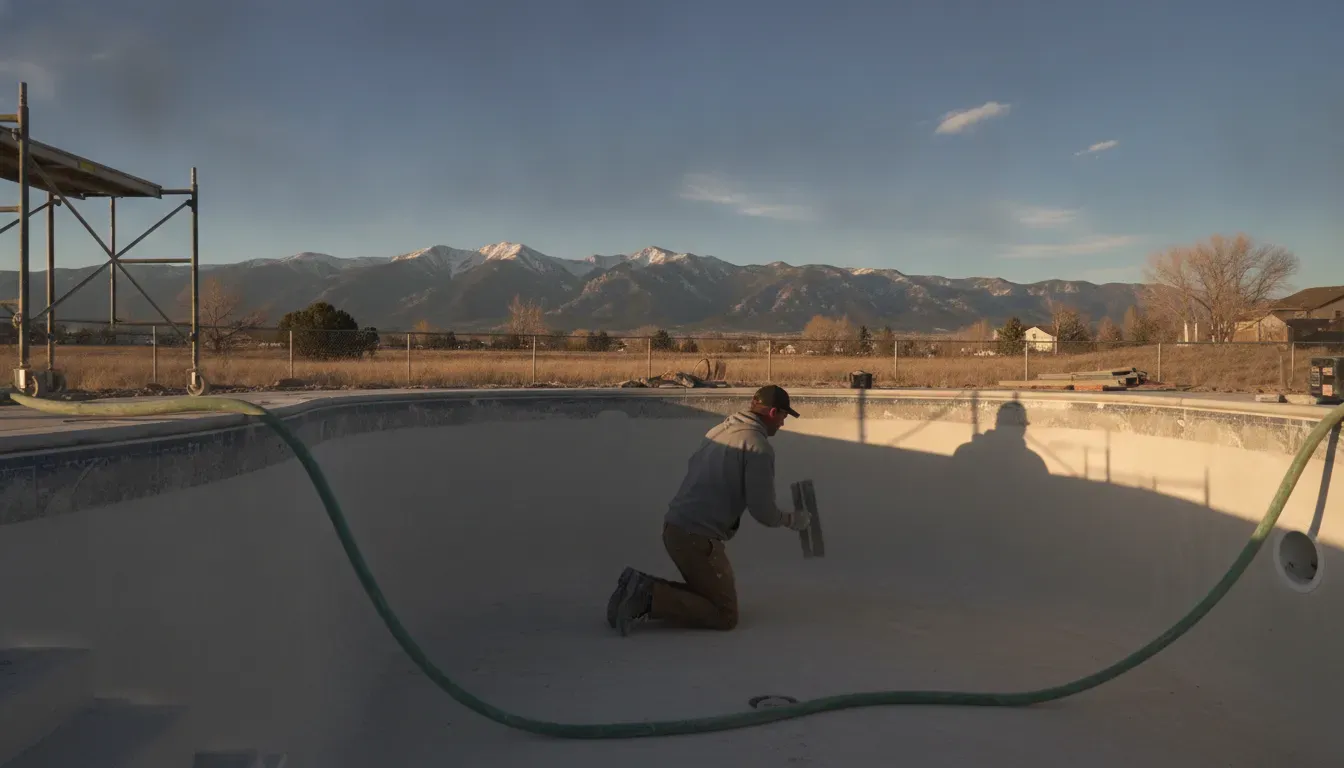
The first day generally includes assessment and draining. Once the pool is empty, the crew prepares the shell by cleaning it and removing the old finish. Surface preparation can take several days when the existing plaster is heavily worn or the pool requires more extensive correction. The new finish is applied only after the surface is ready to receive it.
Finish type also affects the working schedule. Standard plaster and aggregate finishes have different application and curing requirements, so the material choice should be considered alongside appearance, texture, durability, and maintenance. A contractor who knows Denver conditions can explain the expected sequence for your selected finish instead of promising the same timeline for every pool.
Why Denver weather can change the schedule
Denver's high-altitude environment and freeze risk make curing conditions important. Cold temperatures, snow, or a sudden weather shift can delay curing and extend the overall project. The work may still be planned for one week, but responsible scheduling leaves room for conditions that are outside the crew's control. High-altitude and freeze-protection requirements should be considered when selecting materials and setting expectations for the project.
For that reason, the best pool resurfacing timeline denver homeowners can plan around is five to seven days in suitable conditions. With a possible extension when the pool is larger, the finish is more involved, repairs are uncovered, or weather interrupts curing. Denver's active pool season generally runs from April through October, so scheduling before opening or during a suitable off-season window can reduce disruption. Ask for a written timeline that identifies the start date, preparation days, finish application, curing period, and refill instructions before approving the work.
Why the Pool Resurfacing Timeline in Denver Matters Before You Plan
A resurfacing project does more than change the look and feel of your pool. It temporarily takes the pool out of service, so the timing affects when your family, guests, tenants, or members can use it. Even when the work itself fits within a typical one-week window, the surrounding schedule still matters. Drainage, surface preparation, finish application, curing, refill, and water balancing all need to happen in the right order before swimming can resume.
That downtime is easier to manage when you plan around Denver's swimming season, which generally runs from April through October. Starting a project shortly before a planned pool opening may be practical, but beginning after the season is underway can mean giving up valuable warm-weather use. For homeowners who host gatherings, property managers coordinating amenities, and HOAs serving residents, a delay can create more disruption than the resurfacing work itself.
Plan around the season, not just the workdays
Resurfacing is a major project, and the best planning window is usually the off-season or the period just before opening. That gives the contractor room to complete the work without competing with your busiest swimming dates. It also leaves some margin for conditions that are outside anyone's control, such as a cold snap, snow, or a curing delay.
Use the project date as the middle of your planning process, not the finish line. Before scheduling, identify when you want the pool ready, then work backward. Allow time for the initial consultation, finish selection, scheduling, the resurfacing work itself, curing, refill, and final water adjustment. A reliable contractor can explain which steps are included and where weather or the pool's condition may affect the calendar.
Book before the spring rush
Early planning also improves your chances of getting the contractor and dates you actually want. As Denver homeowners prepare for the first warm weekends of the year, demand for pool renovations and related services can increase. Waiting until the pool is almost ready to open may leave fewer appointment options, especially if you need a particular finish or have additional repairs to coordinate.
Before committing, review the pool replastering process so you understand how preparation, finish installation, and post-project care fit together. Then discuss your target completion date, likely downtime, material choices, and a weather contingency with the contractor. A clear schedule helps you protect the swimming season while allowing the work to be completed carefully rather than rushed.
Inside the Process: A Step-by-Step Resurfacing Timeline
A clear sequence helps Denver homeowners plan around an empty pool, contractor access, and the curing period that follows the finish application. The exact schedule can change with pool size, surface condition, finish selection, and weather, but a typical residential project follows four practical stages.
Day 1: Assessment and draining
The project begins with an on-site assessment and a complete drain. The technician reviews the pool shell, existing finish, tile, coping, drains, returns, steps, and any areas that may need repair before resurfacing. Draining on the first day exposes the full surface so the crew can identify hollow spots, cracks, stains, or other conditions that are not visible under water. It also gives the team a chance to confirm the work plan before preparation begins. Because an empty pool can be vulnerable to weather and groundwater pressure, draining should be coordinated by an experienced professional rather than treated as a casual first step. This assessment and draining stage is the foundation of the rest of the schedule.
Days 2-4: Surface preparation and hydroblasting
Preparation is often the most important part of the resurfacing process. The crew cleans the exposed pool, removes failing plaster or paint, and prepares the shell for a strong bond with the new finish. Hydroblasting may be used to remove old material and create a clean bonding surface. The referenced process uses water pressure up to 40,000 PSI for this work, with the method selected according to the existing surface and project requirements. The crew may also address minor repairs or detail work around fittings during this phase. Rushing preparation can compromise the finish, so several days are commonly allocated to cleaning, removal, inspection, and final readiness checks.
Days 4-7: Application of the new finish
Once preparation is complete, the selected finish is applied across the pool. This may be a traditional plaster product, a quartz or pebble aggregate, or another finish chosen during the consultation. Application timing depends on the pool's shape, depth changes, stairs, benches, and details around drains and fittings. The crew works methodically to create consistent coverage and a clean transition at each feature. In a favorable Denver schedule, this phase takes place toward the end of the project window. Which is why a standard resurfacing job is often described as a five-to-seven-day process. Weather can still affect the pace, especially when temperatures are low or snow interrupts access.
After application: Mandatory curing before refill
The pool cannot be refilled immediately after the finish is installed. It must cure for the period specified for the material and conditions. This step allows the new surface to harden properly before it is exposed to water and startup chemistry. Colorado's high-altitude conditions and freeze-protection needs should be considered when planning materials and curing. Cold temperatures or snow can extend the schedule, so the refill date should remain flexible until the finish is ready. After refill, careful water balancing and follow-up maintenance help protect the new surface. For a deeper explanation of material preparation and application, review this pool replastering process.
When Is the Best Time of Year to Resurface a Pool in Denver?
For most Denver homeowners, the best time to resurface a pool is in spring before the pool opens or in early fall after regular swimming has slowed. Denver's active pool season generally runs from April through October. So timing the work outside those months helps protect the part of the year when your family, residents, or guests expect to use the pool.
Spring and fall also offer a practical middle ground. Mid-summer heat can make scheduling and surface curing more difficult, while winter introduces freezing conditions that may delay the project or create additional protection requirements. Weather is never completely predictable along the Front Range, but choosing a favorable seasonal window gives the finish a better chance to cure without unnecessary interruptions.
Schedule before the April opening when possible
If you want the pool ready for the first warm weekends of the year, begin planning well before April. Resurfacing is a major renovation, not a quick maintenance visit. The work typically includes draining the pool, preparing the existing surface, applying the new finish, and allowing it to cure before the pool is refilled. Most residential projects can be completed within about one week when conditions are favorable. But the calendar should also account for inspection, material selection, weather changes, and contractor availability.
Starting the conversation during the winter or early in the year can help you avoid the peak spring booking rush. It also leaves room to address related repairs or select a finish without compressing the schedule immediately before opening day. For HOAs and commercial properties, early planning is even more important because the work must be coordinated around residents, guests, operating schedules, and safety requirements.
Why early fall can be a smart alternative
Early fall is often a strong option when the surface has deteriorated during the season or when spring availability is limited. The pool may be used less frequently, so resurfacing creates less disruption than it would during July or August. However, the work should not be pushed too late into the season. Cold temperatures and snow can delay curing, and Denver's freeze risk makes winter an unsuitable default window for an exposed resurfacing project.
A local professional should evaluate the forecast, pool condition, selected finish, and site-specific freeze-protection needs before confirming dates. High-altitude conditions can affect how resurfacing materials behave and how they cure, so a generic calendar recommendation is not enough for every pool.
Explore Denver pool resurfacing services
The right pool resurfacing timeline in Denver is the one that protects curing conditions and minimizes lost swim time. In most cases, that means reserving a spring slot before opening or choosing an early-fall window, then building reasonable weather flexibility into the plan.
Weather, Altitude, and Freeze Protection in the Denver Resurfacing Timeline
A five- to seven-day estimate assumes the weather cooperates. In Denver, that assumption needs some flexibility. Cold temperatures and snow can slow the curing process, which may extend the time between applying the finish and safely refilling the pool. A project planned for one week in favorable conditions can move beyond that window when a late storm, overnight freeze, or sustained cold settles in.
That is not a sign that the work is being rushed or mishandled. Curing is part of the resurfacing system, not an optional pause. The finish needs appropriate conditions to set properly before the pool is filled and brought back into service. Trying to force the schedule around poor weather can create avoidable problems with the new surface, so a responsible timeline leaves room for conditions that cannot be controlled.
Why Denver conditions require a wider schedule
Denver pools face more than ordinary seasonal temperature changes. High-altitude conditions can affect how resurfacing materials behave, while Colorado's freeze-protection requirements influence material selection and curing decisions. These are specialized considerations for local pool projects. And they are one reason a contractor familiar with Denver conditions should set the schedule rather than applying a generic national timeline. The technical requirements for materials and curing should be evaluated alongside the pool's design, exposure, and planned use.
Freeze-thaw risk also affects when work should begin and how the site is protected between stages. Even if daytime temperatures appear comfortable, nighttime conditions can change the practical timeline. Snow and cold may delay preparation or finishing work, and the project may need a buffer before the pool can be refilled. Building that buffer into the original plan gives homeowners a more realistic target and reduces the chance that the pool will be unavailable when the season begins.
Plan for the finish after the crew leaves
The timeline does not end when the pool is refilled. New surfaces need properly balanced water chemistry during the startup period and ongoing maintenance. Monitoring water balance helps protect the finish from premature degradation and supports longer-term surface integrity. The EPA's guidance on swimming pools also connects proper maintenance and water chemistry with protecting pool surfaces and improving overall system efficiency: EPA pool and water efficiency guidance.
For Denver homeowners, the practical approach is to schedule early, ask how weather contingencies are handled, and confirm what post-resurface water care is included in the handoff. A local contractor can build reasonable weather and curing time into the plan, explain when a delay is necessary. And provide clear instructions for protecting the investment once the pool is back in operation.
How Your Finish Choice Shapes the Timeline and Budget
Finish selection affects more than the appearance and texture of your pool. It can change the amount of preparation, the labor involved, the curing requirements, and the total time before the pool is ready to refill. A standard plaster finish may fit a straightforward resurfacing schedule, while aggregate and polished finishes generally require a larger investment and more detailed installation work.
The figures below are general market estimates for context, not a fixed Neptune Pools quote. Actual pricing depends on pool size, shape, access, existing surface conditions, selected color and texture, local labor, and any repairs discovered after the pool is drained. For a broader look at the variables behind the price, review this pool resurfacing cost breakdown.
| Finish option | General market estimate | Timeline and planning considerations |
|---|---|---|
| Standard plaster | Approximately $600-$800 for basic, material-dependent projects | Often the simplest finish path. A typical project may take about 5-7 days from draining through curing and refill, assuming favorable weather and no substantial repairs. |
| Pebble aggregate | Approximately $3,500-$8,500 | Usually involves more preparation and a more involved application than standard plaster. Allow additional coordination for labor, finish selection, and curing before the pool returns to service. |
| Polished quartz or quartz-based finish | Approximately $5,000-$10,000 | A premium finish can require careful preparation and finishing work. The installation schedule should include adequate curing time and a controlled startup rather than planning around the shortest possible timeline. |
The plaster, pebble aggregate, and polished finish ranges above are reported as general Denver-area estimates by HomeYou. They are useful for comparing finish categories, but they should not replace a site-specific assessment. A large pool with difficult access may cost more than a smaller pool with an uncomplicated layout, even when both use the same finish.
Why a premium finish can add time
The finish itself is only one part of the schedule. Crews must drain the pool, prepare and clean the shell, address defects, apply the new material, and allow it to cure before refilling. Aggregate and polished surfaces may require additional preparation or more precise application, so the labor plan can extend beyond a basic plaster installation. Weather also matters. Cold temperatures, snow, and other unfavorable conditions can slow curing in Colorado.
That is why a realistic pool resurfacing timeline in Denver should include both the installation days and a reasonable weather buffer. Choosing a finish during the estimate allows the contractor to explain what changes, if any, it makes to the work sequence, startup process, and expected pool downtime. It also helps you schedule the project outside the busiest part of the swimming season instead of choosing a material based only on its initial price.
Request a free estimate and get your resurfacing timeline scheduled before the season rush
Frequently Asked Questions
How long does pool resurfacing take in Denver?
Most residential projects take about five to seven days, or roughly one week, when weather stays favorable. The schedule includes draining, surface preparation, applying the finish, curing, and refilling. A larger or more complex pool may require additional time. Typical resurfacing timelines are commonly estimated at five to seven days.
What can delay a pool resurfacing project?
Cold temperatures, snow, project size, pool shape, surface condition, and the finish you select can all affect the schedule. In Denver, high-altitude conditions and freeze protection also need to be considered when selecting materials and planning the curing period. Your contractor should explain weather contingencies before work begins.
Does pool resurfacing take longer in winter in Colorado?
It can. Cold weather and snow may delay surface curing and extend the overall project. Spring and fall are generally better planning windows because they avoid many winter freezing concerns and the extreme heat of midsummer. If you want the pool ready for use in April, schedule the work before the season opens.
What should I do after the pool is refilled?
Follow the contractor's startup instructions and monitor the water balance closely. Proper post-resurfacing chemistry helps protect the new finish from premature degradation. Do not assume the pool is ready for normal swimming or chemical routines until the finish has cured and the technician confirms the next steps. EPA WaterSense guidance also emphasizes maintaining pool surface integrity and water chemistry.
Ready to Plan Your Pool Resurfacing?
A clear project timeline helps you coordinate the work with your Denver-area pool season and make informed decisions about the next steps. To request a free pool resurfacing consultation, contact Neptune Pools about your resurfacing project. You can also call (303) 431-8501 to discuss your pool, preferred schedule, and the timeline you need.
Related Blogs