Swimming Pool Maintenance Cost in Denver: 2026 Guide
In Denver Metro, pool care is not one flat monthly bill. Your budget usually combines recurring cleaning, chemicals, equipment checks, repairs, and separate spring opening and fall winterization work. The right planning number depends on pool size, service frequency, equipment complexity, water volume, and its current condition.
The swimming pool maintenance cost for a Denver home is best estimated as a seasonal ownership budget, not a universal quote. Start with routine service, then add chemicals, utilities, condition-driven repairs, and Colorado-specific freeze protection. A professional plan can make recurring care more predictable, while DIY service may reduce labor costs but requires consistent testing, safe chemical handling, and time.
Request a transparent Denver pool maintenance quote from Neptune Pools.
With those cost categories separated, it becomes easier to compare realistic options and see which expenses are routine, seasonal, or preventable. Here is how the main line items fit together for a Denver pool.
What Does Swimming Pool Maintenance Cost in Denver?
For Denver Metro homeowners, the most useful answer is a budget range rather than a single promised price. Neptune Pools lists residential recurring maintenance plans from $130 to $480 per month, depending on the level of service. That is not a guaranteed quote for every property. Pool size, visit frequency, equipment complexity, water volume, and the condition of the pool can all change the final cost. These factors commonly affect professional maintenance pricing.
It also helps to separate recurring care from the other costs of owning a pool. Denver's active pool season generally runs for about seven months, from April through October. Repairs, chemicals, utilities, and winterization may not fit neatly into a monthly service charge.
| Budget category | What it may include | How to plan for it |
|---|---|---|
| Recurring service | Scheduled cleaning, skimming, vacuuming, water checks, and routine filter care. | Use the service plan's monthly price as the starting point. Neptune's listed residential plans range from $130 to $480 per month, depending on service level. |
| Chemicals and supplies | Sanitizer, balancing products, and supplies needed for the pool's sanitation system and water volume. | Keep this as a separate variable line item. Needs change with pool size, water conditions, usage, and sanitation equipment. |
| Repairs and equipment | Pump, filter, heater, plumbing, or control-system diagnosis and repair. | Set aside a repair reserve instead of assuming routine service covers component failures. Equipment complexity and condition matter. |
| Utilities | Water, electricity, and heating required to operate the pool. | Track these separately because operating costs vary with equipment efficiency, heating choices, leaks, and pool use. |
| Seasonal services | Spring opening, fall closing, winterization, and freeze protection. | Budget separately from monthly care. Colorado's freeze-prone winters make correct winterization important for protecting plumbing and equipment. |
A service agreement can make the routine portion easier to budget by keeping recurring care more predictable, while the other categories remain condition-driven. Properly balanced water also supports equipment longevity, and the CDC identifies water chemistry and equipment management as important parts of safe pool operation. For a clearer view of what regular visits can cover, review Neptune's weekly pool maintenance plans.
Which Costs Belong in a Denver Pool Maintenance Budget?
A realistic Denver pool budget is more than a weekly service charge. It should account for recurring work that keeps the water and surfaces clean, supplies for water balance, equipment monitoring, utilities, and occasional costs caused by the pool's condition. Pool size, service frequency, equipment complexity, water volume, and repair needs all affect the final total. Use these categories to plan rather than treating any general figure as a guaranteed quote.
Weekly cleaning and routine service
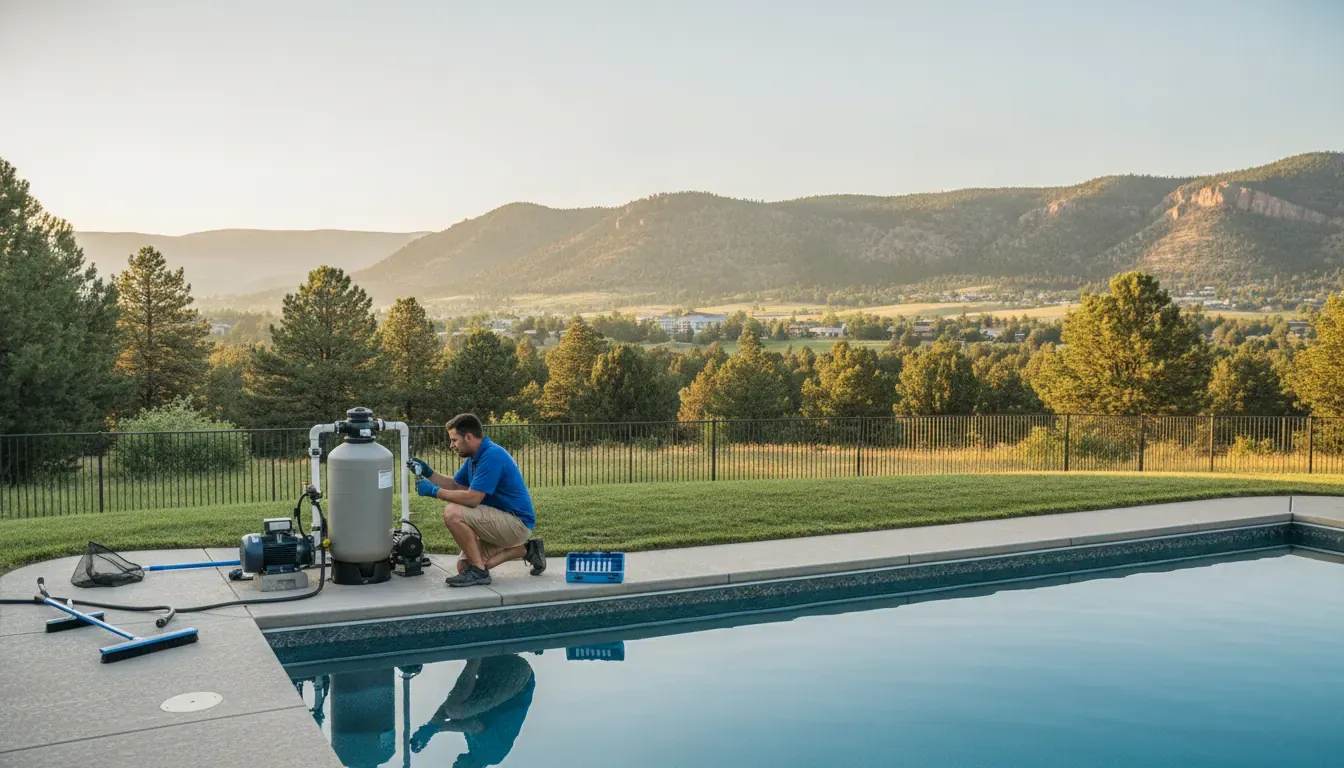
The most visible line item is recurring cleaning. Depending on the pool and its surroundings, this may include skimming debris, brushing surfaces, vacuuming, checking baskets, and cleaning or inspecting filters. Pools near trees or exposed to heavy use may need more frequent attention. Neptune's weekly pool maintenance plans can help homeowners separate predictable routine care from one-time work.
Chemicals and water balance
Chemical spending depends on the sanitation system, pool water volume, weather, and how frequently the pool is used. It is not simply a fixed monthly amount. Balanced water also protects equipment and helps maintain a safer swimming environment. The CDC identifies proper water chemistry and equipment maintenance as important to protecting pool users. Chemical products require careful storage and handling, so include both the supplies and the time or service needed to manage them safely. Neptune also offers pool chemical delivery in Denver, which can make recurring supply needs easier to plan.
Equipment inspection and repairs
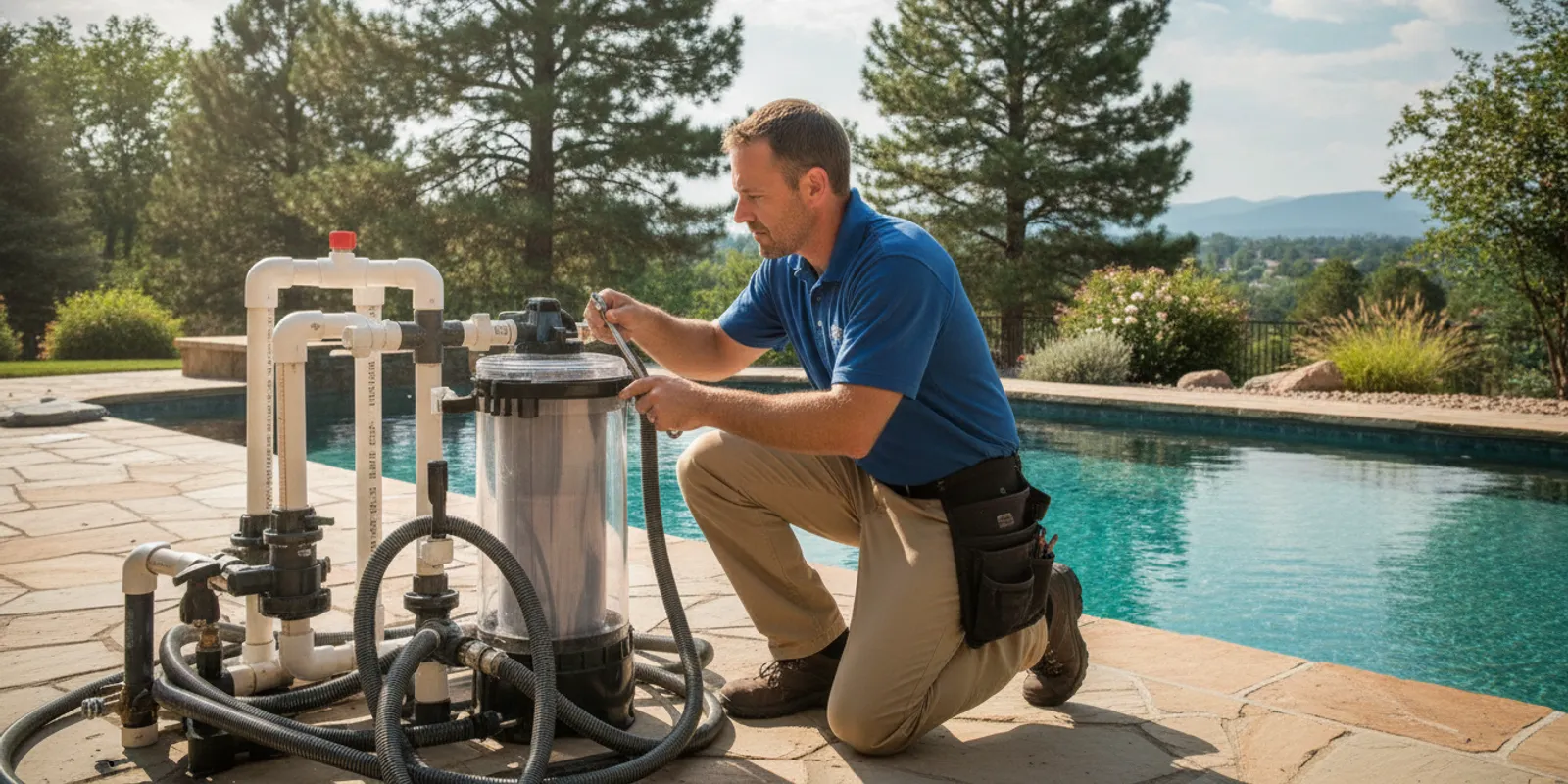
Pumps, filters, heaters, valves, and controls deserve their own budget category. Routine inspection can identify reduced flow, unusual noise, leaks, or filter problems before a small issue becomes a larger repair. The EPA notes that regular pump and filter inspection supports operational longevity and efficiency. When diagnosis or replacement is needed, plan for a separate repair reserve and use Neptune's pool equipment repairs and servicing resources to distinguish maintenance from corrective work.
Utilities, heating, and condition-driven expenses
Electricity, water, and heating costs continue even when they are not included in a service plan. A leak, inefficient pump, or aging heater can push those operating costs higher. The EPA recommends proactive leak detection and routine equipment maintenance as ways to reduce unnecessary utility expenses. Covers and efficient equipment may also help over time, but the right choice depends on the pool and its existing system.
Finally, reserve money for expenses tied to condition and Colorado weather, such as correcting persistent water-balance problems, repairing worn components, or addressing freeze-related concerns. Reviewing each bucket separately gives you a clearer view of your swimming pool maintenance cost and makes an unusually high bill easier to explain.
How Do Opening and Winterization Affect Annual Cost?
Seasonal work deserves its own place in a Denver pool budget. Recurring service covers routine care during the active season, but opening and closing prepare the pool for two very different operating conditions. Denver's pool season typically runs for seven months, from April through October. That means a maintenance plan may cover regular visits without including every task required at the beginning and end of that window.
Plan the spring opening in April
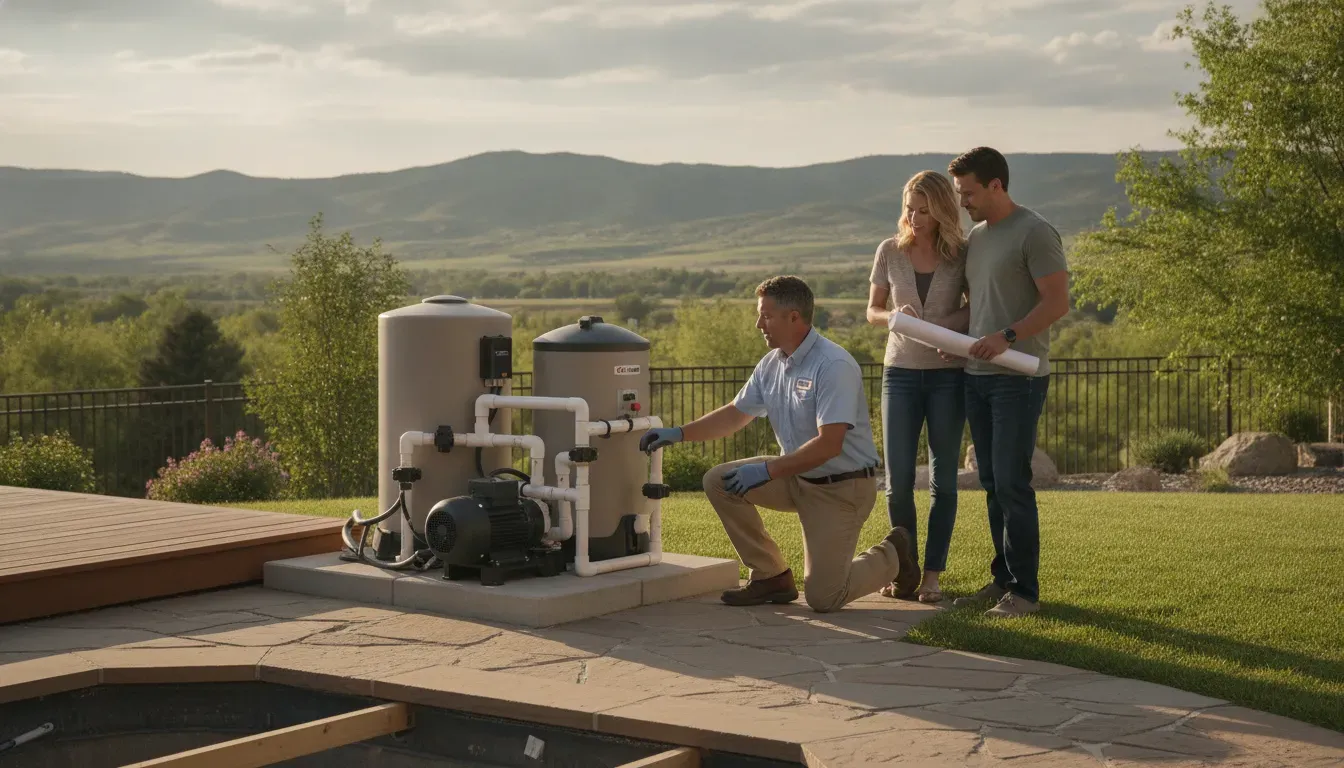
A spring opening brings the pool back into service after winter. The work may involve removing or storing the cover, reconnecting equipment, inspecting the system, restoring circulation, and testing the water before regular swimming begins. The exact scope depends on the pool, equipment, and condition at opening. So it should be treated as a separate seasonal line item rather than assumed to be part of the monthly maintenance price. For more detail on what this service can include, review seasonal pool opening service costs.
Budget for regular care from April through October
Once the pool is operating, routine visits, water testing, cleaning, and equipment monitoring support the seven-month season. This is the period when a recurring maintenance plan is most visible, but the annual budget still needs to account for conditions that change the work required. Pool size, equipment complexity, water chemistry, and the pool's condition can all affect the final cost. Keeping opening, recurring care, chemicals, and repairs as separate categories makes a swimming pool maintenance cost estimate easier to understand.
Schedule fall closing before freezing weather
Fall winterization prepares plumbing and equipment for Colorado's freeze-prone winter. The objective is to protect the system when the pool is no longer circulating as it does during the swimming season. Winterization is not simply the reverse of opening. It requires procedures suited to the pool's equipment and plumbing, and poor preparation can contribute to freeze-related damage and costly repairs. Colorado's high altitude and winter conditions make local freeze protection an important part of responsible pool ownership.
Review the annual total, not only the monthly charge
After adding spring opening, seven months of routine care, chemicals, repairs when needed, and fall winterization, you have a more realistic annual planning picture. A service agreement can make routine costs easier to budget, but seasonal work may still need separate confirmation. Ask which opening and closing tasks are included, which supplies are billed separately, and what equipment conditions could change the scope. Transparent line items help you compare options without treating a monthly service price as the complete annual cost.
Is DIY Pool Care Cheaper Than Professional Service?
DIY pool care can reduce the amount you pay to a service company, but it does not make pool ownership free. The real comparison includes your time, testing supplies, chemicals, cleaning equipment, safety practices, and the risk of overlooking a problem. The better choice depends on how consistently you can perform the work and how comfortable you are making decisions about water chemistry and mechanical equipment.
For some Denver homeowners, handling simple weekly tasks is practical. Others prefer to pay for dependable service so maintenance does not compete with work, travel, or family schedules. Use this comparison to evaluate the tradeoff without assuming that either option has one fixed swimming pool maintenance cost.
| Consideration | DIY care | Professional care |
|---|---|---|
| Time and routine labor | You handle recurring skimming, vacuuming, basket checks, water testing, and filter cleaning. The workload rises with debris, vegetation, and heavy use. | A scheduled technician handles routine cleaning and service visits, reducing the weekly labor required from the homeowner. |
| Water chemistry | You buy testing supplies, interpret results, and select adjustments. Small errors can compound when readings are inconsistent or conditions change. | Certified technicians apply trained judgment to water quality and local Colorado conditions. Proper chemistry helps protect swimmers and mechanical equipment. |
| Chemical safety | You are responsible for transporting, storing, measuring, and handling chemicals correctly. The CDC recommends diligent pool chemical storage and handling to prevent exposures and injuries: pool chemical safety guidance. | The service provider manages chemical procedures as part of the work. You still need to follow safe storage instructions for any chemicals kept on your property. |
| Equipment risk | You may save service fees on basic checks, but missed symptoms can allow pump, filter, heater, or plumbing issues to worsen. Improper chemistry can also damage surfaces or mechanical systems. | Routine inspections can identify developing problems before premature failure of expensive components. For a repair or persistent performance issue, see pool equipment repairs and servicing. |
| Scheduling and convenience | You control the schedule, but the work remains your responsibility during vacations, storms, heat, and peak swimming periods. | Reliable recurring scheduling keeps routine care from being missed. Neptune's weekly pool maintenance plans can suit homeowners who value consistency. |
When DIY makes sense
DIY is most manageable when you have a predictable schedule, understand the equipment, and are willing to test and record water conditions consistently. It can also work well when you outsource only specialized tasks while keeping up with basic cleaning yourself. Do not treat a clear-looking pool as proof that chemistry is balanced, and do not postpone a professional inspection when equipment behaves differently.
When professional service is the better value
Professional care is often the better value when your time is limited. The pool has complex equipment, or you want a trained technician watching for chemistry and maintenance issues. The price buys more than labor. It can also buy reliable scheduling, safer chemical handling, more comprehensive filter cleaning, and earlier awareness of repairs. Ask for a service scope that separates recurring care from chemicals, seasonal work, and repairs so your budget reflects the full ownership picture.
What Makes Pool Maintenance More Expensive in Denver?
There is no single answer to the swimming pool maintenance cost for every Denver-area property. A realistic service plan reflects the pool itself, how it is used, and the conditions it faces between visits. Professional maintenance costs commonly vary with pool size, service frequency, equipment complexity, and the amount of chemical or repair work required. Those factors are also recognized in broader pool-maintenance cost guidance.
- Pool size and water volume: A larger pool generally requires more time to skim, vacuum, and inspect, while its greater water volume can increase chemical demand. The sanitation system matters too. Different systems have different supply requirements, so chemical costs are not determined by pool dimensions alone.
- Usage and surrounding vegetation: A pool used frequently needs closer attention to debris, water balance, and filtration. Trees and other vegetation near the pool can increase the cleaning workload, especially when leaves and organic material enter the water. Cleaning frequency depends heavily on both vegetation and heavy-use periods.
- Sanitation and equipment: Saltwater systems, traditional chlorine systems, automated controls, heaters, pumps, filters, and other equipment each create different inspection and service needs. More complex equipment may require more specialized troubleshooting. Routine pump and filter inspections support efficiency and equipment longevity, according to EPA pool-efficiency guidance.
- Denver's altitude and weather: Water balance can be more demanding when climate-specific chemistry variables are part of the equation. Denver's weather also creates a wider seasonal planning issue than routine summer cleaning alone. Freeze-prone winters make proper protection and winterization important because neglected equipment or plumbing can lead to repair costs later.
- Pool condition and repair history: A well-maintained pool usually has more predictable routine needs. Older or neglected equipment can add diagnostic work, replacement parts, or corrective water treatment. Persistent leaks can also increase water and utility costs, making early investigation more economical than allowing the problem to continue.
These drivers are why a low recurring service price may not represent the complete annual budget. Ask whether a plan covers only routine visits or also accounts for chemicals, equipment checks, seasonal work, and repairs. For Denver owners, understanding the high-altitude pool chemical requirements can also help explain why local expertise is valuable when comparing service options.
How Can Denver Homeowners Control Pool Maintenance Costs?
Controlling your swimming pool maintenance cost is less about choosing the cheapest single service and more about preventing avoidable work. A consistent plan keeps small water-quality or equipment issues from becoming urgent repairs, while giving you a clearer view of routine and seasonal expenses.
Keep routine care consistent
Use a dependable cleaning and testing schedule during Denver's active pool season, which generally runs from April through October. Missed visits can allow debris, water-balance problems, or equipment issues to build. A recurring plan also makes service easier to budget than handling each problem as an emergency. Neptune Pools emphasizes reliable scheduling and transparent pricing for homeowners who want routine care handled consistently.
Find leaks and watch water efficiency
Unexpected water loss can increase both water and heating expenses. Have unexplained water-level changes investigated instead of repeatedly adding water without finding the cause. The EPA identifies leak detection and routine equipment maintenance as important steps for reducing unnecessary utility costs. A pool cover, when appropriate for your pool and use, can also support water-efficiency efforts. Pool equipment repairs and servicing can help address issues before they lead to larger operating problems.
Protect chemistry and equipment
Test water regularly and follow safe chemical storage and handling practices. Balanced water helps protect mechanical equipment such as pumps, filters, and heaters, while routine inspection supports efficiency and longevity. Chemistry needs can vary with water volume and the sanitation system, so avoid buying or adding chemicals based only on a neighbor's routine. For Denver homeowners who prefer scheduled supply support, Neptune offers pool chemical delivery in Denver.
Plan for seasons and predictable billing
Budget separately for opening, closing, and freeze protection rather than treating them as unexpected additions to monthly maintenance. Colorado's freeze-prone winters make winterization an important protection for pool plumbing and equipment. Finally, ask whether a service agreement can establish fixed monthly routine-care costs. A fixed arrangement does not eliminate condition-driven repairs, but it can make recurring expenses easier to plan and compare.
Contact Neptune Pools to discuss a practical pool maintenance plan for your Denver home.
Frequently Asked Questions
What is a reasonable monthly budget for pool maintenance in Denver?
Neptune's listed residential recurring maintenance plans range from $130 to $480 per month in the Denver Metro area, depending on the service level. That is not a guaranteed bid for every pool. Pool size, service frequency, equipment complexity, chemical needs, and repairs can change the total. Seasonal opening, winterization, utilities, heating, and major repairs may be separate budget items. Source: Neptune Pools.
Does the Denver pool season affect annual maintenance costs?
Yes. Denver's active pool season generally runs for seven months, from April through October. Owners should budget for spring opening and fall winterization in addition to recurring care, especially because Colorado's freeze-prone winters make equipment protection important. Source: Neptune Pools.
Can I save money by maintaining my pool myself?
DIY care can reduce service labor when you have the time, consistency, and confidence to test water, clean the pool, and monitor equipment. It does not eliminate chemical, supply, utility, or repair costs. Incorrect chemistry can damage surfaces, liners, or mechanical systems, so the potential savings should be weighed against technical risk. Source: iopool.
What makes pool chemical costs vary from one Denver home to another?
Chemical spending depends mainly on the sanitation system and the pool's water volume. Usage, weather, vegetation, and water balance can also affect how often supplies are needed. A consistent testing and treatment routine helps prevent avoidable corrections, while chemical delivery can simplify replenishment for Denver homeowners.
When is professional pool service worth the cost?
Professional care is often worthwhile when you cannot maintain a reliable schedule, have complex equipment, or need help with high-altitude chemistry and freeze protection. Regular checks can identify equipment problems before premature component failure, while trained service helps keep water chemistry and filtration on track.
Ready to Plan Your Denver Pool Maintenance Budget?
A clear maintenance plan can make recurring service, seasonal work, chemicals, and equipment needs easier to budget. Neptune Pools can help you evaluate the care your pool requires and identify the right next step for your property. Pricing depends on factors such as pool size, equipment, frequency, and condition, so a direct review is more useful than a generic national average.
Related Blogs