Pool Leak Detection Guide for Denver Homeowners
A pool that needs frequent refilling is not always leaking. Denver's dry, high-altitude climate can increase evaporation, while wind, sun, and splash-out remove water faster than many homeowners expect. The important question is whether the loss exceeds normal conditions and continues when the pool is protected.
For pool leak detection, measure the water loss, check the equipment pad and return lines, then use a bucket test to compare the pool's level with evaporation. Losing more than 1/4 inch per day is likely a leak rather than normal evaporation, according to Neptune Pools' maintenance guidance.
Early attention matters because repeated refilling can disrupt water chemistry, raise chemical costs, and allow a small plumbing or structural problem to worsen. Start by checking the visible clues around your pool, equipment, and waterline before moving to a controlled test.
Contact Neptune Pools to schedule pool leak detection and repair in the Denver Metro.
Signs of a Pool Leak Every Denver Homeowner Should Know
Denver's intense sun, dry air, and high-altitude conditions can make normal evaporation look like a plumbing problem. A careful inspection helps separate routine water loss from warning signs that need attention.
Start by tracking the water level under similar weather and use conditions. Losing more than 1/4 inch per day is likely a leak rather than evaporation. A sudden drop deserves attention even when the loss seems modest, especially if you have not changed the pool's cover, operating schedule, or recent activity.
Look for water where it should not be
Wet ground near the pool, equipment pad, or buried plumbing is one of the clearest visual clues. Persistent dampness may point to a liner issue, pump seal, underground pipe, pipe-to-pool connection, pool edge, or pipe joint. The EPA pool water efficiency technical sheet identifies wet spots and bubbles as signs that can indicate leakage from these areas.
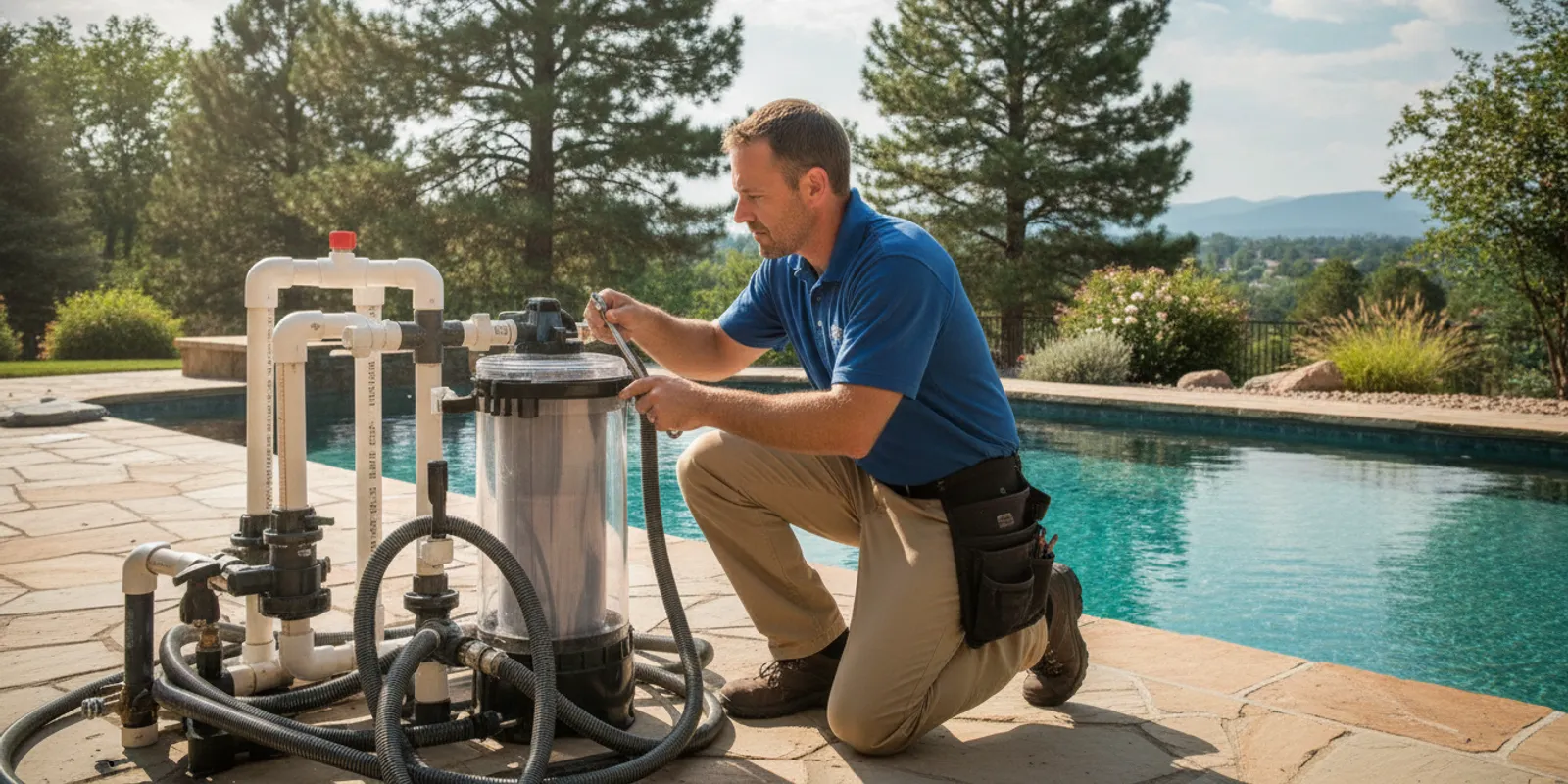
Inspect the water returns while the circulation system runs. Air bubbles entering the return stream can indicate a problem in the suction side, pump seal, or connected piping. Water around the pump or filter may also reveal a failing seal or loose connection. Do not dismiss a small drip because equipment leaks can worsen while the system cycles.
Check the pool shell and surrounding surfaces
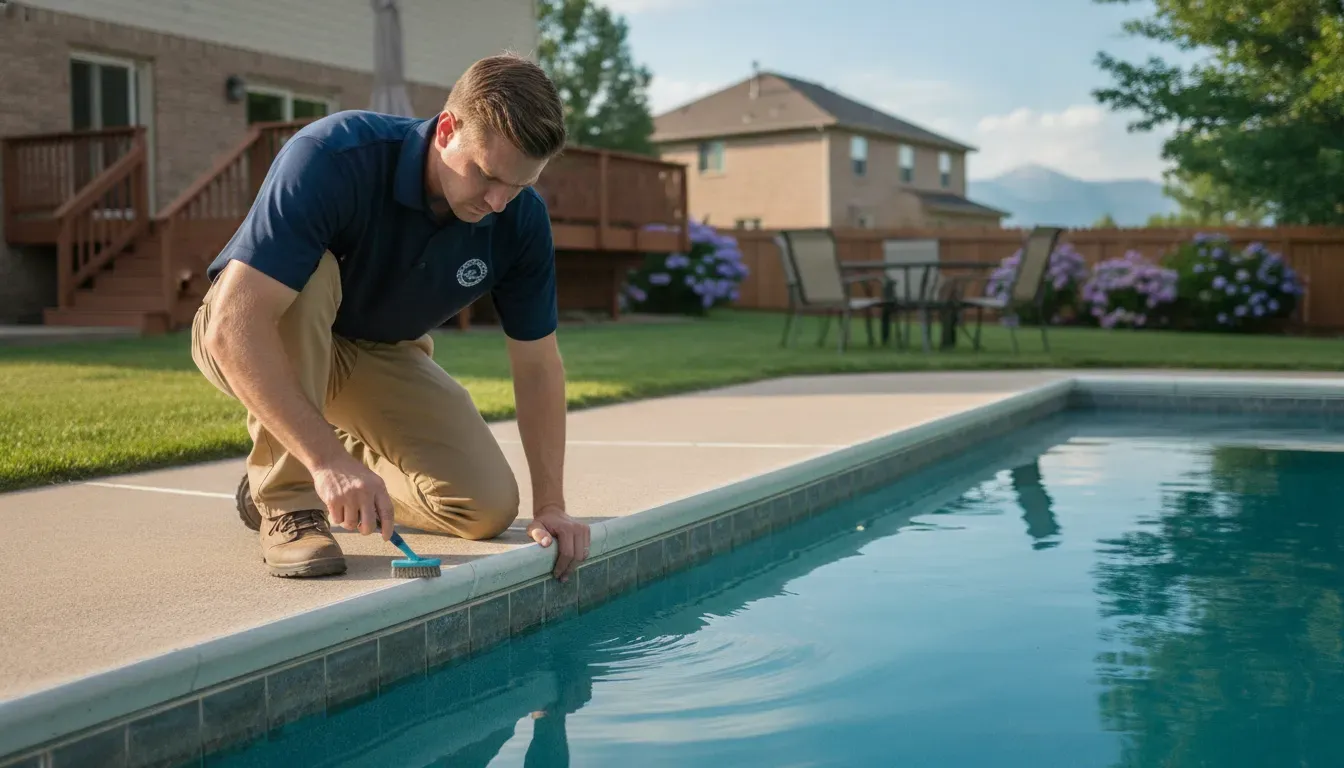
Examine the waterline, tile, coping, deck, and nearby soil. Movement around the tile line or cracks at the pool edge can signal a shell leak or another structural problem. A vinyl liner may also develop a small puncture that is difficult to see without a close inspection. Look for wrinkles, separation, or an area where the liner no longer sits tightly against the wall or floor.
Changes in the surrounding ground provide another important clue. An unaddressed leak can wash away supporting soil beneath the pool structure. Over time, that erosion may contribute to sinking, cracking, or structural failure. New settlement near the pool should therefore be treated as more than a cosmetic landscaping issue.
Frequent refilling can create a second problem. Adding water repeatedly may dilute the pool's chemistry and increase chemical use. If your water level keeps falling, record the loss and inspect the equipment and shell before continuing to refill. A documented pattern gives a technician better information for choosing the next diagnostic step.
The Bucket Test: Confirm a Pool Leak at Home
Denver's dry, high-altitude climate increases evaporation, making ordinary water loss difficult to separate from an active leak. The bucket test provides a controlled comparison before you schedule professional pool leak detection. It does not locate the leak, but it can show whether your pool is losing water faster than the surrounding air.
Choose a calm period when the pool will not be used, refilled, or backwashed. Turn off automatic water features if possible. Then complete the test as follows:
- Mark the pool waterline. Use a small piece of painter's tape on the tile or coping to record the starting level. Mark the date and time. Keep the pump schedule normal unless a technician has given you different instructions.
- Fill a bucket to the same level. Place a weighted bucket on a pool step, keeping it stable and partially submerged. Fill the bucket with pool water until its surface matches the pool's waterline. Mark the water level inside the bucket with tape.
- Run the comparison for 24 to 48 hours. Do not add water during the test. Avoid swimming and limit activity that could cause splash-out or drag-out. Record weather conditions, including strong wind, unusual heat, or rain.
- Compare both levels. Measure the drop inside the bucket and the drop in the pool. If both levels fall by roughly the same amount, evaporation is the more likely explanation. If the pool drops noticeably farther than the bucket, active water loss is more likely.
Repeat the test if wind, rain, or pool activity may have affected the first result. A covered pool can also produce a different comparison than an uncovered pool, so note whether the cover was used.
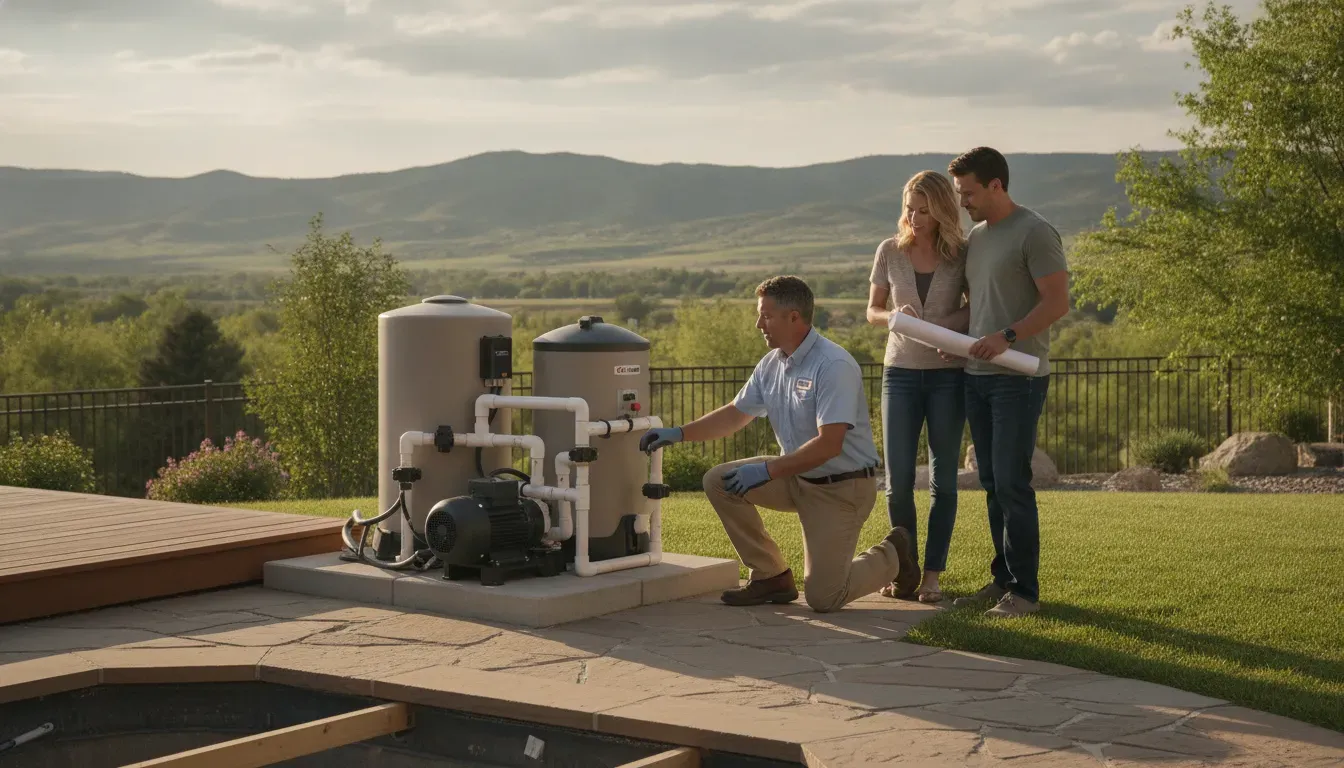
After a result suggesting a leak, inspect the equipment pad before assuming the problem is underground. Check the pump strainer for debris and possible air leaks, as recommended in the EPA pool water-efficiency guidance. Examine the pump seal closely. It is a critical failure point that can cause water loss before water reaches the rest of the pipework, according to Neptune Pools' pool leak detection guidance.
Keep your measurements and photos. They help a technician understand the pattern and choose the next diagnostic step. A confirmed difference does not identify whether the source is the shell, equipment, or plumbing, but it gives you a reliable reason to investigate promptly.
Rule Out Routine Water Loss Before Assuming a Leak
Denver pool owners often see the waterline fall and immediately consider pool leak detection. First, rule out the routine losses that can be substantial in Colorado. Dry, high-altitude air increases evaporation, especially during sunny, windy weather. That normal loss can look similar to an active plumbing or shell leak.
Start by observing how the pool is being used. Swimmers carry water out on their bodies, and energetic play creates splash-out. Water can also leave around ladders, steps, and the deck during normal activity. These losses are easy to mistake for a leak when the pool receives frequent use. The Environmental Protection Agency identifies splash-out and drag-out as preventable sources of pool water loss.
Wind and temperature also change the evaporation rate. An exposed pool loses water faster than one protected by landscaping, fencing, or other wind breaks. Shade can keep the water cooler and reduce evaporation as well. These measures do not eliminate evaporation, but they can make daily water levels more stable. The EPA also recommends covering a pool during periods of inactivity to reduce normal evaporation loss.
Measure the water level consistently
Use the same reference point each day, such as the skimmer opening or a marked tile. Record the level before adding water, and note heavy swimming, storms, or unusually strong wind. A short log gives you a clearer baseline than memory.
Neptune Pools' local guidance uses one-quarter inch per day as a practical warning threshold. If the pool loses more than 1/4 inch daily after accounting for weather and use, a leak becomes more likely than ordinary evaporation. A consistent drop deserves further testing, even if no wet soil or equipment-pad leak is visible.
Water chemistry can provide another useful clue. Frequent refilling dilutes chemicals and may increase supply needs. If you are correcting chemistry repeatedly, use professional-grade supplies and chemicals while you investigate the underlying water loss. Do not treat chemical demand alone as proof of a leak. Confirm the pattern with measured water levels and a controlled test.
Once shade, wind, pool use, and evaporation have been considered, the next step is a bucket test. That comparison helps separate normal environmental loss from water leaving the pool through a leak.
DIY Diagnosis vs. Professional Pool Leak Detection
DIY checks are useful when water loss has an obvious source. They can help you decide whether to monitor the pool, make a simple correction, or schedule a diagnostic visit. They cannot reliably identify every leak beneath a Denver-area pool.
Start with observations that do not require specialized equipment. Look for visible cracks, wet soil, air bubbles, or water around equipment connections. In a vinyl-liner pool, inspect high-use areas carefully. Small punctures or tears are frequent causes of water loss in these liners. The right steps to diagnose plumbing leaks early can prevent a minor problem from becoming a larger repair.
| DIY Approach | Professional Service |
|---|---|
| Use the bucket test to compare pool water loss with evaporation. This is especially useful in Colorado's dry, high-altitude climate, where normal evaporation can complicate diagnosis. | Review water-loss patterns alongside equipment and site conditions. Professionals separate evaporation, splash-out, equipment leaks, structural leaks, and plumbing failures. |
| Inspect the pool shell, tile line, liner, pump, filter, and visible pipe connections. Wet spots or bubbles can point toward the liner, pump seal, piping, joints, or pool-to-pipe connections. | Perform a pressure test on the pool lines when visual checks do not reveal the source. The test helps confirm whether underground plumbing is holding pressure. |
| Apply pool-safe dye near a suspected crack with the pump off. Water pressure may draw the dye toward a small structural opening. | Use electronic acoustic detectors to pinpoint underground leaks without digging. Accurate location reduces unnecessary excavation, repair costs, and disruption. |
| Record water levels and repeat basic checks. Stop if the diagnosis requires opening equipment, disturbing the liner, or excavating around the pool. | Investigate hidden structural issues and inaccessible pipework. A professional can recommend a targeted repair instead of treating every symptom as a surface crack. |
A DIY dye test can confirm a suspected shell leak, but a negative result does not prove the plumbing is sound. Underground lines may leak beneath decking or landscaping while the pool surface looks intact. Pressure testing and acoustic location address problems that visual inspection cannot reach.
Call for professional testing when the bucket test shows continuing loss, the equipment pad appears dry, or water levels fall rapidly. Prompt diagnosis also matters when tile movement, edge cracking, or soil settlement appears. An untreated leak can wash away supporting soil beneath the pool, leading to sinking, cracking, and more extensive structural damage.
What Professional Pool Leak Detection Includes
Professional pool leak detection starts with a controlled process that separates visible water loss from a hidden plumbing or structural problem. The technician first reviews the symptoms, checks accessible equipment, and identifies whether the loss occurs while the circulation system runs.
That distinction matters because a leak can involve the pool shell, a fitting, the equipment pad, or underground pipework. A careful diagnosis prevents a homeowner from paying for excavation before the leak's location and cause are understood.
Pressure testing separates plumbing leaks from structural leaks
When visual checks do not reveal the source, the technician isolates the pool's plumbing lines and performs a pressure test. Stable pressure supports the integrity of the tested line. A pressure drop indicates that water is escaping somewhere in the pipework.
This test helps distinguish a structural leak from a plumbing leak. If the lines hold pressure, attention can shift toward the shell, liner, fittings, or another exposed component. If pressure falls, the investigation can focus on the affected underground line instead of disturbing the entire pool area.
Pressure testing also gives the repair plan a stronger foundation. The technician can identify which circuit requires attention, reducing guesswork around returns, suction lines, skimmers, and other connections.
Electronic equipment pinpoints underground leaks
After testing identifies a likely plumbing problem, electronic acoustic detection can help locate the leak beneath concrete, decking, soil, or landscaping. The equipment listens for sound patterns created by escaping water in pressurized lines.
This approach can pinpoint underground leaks without digging across the pool area. More precise location work means less disruption to the property and a smaller risk of opening the wrong section. It also helps minimize unnecessary excavation, repair costs, and restoration work.
Dye testing checks suspected shell cracks
For a suspected structural crack, a technician may use pool-safe dye with the circulation system off. Water movement toward a crack can draw the dye into the opening, helping reveal a leak in the pool shell or around a fitting.
This method is useful when the suspected defect is small or difficult to see under normal conditions. The inspection may also include the tile line, pool edges, liner, and visible joints. Movement near the tile line or cracking at the pool edge can support further structural investigation.
Prompt repair also supports responsible water management. Colorado municipal water efficiency guidance recommends monitoring usage and repairing detected leaks promptly. Colorado's municipal water efficiency guidance provides that context for property owners.
Schedule pool leak detection and repair with Neptune Pools
Denver Weather and Freeze Factors That Cause Leaks
Denver pools face a combination of weather and elevation conditions that can make water loss harder to interpret. Dry air and intense sun increase evaporation, while freeze-thaw cycles place repeated stress on buried plumbing. A pool can lose water from normal conditions, then develop a true leak when a weakened joint finally opens.
Colorado's freeze-thaw cycle can stress pool plumbing joints and create micro-cracks over time. Those cracks may remain difficult to see during warmer weather. They can also expand when trapped water freezes inside a line or fitting. Watch for recurring water loss, damp areas near plumbing, or changes that return after each cold season.
High-altitude conditions create another maintenance challenge. Evaporation rates can rise in Denver's dry climate, making normal water loss look like a plumbing failure. At the same time, evaporation and frequent refilling can destabilize water chemistry. Unbalanced chemistry may contribute to pipe corrosion and equipment wear. Tracking water levels and chemical demand across the season helps separate environmental loss from a developing leak.
Winterize before the first hard freeze
Proper winterization is the strongest defense against freeze-related plumbing leaks. Before sustained freezing weather, have the lines blown out and the pumps winterized correctly. The process should address the complete circulation system, not only the visible equipment pad. Residual water in plumbing can freeze, expand, and strain joints, valves, and connected fittings.
Protect exposed plumbing from frost and inspect equipment connections before closing the pool. A professional can identify vulnerable components and confirm that winterization matches the system's layout. If you need practical guidance, review these common pool maintenance questions before scheduling seasonal service.
Stabilize chemistry through Colorado's dry season
Check water chemistry consistently during periods of high evaporation. Add make-up water carefully, then retest instead of assuming the previous balance still applies. A cover can reduce evaporation during inactivity, while shade and wind protection can help keep water levels more stable. These measures will not repair a plumbing leak, but they make unusual losses easier to identify.
Colorado's swimming pool rules authorize certain local entities to use the Model Aquatic Health Code. The Colorado Department of Public Health and Environment provides the current regulatory information at its swimming pool guidance page. Following sound seasonal practices supports safe operation and protects equipment. If freeze damage has affected the shell or surrounding features, Neptune Pools also handles pool remodels and rehabilitation.
Get a professional leak inspection in the Denver Metro
Frequently Asked Questions
How much water loss usually indicates a pool leak?
Losing more than 1/4 inch of water per day is likely a leak rather than normal evaporation. In Denver, dry air, high altitude, wind, and splash-out can increase routine loss, so confirm the pattern with a bucket test before scheduling repairs. Neptune Pools explains the 1/4-inch threshold.
Can I check for a pool leak without professional equipment?
Yes. Run a bucket test with the pump off, compare the water-level changes inside and outside the bucket, and inspect the equipment pad for wet connections. Check the pump strainer and pump seal as well, because equipment-side failures can lose water before the problem reaches underground plumbing.
When should a Denver homeowner call a leak detection professional?
Call a professional when the bucket test confirms abnormal loss, visible inspections reveal nothing, or the water level continues falling quickly. A pressure test can distinguish a structural leak from a plumbing-line leak, while electronic acoustic equipment can locate underground leaks without unnecessary digging. Learn more about professional leak diagnosis.
Can freezing temperatures cause a pool leak in Colorado?
Yes. Colorado freeze-thaw cycles can stress plumbing joints and create micro-cracks that develop into leaks. Proper winterization, including blowing out lines and winterizing pumps, is the best defense against freeze-related plumbing leaks.
Schedule Professional Pool Leak Detection
When water loss continues after basic checks, professional testing can pinpoint the source and help avoid unnecessary repairs. Neptune Pools serves Denver Metro homeowners with practical leak detection and repair guidance.
Contact Neptune Pools to schedule pool leak detection and repair for your pool today.
Related Blogs