Denver Pool Opening Service: What to Expect
Opening a pool in Denver is more than removing the cover and turning on the pump. Winter plugs, fittings, circulation equipment, and water chemistry all need attention before the pool is ready for regular use. Colorado's high-altitude conditions, rapid temperature changes, hard water, freeze concerns, and intense UV exposure can make a spring startup less predictable than it appears.
A denver pool opening service typically includes preparing the pool, reassembling and starting equipment, priming circulation, checking the system, and balancing the water. The right scope depends on the pool's condition and whether it needs deeper surface cleaning or treatment.
Neptune Pools provides seasonal opening service throughout the Denver Metro area, including Denver, Lakewood, Littleton, and Cherry Creek. The active pool season generally runs from April through October, but weather and equipment condition should guide the date. Professional help is especially useful when the water is difficult to balance, equipment will not prime, or winter conditions may have caused a problem.
Schedule seasonal pool opening service with Neptune Pools.
Planning around local conditions is the first step toward a smoother startup.
When Should You Book a Denver Pool Opening Service?
For most Denver Metro homeowners, pool opening planning starts in spring, with the active pool season generally running from April through October. That range is a useful planning framework, not a universal appointment deadline. The right opening date depends on local weather, the condition of the pool and cover, and whether the equipment is ready to return to service.
Denver can move quickly between cold nights and warmer afternoons. Colorado pool owners also have to account for high-altitude chemistry, freeze protection, rapid temperature changes, hard-water staining, and intense UV exposure to equipment. Those conditions make the opening decision more involved than choosing the first warm weekend on the calendar. A professional can assess the situation on site and match the work to the pool's actual condition.
Plan around weather, not a rigid date
Booking too early can mean opening the pool before the weather is consistently suitable for the season ahead. Waiting too long may leave the cover, water, and equipment unchecked while spring conditions change. Rather than promising that every pool should open on the same date. Use the April-through-October season as a broad guide and schedule around the weather pattern at your property.
It is also worth planning ahead if the pool is in Denver, Lakewood, Littleton, Cherry Creek, or another nearby Denver Metro community. Denver is Neptune Pools' headquarters and largest service area, and the company provides seasonal opening and closing services as part of its Colorado-focused maintenance offering. Early planning gives you time to discuss the pool's condition and the scope of service before you need the pool operating.
Book seasonal pool opening service with Neptune Pools.
Equipment condition can change the schedule
Timing matters even more when the pool has a known equipment concern or has been closed through difficult winter conditions. A pool opening is not only a cover-removal task. The condition of the equipment and circulation system affects whether the pool can be started and evaluated safely. Colorado's freeze concerns and temperature swings are reasons to treat unusual conditions as a reason for inspection, not as a cue to force a standard opening routine.
If the equipment does not appear ready, the opening appointment can identify that the pool needs further attention before normal operation. That is different from assuming a failed pump, leak, or other problem without evidence. The practical next step is to have the system assessed and then determine whether opening work, equipment servicing, or both are appropriate.
Why professional timing differs from a DIY checklist
Existing pool-opening checklists can help a homeowner understand the general sequence of seasonal preparation. They do not replace a service decision for a Denver pool with local weather, altitude, freeze, water, and equipment considerations. This article focuses on when to bring in professional help and how to plan the appointment, rather than repeating a step-by-step DIY checklist.
A professional Denver pool opening service is most useful when you want the opening date and scope tied to the pool's condition. That approach keeps the decision practical: start with the seasonal window, check the weather and equipment realities. And schedule service when the pool is ready for a measured return to operation.
What Does a Professional Pool Opening Include?
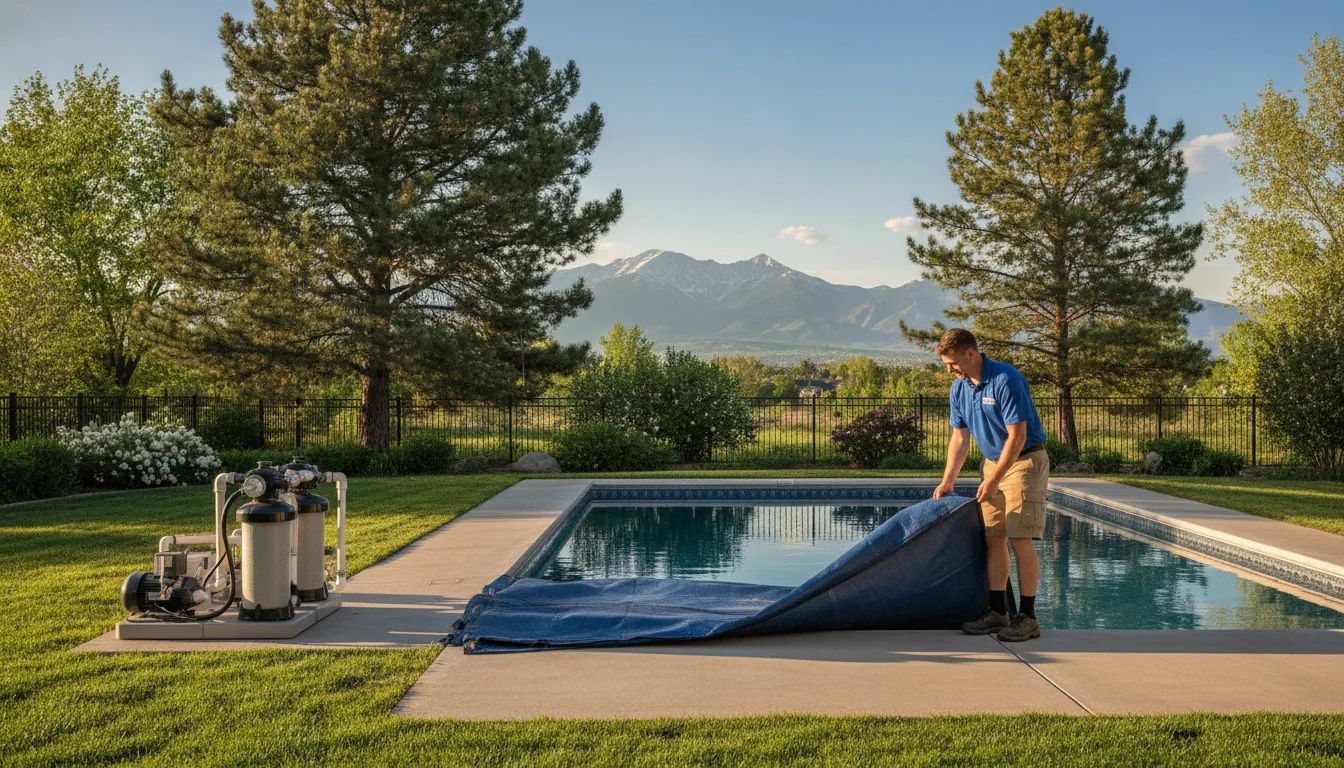
A professional opening is a managed transition from winter protection to safe, circulating pool operation. The work begins with an assessment of the pool cover and surrounding area, followed by removal of winter plugs and reinstallation of the fittings needed for normal circulation. This approach helps the technician identify problems early instead of treating the first startup as a trial-and-error project.
Preparation and equipment startup
Once the pool is prepared, the technician reassembles the pool equipment and starts the system. That can include pumps, filters, heaters, automation, timers, and related components, depending on the installation. The circulation system is then primed so water can move through the equipment properly. A system that will not hold a prime, starts noisily, or shows signs of leakage needs attention before normal operation continues.
The opening process also includes an inspection of the operating system. The goal is not simply to switch equipment on, but to confirm that the system is functioning as expected and to identify conditions that may require follow-up. If the inspection reveals a mechanical concern, pool equipment repair in Denver can be the appropriate next step.
Water preparation and final checks
After circulation is established, the water receives an initial chemical balance. This is particularly important in Colorado, where pool care can involve high-altitude chemistry, rapid temperature changes, hard-water staining, and other local conditions. The opening is complete when the equipment has been started, circulation has been primed, the water has received its initial balance, and the system has been inspected. Ongoing service can then continue with testing, balancing, chemical dosing as needed, and equipment checks.
Standard and Premium service are different scopes
Neptune Pools offers Standard and Premium opening options, and the distinction matters when planning the work. Standard includes removing winter plugs and reinstalling fittings, equipment reassembly and startup, circulation-system priming, initial chemical balancing, and a system inspection. It does not automatically include the more intensive surface and water preparation associated with Premium service.
Premium includes the Standard startup elements plus draining the water to the appropriate level, pressure washing surfaces, and chlorine treatment or acid washing when needed. It also includes complete chemical balancing and a final system inspection. In other words, pressure washing, draining, and acid washing should be understood as Premium-scope work, not assumed features of every professional opening. A technician can help match the service level to the pool's condition and the amount of preparation required.
How Are Equipment and Water Checks Handled?
Once the pool has been prepared for opening, the equipment and water systems need to be brought back into service in a controlled order. A professional opening is not simply a matter of turning on the pump. The technician reassembles the system, checks that fittings and connections are in place. Primes the circulation system, and confirms that water is moving before evaluating the rest of the equipment.
Starting the circulation and equipment
Priming helps establish water flow through the pump and plumbing after winterization. The startup process includes checking the pump, filter, heater, and related valves for normal operation. Neptune Pools works with variable-speed and single-speed pumps, gas heaters, heat pumps, solar systems, cartridge filters, sand filters, and DE filters. Automation systems, remote-management controls, and timers are also part of the equipment review when they are installed.
The inspection is meant to identify observable operating issues before the pool is handed back for regular use. The technician checks whether the circulation system maintains its prime. They also check the filter, heating controls, automation, and timers. This confirms that the major components respond normally before regular use. If equipment needs more than routine startup, pool equipment repair and servicing in Denver is the appropriate next step rather than guessing at a diagnosis.
Neptune technicians provide factory-trained service for major equipment brands and can source OEM parts or perform warranty-compliant installation and configuration when repair or replacement work is required. Those services are separate from assuming that every startup problem has the same cause, so the inspection findings should guide any recommendation.
Testing and balancing the water
Water testing follows the equipment check because circulation is needed to distribute treatment through the pool. The opening process includes chemical balancing, with the exact treatment based on the water readings and pool condition. Neptune's maintenance process includes water chemistry testing, balancing, chemical dosing as needed, and equipment inspection. Service reports record chemical readings and precise dosages, creating a useful reference for the next visit.
Chlorine and pH are central to safe pool water management. The CDC identifies them as a first defense against germs that can make swimmers sick and recommends regularly checking both in a residential pool. It lists a typical chlorine range of 1 to 4 parts per million and recommends pool pH from 7.0 to 7.8. Water outside an appropriate range can reduce disinfectant effectiveness, irritate skin and eyes, or contribute to equipment damage. See the CDC guidance on home pool water testing for the public-health recommendations.
Why Colorado conditions matter
Denver-area pools face conditions that can affect both startup and chemistry. High-altitude chemistry, rapid temperature changes, hard-water staining, freeze concerns, and intense ultraviolet exposure to equipment all deserve attention. A useful opening check accounts for those local factors instead of applying a generic checklist from another climate. Before the handoff, the technician can document the readings, equipment status. And any items that require follow-up so the homeowner knows what is operating and what still needs attention.
What Are the Signs You Need Professional Help?
A pool opening can look routine until one small problem turns into a complicated startup. Professional help is appropriate when the condition of the cover, fittings, equipment, or water is unclear. The goal is not to diagnose a failure from a quick visual check. It is to identify when continuing without an inspection could create safety, equipment, or water-quality concerns.
Cover and plumbing problems
Do not force a cover that is torn, heavily loaded, unusually tight, or stuck around the pool edge. A damaged cover may need careful removal and inspection before the pool is opened. The same caution applies to winter plugs and fittings. If a plug will not release with reasonable effort, a fitting is cracked, or a connection appears damaged, stop rather than applying more force. A technician can determine what needs service and what belongs in the normal opening process.
Startup behavior that needs inspection
Equipment deserves professional attention when the pump will not hold a prime, the system repeatedly loses prime, or water is visibly leaking around a connection. Also call for help if the pump, filter, heater, timer, or automation system makes an unusual noise, cycles unexpectedly, shows an error, or behaves differently after startup. These signs do not identify one specific fault on their own, but they do make a simple DIY checklist insufficient. Neptune supports equipment such as variable-speed and single-speed pumps, gas heaters, heat pumps, cartridge, sand, and DE filters, as well as automation and remote-management systems. When needed, route the issue to pool equipment repair in Denver rather than repeatedly restarting the system.
Water or Colorado-weather concerns
Persistent cloudy water, green water, heavy staining, or an uncertain chemical history are good reasons to have the water tested before swimming. Colorado pools can require attention to high-altitude chemistry, hard-water staining, rapid temperature changes, intense UV exposure, and freeze protection. If you are unsure which chemicals are present, how much to add, or whether the water is safe for swimmers, do not guess or mix products. The CDC identifies chlorine and pH as the first defense against germs in residential pools and recommends regular testing. For local context, review this guide to high-altitude pool water chemistry.
Freeze concerns also justify a professional assessment. If the pool or plumbing was not closed confidently, temperatures changed sharply. Or you see signs of cracked equipment or leaking lines, an opening inspection can establish what is safe to operate. A professional Denver pool opening service should document the condition, explain any recommended repair, and separate confirmed findings from possibilities. That gives you a safer handoff without turning the opening into an unsupported diagnosis.
Standard vs Premium Pool Opening Service
Neptune Pools offers two pool-opening packages for Denver Metro homeowners. Both are designed to move the pool from winter shutdown toward normal operation, but the Premium package adds more intensive water and surface preparation. The right choice depends on the condition of the pool when it is opened and how much cleanup it needs before regular circulation and maintenance begin.
| Service feature. | Standard, $549.99. | Premium, $749.99. |
|---|---|---|
| Remove winter plugs and reinstall fittings. | Included. | Included. |
| Equipment reassembly and startup. | Included. | Included. |
| Prime the circulation system. | Included. | Included. |
| Chemical balancing. | Initial balancing. | Complete balancing. |
| System inspection. | Included. | Final inspection included. |
| Drain water to the appropriate level. | Not included. | Included. |
| Pressure wash surfaces. | Not included. | Included. |
| Chlorine treatment or acid washing. | Not included. | Included if needed. |
When Standard may be the practical fit
Standard service covers the core opening work: removing winter plugs, reinstalling fittings, reassembling and starting the equipment, priming circulation, performing initial chemical balancing, and inspecting the system. It can suit a pool that is already in relatively manageable condition and does not require substantial surface cleaning or additional water treatment. Neptune lists this package at $549.99.
When Premium preparation is worth considering
Premium service is the more comprehensive opening option. In addition to the same core equipment and circulation steps, Neptune lists draining the water to the appropriate level. Pressure washing surfaces, and applying chlorine treatment and/or acid washing if needed. It also includes complete chemical balancing and a final system inspection. Neptune lists the Premium package at $749.99.
The distinction is not simply a higher level of chemical balancing. Premium adds physical preparation for surfaces and water, which may be appropriate when the pool needs more than a basic restart. If you are unsure which scope fits your pool, describe its condition when requesting a Denver pool opening service. Neptune can help match the package to the work required rather than assuming every pool needs the same opening process.
What Happens After the Pool Is Opened?
The opening appointment is the start of the swimming season, not the end of pool care. Once the cover and winter hardware are handled, the next priority is a clear handoff. You should know whether the water is being maintained, whether the equipment is operating as expected, and what needs attention during the weeks ahead.
Confirm the pool's operating status
Ask the service professional to explain what was observed during startup and inspection. The useful details include whether circulation is running, whether the water received its initial balance, and whether any equipment condition or maintenance issue was noted. This is especially important when a pool has been closed for months, because the first visit establishes a practical baseline for the season.
Ask which items were completed as part of the opening scope and which items, if any, were outside that scope. A clear distinction helps prevent confusion later. It also makes it easier to decide whether a separate repair or follow-up visit is appropriate instead of treating every observation as part of routine opening work.
Use the service report as your seasonal record
Neptune Pools service reports record chemical readings and precise dosages. They also include before-and-after photos and are emailed to customers within 24 hours. Keep that report with your household or property records. It gives you a written reference for the pool's condition at handoff, the chemistry at that visit, and any visual issue that may need to be monitored.
For an HOA or rental property, documentation also gives the person responsible for the pool a consistent record to review. Instead of relying on memory, ask for the report and note any recommended next action, such as continued observation, routine maintenance, or equipment servicing.
Plan recurring care after opening
Opening the pool does not replace regular cleaning and inspection. A maintenance visit includes surface skimming, wall and tile brushing, vacuuming, filter and skimmer-basket cleaning, water chemistry testing and balancing, chemical dosing as needed, and equipment inspection. Those recurring tasks help keep the initial opening work connected to day-to-day pool operation.
If you want the handoff to include a defined maintenance routine, review Denver pool maintenance plans and ask which service frequency fits your pool, property, and season.
Schedule seasonal opening service and ongoing pool care with Neptune Pools.
Frequently Asked Questions
When is the best time to schedule a pool opening in Denver?
Denver's active pool season generally runs from April through October, but the right opening date depends on weather, overnight temperatures, and your equipment's condition. Schedule before you plan to swim regularly, while allowing enough time to address water or equipment issues.
What is the difference between a pool opening service and a DIY checklist?
A professional opening covers more than removing a cover. The service can include removing winter plugs, reinstalling fittings, reassembling and starting equipment, priming the circulation system, balancing the water, and inspecting the system. The exact scope depends on the selected package.
What does Neptune's Standard pool opening service include?
The Standard package includes removing winter plugs and reinstalling fittings, equipment reassembly and startup, circulation-system priming, initial chemical balancing, and a system inspection. It is intended for pools that do not need the additional cleaning and treatment work included in Premium.
When should I request Premium opening service?
Premium may be appropriate when the pool needs more extensive preparation. It includes the Standard startup work plus draining water to the appropriate level, pressure washing surfaces. Chlorine treatment or acid washing if needed, complete chemical balancing, and a final system inspection.
What if the pump will not prime or the water stays cloudy?
Stop troubleshooting if equipment behaves unusually, leaks, or will not establish circulation. Persistent cloudy or green water, uncertain chemistry, or a suspected freeze-related issue is a good reason to request professional help. An inspection can determine whether the opening needs equipment repair, additional treatment, or follow-up maintenance.
Ready to Open Your Denver Pool?
Professional opening support can simplify the transition from winter protection to a clean, functioning pool, especially when equipment or water conditions need closer attention. Neptune Pools can help with seasonal pool care and the practical steps involved in getting your system ready for use. Book a professional Denver pool opening service or request seasonal pool care.
Related Blogs