HOA Pool Maintenance Denver: Requirements and Guide

Compliance failures can shut down your community pool and expose your HOA board to major legal liability. Keeping a facility safe and operational requires a strict combination of daily monitoring, expert equipment checks, and state-certified oversight. Schedule your HOA pool maintenance consultation with Neptune Pools today and ensure your community pool meets every Colorado requirement.
Expert hoa pool maintenance denver programs must follow strict Colorado regulations to ensure community safety and facility health. Colorado law requires that all semi-public pools have a certified pool operator (CPO) or aquatic facility operator (AFO) on staff or under contract. Community pools generally need professional service at least two to three times per week, with chemical levels tested twice daily. This steady schedule keeps the water balanced despite heavy use while catching pump issues before they lead to costly repairs. By keeping clear records of every chemical test and mechanical check, HOAs protect their pool and remain compliant with state health codes throughout the year.
Hoa Pool Maintenance Denver: What Are the Legal Requirements for HOA Pools in Denver?
Colorado law classifies most HOA and community pools as semi-public facilities that must follow strict state health codes under the Colorado Department of Public Health and Environment. Regulation 5-CCR-1003-5 governs every aspect of semi-public pool operation, from water quality standards to equipment specifications. Any board managing an HOA pool must understand these requirements or risk fines, closure orders, and liability exposure. Working with an experienced HOA pool maintenance provider ensures your facility stays compliant without placing the burden on volunteers or property managers.
What Are the Key Denver Pool Regulations at a Glance?
| Requirement | Colorado Standard | Denver HOA Implication |
|---|---|---|
| Certified operator | CPO or AFO on staff or under contract (5-CCR-1003-5-4.9) | Board must contract with CPO-certified provider; cannot rely on uncertified staff |
| Water turnover | Complete circulation every 6 hours minimum | Undersized pumps or clogged filters cause non-compliance; requires professional sizing |
| Chemical testing | Free chlorine 1-4 ppm; pH 7.2-7.8; alkalinity 80-120 ppm | Denver's high UV and altitude accelerate chlorine loss; testing twice daily required |
| Record keeping | Daily logs with timestamps, available for inspection | Digital logging systems reduce errors and ensure inspection readiness |
| Safety equipment | VGBA-compliant drain covers, emergency shut-offs, slip-resistant surfaces | Annual inspections verify compliance; repairs must use approved parts |
| Winterization | Line blowing, antifreeze, expansion plugs, cover securement | Denver's freeze-thaw cycles require monthly winter monitoring beyond standard closing |
This table summarizes the core compliance areas every Denver HOA board must track. Each requirement carries specific documentation and testing obligations that a professional maintenance provider handles as part of a comprehensive service plan. Boards that invest in CPO-certified service typically pass health inspections with fewer violations and avoid costly emergency repairs during peak season.
Colorado Regulations for HOA and Community Pools
Running a community pool requires careful attention to state regulations designed to protect swimmers and prevent health hazards. The Colorado health code treats most HOA pools as semi-public spaces that must meet specific certification, record-keeping, and water quality standards. Many boards contract with professional hoa pool maintenance denver providers to navigate these requirements effectively.
Certified Pool Operator Requirements
Colorado 5-CCR-1003-5-4.9 mandates that every semi-public pool must have a designated certified pool operator (CPO) or aquatic facility operator (AFO) on staff or under contract. This individual holds formal training in water chemistry, filtration systems, safety protocols, and state health code compliance. For most HOA boards, contracting with a professional pool service that employs CPO-certified technicians is the most practical path to compliance. A CPO understands Denver-specific challenges such as high-altitude water chemistry, rapid evaporation rates, and freeze-protection requirements that differ from lower-elevation regions.
Required Records and Inspection Logs
HOAs must maintain daily operational logs at the pool site that document every chemical test, equipment check, and maintenance action. Colorado regulations require these records to include chlorine or bromine levels, pH readings, total alkalinity, filter cleaning dates, and any repairs performed. Each entry must include a timestamp and the signature or initials of the operator who performed the test. These logs must be available for immediate inspection by county health officials at any time. Many Denver-area HOAs now use digital log systems provided by their maintenance provider to eliminate paperwork errors and ensure inspection readiness.
- Daily free chlorine (1-4 ppm) or bromine (2-6 ppm) readings
- pH levels maintained between 7.2 and 7.8
- Total alkalinity between 80-120 ppm
- Cyanuric acid (stabilizer) levels when using outdoor pools
- Filter pressure readings and backwash dates
- Temperature readings for spas and therapy pools
Water Turnover and Filtration Standards
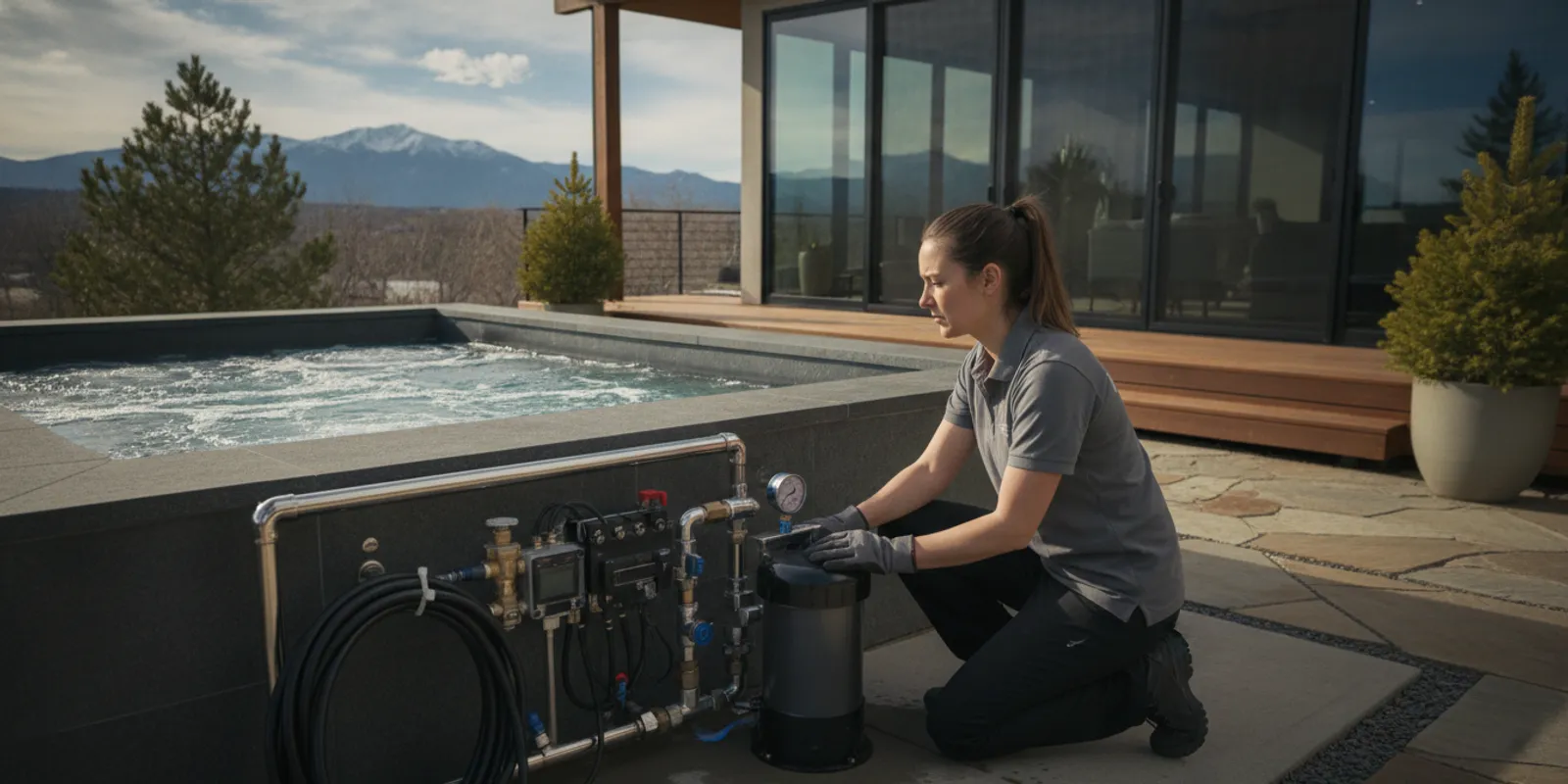
Colorado regulations require that all semi-public pools achieve a complete water turnover at least once every six hours. This means the filtration system must circulate a volume of water equal to the pool's total capacity within that timeframe. Pools with higher bather loads or those located at Denver's elevation may need faster turnover rates to maintain clarity and sanitation. Undersized pumps, clogged filters, or worn impellers can prevent a system from meeting this requirement, which is why regular pool equipment service is essential for compliance.
What Water Chemistry Standards Apply at Denver's Altitude?
Denver's elevation of 5,280 feet above sea level creates unique water chemistry challenges that standard pool management guides do not always address. Lower atmospheric pressure means water holds less dissolved oxygen, which affects how sanitizers perform. Higher UV radiation at altitude accelerates chlorine degradation, requiring more frequent testing and adjustment. In addition, Denver's naturally alkaline water source often requires pH correction before it reaches balanced levels. Professional hoa pool maintenance denver programs account for these variables by testing more frequently and adjusting chemical dosages to match local conditions. Regular professional pool maintenance ensures your water chemistry stays within state-mandated ranges year-round.

The CDC recommends maintaining specific chemical ranges for public and semi-public pools to prevent waterborne illness and equipment damage. At Denver's altitude, boards should expect to test water chemistry at least twice daily during peak season and adjust sanitizer levels upward to compensate for faster UV breakdown. A professional maintenance provider brings the testing equipment and chemical stock to keep your pool balanced without requiring board members to manage these technical details.
Equipment Inspections and Preventive Maintenance
Routine equipment inspections catch small problems before they become expensive emergencies. A comprehensive hoa pool maintenance denver plan includes weekly checks of pumps, filters, heaters, chemical feeders, and safety equipment. The CDC recommends that pool operators follow a preventive maintenance schedule that replaces wear components such as seals, gaskets, and sensors before they fail. This approach helps HOAs budget for predictable replacement costs rather than facing emergency repair bills.
Pump and Filter Maintenance
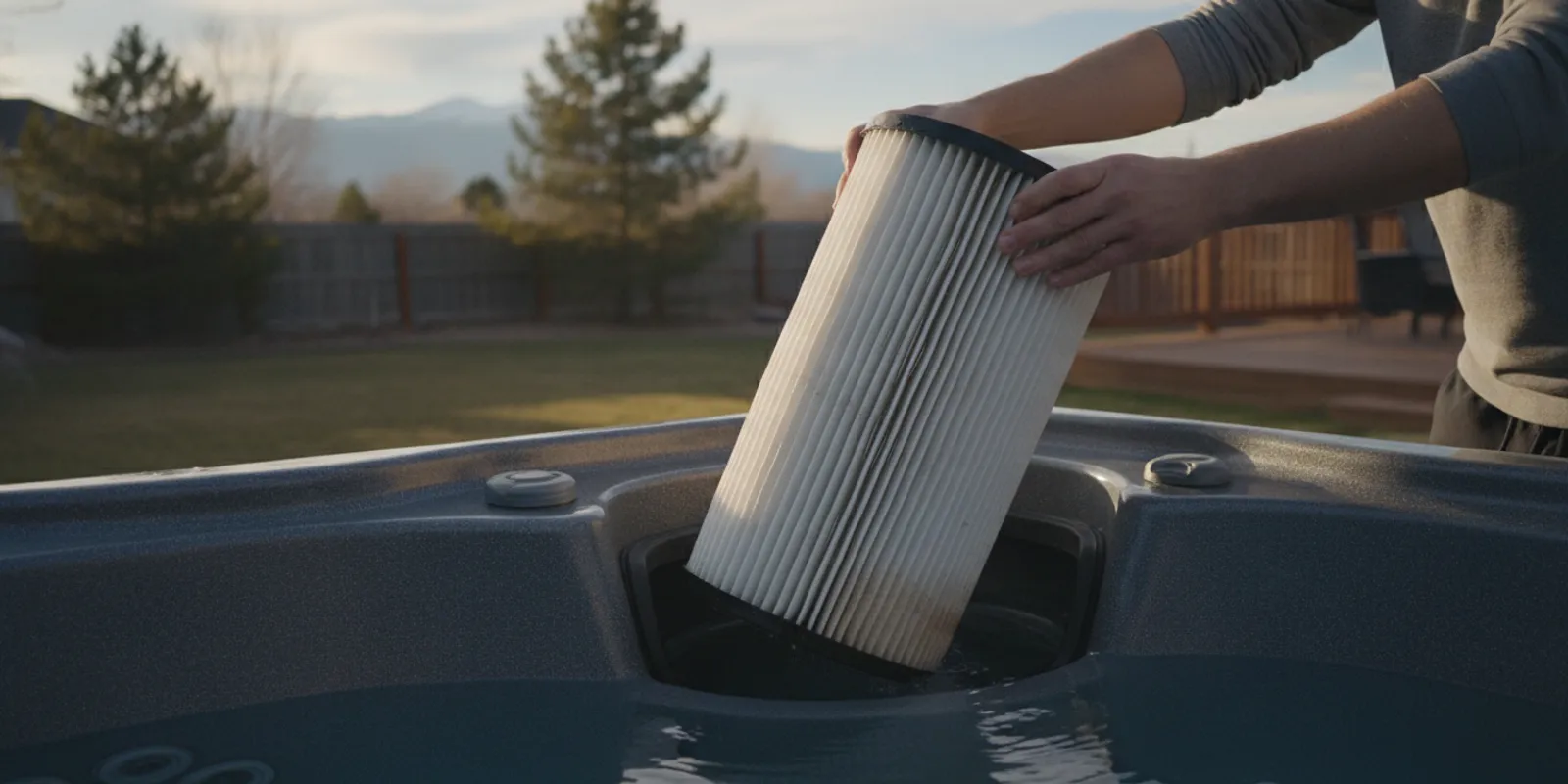
The circulation pump is the heart of any pool system. A pump that loses prime, runs dry, or operates with a clogged impeller cannot meet Colorado's six-hour turnover requirement. Weekly visual inspections should check for unusual noise, vibration, or leaks. A sudden change in pump pressure often indicates a clogged impeller or dirty filter that needs immediate attention. Filter media -- whether sand, cartridge, or diatomaceous earth -- must be cleaned or replaced according to manufacturer specifications. Most Denver-area community pools benefit from a mid-season deep clean that removes accumulated oils and minerals that standard backwashing cannot eliminate. A professional maintenance provider can identify early warning signs during routine visits and address them before a breakdown occurs.
Safety Equipment and Heater Checks
Colorado regulations require that all semi-public pools maintain functioning safety equipment including drain covers compliant with the Virginia Graeme Baker Pool and Spa Safety Act. Emergency shut-off switches, handrails, and slip-resistant surfaces. Regular inspections should verify that drain covers are securely fastened and free of cracks, that emergency equipment is accessible, and that pool lighting operates correctly. Pool heaters in Denver work hard year-round, even during cool summer evenings. Annual heater inspections should include burner cleaning, heat exchanger inspection, and gas pressure verification to ensure efficient operation and prevent carbon monoxide risks.
How Should HOAs Winterize Their Community Pool in Denver?
Winterization is one of the most critical tasks in Denver's climate, where freeze-thaw cycles can damage pool plumbing and equipment within hours. Proper winterization goes beyond covering the water surface; it requires systematic preparation of every component that could be damaged by freezing temperatures. Working with a professional hoa pool maintenance denver provider ensures that winterization follows best practices for Colorado's high-altitude conditions.
Freeze Protection and Winter Closing Procedures
Closing a pool at Denver's altitude requires several critical steps that differ from standard winterization procedures found in national guides. Technicians must blow out all plumbing lines using a high-volume air compressor to remove standing water, then add non-toxic pool antifreeze to remaining low points. The water level must be lowered below the skimmer and return lines, and expansion plugs installed in all open fittings. The cover must be secured against Denver's strong winter winds, and a cover pump should be installed to prevent rainwater accumulation. Monthly winter visits should check water levels beneath the cover, inspect cover condition, and verify that no standing water has accumulated on the cover surface.
Spring Opening: Restarting Your Community Pool
Opening a Denver community pool for the summer season requires careful attention to equipment that has sat idle through winter. The process begins with removing and cleaning the cover, then inspecting all plumbing connections for freeze damage. The pump and filter system should be reassembled with fresh lubricant on gaskets and o-rings. Filling the pool and establishing proper water chemistry typically takes several days as the heater, filter, and chemical feeder systems are gradually brought back online. Colorado law requires a full water turnover and passing water quality tests before the pool opens to residents. Scheduling spring opening services with a professional provider ensures your pool is ready for the first warm weekend without delays.
Frequently Asked Questions About HOA Pool Maintenance in Denver
Does Colorado require a certified pool operator for HOA pools?
Yes. Colorado regulation 5-CCR-1003-5-4.9 requires every semi-public pool, including HOA and community pools. To have a certified pool operator (CPO) or aquatic facility operator (AFO) on staff or under contract. Most HOAs meet this requirement by contracting with a professional pool maintenance company that employs certified technicians.
How often should an HOA pool be serviced in Denver?
Community pools in Denver typically need professional service two to three times per week during the swimming season. Chemical levels should be tested at least twice daily, with adjustments made as needed. During the off-season, monthly winterization checks are recommended to protect equipment from freeze damage.
What records must an HOA keep for pool inspections?
HOAs must maintain daily logs documenting chemical test results (chlorine, pH, alkalinity), filter cleaning dates, equipment repairs, and any safety inspections. These records must be available at the pool site for immediate review by county health inspectors. Digital record-keeping systems offered by professional maintenance providers simplify compliance.
What happens if an HOA pool fails a health inspection?
An HOA pool that fails inspection may be ordered closed until violations are corrected. Repeat violations can result in fines and increased scrutiny from health authorities. Working with a CPO-certified maintenance provider significantly reduces the risk of inspection failures by ensuring consistent water quality and proper record-keeping.
Can an HOA use a regular pool service for community pool maintenance?
Only if the service provider employs or contracts with a certified pool operator (CPO). Standard residential pool services may not meet Colorado's semi-public pool requirements. HOAs should verify that their maintenance provider has CPO certification on staff and experience with community pool regulations before signing a contract.
Ready to Ensure Your HOA Pool Meets Every Colorado Requirement?
Neptune Pools has served Denver Metro communities since 1982, providing CPO-certified maintenance, repair, and compliance support for HOA and community pools. Our team handles everything from daily chemical testing and equipment inspections to winterization and spring opening so your board can focus on serving residents rather than managing pool operations. Contact Neptune Pools today to schedule a free consultation and site assessment for your community pool.
Related Blogs