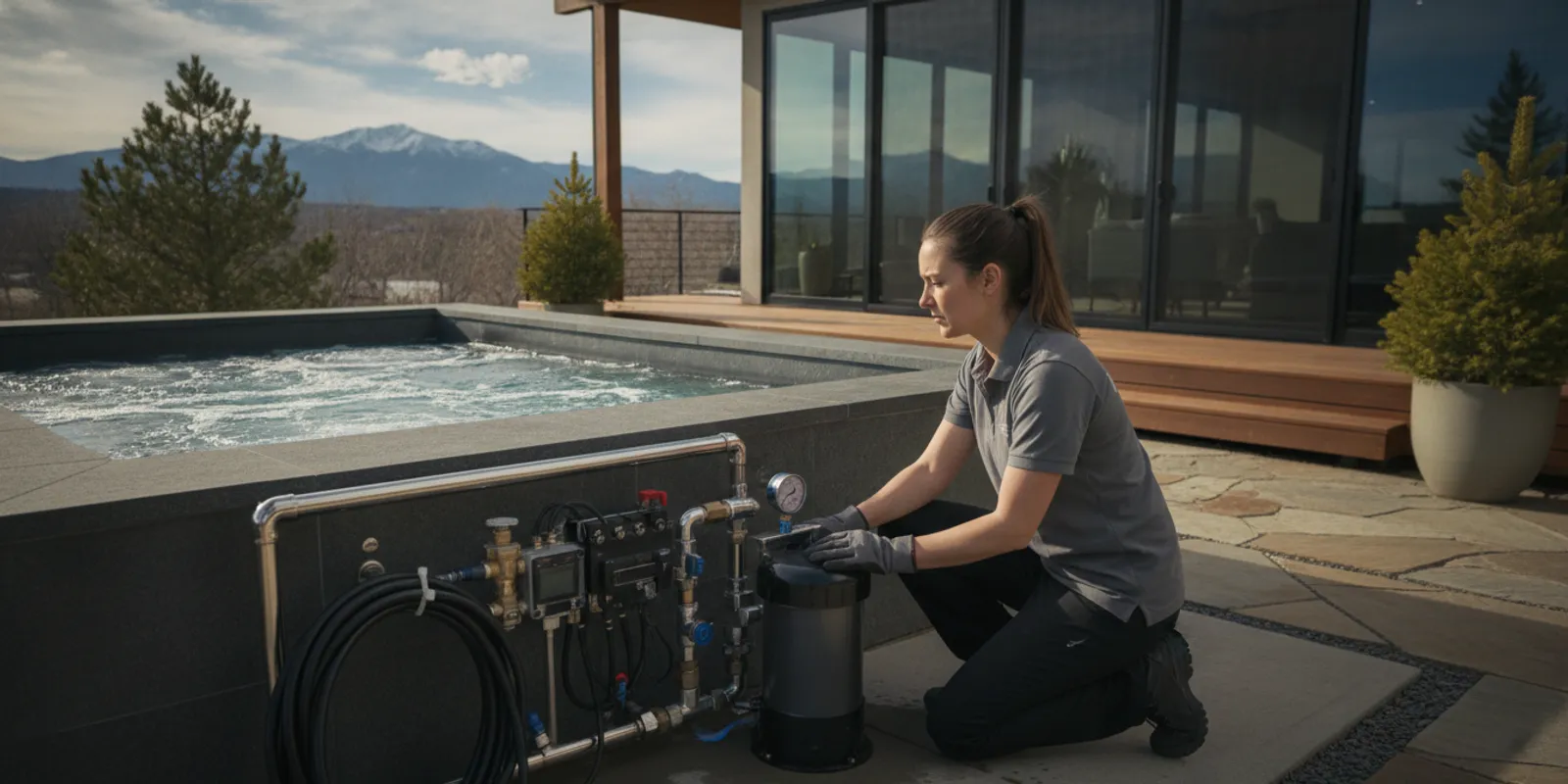
Hot Tub Filter Replacement: Denver Selection and Installation Guide
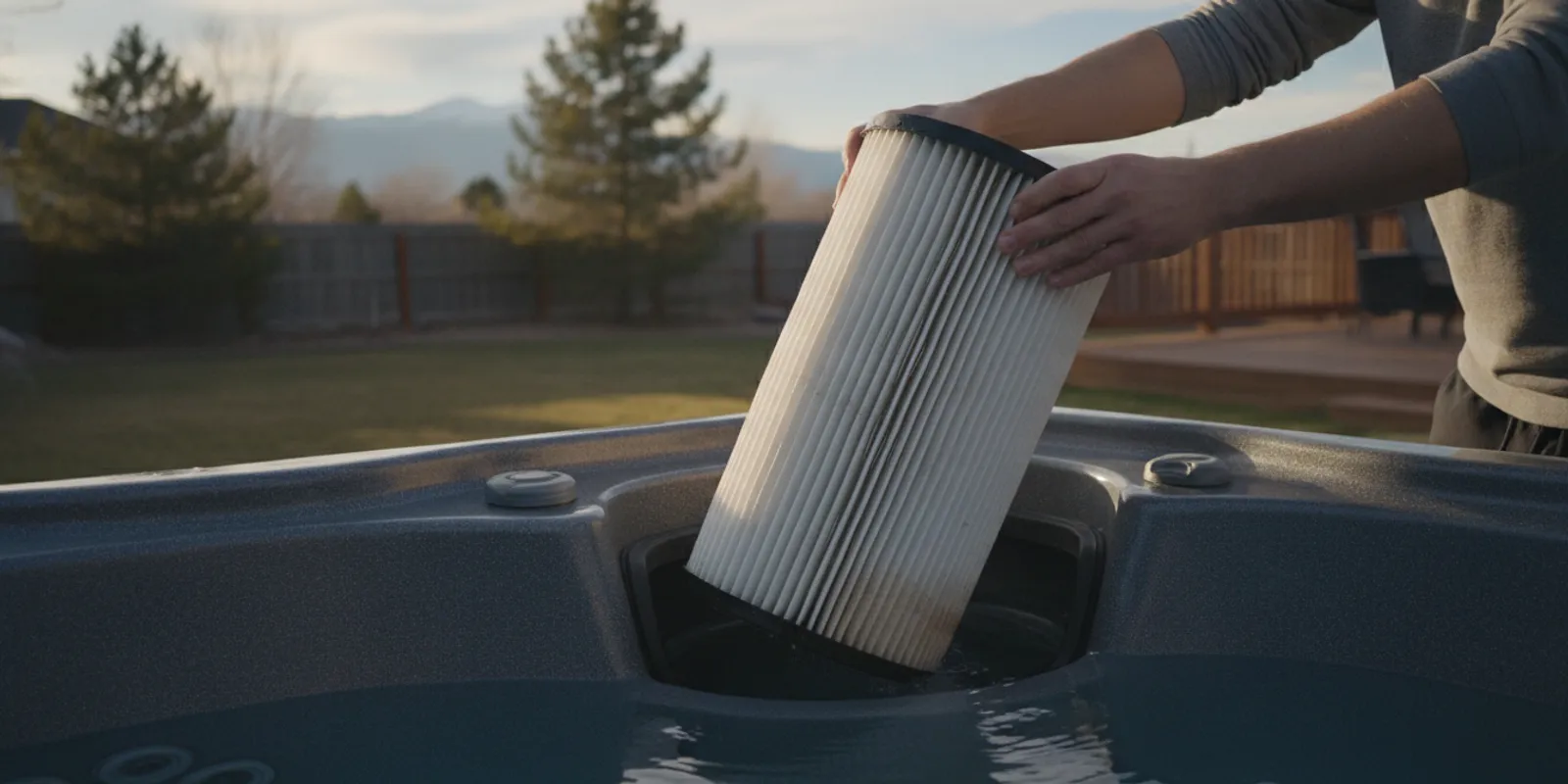
Hot tub filter replacement is straightforward when you match the cartridge to the spa and follow the equipment maker’s instructions. The challenge is that filters that look alike can differ in length, diameter, end style, thread, and filtration area. A close-but-wrong fit can leave gaps, restrict water flow, or prevent the filter from seating correctly. Use this guide to identify your current filter, confirm a replacement, and decide when a cartridge needs more than another rinse.
Ask Neptune Pools for help identifying your spa filter.
What does a hot tub filter do?
A hot tub filter catches suspended particles as water circulates through the spa’s filtration system. Most residential spas use a pleated cartridge housed in a filter compartment. The pump draws water through the cartridge, and the pleated surface provides area to collect debris such as lint, hair, and other particles. The filter is one part of water care; it does not replace testing, sanitation, or routine cleaning.
Hot tub filter cartridges are not the same as drinking-water filters. For example, a Harvard case-study summary on safe home drinking water describes a filter-pitcher program and replacement cartridges, a different application from spa circulation. Use the spa and filter manufacturer’s specifications—not drinking-water filter guidance—to select a replacement.
A correctly installed filter needs to fit the compartment and work with the system’s intended flow. A cartridge that is too tall, too wide, or configured with the wrong connection may not seat or seal. Even if it can be forced into place, do not operate the spa with an ill-fitting cartridge. Confirming the exact specification is safer than relying on appearance alone.
How can you identify the correct replacement?
Start with the information attached to the spa, not a guess based on the old cartridge’s general shape. Check the owner’s manual, the filter-compartment label, and the cartridge itself. If the printed part number is readable, record it and verify that it is listed for your spa model. Manufacturers may revise parts or list compatible replacements, so confirm the current match rather than assuming an old label tells the whole story.
- Find the spa make and model. Look for the identification plate on the cabinet or equipment area, and note the model exactly. If the spa has been repaired or its filter housing changed, mention that when checking compatibility.
- Record the cartridge markings. Photograph or write down the brand, part number, and any model or series printed on the end cap. A clear photo of both ends and the side label can help a supplier identify it.
- Measure the old filter if needed. Record the overall length, outside diameter, and the dimensions and style of both end caps. Note whether an end is open or closed and whether it has a threaded or other connection. Measure the cartridge itself, not a compressed or distorted section.
- Check the housing connection. Confirm how the cartridge attaches and whether the spa uses a retaining nut, standpipe, or other fitting. The connection must match the housing, not just the filter’s outer dimensions.
- Verify the listing before ordering. Match the part number or dimensions against the spa model and the supplier’s compatibility information. If the model and cartridge markings conflict, pause and ask the spa maker or a qualified service provider.
Measurements are a useful cross-check, but they do not always reveal the cartridge’s filtration characteristics or precise connection design. Two filters can share similar dimensions and still not be interchangeable. Do not trim pleats, remove an end cap, add an improvised adapter, or force a cartridge into the housing to make it fit.
Which details matter when comparing filters?
Use the product listing and your spa documentation to compare the details that affect fit and operation. The table below is a checklist, not a substitute for confirming compatibility with the spa model.
| Detail to check | What to verify | Why it matters |
|---|---|---|
| Part number | Exact cartridge number or a manufacturer-approved replacement | Most direct way to confirm the intended filter when markings are available. |
| Length and diameter | Measurements match the cartridge specified for the spa | A mismatch can keep the filter from seating or fitting inside the compartment. |
| End-cap design | Open or closed end, shape, and any threaded connection | The end must align with the housing and its seal or attachment point. |
| Spa compatibility | Model and equipment configuration shown in the maker’s documentation | A visually similar cartridge may not be approved for your system. |
| Filter condition | Pleats, end caps, core, and seals are intact | Damage can compromise fit or filtration even when the part is the correct model. |
Be cautious with vague listings that say only “fits most spas.” Ask for the specific compatible model or part number. If the original part number is unavailable, compare all dimensions and connection details and confirm the replacement with a knowledgeable supplier. Save the packaging or product details until the new cartridge has been installed and checked for a proper fit.
When should you replace a hot tub filter?
There is no single replacement interval that fits every spa. Follow the filter maker’s schedule and inspection advice, then account for how often the spa is used, how many bathers use it, and how much debris reaches the water. A heavily used spa or one exposed to more outdoor debris may need attention sooner than a lightly used, sheltered spa. Cleaning can extend a cartridge’s useful service, but it cannot repair worn or damaged media.
Inspect the cartridge during routine care. Replacement is appropriate when you find torn or flattened pleats, a cracked end cap or core, a damaged seal, or a connection that no longer holds securely. A cartridge may also be at the end of its useful life if it remains visibly dirty after proper cleaning or the system continues to show a filtration or flow concern despite correct installation and water care.
- Replace a damaged cartridge. A tear, broken core, or failed end cap is not something to patch for continued use.
- Investigate repeated clogging. If the filter loads quickly again after cleaning, consider spa use, debris, water-care conditions, and the prescribed cleaning method instead of repeatedly substituting new cartridges without finding the cause.
- Do not treat cloudy water as proof the filter alone is bad. Cloudiness can have several causes. Check water-care readings and the overall circulation system as well as the cartridge.
- Use manufacturer guidance for timing. A calendar interval is a starting point, not a universal promise of cartridge life.
Denver-area owners should follow the spa maker’s water-care directions and adjust their inspection routine to actual use and local conditions. Outdoor spas can encounter changing weather and debris, while water-care needs vary by fill water, bather load, and spa operation. Avoid compensating for an uncertain water issue by changing cartridge type or adding chemicals without checking product directions.
How do you install the new cartridge?
Filter compartments vary, so consult the spa manual before opening the housing. The following sequence is a general guide. If your manual calls for a different procedure, use its instructions.
- Turn the spa off. Use the controls to stop operation, then isolate power as directed by the manufacturer before accessing the filter area. Do not reach into moving equipment or work around exposed electrical components.
- Open the correct access point. Remove the cover or retaining pieces as described in the manual. Keep small hardware together and note how the pieces were arranged.
- Remove the old cartridge carefully. Loosen the retainer or unscrew the filter only in the intended direction. Do not use tools in a way that can crack the housing or damage threads.
- Check the compartment. Remove loose debris that is accessible without dismantling plumbing. Inspect the visible seating surface and connections for damage. If you see a crack, damaged thread, or persistent debris beyond reach, stop and arrange service.
- Compare old and new parts. Check the part number, dimensions, end caps, and connection. A mismatch is a reason to stop—not a reason to push harder.
- Seat the replacement as intended. Install it by hand where the manual directs. Make sure it sits squarely and any retainer is secure without overtightening.
- Close the compartment and restore power. Follow the maker’s restart instructions. Observe the spa for abnormal sounds, leaks, error messages, or a circulation problem.
If you are uncertain how to isolate power safely, cannot reach the filter without disturbing equipment, or find damaged housing parts, do not continue the job. A straightforward cartridge change should not require forcing fittings or opening electrical enclosures. For broader hot tub care, Neptune Pools also offers spa services and guidance on cleaning a hot tub.
What can cleaning fix—and what can it not fix?
Routine rinsing can clear loose material from between the pleats. Use a garden hose or the cleaning method specified by the filter maker, directing water through the pleats without crushing them. Separate pleats gently as needed to rinse debris from the folds. Allow the cartridge to drain as directed before reinstalling it.
Do not assume that a stronger cleaning method is better. Avoid a pressure washer, dishwasher, household cleaners, or soaking chemicals unless the filter manufacturer specifically approves the product and process. The wrong method can damage the media, leave residues, or weaken the cartridge. A filter-cleaning product must be used according to its label, and it should not be mixed with other products.
Cleaning will not restore a torn pleat, cracked core, distorted end cap, or failed seal. It also will not correct a wrong-sized cartridge, an obstructed plumbing line, or a mechanical problem with the circulation system. If careful cleaning and correct installation do not resolve the concern, investigate the system rather than repeatedly cleaning or replacing filters without a diagnosis. For symptoms involving jets or water flow, see the related hot tub repair planning guide or request an assessment.
Request help with spa filtration or routine spa care.
When should you call for service?
Get professional help if the replacement will not seat, the housing or threads appear damaged, the filter compartment leaks, or the spa continues to report a flow issue after you have verified the correct cartridge and followed the restart steps. Also stop if access requires electrical work or plumbing disassembly. These signs can point to a problem beyond the cartridge, and continued operation may make diagnosis harder.
Before arranging help, note the spa make and model, filter part number, what you observed, and what you have already tried. A photo of the cartridge label and filter compartment can be useful. Tell the technician whether the issue began after a filter change and whether the filter is new or cleaned. Neptune Pools provides equipment repair and servicing, and owners can also review the company’s pool and spa care FAQs for service information.
If you are comparing hands-on care with professional support, consider the spa’s condition and the task involved. A cartridge change may be manageable when the correct part is known and access is simple. More involved cleaning or repair concerns may call for a trained technician; Neptune Pools explains what to expect from hiring a spa cleaner. Avoid running a spa with a missing or improperly seated filter unless the manufacturer’s instructions explicitly say otherwise.
Contact Neptune Pools to discuss a filter or circulation concern.
Frequently Asked Questions
Can I use a filter that looks the same as my old one?
Not without checking compatibility. Confirm the part number or verify the spa model, measurements, end-cap design, and connection against the manufacturer’s specifications. Similar appearance alone does not confirm a proper fit.
Can I run a hot tub without its filter while I wait for a replacement?
Follow the spa manufacturer’s instructions. Do not assume it is safe to operate without the cartridge; the filter is part of the designed circulation system. If the correct replacement is not available, ask the manufacturer or a qualified service provider what to do for your particular spa.
Does a new filter solve cloudy water?
Not necessarily. Cloudy water can relate to water balance, sanitation, circulation, debris, or filtration. Check the water-care instructions and readings, verify that the cartridge is correct and installed properly, and seek help if the cause is unclear.
How often should I clean or replace the cartridge?
Use the schedule and condition checks provided by the spa and filter makers. Usage, debris, and water-care conditions affect how quickly a cartridge needs attention. Replace it if it is damaged or no longer performs after proper cleaning, rather than relying on one interval for every spa.
What information should I have before buying a replacement?
Have the spa make and model, cartridge part number or clear photos, measurements, and details of the end-cap connection. Confirm compatibility with the manufacturer or supplier before installing the new part.
Taking time to verify the cartridge before installation can prevent a poor fit and make it easier to identify when the real issue lies elsewhere in the spa system.
Related Blogs