Hot Tub Jet Replacement Cost Denver: Repair Planning Guide

If one hot tub jet has stopped flowing, feels weak, or leaks around its fitting, the repair may be limited to a replaceable jet. The symptom may point to a bigger issue. A hot tub jet replacement cost Denver estimate depends on the jet design, the availability of a matching part, and how easily a technician can reach the assembly. It also depends on whether the plumbing or pump needs attention. This planning guide explains what to check, what affects an estimate, and how to avoid paying to replace the wrong part.
Request help diagnosing your spa jet.
What does hot tub jet replacement involve?
A spa jet is not always a single, universal part. Depending on the model, a homeowner's "jet" may refer to the removable insert, the visible face, a retaining ring, or a body mounted through the shell. The connected plumbing behind it may also require attention. Some jets can be removed from inside the tub; other repairs require access behind or beneath the shell. A repair estimate should identify which component has failed rather than simply say "replace jet."
The first question is whether the defect is actually at the jet. A loose or damaged insert can sometimes be corrected without disturbing the plumbing. A cracked jet body, failed seal, or leak at the connection may require a more involved repair. If several jets are weak at once, replacing one insert is unlikely to address the cause. The circulation system, water level, valves, filter condition, pump, and plumbing all deserve consideration.
Hot tub designs vary by make, model, age, and production revision. Even jets that look alike can differ in diameter, thread or locking style, nozzle pattern, and connection. A part that nearly fits is not necessarily compatible. Before ordering anything, record the spa make and model, take clear photos of the jet face and surrounding area, and check whether the manufacturer or service documentation identifies the part.
How does hot tub jet replacement cost Denver vary by scope?
There is no reliable flat price for every spa jet repair. The final amount is usually a combination of the correct replacement component, labor to access and fit it, diagnostic time, and any related repair discovered during inspection. Denver-area estimates also depend on the spa's installation: a freestanding unit with accessible panels is different from one enclosed tightly by a deck or built-in surround.
| Cost factor | What can make it simpler | What can add work |
|---|---|---|
| Jet part and compatibility. | Exact make/model and a readily available matching insert. | Unidentified spa, discontinued part, or a jet assembly that must be matched by measurements and design. |
| Access to the repair. | Removable jet serviceable from inside the tub. | Jet body or seal requiring access behind the shell or through a restricted equipment area. |
| Condition around the jet. | Intact fitting and sound surrounding material. | Cracked body, damaged seal, mineral buildup, or evidence of a leak that needs further tracing. |
| System diagnosis. | One isolated jet with normal flow elsewhere. | Multiple weak jets, abnormal pump noise, air in the lines, or symptoms that change across operating modes. |
| Scheduling and scope. | Clearly documented issue and a repair that can be completed in one visit. | Additional testing, a second visit for a special-order part, or separate pump and plumbing work. |
Parts are only one part of the price. A simple, accessible insert change can involve less labor than replacing a body behind the shell, even if the replacement part itself is inexpensive. A leak that appears near a jet can also originate at a nearby union, hose, manifold, or another connection. Finding the source before opening the spa or replacing components is important because water can travel along surfaces and make the apparent leak point misleading.
When you compare estimates, ask whether the price includes diagnosis, the specified part, installation, any water-level or operational test, and cleanup. Ask what is excluded and whether the technician will pause for approval if inspection reveals a separate plumbing or pump issue. A quote that lists the specific part and the reason it is needed is more useful than a bare "jet repair" line.
How can you tell whether the jet itself has failed?
Start with a careful observation, not a disassembly. Note whether the problem affects one jet or several, whether the jet is visibly loose or damaged, and whether there is water outside the spa. Check the water level and confirm the spa is operating in the mode you expect. If your owner's manual explains how to adjust that jet's flow or direction, follow those instructions; some spa jets can be turned down or closed by design.
- One jet is weak while nearby jets work normally: A blocked or damaged insert, a closed or partly adjusted jet, or an issue in that branch may be involved.
- Several jets are weak at the same time: Consider shared causes such as a dirty or obstructed filter, a valve position, or low water level. Air in the system or a pump problem may also be involved, so do not assume multiple jets failed together.
- A jet is loose, visibly cracked, or will not stay in place: The insert or retaining arrangement may be damaged, but confirm the part style before ordering a replacement.
- Water appears around one jet or beneath the spa: Shut down the spa if the leak is significant or near electrical equipment, and arrange an inspection. The visible wet area does not by itself prove that the jet body is the source.
- The pump sounds different or flow surges: Treat this as a system symptom. A jet insert alone may not explain unusual pump noise, repeated loss of prime, or changing flow across multiple outlets.
Do not run the pump when the water is below the required operating level, and do not reach into equipment near energized electrical components. If you are uncertain how to isolate power safely, leave the equipment closed and get qualified help. The U.S. Consumer Product Safety Commission provides general product-safety information at CPSC.gov; for a repair involving electrical equipment or a substantial leak, rely on a qualified spa technician rather than an improvised fix.
When is the problem likely bigger than one jet?
A single jet can fail on its own, but patterns across the spa help separate an isolated part issue from a broader circulation or plumbing concern. If most or all jets have weak flow, look beyond individual nozzles. A dirty filter can restrict flow, and a low water level can interfere with circulation. A valve may be set incorrectly, or the pump may not be moving water as it should. The exact checks vary by spa, so use its manual and avoid changing settings you do not understand.
Air-related symptoms also merit attention. Air can enter a system through a condition that affects suction or plumbing, and air bubbles at returns may have more than one cause. If flow starts and stops or the pump loses prime, stop treating the problem as just a cosmetic jet replacement. A new grinding, rattling, or high-pitched sound also warrants broader diagnosis. Continued operation under abnormal conditions may make diagnosis harder or worsen damage.
A leak near a jet can call for a different kind of repair than changing a removable insert. The technician may need to inspect the jet body, a gasket or seal, the connected line, and nearby fittings. If a shell-side connection is inaccessible from the equipment compartment, access requirements can affect labor and planning. Do not cut into a deck or spa cabinet to reach a suspected leak before the source and access plan are confirmed.
For broader symptoms, a professional spa service assessment can help determine whether the issue is a jet, circulation, leak, or equipment repair. Neptune Pools provides spa care in its Denver Metro service context; the appropriate scope depends on the specific spa and what an inspection finds.
Have a broader spa symptom? Request a service assessment.
How do you find the correct replacement jet?
Compatibility is more than matching the outside diameter. Jets can vary by manufacturer, series, connection method, nozzle configuration, and the body installed in the shell. Some replacement inserts are designed to fit only a particular jet body. Installing a close-looking but incompatible piece can leave it loose, restrict flow, or fail to lock in place.
- Identify the spa. Photograph the manufacturer label and record the model and serial information if visible. Labels may be on the cabinet, equipment area, or another location specified by the owner's manual.
- Photograph the jet. Take a straight-on picture and a side view if the piece is already removed safely. Include a ruler for scale, but do not force a stuck insert or remove a part while the system is running.
- Record the symptoms. Note which jets are affected, whether the problem changes with pump speed or a control setting, and whether you see a leak, unusual noise, or air bubbles.
- Check documentation. Use the spa manual, manufacturer part information, or a technician's identification. If the spa has been modified or the label is unreadable, photos and measurements may help but are not a guarantee of fit.
- Confirm the scope before purchase. Ask whether the repair needs the insert only, the body and seal, or investigation of connected plumbing. Confirm returnability before buying a part that has not been positively matched.
If a component has been discontinued, a technician may need to identify a compatible replacement or explain what adjacent parts must also change. Avoid relying on a generic listing that promises a universal fit without verifying the installed body. An accurate identification up front can prevent paying twice for shipping, labor, or a part that cannot be used.
Can you replace a hot tub jet yourself?
Some removable jet inserts are intended to be serviced by an owner. If the manual describes the process and the part is confirmed, a careful replacement may be straightforward. Turn the spa off according to the manufacturer's instructions, keep the work area safe, and do not force the jet. Designs differ, so twisting, prying, or using tools without model-specific directions can damage a retaining feature or the body behind the shell.
Professional diagnosis is a better choice when the jet is cracked at the shell, a leak is present, the part will not release, several jets have changed, or pump behavior is abnormal. Repairs involving concealed plumbing, electrical equipment, or a leak near the equipment compartment should not be approached as a simple insert swap. A technician can inspect the system as a whole and confirm operation after the repair.
For Denver-area owners, seasonal temperature swings are also a reason to avoid leaving an unresolved leak or circulation fault unattended. Cold-weather risk depends on the spa, its installation, operating condition, and the forecast; there is no single winter action that fits every unit. If a spa is losing water or cannot circulate normally, ask a qualified professional how to protect that specific system rather than assuming it is safe to keep operating or to shut down without preparation.
What should a Denver estimate include?
A useful estimate should make the repair understandable before work begins. Ask the service provider to distinguish the confirmed fault from possibilities still being investigated. If the technician cannot identify the exact part until opening or testing the spa, the estimate should explain that uncertainty and the approval process for additional work.
- Diagnosis: What observations or tests support the conclusion that the jet has failed?
- Part identification: What component will be replaced, and how was compatibility confirmed?
- Access and labor: Does the work require access behind the shell, cabinet removal, or additional disassembly?
- Related findings: Is there evidence of a leak, damaged fitting, pump concern, or another issue outside the quoted jet work?
- Testing: What will be checked after installation, such as fit, visible leakage, and return flow under normal operating conditions?
- Approval: Will the technician contact you before adding parts or labor beyond the agreed scope?
Photos can speed up the initial conversation, but they do not replace an on-site diagnosis when the body or plumbing is concealed. Share the spa model, the location of the affected jet, what changed, and whether the spa is currently leaking or making unusual sounds. That information helps a service provider understand whether the request sounds like a part match, a leak assessment, or a broader equipment visit.
If your spa needs more than jet work, Neptune Pools also offers equipment repair and servicing. For recurring care and maintenance planning, see the company's pool and spa maintenance information. Those pages can help you describe the kind of service you are seeking, while the actual repair recommendation should be based on your spa's condition.
How can you keep a small jet issue from becoming a larger repair?
Respond to changes early. Keep a short note of when the problem began, which outlets are affected, and whether it appeared after cleaning, a control adjustment, or other work. Take a photo of any visible crack or wet area. This record can help distinguish a persistent fault from a temporary setting or flow change and may reduce repeated troubleshooting.
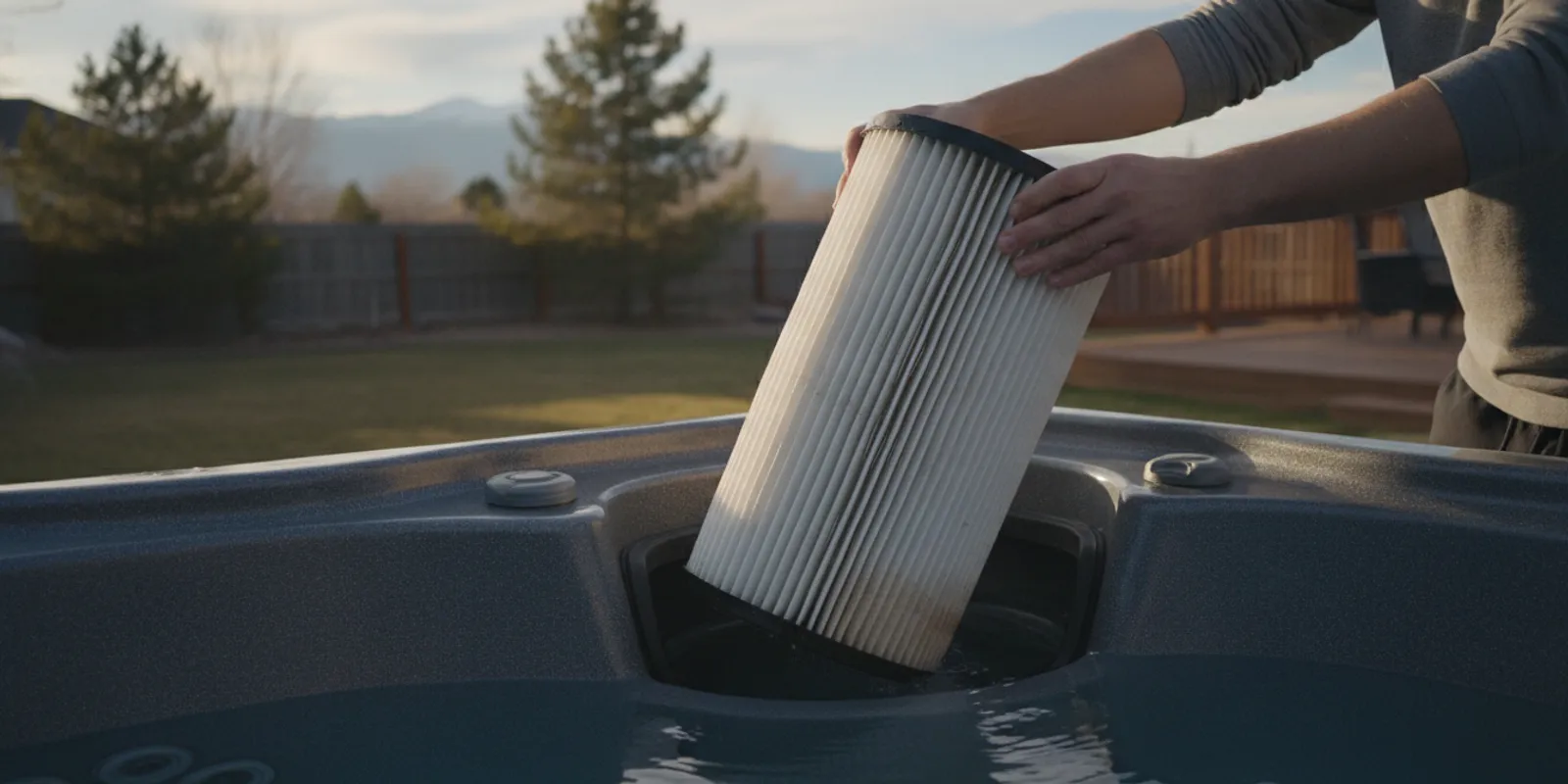
Follow the spa manufacturer's schedule for water care and filter cleaning. A filter that is neglected or improperly installed can affect system performance, but do not assume a filter is the only cause when flow is weak. Check that the water level remains within the recommended range, and do not operate with a visible leak or an unfamiliar pump sound. If cleaning the filter or correcting a setting does not restore normal behavior, stop replacing parts by guesswork.
For service planning in the metro area, Neptune Pools' service-area information outlines its Colorado coverage. If you need to explain the symptoms or request an inspection, use the contact page and include the spa details, photos, and whether the issue involves one jet or multiple outlets.
Arrange a spa service evaluation for your jet or circulation issue.
Frequently Asked Questions
How much does it cost to replace one hot tub jet in Denver?
There is not one dependable price for every jet. The amount depends on whether the failed piece is a removable insert or a body behind the shell, plus part availability, compatibility, access, labor, and any plumbing or pump work found during diagnosis. Request an estimate tied to the specific part and scope rather than relying on a generic price for "a jet."
Can I replace only the visible jet insert?
Sometimes. If the insert is designed to be removable, the body is intact, and the replacement is confirmed for that spa, only the insert may be needed. A crack, leak, damaged retaining feature, or incompatible insert can require more than a visible-part swap. Follow the spa manual and do not force a part that resists removal.
Why are several jets weak at once?
Multiple weak jets more often call for checking shared circulation factors than replacing several jet inserts immediately. Water level, filter condition, valves, air in the system, and pump operation can all be relevant. The right checks depend on the spa; if the pump is noisy or flow is surging, stop using it until the cause is assessed.
Will a replacement jet fix a leak?
Only if the leak comes from the component being replaced and the repair restores the seal. Water near a jet can also come from a body, gasket, nearby plumbing connection, or another point above it. A technician should identify the leak source before parts are ordered or access work begins.
What information should I have before requesting service?
Provide the spa make and model if available, photos of the affected jet and equipment label, a description of which jets are weak, and whether you see water loss, air bubbles, or unusual pump noise. Mention any recent setting changes or work. These details help direct the initial diagnosis, although an inspection may still be needed to confirm the part.
Ready to plan the right repair?
A hot tub jet problem is easier to budget when the failed component, access requirements, and system symptoms are separated before parts are replaced. If the issue is isolated, a matching insert may be enough; if several jets are weak or there is a leak or pump symptom, diagnosis should come first. Neptune Pools can help Denver Metro spa owners determine an appropriate service next step based on the equipment and symptoms.
Ready to plan a hot tub repair? Contact Neptune Pools for a spa service evaluation.
Related Blogs