How to Drain a Pool Safely in Colorado
Learning how to drain a pool starts with knowing whether the pool should be drained at all. In Colorado, a full drain can expose an inground shell to groundwater pressure. It can also damage a vinyl liner or fiberglass pool, create a wastewater problem, and leave pumps or plumbing vulnerable to freeze damage. A partial drain, dilution, professional water treatment, or a pool opening or closing service may be safer than emptying the pool.
Ask Neptune Pools to evaluate a pool drain, equipment, or plumbing concern.
When should you drain a pool?
Drain a pool only when there is a clear reason and a plan for the empty period. A professional may recommend draining for resurfacing, major tile or coping work, or certain repairs. Draining may also be considered for severe contamination that cannot be corrected through filtration. Some pool opening processes specifically call for lowering the water.
If the problem is high total dissolved solids, cloudy water, algae, or an imbalanced chemical reading, a full drain may not be the first solution. Water testing, filtration, a partial drain and refill, or reverse osmosis treatment may address the issue with less structural risk. Never drain simply because the water looks dirty before identifying the cause.
Can draining an inground pool damage the shell?
Yes. An empty inground pool can be lifted, shifted, cracked, or deformed. This can happen when groundwater outside the shell exerts more upward pressure than the water inside the pool. This is often called pool pop. The risk is higher after heavy rain, snowmelt, prolonged wet weather, or when a hydrostatic relief system is blocked or unknown. Fiberglass shells are especially light. Concrete and vinyl-lined pools also require a site-specific assessment.
Colorado's dry climate does not eliminate groundwater risk. A yard can be dry at the surface while soil below the pool remains saturated. A pool that was drained safely in a previous season may not be safe to drain after a different weather pattern. If you see groundwater in a nearby excavation, a wet sump, standing water, or new cracks, stop and call a qualified pool professional. Also stop if you notice movement at the shell or a rapidly rising water table.
What to check before draining a Colorado pool
Before connecting a pump, complete a short safety and disposal review. If any answer is uncertain, do not proceed with a full drain.
- Identify the pool construction. Confirm whether it is concrete, fiberglass, vinyl-lined, or above-ground. Each type has different limits for empty time, liner support, and groundwater response.
- Review recent weather. Delay a full drain during or soon after heavy rain, rapid snowmelt, or a wet period. Check the forecast for the entire time the pool will be low.
- Locate hydrostatic protection. Do not remove or operate a hydrostatic relief valve unless you understand the system and have a refill plan. A blocked or damaged valve is a stop point, not a DIY experiment.
- Check the structure. Look for cracks, bulging, movement, leaks, loose coping, or a liner that is already pulling away. These conditions need professional assessment first.
- Plan water disposal. Confirm the current rules for your city, county, utility, HOA, and property. Do not assume a street, ditch, storm drain, sanitary sewer, or neighbor's lot is an approved discharge point.
- Protect people and pets. Keep the work area supervised, route hoses away from walkways, and prevent children or pets from entering an empty pool.
Use this decision table as a quick pre-drain check. It is not a substitute for the pool manufacturer's instructions or the current requirements for your property.
| Situation | Safer next step | Stop and get help when |
|---|---|---|
| Water is cloudy, green, or chemically unbalanced | Test the water, inspect circulation, and consider treatment or a partial drain. | The cause is unknown, contamination is suspected, or treatment waste is present. |
| Surface work or a major repair is planned | Set the lowest work level and schedule the repair before lowering the water. | The shell, liner, hydrostatic protection, or plumbing condition is uncertain. |
| Rain, snowmelt, or wet soil is present | Delay the drain and evaluate groundwater conditions. | Water is visible around the shell, the ground is saturated, or the pool moves. |
| Discharge route is not confirmed | Check the local authority and property requirements before pumping. | Water would enter a street, storm drain, waterway, neighboring property, or basement. |
A full drain also creates a refill and restart window. Before lowering the water, have the repair materials, replacement parts, approved discharge plan, refill source, and equipment instructions ready. Leaving a pool open while waiting on one of these items increases exposure to weather, debris, and accidental falls. The work plan should account for those risks.
Colorado conditions can change quickly. A warm, dry afternoon does not prove that the soil beneath an inground pool is dry. A sudden cold front can create a separate freeze-protection concern around exposed plumbing. When the reason for draining is maintenance rather than structural work, ask whether a partial drain or professional water treatment will solve the problem with less risk.
Denver maintains a current Sewer Use and Drainage Permits resource that includes swimming pool information and disposal guidance. For homes outside Denver, use the local authority for the exact property address. Rules can differ across the Denver Metro area.
Review Denver's current wastewater and swimming-water resources.
How to drain a pool safely, step by step
The following sequence is a planning guide for a controlled drain. It does not replace the pool manufacturer's instructions, local discharge rules, or an evaluation of groundwater conditions.
1. Decide on the lowest safe water level
Do not default to empty. Set the lowest level needed for the planned work. A partial drain keeps more water inside the shell and may reduce the risk of movement. For a liner pool, never lower the water below the level permitted by the liner manufacturer. For fiberglass or inground concrete pools, ask a pool professional whether dewatering or a hydrostatic procedure is required.
2. Test and condition the water
Record the water level, pH, sanitizer, and any recent chemical treatments. Follow your local authority's discharge requirements before releasing water. Some municipalities require dechlorination, a pH range, a slow discharge, or a specific destination. Westminster, for example, tells residents not to discharge chlorinated water to storm drains. It also provides conditions for property drainage or an approved stormwater discharge. Use that page as a reminder that Colorado rules are local, not as a blanket rule for every municipality.
See Westminster's pool-water discharge guidance as a local Colorado example.
3. Shut down the pool equipment
Turn off the circulation system before the water level reaches the skimmer or any suction opening. Never run a pool pump dry. Keep the filter, heater, automation controls, outlets, and electrical connections protected from splash and discharge water. If electrical wiring, hardwired equipment, or a submerged light must be disconnected or serviced, stop. Use a qualified professional rather than opening equipment while it is energized or wet.
4. Choose a pump and route the hose
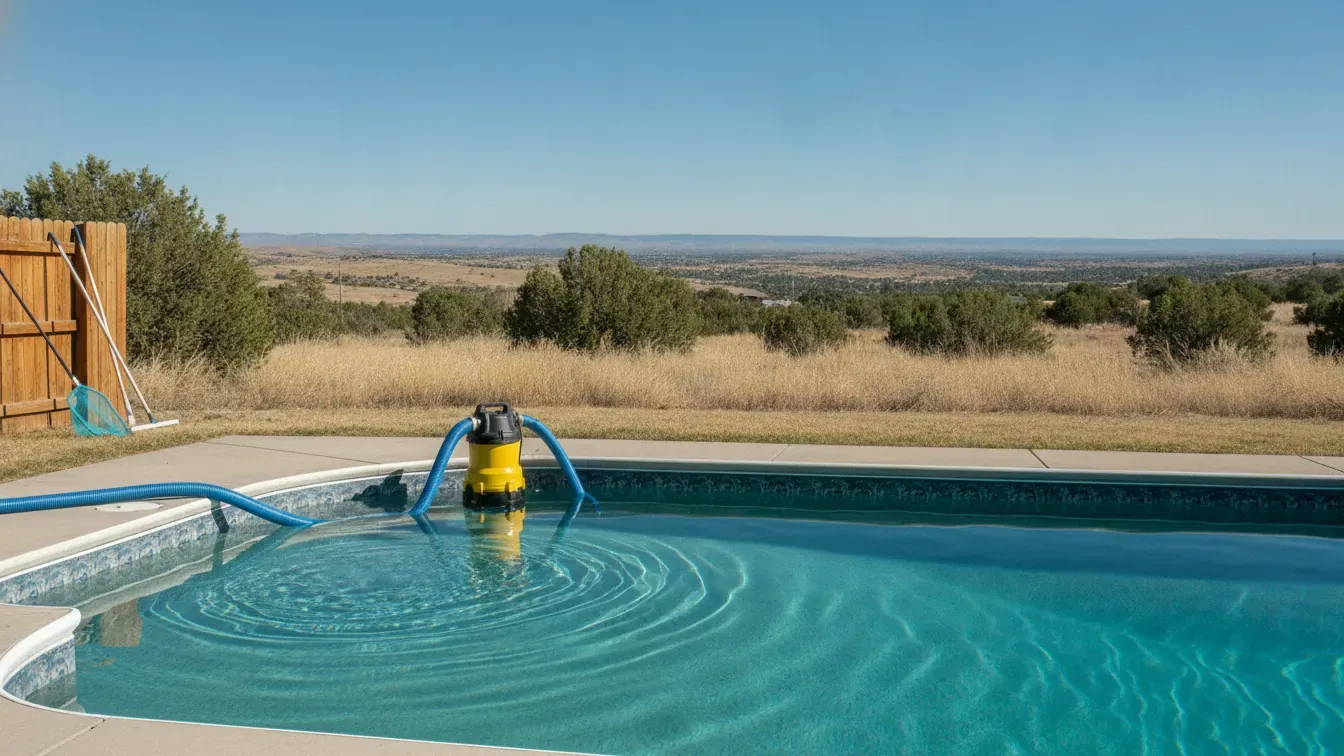
A properly rated submersible pump is commonly used for a controlled drain, but the pump must be suitable for the water and connected according to its instructions. Place it on a stable surface so it does not damage the finish. Route the discharge hose to the approved destination before starting. Make sure the flow will not erode soil, cross a sidewalk, enter a neighbor's yard, or create a path back toward the pool excavation.
Do not improvise a permanent connection to a storm drain or drainage channel. Keep electrical connections elevated and dry, use the required ground-fault protection, and do not handle a pump or cord in the water while energized. If the setup cannot be made safely, stop there.
5. Start slowly and watch the surrounding property
Start the pump while standing clear of moving water and equipment. Monitor the discharge area continuously at first, then at regular intervals. Watch for ponding, erosion, runoff toward a storm drain, flooding, hose movement, electrical exposure, or water entering a basement, crawlspace, or adjacent property. A slow drain is easier to control and gives you time to stop before a drainage problem becomes a property-damage problem.
6. Stop at the planned level
Do not leave a pool draining unattended. Stop when the work level is reached, before the shell, liner, fittings, or structural components are exposed beyond the approved limit. Do not keep pumping to chase the last few inches if doing so requires removing a drain cover, hydrostatic valve, or plumbing component without professional direction.
7. Refill promptly and restart correctly
An inground pool should not sit empty longer than the planned work requires. Refill using a controlled water source and monitor the shell, liner, fittings, and surrounding ground as the water rises. After refilling, prime the circulation system according to the equipment instructions. Inspect for leaks, clean or backwash the filter only through its normal procedure, and test the water before swimming.
Get Colorado-specific pool opening, closing, and maintenance support from Neptune Pools.
How long can a pool stay empty?
There is no single safe empty time for every pool. The answer depends on the pool type, soil and groundwater, weather, shell condition, work being performed, and manufacturer instructions. A concrete pool may tolerate an empty period under controlled conditions. A fiberglass pool, vinyl liner, or pool with unknown hydrostatic protection may require a much narrower window. Plan the work, refill promptly, and do not drain before the contractor, repair materials, and water source are ready.
Think of the empty period as an active work window, not storage time. Keep the pool fenced or otherwise secured, protect exposed fittings from impact, and check the pool after storms or unexpected weather. If you find new moisture, movement, cracking, liner separation, or water collecting beneath the shell, do not add people or equipment to the pool. Stop and request an inspection.
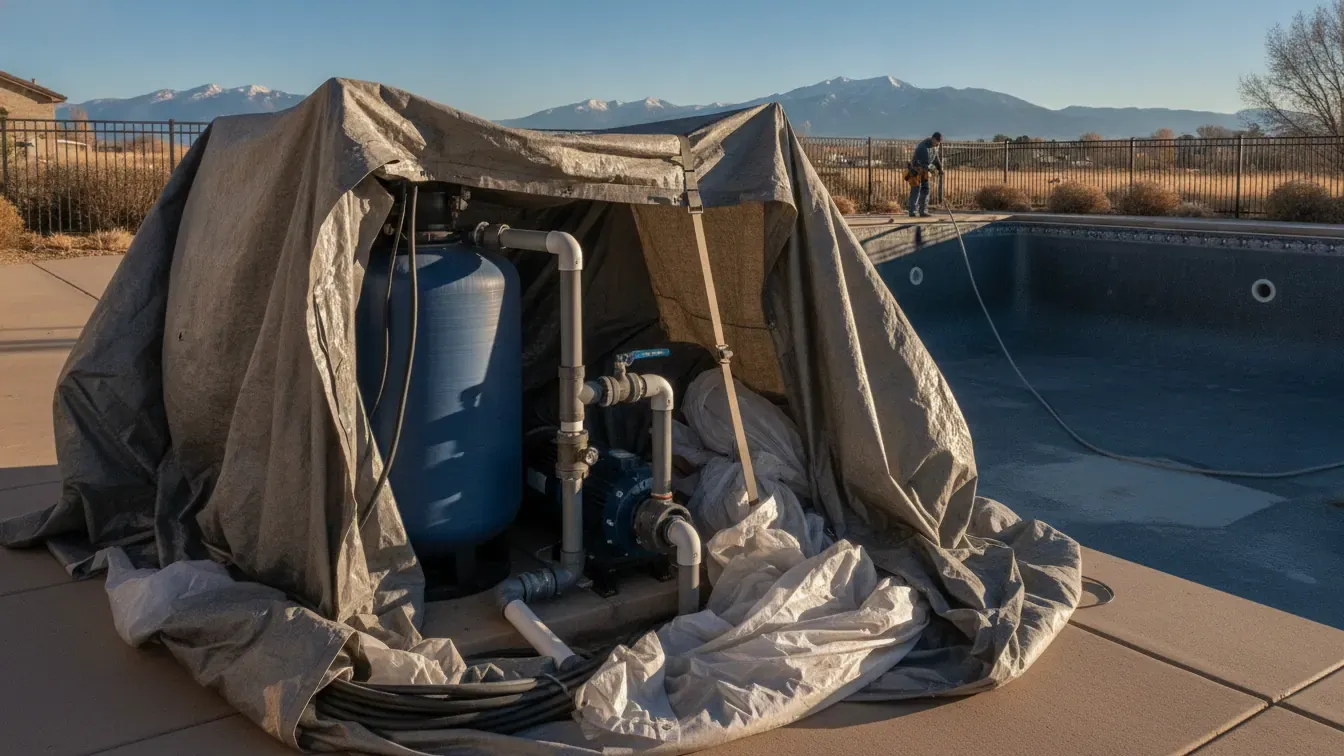
After refill, restart equipment gradually. Confirm that valves are in the correct positions, the pump is primed, and the filter is operating without leaks or unusual pressure. Check the water chemistry before anyone swims. For Colorado homes, also review winterization needs if the work is taking place near a freeze event. A pool that is safe to drain can still be vulnerable when its circulation system is restarted incorrectly or exposed plumbing is left unprotected.
When should you stop and call a pool professional?
Stop the drain and get professional help when the situation involves structural movement, unknown groundwater, plumbing damage, electrical equipment, hazardous water, or a discharge destination you cannot verify. The cost of pausing is usually lower than repairing a shifted shell, flooded property, damaged pump, or failed liner.
- Structural warning: Cracks widen, the floor or walls move, coping shifts, the liner pulls away, or the shell begins to lift.
- Groundwater warning: Water appears around the shell, a nearby sump is running continuously, or the site becomes saturated after rain or snowmelt.
- Plumbing warning: A hydrostatic valve, main drain, return line, skimmer, or underground pipe is damaged or cannot be identified.
- Electrical warning: A pump, light, breaker, outlet, cord, or automation component is wet, damaged, tripping, or being exposed as the water drops.
- Water-quality warning: The pool contains acid-cleaning waste, concentrated chemicals, unknown contamination, or filter media.
- Wastewater warning: The discharge backs up, ponds, runs toward a storm drain or waterway, crosses a property line, or conflicts with local instructions.
Frequently asked questions
Can I drain a pool into the street in Colorado?
Do not assume street drainage is allowed. Local rules may prohibit discharge to public space, ditches, or storm drains, or may require dechlorination and a specific discharge rate. Check the current rule for your city or county before connecting a hose.
Should I drain a pool to fix cloudy or green water?
Usually, not as a first step. Test the water and inspect filtration before choosing a full drain. A partial drain, refill, filtration, or professional water treatment may solve the problem while keeping the pool shell loaded.
Can a pool pop out of the ground when it is drained?
Yes. Groundwater can create upward pressure beneath an empty inground pool and cause lifting, cracking, or deformation. The risk is site-specific and can rise after rain or snowmelt. If groundwater conditions or hydrostatic protection are unknown, get an evaluation before draining.
Can I leave the pool pump running while the pool drains?
No. Turn off the circulation system before the water drops below the skimmer or suction opening. Running a pool pump without sufficient water can damage the pump and create a safety hazard. Use a separate, properly rated submersible pump only when the setup is safe.
What should I do if the pool starts moving or the discharge backs up?
Stop the pump immediately, keep people away from the pool and wet electrical equipment, and call a qualified pool professional. Do not restart the drain to see whether the condition improves. Document the water level and visible changes from a safe location.
Contact Neptune Pools for help planning a safe pool drain in the Denver Metro area.
Related Blogs