How To Winterize An Inground Pool
Learning how to winterize an inground pool in the Denver area starts with planning for changing fall weather, not with a single universal checklist. The right closing depends on the pool’s plumbing, surface, cover, and equipment. Preparing early gives you time to identify concerns and follow the correct instructions for your system.
Schedule help with your pool closing.
This guide explains the decisions and checks involved without prescribing one water level or procedure for every pool. Keep your equipment manuals nearby, and get pool-specific guidance when a component or plumbing circuit is unfamiliar. For a separate hot tub, see Neptune Pools’ spa services.
When should you plan to winterize an inground pool in Colorado?
Begin planning in early fall and watch the forecast as the season progresses. Denver-area weather can shift quickly, so a date that worked last year may not be suitable this year. A closing scheduled at the last minute can leave little time to find a leak, arrange service, or identify a complicated equipment setup before temperatures fall.
Closing too early has tradeoffs as well. If the pool remains open and untreated for a long period, debris and water-quality issues may require attention. Consider expected weather, how the pool is being used, its current condition, and the time needed for a careful closing. Rather than reacting to one forecast, leave room for planning and follow-up.
Before booking, ask what the closing service covers, what information the technician needs, and how unusual equipment is handled. Neptune Pools provides details about its Denver pool closing and winterization service. Property managers can also review relevant HOA pool services when planning for a shared facility.
What should you check before closing day?
A little preparation helps you explain the pool’s condition and makes it easier to spot work that should happen before shutdown. Start with a walk around the pool and equipment pad while the system can still be inspected under normal operation.
- Look for visible changes. Note unusual water loss, damp areas, loose fittings, damaged covers, or cracks. A visual observation is not a diagnosis, but it gives a technician useful context.
- Listen to the equipment. Record new pump noise, weak-looking flow, frequent interruptions, or a filter reading that differs from its usual pattern. Avoid repeatedly operating equipment that appears damaged.
- Clean the pool. Remove leaves and other debris, brush surfaces, and clean the filter according to its manual. A clean pool is easier to inspect and maintain.
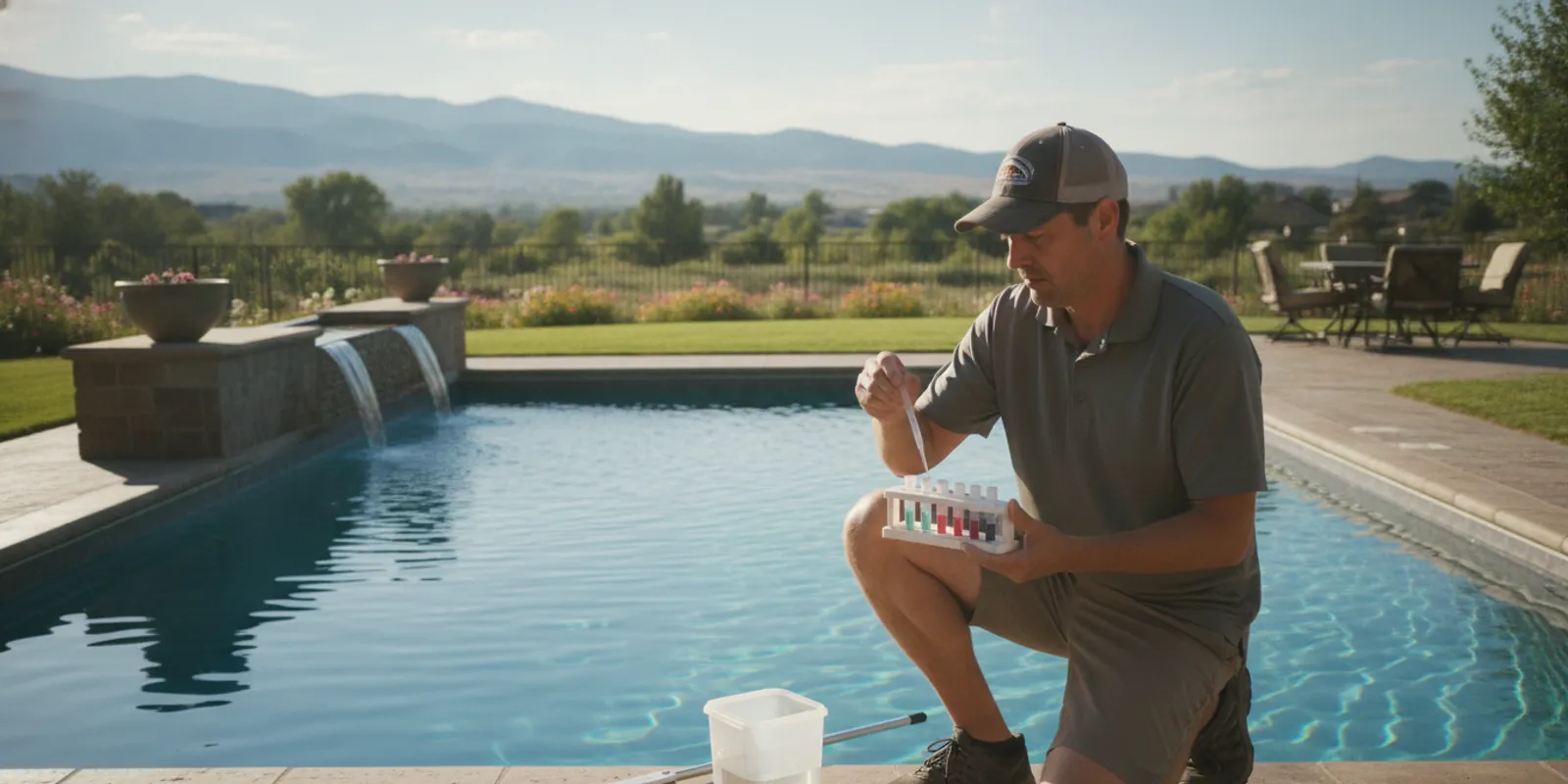
- Test the water. Use a reliable test method and follow product labels or pool-specific advice for adjustments. Do not combine products or add extra chemicals as a precaution without checking directions.
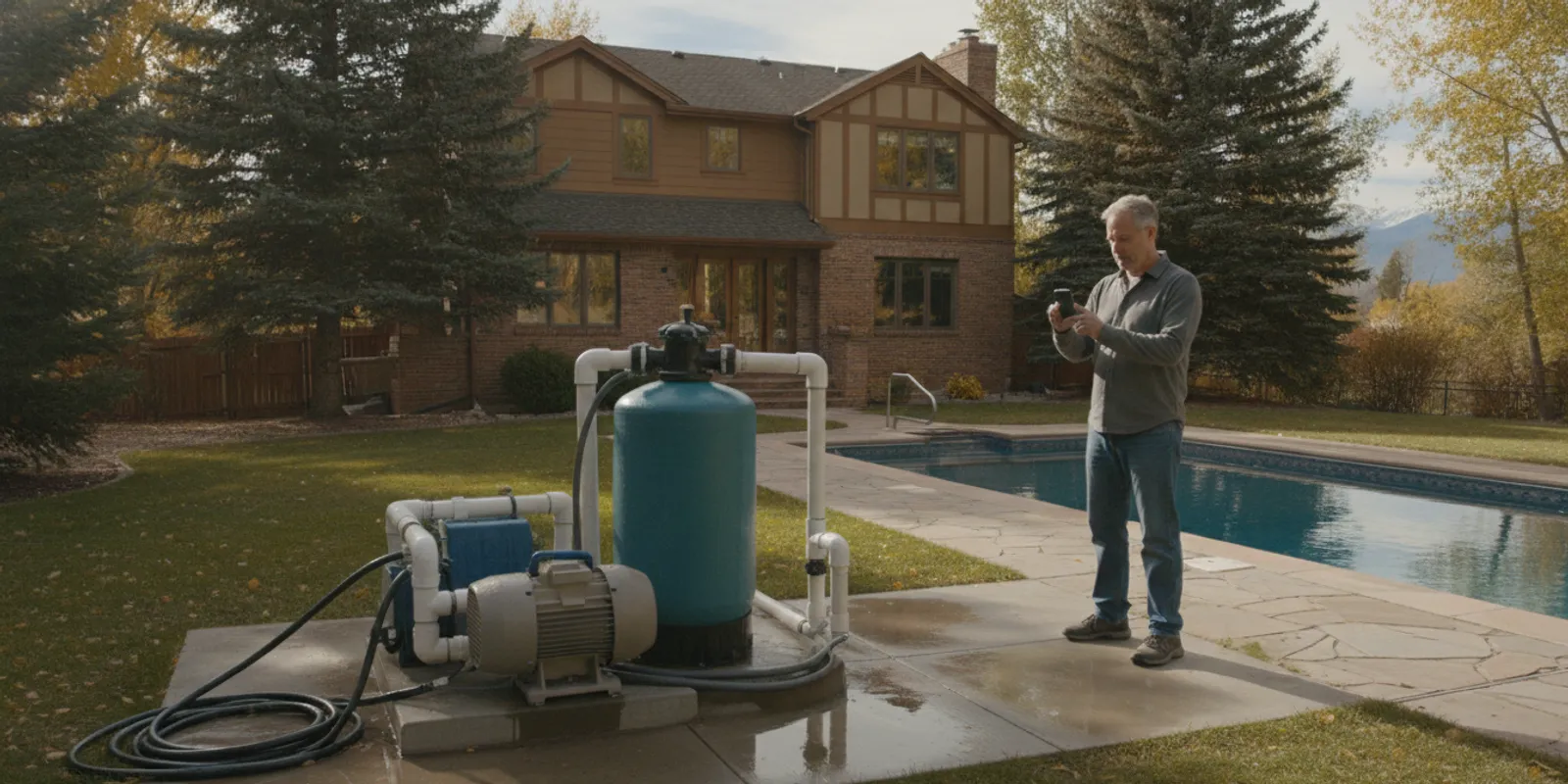
- List every connected feature. Include heaters, cleaners, water features, automation, treatment equipment, and any separate circuits. A short inventory reduces the chance of overlooking a component.
Keep the equipment make and model information, manuals, and any recent repair notes together. If testing supplies or seasonal products are needed, review Denver pool supplies and chemicals. If you have an equipment symptom that needs diagnosis, consult the pool equipment repair and servicing information before the system is shut down.
Which pool parts need attention during winterization?
Winter protection focuses on water-bearing plumbing and equipment that may be exposed to freezing conditions. Water left in vulnerable lines or components can expand when it freezes. The specific procedure depends on the equipment and how the pool is plumbed, so do not assume one method applies to every circuit.
Review the pump and filter, heater, treatment equipment, skimmers, returns, cleaner lines, and water features. Some pools have valves or branches that require separate attention. A cover is another part of the plan, but it does not protect plumbing by itself or compensate for an incomplete closing.
| Area | What to confirm | Why it matters |
|---|---|---|
| Pump and filter | Manufacturer shutdown steps, drain points, and system-specific instructions | Components may retain water that needs appropriate protection |
| Heater and treatment equipment | Model instructions and connected plumbing | Internal passages and fittings may need attention |
| Skimmers, returns, and features | Which circuit serves each fitting and what method applies | Separate lines may not be protected by one general step |
| Pool water and cover | Pool-specific water-level guidance, cover condition, and secure fit | Surface, skimmer arrangement, and cover plan affect decisions |
Use the table as a conversation checklist rather than a do-it-yourself plumbing specification. Water-level choices vary with pool construction, finish, skimmers, cover, and the winterization plan. Do not drain the pool or lower it to a guessed mark. Neptune Pools’ Colorado pool winterizing guide offers related local context.
How can you organize the closing process?
A practical sequence helps homeowners understand the work and keep track of open questions. It is not a substitute for the manuals or qualified service when a system’s layout is unclear.
- Choose a workable window. Follow local conditions and leave time to address problems rather than waiting until a freeze is imminent.
- Record the pool’s current condition. Photograph unusual areas, note water behavior, and list equipment symptoms. This creates a useful before-closing record.
- Clean and inspect. Remove debris, brush the pool, and review the equipment area. Flag damage instead of covering it up or assuming it will resolve in spring.
- Test and adjust water as appropriate. Use test results and product instructions. Avoid mixing products and do not use a guessed chemical recipe.
- Identify every line and component. Confirm which valves, features, and equipment are connected. If you cannot trace a circuit confidently, ask for help before proceeding.
- Follow equipment-specific shutdown instructions. Apply the appropriate method to each component and plumbing circuit. Do not improvise with unfamiliar equipment.
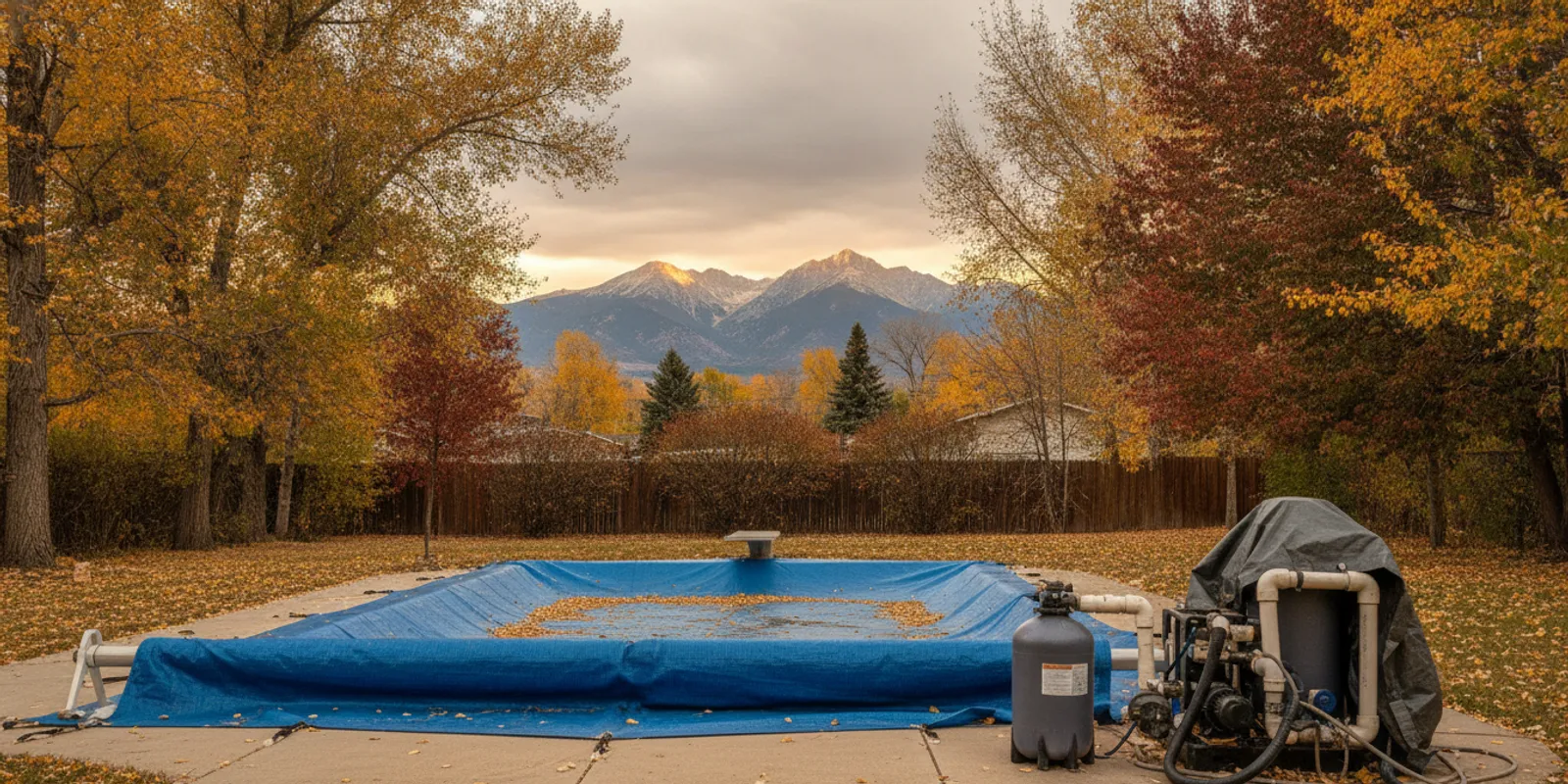
- Set the water level and cover as directed. Follow a plan based on the pool, surface, skimmers, and cover. Secure the cover according to its manufacturer instructions.
- Save a closing record. Note the date, any products used, equipment settings, observations, and spring opening reminders.
For example, an owner who hears a new pump noise should record when it occurs and mention it before closing. That is more useful than simply shutting everything down and hoping the issue disappears. A pool with a heater, automation, or several water features deserves an equipment-by-equipment review because each may have distinct instructions.
What mistakes should you avoid?
Common problems often start with assumptions or a rushed schedule. Keep these points in mind:
- Waiting until freezing weather is imminent. This leaves little time to find a service opening, diagnose a problem, or gather the right information.
- Copying another pool owner’s procedure. Plumbing routes, finishes, covers, and equipment vary, even among homes in the same neighborhood.
- Guessing the water level. Too much or too little lowering can be unsuitable depending on the pool and closing plan. Follow specific guidance.
- Forgetting secondary equipment. A cleaner line or water feature can be overlooked if you only think about the main pump and filter.
- Adding or mixing chemicals without checking labels. Follow product directions and safe handling requirements. Never combine chemicals unless the manufacturer explicitly directs it.
- Assuming a cover solves every issue. A cover keeps debris out when properly selected and secured, but it does not replace plumbing and equipment preparation.
- Ignoring symptoms until spring. Record leaks, abnormal sounds, or poor performance and ask whether they should be assessed before shutdown.
If an issue needs diagnosis, Neptune Pools lists its pool service options. Owners can also review pool cleaning and maintenance in Denver for ongoing care information.
Should you winterize the pool yourself or hire a professional?
The choice depends on how well you know the system, whether you have the correct tools and instructions, and how much time remains before cold weather. An owner may handle cleaning, recordkeeping, and basic visual checks. The more technical work requires confidence about the plumbing and equipment, not just willingness to follow a generic checklist.
| Factor | DIY preparation may fit when | Professional guidance may fit when |
|---|---|---|
| System familiarity | You can identify the equipment and have its manuals | You cannot tell how a line or valve is routed |
| Equipment | The setup is straightforward and operating normally | There is a heater, automation, water feature, or multiple circuits |
| Condition | No unresolved leaks or performance concerns are apparent | You have abnormal noise, visible damage, or unexplained water loss |
| Schedule and tools | You can follow the instructions with suitable equipment and time | A freeze is approaching or you lack a needed tool or procedure |
When comparing service options, ask what tasks are included, whether the provider will review unusual equipment, and how any repair needs are communicated. Keep the answers with your pool records so the spring opening begins with clear context. Neptune Pools serves Denver Metro pool owners with seasonal closings, maintenance, and repair services; check the service area information for coverage. For broader company background, see about Neptune Pools.
For general chemical safety, the U.S. Environmental Protection Agency explains safe handling and storage of household chemical products at its household hazardous waste guidance. Follow each pool product’s label and local disposal rules; this resource supports safe handling, not a specific pool-closing recipe.
What should you prepare before asking for service?
A service inquiry is more useful when it includes the details that determine how the pool can be closed. You do not need to solve technical questions yourself. Instead, give the technician enough context to identify what should be reviewed and what further information may be needed.
Gather the pool’s approximate age if known, its surface type, cover type, and a list of equipment models. Include the pump and filter, heater, salt or other treatment system, cleaner, automation controls, and any water features. If you are unsure what a device is called, take a clear photograph of its label and connections. Do not remove a cover or disconnect plumbing just to create a photo.
Describe changes in plain language. “The water line seems lower after a week” is more useful than diagnosing a leak without evidence. “The pump began making a rattling sound after a restart” gives a sequence that can guide an assessment. Add dates or photos if you have them. Mention whether the pool has had recent repairs, equipment changes, or a cover problem.
Ask specific questions rather than relying only on a general price request. For example: Which components are included in the closing? Should a reported symptom be inspected first? Does the pool’s heater or automation require an additional step? What should remain accessible after the visit? How should you record the final water level and equipment status? Clear answers help you compare scopes without assuming that every provider includes the same work.
Neptune Pools’ contact page is a route to ask about a pool closing. Owners who need help with a mechanical concern can also review the equipment repair service information. Keep the conversation, notes, and photos with the pool’s operating manuals for future reference.
How can you make the spring opening easier now?
Winterization is also a handoff to the next season. A closing record prevents you from having to reconstruct what happened months later, especially if a household member or service provider will handle the opening. Create one folder, either paper or digital, and save the same basic information every year.
- Record the closing date and weather context. This helps explain the timing if you later compare seasonal observations.
- List equipment status. Note what was shut down and any known issue that still needs attention.
- Save product information. Record products used and retain labels or instructions. Do not treat last year’s treatment as an automatic recipe for this year.
- Photograph the setup. Take pictures of controls, valves, and cover attachments only when safe and accessible. Label images so their location is clear.
- Write down opening reminders. Include repairs to schedule, parts to identify, and questions to ask before restarting equipment.
For instance, if a cover strap was loose or a valve label was unreadable, note it now rather than relying on memory after months of winter weather. The spring note does not replace an inspection, but it gives the person reopening the pool a clearer starting point. If the pool has several separate features, make a short checklist for each instead of a single vague note saying “check equipment.”
Owners who plan recurring care can compare Neptune Pools’ pool maintenance information with their seasonal needs. A closing record and clear service scope also make it easier to discuss repairs before the next active season.
Frequently asked questions
Can you winterize an inground pool before the first freeze?
Yes. Planning ahead gives you time to prepare, but choose a closing window based on weather, water condition, and the needs of the pool. Avoid leaving an open pool without appropriate care for an extended period.
Should an inground pool be drained completely for winter?
Do not assume that it should. The right water level depends on the pool structure, finish, groundwater conditions, skimmers, cover, and winterization plan. Get pool-specific advice before changing it.
Does every pool need the same winterizing chemicals?
No. Test results, pool condition, and product directions guide any treatment. Use products intended for pool use and do not mix chemicals unless directed by the manufacturer.
What should I do if I find a leak or equipment problem?
Note what you observe and avoid repeatedly running equipment that may be damaged. Ask a qualified technician to assess the concern and advise whether it should be addressed before shutdown.
Ask about professional pool winterization.
A careful closing is specific to the pool, its equipment, and the Colorado weather ahead. Start early, keep a clear record, follow manufacturer instructions, and get qualified guidance when a line or component is uncertain.
Related Blogs