How to Winterize Pool in Colorado Before a Freeze
Colorado pool season ends quickly in the Denver Metro. To winterize pool systems safely, schedule closing before a hard freeze and treat the work as a complete sequence, not simply putting on a cover.
Request Neptune Pools pool closing and winterization service.
Water left in pumps, filters, heaters, and plumbing can freeze and expand. The damage may remain hidden until spring startup. This guide explains how to prepare the water, clear freeze-prone lines, protect equipment. Set the water level, secure the cover, and decide when professional winterization is the safer choice.
When should you winterize pool systems in Colorado?
Finish winterization before the first hard freeze. Clean and balance the water. Clear freeze-prone lines, then drain or protect equipment according to manufacturer instructions. Set the water level for the cover, and secure the pool before persistent freezing weather arrives.
Most Denver Metro pools operate from roughly April through October. That seasonal pattern is a useful planning guide, but it is not a fixed closing date for every property. The right time depends on overnight temperatures, water temperature, equipment exposure, the cover system, and whether the pool will continue operating.
Many homeowners plan to close in October. Close earlier when the property will be vacant, use has ended, or the equipment pad is exposed to cold conditions. A later closing may be reasonable while temperatures remain moderate if circulation and freeze protection are actively managed. Delaying without a plan increases the chance that a sudden cold snap catches the system unprepared.
Use persistent nighttime freezes as the readiness signal
A single cold night does not always require immediate closing. Colorado weather can change quickly, so watch for a pattern of persistent nighttime freezes and schedule service before the forecast becomes unreliable. If you will be away and cannot monitor the pool, close it before freezing weather settles in.
After closing, October through April should be treated as the critical freeze-protection window. Wind, snow, and repeated freeze-thaw cycles can affect the cover, deck drains, equipment housing, and exposed plumbing. A pool that was closed correctly still benefits from occasional storm checks.
Why Colorado freeze-thaw cycles matter
Water left in plumbing, pumps, filters, heaters, chlorinators, or valves can freeze and expand. During a freeze-thaw cycle, that water may partially thaw and freeze again as temperatures fall. Repeated expansion can worsen a small weakness, turn a minor leak into a failed component, or leave damage hidden until spring.
Winterization removes or protects water from the components most exposed to freezing. The EPA outdoor pool guidance also emphasizes preparing equipment and securing pool covers before cold weather.
How to winterize pool water before closing
Start with a clean pool and a complete water test. Adjust chemistry gradually, follow product labels, and allow the recommended circulation time before shutting down. Use winterizing treatments only when they are compatible with the pool and equipment, and never mix concentrated chemicals together.
| Closing area. | Colorado winter goal. | What to verify. |
|---|---|---|
| Water chemistry. | Begin with clear, balanced water. | Test and adjust according to product labels. |
| Plumbing and equipment. | Remove water from freeze-prone components. | Clear lines and drain equipment as directed. |
| Water level. | Support the cover without overloading it. | Follow pool and cover manufacturer guidance. |
| Cover and drainage. | Protect the pool through wind and storms. | Secure restraints and keep drains clear. |
Clean the pool and filter
Remove leaves and debris from the surface, walls, floor, steps, skimmer baskets, and pump basket. Brush areas where dirt or algae collect, then vacuum as needed. Clean the filter using the method specified for its filter type. A clean filter and circulation system make the final chemistry adjustment more predictable.
Inspect the waterline, fittings, lids, and visible equipment while cleaning. A small leak, damaged lid, or cracked housing is easier to address before shutdown. If the pool has a heater, attached spa, automation, or more than one pump, record the equipment layout before disconnecting anything.
Test and balance the complete water profile
Test pH, total alkalinity, calcium hardness, sanitizer, and any other parameters required by the equipment or chemical manufacturer. Adjust the water gradually and allow circulation between changes. The goal is stable water, not a last-minute chemical spike.
High-altitude conditions and seasonal temperature changes can affect water behavior in the Denver area. Follow the ranges on the product label and in the pool manufacturer's guidance instead of copying a generic internet recipe. Neptune Pools offers pool chemicals and supplies for homeowners who need products for seasonal care.
Shock and add winterizing treatment only as labeled
If the water requires shock treatment, follow the product label and allow the recommended circulation time. Do not close over visible algae or cloudy water and expect winter chemicals to correct the problem. Water that enters winter already out of balance may be harder to recover in spring.
A winterizing algaecide may be appropriate for some pools, but it is not interchangeable with every other pool chemical. Use only a product labeled for winterizing and follow its dosage, compatibility, and circulation directions. Keep all products in their original containers and away from children and pets.
Once treatment is complete, confirm that the water is clear enough to inspect the pool. Make sure the circulation system has had the required time to distribute the chemicals. Then move promptly to plumbing and equipment protection.
Get seasonal pool chemicals and supplies from Neptune Pools.
How do you protect pool plumbing and equipment from freezing?
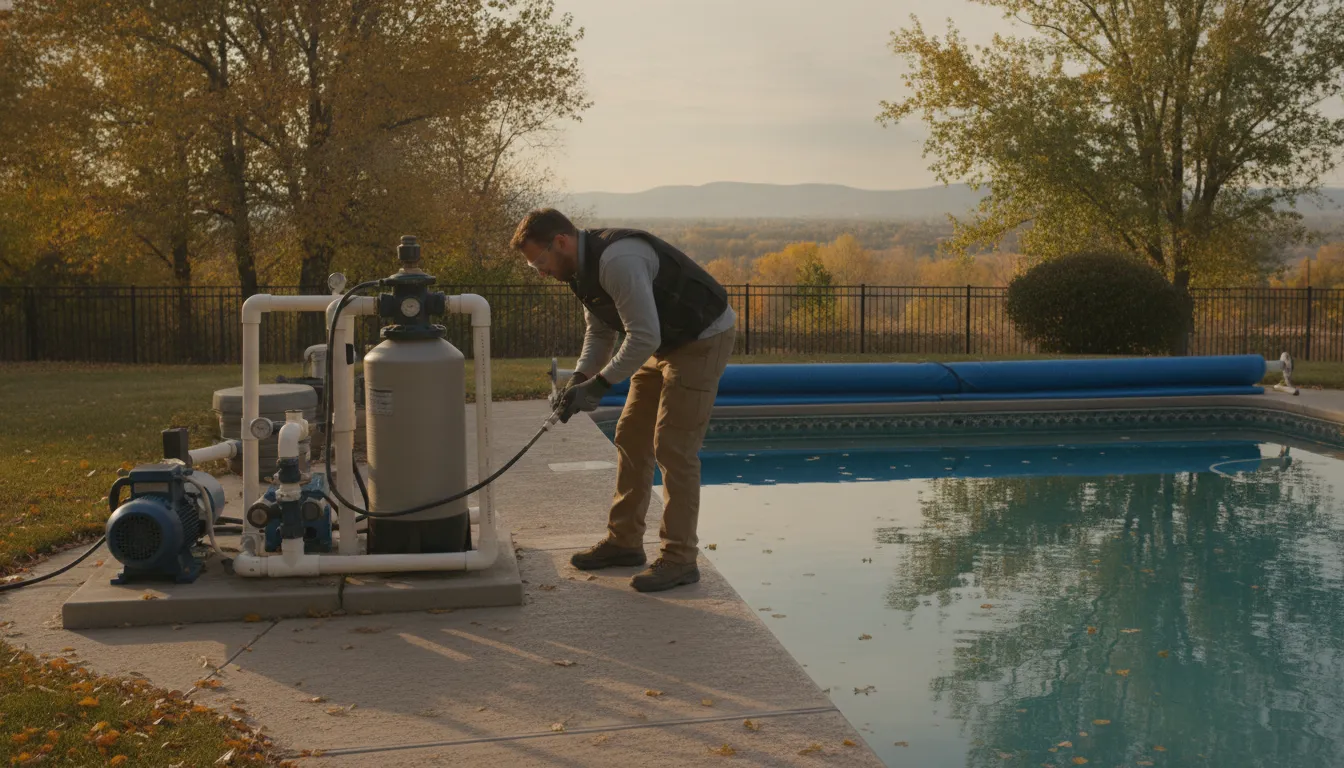
Protect pool plumbing by shutting off power, positioning valves for the system layout, clearing water from circulation lines, and draining equipment passages identified by the manufacturer. The complete sequence must account for skimmers, returns, cleaner lines, attached spas, low points, heaters, filters, and pumps.
Water removal is the most technical part of a pool closing. The objective is to clear water from the lines and equipment that will not be circulating during winter. The correct method depends on the plumbing layout, valves, filter type, heater, cleaner, spa connection, and manufacturer's instructions.
Follow a complete line blow-out sequence
- Shut off power. Turn off power to the pump and other equipment before opening or disconnecting components.
- Position the valves. Close or position valves according to the pool's plumbing layout and equipment instructions.
- Clear the lines. Use appropriate air equipment to clear water from circulation lines, returns, skimmers, cleaner lines, and attached spa lines when applicable.
- Block backflow. Plug or cap lines with fittings intended for the pool system so water cannot flow back into protected plumbing.
- Drain equipment. Remove water from the pump housing, filter, heater, chlorinator, and other components the manufacturer identifies for winter protection.
- Store small parts. Remove drain plugs or configure components for drainage only as directed, then store small parts where they can be found at opening.
Do not assume that water has been removed because the pump basket looks empty. Low points, valves, heater passages, and connected spa plumbing can retain water. A missed section can freeze even when the main pool lines appear clear.
Protect exposed equipment and plumbing
Do not seal wet equipment in a way that traps water or moisture. Protect exposed components from snow and direct weather while preserving the drainage and ventilation specified by the manufacturer. Never energize a dry pump or heater simply to test it during a freeze unless the equipment instructions and a qualified technician support that action.
Make a closing record with valve positions, drain-plug locations, equipment condition, and repairs needed before spring. This helps prevent a rushed startup and gives a technician useful information if the pool needs service. Neptune Pools provides pool equipment repair and servicing when a pump, filter, heater, or control system needs attention before shutdown.
What water level should a pool have for winter?
Set the winter water level according to the cover, liner or finish, drainage conditions, and manufacturer instructions. Solid, mesh, automatic, and safety covers can require different levels. The goal is to support the cover without overloading it, exposing the pool structure, or allowing water into equipment that should stay dry.
There is no single water level that fits every pool or cover. The correct level depends on the cover type, pool construction, liner or finish, local drainage, and the manufacturer's instructions. Lowering the water too far can expose a liner or create structural pressure problems. Leaving it too high can place excess load on a cover or allow water to reach components that should remain dry.
For a solid cover. Water may need to remain at a level that supports the cover without allowing it to rub against the pool edge or rise into protected equipment. A mesh cover may follow a different approach because precipitation can pass through it. Automatic covers, safety covers, and specialized systems also have their own requirements.
Before draining, confirm the guidance for your specific cover and pool. Neptune Pools' article on how far to drain an inground pool for winter provides related planning information, but the pool and cover manufacturer's instructions remain the controlling reference for the installation.
Control water and runoff during the off-season
Check the water level after major storms and snowmelt. Do not pump water off a cover or add water without considering the cover design and pool drainage conditions. Keep deck drains, nearby gutters, and the area around the equipment pad clear so runoff does not collect where it can refreeze.
If the level changes unexpectedly, look for a displaced cover, leak, blocked drain, or drainage problem. Address the cause early rather than waiting for spring, when freeze damage and standing water may be more difficult to separate.
How to cover and check a winterized pool
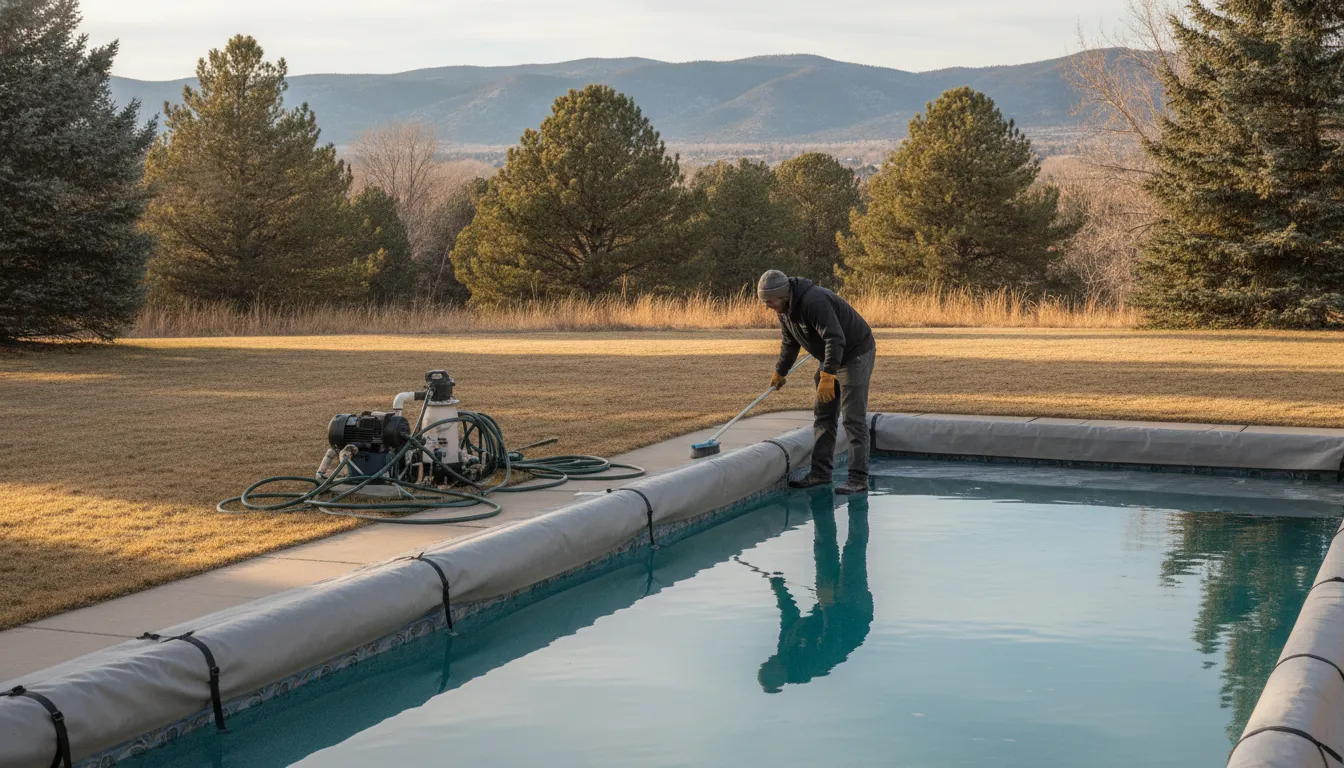
A winter cover should fit the pool, use every approved restraint, and be checked after major wind or snow events. Keep surrounding drains clear, never walk on the cover, and follow the cover manufacturer's directions for removing snow or standing water.
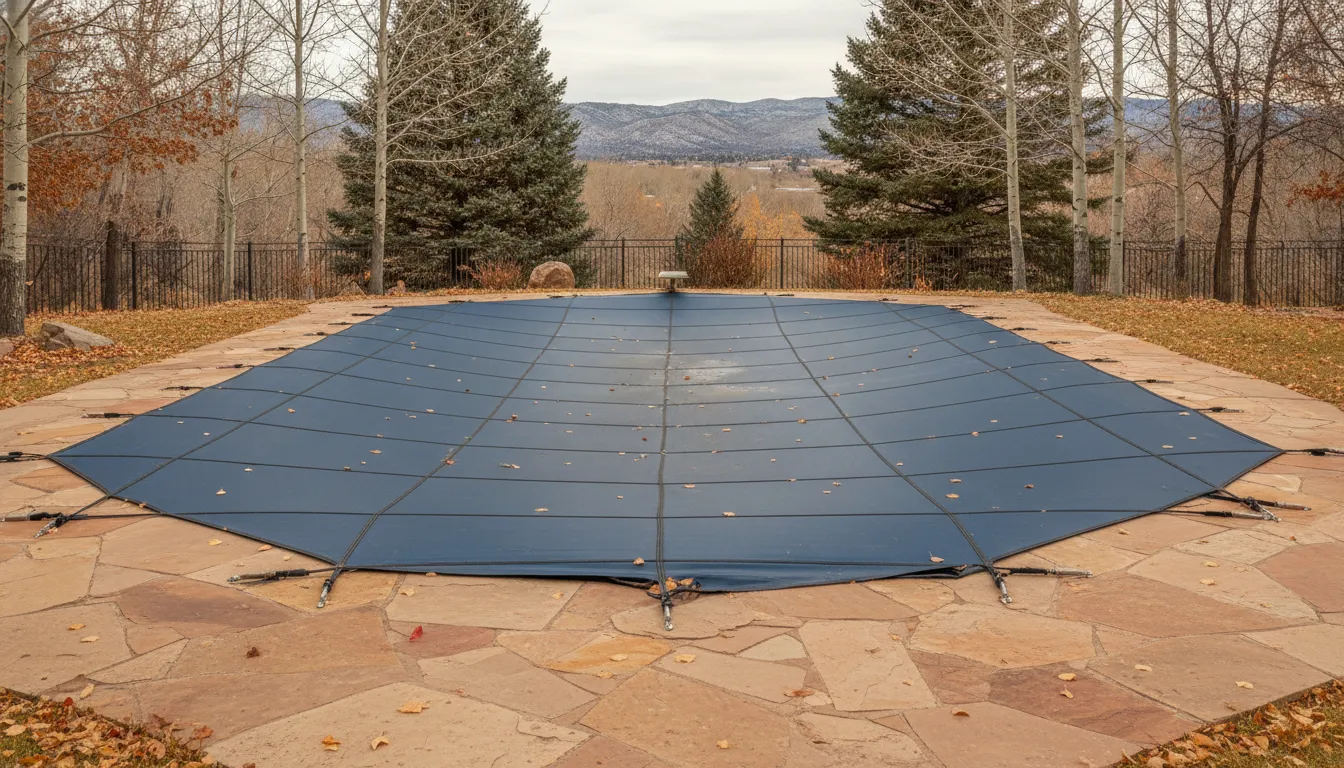
A winter cover is useful only when it fits the pool and stays in place through Denver's wind, snow, and freeze-thaw cycles. Before installing it, confirm that the cover is the correct size and type, with no tears, stretched areas, or damaged hardware. It should sit evenly around the perimeter rather than pulling sharply against one corner or leaving exposed gaps.
Secure the cover before the first storm
Fasten every anchor, strap, spring, or other approved restraint according to the cover manufacturer's instructions. A loose cover can shift in high winds, while snow loads can stress the fabric, anchors, and pool edge. Do not walk on the cover. Follow the manufacturer's directions for removing snow or standing water.
Clean leaves and debris from the pool area before covering it. A cover reduces debris entering the water during the off-season, which can make spring opening more manageable. It does not eliminate the need for observation, so check the cover after major wind or snow events.
Store removable accessories and inspect after storms
Clean and dry removable ladders, steps, diving boards, rails, cleaners, and other accessories before storing them in a protected location. Keep items out of the weather to limit freezing and physical damage. After a storm, look for pooled water, torn material, displaced anchors, sagging, or debris that could add weight.
If the cover has shifted or appears damaged, address it promptly rather than waiting until spring. Keep surrounding drains and the deck clear. A short inspection after each major storm can prevent a minor cover issue from becoming a larger winter problem.
Schedule a pool equipment inspection before winter freeze damage occurs.
What does a professional Colorado pool closing include?
Professional pool closing can include water-level adjustment, winter chemical treatment, equipment shutdown, line blow-out, cover installation, and a winter risk inspection. It is especially useful when plumbing is unfamiliar, the system has multiple components, or the property cannot be monitored before a freeze.
A DIY closing can be reasonable when you know your plumbing layout, understand your equipment, and have time to complete every step before a hard freeze. It is a different decision when the system is unfamiliar, the equipment is complex, or the weather is already turning. In Colorado, a missed valve, trapped water pocket, or unsecured cover can create a problem more disruptive than the closing itself.
When a DIY closing may make sense
Homeowners who have closed the same pool successfully may be comfortable handling routine preparation. That includes cleaning the pool, testing and balancing the water, following the cover and pool manufacturer's water-level guidance, and storing accessories. You should also have the right air equipment and a clear understanding of how the pump, filter, heater, cleaner, spa, and plumbing are connected.
Do not treat a familiar checklist as a substitute for inspection. If you cannot identify every line, drain the appropriate components, or confirm that water has been removed from freeze-prone plumbing, the risk is not just cosmetic. The EPA notes that professional winterization can purge lines and help prevent equipment damage. Use the linked EPA guidance above as general context, then follow your equipment and cover manufacturer's instructions.
When professional help is the safer choice
Professional closing is especially useful for pools with unknown plumbing, multiple pumps, attached spas, automation, heaters, or equipment that has shown signs of trouble. It is also practical when you are short on time or cannot monitor the pool before and during the first hard freezes.
Neptune Pools' closing service covers water-level adjustment, winter chemical treatment, equipment shutdown, line blow-out, cover installation, and a winter risk inspection. That scope addresses both visible preparation and less obvious freeze risks. A technician can also identify equipment concerns that should be repaired before spring startup. Related service information is available on the pool cleaning and maintenance page.
For homeowners who are unsure whether a pool is ready, professional assessment is often the most efficient choice. Share the pool type, cover type, equipment layout, and recent leaks or repairs when requesting service. Those details help the technician plan the closing safely.
Request professional pool closing and winterization in the Denver Metro.
Frequently Asked Questions
When is the best time to winterize a pool in Colorado?
Most Denver Metro homeowners plan to close in October. The best date depends on overnight temperatures, water temperature, equipment exposure, and whether the pool is still being used. Finish before the first hard freeze. Close earlier if you cannot monitor the system.
What chemicals should I add before closing?
Clean and test the water first. Balance the chemistry and use shock or a winterizing algaecide only when the product label and pool conditions support it. Never mix concentrated products together, and follow the manufacturer's dosage and circulation instructions.
How far should I lower the water level?
The correct level depends on the pool, cover, liner or finish, drainage, and manufacturer's directions. Solid, mesh, automatic, and safety covers can require different approaches. Do not lower the water based on a generic number without confirming the requirements for your installation.
Do pool lines really need to be blown out?
Lines that retain water can freeze and expand, which may crack plumbing or damage connected equipment. A complete closing clears the skimmer, returns, cleaner lines, spa lines, low points, and equipment passages that require protection. The sequence must match the plumbing layout.
Should I hire a professional to winterize my pool?
Professional winterization is a safer choice when you cannot identify the plumbing or have multiple pumps or an attached spa. It also helps when you operate a heater or automation system, have noticed leaks, or cannot monitor the pool before a freeze. Professional help is useful when the correct cover or water level is uncertain.
Written by Neptune Pools, a Denver Metro pool and spa care company serving Colorado homeowners and property operators.
Contact Neptune Pools to protect your pool before Colorado's first hard freeze.
Related Blogs