Pool Plastering Service Denver: Signs It's Time to Refinish

Pool plaster can change gradually, and not every mark means a finish needs replacement. If you are considering a pool plastering service denver, start by separating color changes from texture changes, material loss, and recurring water-care concerns. Those clues help you explain what you see without making a diagnosis from the deck.
Request a pool finish consultation.
A useful assessment considers the whole pool: where a change appears, whether it is spreading, what the surface feels like where safely accessible, and what has happened to the water and finish over time. This guide covers observations you can make safely, records worth gathering, and questions to ask before choosing treatment. Several different conditions can look similar, so use these details to prepare for an evaluation rather than to diagnose the surface yourself.
What changes can point to plaster deterioration?
Pool plaster is the visible interior finish over the pool shell. Its appearance and feel can be affected by finish type, age, water conditions, cleaning, use, and previous repairs. Compare the current surface with how it looked and felt before. A single isolated spot rarely tells the whole story.
- Widespread roughness: A surface that used to feel even may become abrasive or irregular. Do not enter an unsafe pool or climb into it just to check. Observe only an area you can reach safely from the deck.
- Persistent etching or pitting: Small pits, rough patches, or an area that appears to be wearing away deserve attention, especially if the affected zone is expanding.
- Exposed grains or a different layer: If the finish looks thin or missing and underlying material is visible, photograph it and request an assessment. Do not scrape it to see how deep it goes.
- Flaking or loose material: Chips and flakes can indicate loss of finish, but their cause and extent need evaluation. Avoid patching a large area with an improvised product.
- Cracks or changing lines: A crack may be limited to the finish or may relate to a deeper condition. Appearance alone cannot establish which. Note its length and location without tapping or chipping it.
- Persistent color variation: Mottling or fading may be staining, a deposit, a previous repair, or wear. Texture and progression offer useful clues beyond color.
When a change is not urgent, take dated photographs from consistent viewpoints every few weeks. Include a broad pool view and close-ups with a nearby reference point. Note recent brushing, chemical treatments, refill events, and whether each picture was taken before or after cleaning. The record can show whether a mark is stable, spreading, or changing in texture. If you see a sudden change, loose material, or a safety concern, do not wait weeks to document it; contact a qualified pool professional.
How can you distinguish a stain from a finish problem?
A stain or deposit often changes color while leaving the surface comparatively smooth. It may be localized, follow a recognizable outline, or appear near a place where leaves, metal, or waterline buildup collects. Rust-colored marks, leaf-shaped discoloration, and pale scale-like patches can have different causes. Color alone is not a dependable diagnosis.
A finish concern becomes more plausible when the color change occurs with roughness, pits, flaking, exposed grains, or a growing area of material loss. Even then, do not assume the finish is the only cause. Water conditions, circulation, filtration, source water, cleaning methods, and prior work can all matter during an inspection.
| Observation | What it may suggest | Useful next step |
|---|---|---|
| Color mark, smooth-looking area | Possible stain or deposit; source varies | Record location and maintenance history; seek advice before aggressive treatment |
| Rough patch with discoloration | Possible wear, etching, or buildup | Photograph texture and request assessment |
| Pits, flaking, or exposed grains | Possible material loss or finish deterioration | Avoid scraping and arrange an inspection |
| Crack or area that appears to change | Finish or deeper concern; evaluation needed | Document size and progression, then request professional advice |
Do not apply a strong acid treatment or abrasive tool just to see whether a mark disappears. These methods can affect the finish, change water conditions, and remove clues that help establish the cause. A professional can consider water readings, pool history, and the pattern before recommending a response. For context on one treatment option, read this guide to pool acid washing and when it may be appropriate.
Which water-care clues deserve attention?
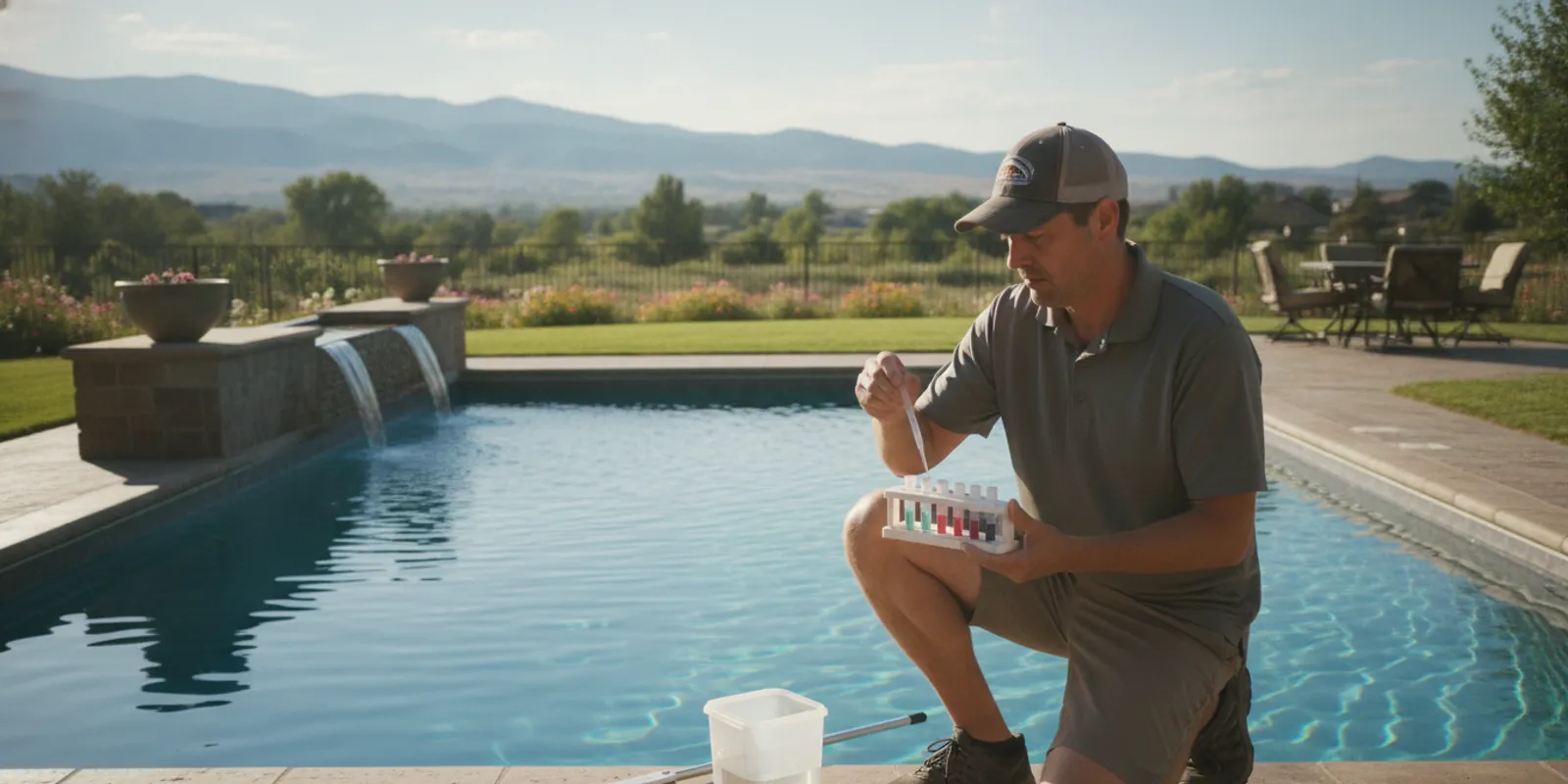
Water balance is part of caring for a cement-based finish, but a difficult-to-manage reading does not prove that plaster is failing. Testing technique, source water, recent additions, circulation, and filtration can all affect the picture. If readings repeatedly fall outside the ranges recommended for your finish and treatment system, review the testing and care process and keep a record rather than reacting to one unusual result with a large chemical addition.
Keep a log with dates, test results, chemical additions, top-offs, and unusual debris or weather. For a Denver pool, the operating season and winter closure or spring reopening can create gaps in the history. Note when the pool was closed, when it was restarted, and whether the appearance changed after either event. These notes are clues for a conversation, not proof that a particular condition caused damage. For testing help and supplies, review pool chemicals and water testing support.
When readings are inconsistent, write down the test method, date, and any recent change such as a refill or heavy rain. Record the actual values rather than relying on memory. If equipment seems to affect circulation, note that separately and consult pool equipment repair and servicing information. The goal is to bring a useful timeline to the assessment, not to attribute every symptom to one cause. Routine pool cleaning and maintenance helps with monitoring, but it cannot replace material already lost from a finish.
For general water-quality context, the U.S. Centers for Disease Control and Prevention explains pool and hot tub water testing and chemistry in its Healthy Swimming guidance. This supports the practical value of testing and records; it does not diagnose plaster condition or replace finish-specific instructions from a qualified professional.
What can you safely check before requesting an assessment?
- Map the areas. Mark whether the concern is at steps, the waterline, floor, corners, or around fittings. Photograph the full pool and each detail so the location is clear.
- Describe texture without damaging it. If an area can be reached safely from the deck, observe it gently. Do not chip, sand, scrape, or use a metal tool to test the finish.
- Collect the history. Gather water test records, maintenance notes, chemical additions, refill dates, and information about past repairs or finish work.
- Look for related symptoms. Note unusual water loss, recurring deposits, leaks, or equipment concerns. They may require separate investigation and should not automatically be blamed on plaster.
- Record the timeline. Estimate when the mark first appeared and what has changed since. If unsure, say so rather than guessing; dated photos can fill in some of the history.
- Keep the pool safe and operating normally. Avoid unusual chemical treatments or draining while waiting for advice. Follow product directions and seek help if an immediate safety or equipment issue arises.
Never drain a pool merely to inspect the interior unless a qualified professional has determined that draining is appropriate. Groundwater and site conditions can make draining risky, and an empty pool may be damaged. If you suspect a leak or sudden structural change, describe the urgency when seeking professional help instead of attempting an invasive inspection.
How does Denver seasonality affect what you observe?
In the Denver area, many outdoor pools move between an active season and a period of closure. Timing matters: a change noticed at spring opening may have developed earlier, or it may become easier to see once the water is clear and the pool is operating. Record the closing and reopening dates, any work done during that period, and the first date the new condition was visible.
Winter closure and freeze protection involve equipment and site-specific conditions. Do not change winter water level, drain a pool, or alter winterization steps because of a surface mark alone. If the concern appears while preparing to close the pool, ask whether an inspection can be scheduled without disrupting the winter plan. Review pool closing and winterization information for seasonal context.
Colorado’s dry periods, sun, wind, and variable weather can affect pool operation and water levels, but they do not by themselves establish why a particular finish has changed. Separate observations: describe the surface, document water readings, and note operational events. This helps an evaluator distinguish a finish symptom from a coincident maintenance or equipment issue.
What should you ask during a plaster assessment?
A useful conversation should clarify what was observed and what remains uncertain. Ask the professional to describe the affected areas, whether the concern appears limited to color or involves texture and material loss, and what other causes should be considered. If a recommendation is made, ask what evidence supports it and whether a less invasive option is reasonable.
- Does the condition appear limited to a stain or deposit, or is the finish itself changing?
- Is the issue localized or distributed across several parts of the pool?
- Would water history, a closer inspection, or another diagnostic step change the recommendation?
- What work is proposed: cleaning, localized repair, surface preparation, or a new finish?
- What preparation, access, scheduling, and pool-use disruption should I plan for?
- What conditions could change the scope after work begins, and how would those be discussed?
Ask for the recommendation in writing, including the condition being addressed, the proposed scope, exclusions, and any owner preparation. If a finish project is proposed, ask how the existing surface will be evaluated and prepared, what finish options are available, and what care instructions apply after the work. Do not assume every discoloration requires full refinishing, and do not expect a surface treatment to correct a separate structural or circulation problem.
For project-planning context, see factors that influence pool replastering costs and the homeowner’s guide to pool resurfacing. These resources can help organize questions; an article cannot determine the condition of an individual pool.
If the discussion turns to broader renovation, ask which observations are confirmed and which are still possibilities. Request that the proposed scope identify what work addresses the visible finish and what work, if any, addresses separate concerns. Ask whether the recommendation depends on emptying the pool, specialized preparation, or follow-up water-care steps. Written details help you compare plans on scope rather than on a label such as “repair” or “refinish.”
Discuss pool refinishing and rehabilitation options.
When is a professional plastering assessment worthwhile?
Consider an assessment when roughness is widespread, pits or flaking are increasing, material appears exposed, or a crack or surface change persists. It is also reasonable to ask for an opinion when you cannot tell whether a recurring mark is staining or material loss. An evaluation can place the visible symptom alongside the pool’s history and help identify whether the next step is monitoring, maintenance, localized work, or a broader renovation discussion.
When contacting a pool professional, share a concise description, location map, dated photos, and water-care records. Include the pool’s recent operating and closure history and mention previous repairs. If a water-loss or equipment concern is present, identify it as a separate observation. A clear request helps focus the conversation on what needs assessment instead of a premature assumption about cause.
Neptune Pools provides pool remodel and rehabilitation services in the Denver Metro area. Learn about pool resurfacing and restoration options and ask what kind of evaluation is appropriate for the condition you have documented.
Frequently Asked Questions
Does every rough spot mean the pool needs replastering?
No. Deposits, localized wear, previous repairs, and other conditions can affect texture. A professional should assess the location and extent before recommending a full finish project.
Can I remove a stain with an acid wash?
Do not assume an acid wash is appropriate. The cause of the stain and the condition of the finish matter, and an aggressive treatment can remove surface material. Get an informed diagnosis before choosing a treatment.
Can water chemistry cause plaster to deteriorate?
Water balance is an important part of finish care, but visible changes have several possible causes. Keep test records and have unusual texture or material loss evaluated rather than assigning a cause from appearance alone.
Should I drain the pool to check the plaster?
No, not as a do-it-yourself inspection. Draining can create risks depending on groundwater and site conditions. Ask a qualified professional whether draining is appropriate for the pool and proposed evaluation.
How should I prepare for a consultation?
Share dated photos, a map of affected areas, water test history, maintenance records, and notes about when the change began. Write down questions about diagnosis, scope, preparation, disruption, and alternatives before the conversation.
Contact Neptune Pools to discuss your pool finish.
A persistent change in both appearance and texture deserves careful documentation and a measured assessment before you choose a treatment or refinishing plan.
Related Blogs