Pool Acid Wash in Colorado: A Safe Guide
A darkened or stained pool surface can make an acid wash seem like the obvious answer, especially after a difficult Colorado opening. It is not, however, a routine cleaning step or a safe do-it-yourself project. The right choice depends on what caused the discoloration and whether the finish can tolerate treatment.
A pool acid wash removes a thin layer from a compatible pool finish to address certain buildup, stains, or discoloration. Because acid is corrosive, the finish type, age, and condition must be evaluated first. Professional handling is essential, and an acid wash may be the wrong solution if the surface is already damaged or needs resurfacing.
For Denver Metro pool owners, hard-water staining, seasonal algae, high-altitude chemistry, and rapid temperature changes can all affect the decision. Start by understanding what the process actually removes, what it cannot repair, and how a careful evaluation separates a cleaning need from a larger rehabilitation concern.
Talk with Neptune Pools about the right next step for your pool surface.
What Is a Pool Acid Wash?
A pool acid wash is a surface treatment used to address certain stains, mineral buildup, algae-related discoloration, or other deposits that routine cleaning may not remove. In general, the pool is prepared for treatment, then an acidic solution is applied to a compatible interior finish under controlled conditions. The acid reacts with the surface and lifts some of the material causing the discoloration.
That last point matters: an acid wash is not simply a stronger version of brushing or vacuuming. It removes a thin layer of the pool's finish. Because the treatment changes the surface, it should be considered a conditional restoration service rather than routine maintenance. A successful evaluation begins with identifying what caused the discoloration and whether the finish can tolerate the treatment.
What can an acid wash remove?
Acid washing may help with some mineral deposits, stubborn stains, and algae buildup on suitable pool surfaces. In the Denver area, hard-water staining and seasonal algae or discoloration can be part of the problem. However, a dark or uneven surface does not automatically mean an acid wash is the right answer. Some marks are related to the finish itself, water chemistry, equipment, or deterioration below the visible surface.
Routine service addresses a different set of needs. Skimming, brushing, vacuuming, water testing and balancing, chemical dosing, and equipment inspection help maintain the pool and may clarify whether a surface issue is actually a cleaning issue. Neptune treats acid washing as a possible part of premium pool-opening work when needed, not as an automatic step. See the company's professional pool cleaning and maintenance services for the ongoing care that supports surface condition.
Why finish type and condition matter
Not every finish responds to acid in the same way. The surface type, age, condition, and cause of the stain all affect suitability. Cracks, hollow areas, worn material, or other underlying problems can become more visible after a layer is removed. An acid wash can also worsen existing damage or shorten the remaining life of a finish. So it is not a substitute for resurfacing or remodeling when the pool has deteriorated beyond cleaning.
Acid is corrosive, and improper handling can damage the pool or create hazards for people nearby. Professional evaluation includes looking beyond the stain, considering Colorado conditions such as high-altitude chemistry and hard water. And choosing a treatment only when its likely benefit justifies its effect on the finish. The goal is not to promise a like-new result. It is to choose the least damaging, most appropriate path for the surface in front of you.
When Is a Pool Acid Wash Appropriate in Colorado?
A pool acid wash may be considered when discoloration or surface buildup remains after a pool has been properly evaluated and routine cleaning is not enough. In Colorado, hard water, seasonal algae, changing temperatures, and opening conditions can all contribute to a pool that looks stained or dull. Those conditions do not automatically mean an acid wash is the right answer. The cause of the problem and the condition of the finish matter more than appearance alone.
Hard-water mineral staining is one reason a professional may investigate an acid wash. Calcium or other deposits can create a rough, cloudy, or discolored appearance, but buildup on tile is not the same problem as damage within the pool finish. A targeted cleaning approach may be more appropriate for some tile deposits. Neptune's guidance on calcium buildup on pool tile can help explain that distinction.
Algae or broad discoloration may also be present after winter or before a seasonal opening. Neptune treats acid washing as a conditional part of premium opening work, alongside surface preparation and treatment, rather than an automatic step. A pool may instead need surface brushing, vacuuming, water testing, chemistry balancing, equipment inspection, or a treatment plan. Ongoing Denver pool maintenance services can address many issues without removing part of the finish.
Colorado's high-altitude chemistry and hard-water conditions make diagnosis especially important. Water balance, equipment performance, and the history of the finish can influence whether staining returns or whether an aggressive treatment creates more harm than benefit. Acid is corrosive, and the wrong application can etch a surface, expose existing damage, or shorten the remaining life of an older finish. A finish's type, age, condition, and the source of the discoloration should be reviewed before any decision is made.
An acid wash is not a substitute for resurfacing or remodeling when the pool surface is deteriorated, cracked, or otherwise beyond routine cleaning. In those cases, an inspection should compare a conditional cleaning treatment with repair or rehabilitation options. Professional handling matters because acid is corrosive and chemical work requires suitable protective equipment and procedures.
Explore pool remodels and rehabs for a professional evaluation of surface concerns.
Why Acid Washing Can Damage a Pool Surface
A pool acid wash is a corrective treatment, not routine cleaning. Because acid is corrosive, it removes a thin layer from a compatible pool finish while targeting certain stains, mineral deposits, or discoloration. That can be appropriate in the right conditions. But the same chemistry can create new surface problems when the finish is too old, already weakened, or not suited to the treatment.
Corrosive chemistry can etch the finish
Acid does not distinguish between unwanted buildup and the surface beneath it. If the treatment is too aggressive for the finish or applied unevenly, it can etch the surface. Etching may leave rough, dull, or visibly inconsistent areas instead of producing a uniform appearance. Softer or previously worn portions can react differently from stronger sections, making the final result uneven.
This risk is one reason a pool acid wash should not be treated as a DIY cleaning project. Chemical handling requires appropriate equipment, storage, ventilation, and professional judgment. The Centers for Disease Control and Prevention warns that pool chemicals can injure people when they are mixed or handled without appropriate personal protective equipment. Neptune Pools uses professional-grade chemicals, precision testing equipment, and proper handling practices as part of its service approach.
Existing damage may become more visible
A treatment can reveal problems that dirt or discoloration had been masking. Cracks, rough areas, worn aggregate, hollow spots, or broader deterioration may stand out after the surface is cleaned. Acid washing does not repair those conditions. In some cases, removing material from an already compromised finish can worsen the appearance or reduce the amount of usable finish left.
Finish type, age, condition, and the cause of the discoloration all matter. Denver-area pools also face considerations such as hard-water staining, seasonal algae, rapid temperature changes, and chemistry management. A stain caused by surface buildup may call for a different response than a stain tied to deterioration or an underlying equipment issue.
It is not a substitute for resurfacing
Acid washing can sometimes improve a compatible surface, but it cannot restore a finish that has reached the end of its service life. It may shorten the remaining life of an aging finish when the surface is already deteriorated. If cleaning cannot address the underlying condition, resurfacing or rehabilitation may be the more appropriate path. An inspection can help distinguish a cleaning problem from a surface-renovation problem before work begins. When damage goes beyond routine care, review pool remodels and rehabs as an evaluation option rather than assuming another wash will solve it.
How Professionals Approach the Decision
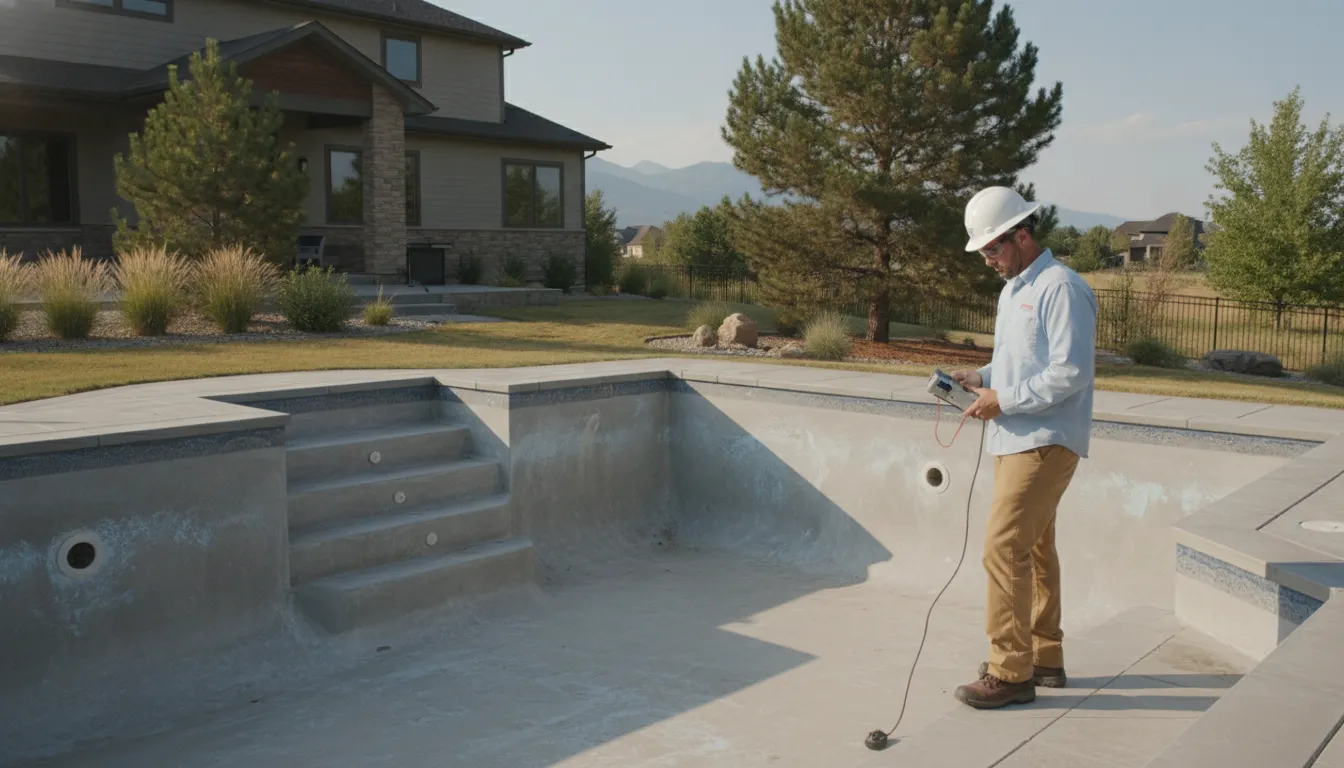
A professional does not begin by assuming that discoloration calls for a pool acid wash. The first goal is to identify what is happening to the surface, whether treatment is appropriate, and what risks must be controlled. In Colorado, hard-water staining, seasonal algae or discoloration, high-altitude chemistry, and rapid weather changes can all affect how a pool is evaluated. The right response may be cleaning, equipment attention, treatment, or a larger surface project.
- Inspect the finish and the visible problem. The technician examines the finish type, age, condition, and the location and character of the staining or buildup. A surface problem can reflect mineral deposits, organic discoloration, chemistry issues, or deterioration. Those causes do not all respond to the same treatment. The inspection also looks for signs that the finish is fragile or already damaged, because an aggressive treatment can expose or worsen underlying problems.
- Determine whether the surface is compatible. Acid washing removes a thin layer from a compatible pool finish. It is therefore a condition-based service, not routine cleaning and not a universal answer for every pool. The decision should account for the finish's remaining service life and whether cleaning or correcting the water chemistry could address the issue with less risk. If the surface is deteriorated, resurfacing or rehabilitation may be more appropriate than removing more material.
- Choose the least aggressive suitable option. A professional compares the suspected cause with available approaches, including normal surface cleaning, chemistry correction, targeted attention to tile or equipment, and acid treatment when justified. Neptune's regular maintenance work includes brushing, vacuuming, water testing and balancing, chemical dosing, and equipment inspection. That broader view helps separate a removable buildup from a problem that needs repair or a larger evaluation.
- Plan drainage, wastewater, and safety controls. Acid is corrosive, and chemical work requires appropriate handling, protective equipment, ventilation, storage, and disposal procedures. The work plan should address water level, drainage or wastewater management, protection of nearby surfaces, and safe access around the pool. These controls are part of the service decision, not details to improvise after work begins. They are especially important when a pool is being opened after winter or has uncertain water and equipment conditions.
- Evaluate the finish after treatment. Once the work is complete, the finish and water condition should be reviewed rather than judged only by an immediate change in color. The result may clarify whether the issue was surface-level or whether deterioration remains. Neptune treats acid washing as a conditional part of premium opening service when needed, alongside pressure washing and chlorine treatment. Its certified technicians can help determine whether continued maintenance is appropriate or whether the pool needs pool remodels and rehabs.
Acid Wash, Cleaning, or Replastering: Which Path Fits?
A discolored pool does not automatically need an acid wash. The right response depends on whether the problem is routine debris, mineral buildup. A condition that may respond to a carefully evaluated surface treatment, or deterioration that requires rehabilitation. In Denver, hard-water staining, seasonal algae, and changing chemistry can look similar at first, so surface condition and the cause of the discoloration matter.
| Option | Best fit | What it addresses |
|---|---|---|
| Routine cleaning and maintenance | Water and surfaces are generally sound, but regular care is needed. | Skimming, brushing, vacuuming, chemistry testing and balancing, chemical dosing, and equipment inspection. This is the starting point for preventing avoidable buildup and discoloration. |
| Targeted tile or mineral-buildup cleaning | Deposits are concentrated on tile or specific areas rather than spread across a deteriorating finish. | A focused approach to help remove calcium from pool tile without treating the entire pool surface. The treatment should match the tile and buildup. |
| Pool acid wash | Staining or buildup may warrant a conditional surface treatment after professional evaluation. | An acid wash can remove a thin layer from a compatible finish. It is not routine maintenance, is not appropriate for every finish, and should not be treated as a DIY project. Finish age, type, condition, and the cause of the stain all affect suitability. |
| Replastering or remodeling | The finish is damaged, deteriorated, or unlikely to improve through cleaning alone. | Resurfacing or broader rehabilitation addresses the condition of the pool rather than only its appearance. Review pool replastering options when surface problems go beyond removable buildup. |
Neptune treats acid washing as a conditional service, including when it is needed during certain premium pool openings, rather than an automatic step. A professional assessment can separate a removable deposit from damage that needs a different solution.
Explore pool remodels and rehabs for a professional evaluation of surface damage..
What Denver Pool Owners Should Ask Before Scheduling
A pool acid wash should begin with a surface assessment, not an automatic appointment. Before scheduling, ask the technician to identify the pool's finish type, approximate age, and current condition. Plaster, aggregate, tile, and other materials may respond differently, and suitability depends on more than how dark or stained the waterline appears. Finish type, age, condition, and the likely cause of the stain all affect the recommendation.
Questions about the problem
- What do you believe is causing the discoloration or buildup: hard-water deposits, algae, chemistry-related staining, or something else?
- Does the affected area look like removable buildup, or could it indicate etching, cracking, roughness, or broader surface deterioration?
- Could routine cleaning, tile treatment, water-balance correction, or another less aggressive option address the problem?
These questions matter in Denver, where hard-water staining, seasonal discoloration, high-altitude chemistry, and rapid temperature changes can all complicate a visual diagnosis. Neptune's maintenance work includes brushing, vacuuming, water testing and balancing, chemical dosing, and equipment inspection, so a professional may recommend addressing those factors before considering a surface-removal treatment.
Questions about safety and handling
- What safety precautions will protect people, equipment, landscaping, and the pool finish?
- How will wastewater and chemical byproducts be contained, handled, and disposed of?
- What professional equipment, testing, storage, and handling procedures will be used?
Acid is corrosive. Mishandling can damage a finish and create safety hazards, which is why an acid wash is not a routine cleaning job or a DIY chemical project. A qualified provider should explain the plan in clear terms without asking the homeowner to improvise chemical procedures.
Questions about the long-term decision
- Could the treatment expose or worsen damage that is already present?
- How might it affect the remaining life of the finish?
- Would pool remodels and rehabs be more appropriate if the surface is deteriorated beyond cleaning?
An acid wash removes a thin layer from a compatible finish. It cannot replace resurfacing or remodeling when the underlying surface needs rehabilitation. Ask for an inspection-based recommendation and realistic expectations before approving the work.
Frequently Asked Questions
What does an acid wash do to a pool?
An acid wash removes a thin layer from a compatible pool finish to address certain stains, discoloration, or buildup. It is a conditional treatment, not routine cleaning, and the result depends on the finish type, age, condition, and cause of the problem. It may improve appearance, but it cannot repair every form of surface damage.
Is a pool acid wash a safe DIY project?
No. Acid is corrosive, and improper handling can damage the finish, create hazardous conditions, and expose people or equipment to harmful chemicals. A qualified professional should evaluate whether the treatment is appropriate and manage the work with suitable testing, handling, storage, and safety procedures.
Can an acid wash damage a delicate plaster finish?
Yes. An acid wash can etch a finish, reveal underlying deterioration, or shorten the remaining life of an older or weakened surface. The finish's age, material, and condition should be assessed before choosing this option. If damage goes beyond what cleaning can address, replastering or rehabilitation may be more appropriate.
Is an acid wash always needed when a pool is stained?
No. Staining may relate to hard water, algae, water chemistry, tile deposits, equipment issues, or surface deterioration. Depending on the cause, routine cleaning, chemistry management, targeted tile cleaning, or equipment attention may be a better first step. A professional assessment helps separate removable buildup from damage that requires a larger repair.
How can Colorado pool owners avoid recurring discoloration?
Start with consistent maintenance, including brushing, vacuuming, water testing and balancing, chemical dosing, and equipment inspection. Denver-area hard water, seasonal changes, and rapid temperature shifts can affect pool care decisions. So the maintenance plan should account for local conditions rather than treating every stain with acid.
Ready to Discuss Your Pool's Next Step?
Acid washing is not the right solution for every pool surface. A professional evaluation can help clarify whether targeted cleaning, rehabilitation, or a broader remodel better fits the pool's condition and goals. Request a professional pool remodel or rehabilitation evaluation from Neptune Pools. You can also call Neptune Pools at (303) 431-8501 to discuss your options.
Related Blogs