Pool Algae Prevention Denver: Summer Maintenance Guide
Pool Algae Prevention Denver requires a strict focus on water chemistry and regular cleaning to stop blooms before they start during the hot summer months. Denver summer heat poses unique challenges for water chemistry because high temperatures and intense UV rays at high altitude will quickly strip away your pool chlorine. According to the CDC, keeping your pH between 7.0 and 7.8 is the best way to balance killing germs and stopping algae growth. Regular maintenance is essential for algae prevention and overall pool longevity because it stops small issues from becoming costly repairs that can ruin your summer fun. By staying ahead of these changes, you ensure that your pool water stays clear, healthy, and safe for your family and guests all season long.
Pool Algae Prevention Denver: The Impact of Denver Summer Heat on Pool Chemistry
Denver summer heat creates a unique set of hurdles for pool owners. The thin air at high altitude allows more UV rays to reach your water. This intense sun does more than just warm the pool. It causes chemical changes that can lead to rapid algae growth. Effective Pool Algae Prevention Denver needs a plan that fits these local needs.
High Altitude UV Exposure
Sunlight is a primary factor that reduces chlorine levels in outdoor pools. In Denver, the UV index is often higher than in coastal cities because of our height. These rays break down chlorine through a natural process. According to the CDC, sunlight is one of the main things that reduce chlorine levels. Without enough chlorine, your pool loses its main way to fight off algae.
High-altitude water chemistry needs specific ways to keep the water safe. When chlorine levels drop due to sun exposure, algae spores can begin to establish themselves during the peak heat of the day. This is why standard pool care guides for other areas often fail in Colorado. You must test your water more often during the hot months to make sure your cleaner stays at the right level.
Chlorine Loss and Algae Risk
Heat also plays a big role in how fast chemicals work. As water temps rise, bacteria and algae grow much faster. The Denver summer heat makes it hard to keep a steady balance. When your pool water gets warm, it creates the perfect home for algae to spread. This risk is highest from June through August when day temps stay high for many days in a row.
To fight this, you need a strong base of chlorine. The CDC suggests a chlorine level of at least 1 part per million in pools. However, in the high Denver sun, you may need a higher level to account for daily loss. Keeping your water clear during these months is about staying ahead of the heat before the algae takes hold.
Seasonality and Local Care
Neptune Pools says that care should fit the typical Colorado swimming season, which often runs from late spring through early autumn. This season usually spans from May through September. During the peak of this time, dry air and heat lead to high water loss. As water leaves the pool, the minerals and chemicals that stay behind become more concentrated. This can shift your pH and make your chlorine less helpful.
Certified tech staff can help manage these shifts. They know how to balance the water for our local air. By changing your care routine for the Denver summer heat, you can stop algae before it starts. This proactive path saves you money and time on heavy cleaning later in the year.
Key Water Chemistry Parameters for Algae Prevention
Stopping algae growth starts with correct water balance. In the Denver Metro area, the high sun intensity means your pool chemicals work harder to keep the water clear. To succeed with Pool Algae Prevention Denver, you must track three core metrics: pH, free chlorine, and stabilizer levels. When these stay in range, your pool stays safe and clean.
Maintain a Balanced pH Level
The pH scale measures how acidic or basic your water is. For pools, the CDC recommends a pH range of 7.0 to 7.8 to kill germs and prevent algae. This range is the best balance for both water safety and gear life. If the pH goes above 8.0, your chlorine becomes much less effective at killing organic growth. High pH levels often happen in Denver due to heavy water use and wind-blown dust.
You should test your pH at least twice a week during the hot months. If the level is too high, you can use muriatic acid to bring it down. If it is too low, you may need to add soda ash. Keeping your pH stable helps your chlorine do its job without needing extra chemicals.
Set Chlorine and Stabilizer Targets
Free chlorine is your main tool against algae. For most pools, you need at least 1 ppm of chlorine to keep the water safe. But the sun in Colorado can burn off chlorine in just a few hours. This is why we use cyanuric acid to reduce chlorine loss from UV rays. It acts like sunblock for your pool water.
If you use this stabilizer, the CDC suggests a higher chlorine floor. You should keep at least 2 ppm of free chlorine in pools that use cyanuric acid. Most Denver homeowners find that a range of 2-4 ppm works best to stop algae before it starts. You should also check your stabilizer levels to ensure they do not climb too high, as this can lock your chlorine.
Ideal Chemical Ranges for Algae Control
Following these specific ranges will help you keep your pool water clear all summer. Use this table as a quick guide for your weekly tests.
| Parameter. | Ideal Range. | Primary Goal. |
|---|---|---|
| pH Level. | 7.0 to 7.8. | Optimize chlorine power. |
| Free Chlorine. | 1 to 4 ppm. | Kill algae and bacteria. |
| Cyanuric Acid. | 30 to 50 ppm. | Protect chlorine from sun. |
| Total Alkalinity. | 80 to 120 ppm. | Prevent sudden pH shifts. |
Step-by-Step Summer Pool Maintenance Protocol
Setting a firm routine is the best way to keep your pool algae-free during hot months. When you follow a strict plan, you stop small issues from becoming big ones. This habit keeps your water clear even when the Denver sun is at its peak.
Weekly Cleaning Tasks
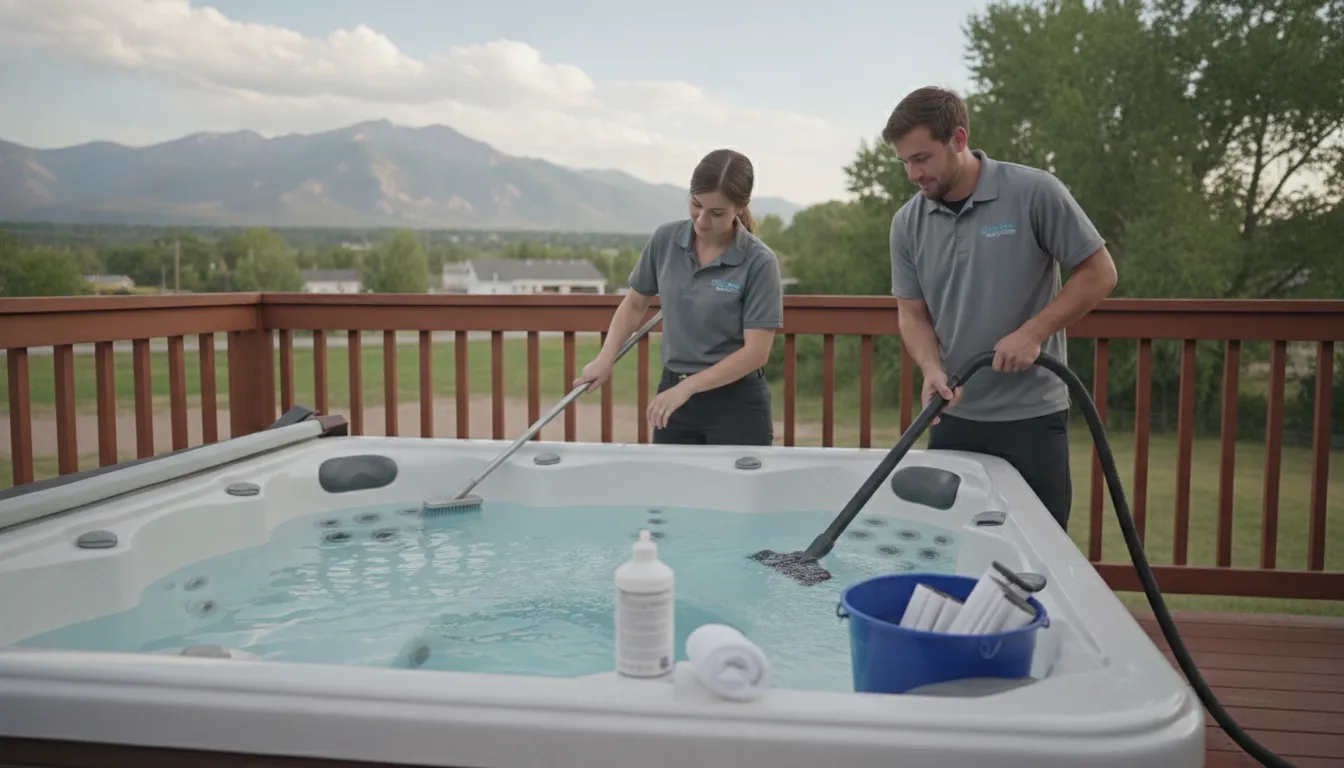
Trash and dirt can hold algae and use up your chlorine fast. You should use a brush to scrub the pool walls and floor once a week. This step breaks up early growth that might start in dark spots or corners.
After you brush, you must vacuum the pool to remove dirt. Taking out this waste helps your filter work well. A clean pool lets your chemicals kill germs rather than fighting trapped dirt.
- Test your water. You must routinely test and adjust both the chlorine and pH levels to keep your pool safe.
- Scrub the walls. Use a stiff brush to clean the walls, steps, and floor to stop thin films where algae might grow.
- Vacuum the floor. Pull out all dirt from the bottom to keep the water clear and help your filter stay clean.
- Empty the baskets. Clear out your skimmer and pump baskets to keep water moving and help your gear last.
- Add a weekly shock. You should run a weekly shock treatment to kill germs and help your chlorine work better.
Check and Fix Chemistry
The strong sun in high spots like Denver can quickly drain your chlorine. You should test your water twice a week during the hot summer. Many things can lower chlorine levels, so quick checks are the only way to stop a green pool.
When you find your levels are off, make small changes. Adding chemicals in steps helps you avoid big swings and keeps the water balanced. Regular tests are the main part of a good pool plan.
Proactive Prevention vs. Reactive Algae Remediation
Most pool owners face a choice between two paths. You can spend a little time each week on Pool Algae Prevention Denver, or you can spend a lot of money to fix a green pool. Being proactive is not just easier on your schedule. It also protects your pool parts from the harsh effects of big chemical doses. When you prevent algae buildup at opening, you set a firm base for the whole summer.
The cost of reactive care
Waiting for algae to show up before you act is a common mistake. Once a pool turns green, you must use high levels of chemicals to kill the bloom. Many people use calcium hypochlorite to clear the water. While this shock works, it puts a strain on your filter and pool walls. The high chlorine levels needed for a fast fix can also fade your liner or wear down pool covers over time.
Reactive care often leads to a cycle of chemical spikes. You add a large dose of shock, which drives the pH down. If the pH falls below 7.0, it can make your pipes and heaters corrode or break down. By the time you fix the water, the damage to your gear might already be done. This is why a steady hand is better than a quick fix.
Benefits of continuous prevention
Continuous prevention is the best way to keep your pool clear. It means keeping a steady level of sanitizer in the water at all times. This method stops the things that help algae start to grow. For Denver pool owners, this means checking levels more often during hot weeks. A stable pool uses fewer chemicals in the long run than one that needs weekly shocks.
Consistent care also makes your pool safer to use. When you follow a keep your pool algae-free routine, you avoid the long wait times after a shock. You can enjoy your water without the worry of skin or eye stings from chemical spikes. A proactive plan keeps the water clear, the gear safe, and your summer fun on track.
Frequently Asked Questions
How do I prevent algae in my pool in Denver?
Successful Pool Algae Prevention Denver requires keeping your pH levels between 7.0 and 7.8. According to the CDC, this range is the best way to balance germ killing and pipe safety. Because Denver sunlight and heat reduce chlorine levels fast, you should also test your water often and use a stabilizer to keep your chemical levels steady.
Does pool algae grow fast in hot weather?
Yes, algae grows much faster when temperatures rise and sunlight is intense. The high-altitude sun in Colorado speeds up how fast chlorine breaks down in outdoor pools. When chlorine levels drop, algae can begin to form within less than 24 hours. Regular maintenance is the most vital step to keep your water clear and safe during the peak of the hot summer season.
How often should I shock my pool in summer?
You should shock your pool once per week during the summer months to stay ahead of organic growth. This routine treatment helps kill algae spores before they turn into a full bloom. According to Neptune Pools, consistent chemical care is much more effective and less costly than trying to fix a green pool after the problem starts.
What is the best way to prevent pool algae?
The best way to prevent growth is a mix of good water flow and proper chemistry. You must maintain a chlorine level of at least 1 ppm, or 2 ppm if you use a stabilizer. Regular brushing and vacuuming also stop spores from sticking to pool walls. Keeping these habits throughout the typical Colorado active season will ensure your pool stays clear all year long.
Book Your Neptune Pools Maintenance Plan and Stop Denver Algae
Leaving your pool alone during a hot Denver week can lead to a green mess. This requires expensive chemical treatments and professional recovery services. Using our monthly list to keep your pool algae-free helps you avoid stress and keeps your family swimming all summer long starting today without delay. Our team has served Colorado since 1982 with expert skills using tools made for thin air and high sun to keep your pool water safe.
Are you ready to schedule a professional pool maintenance plan for your home? Contact our expert Denver team today to keep your pool water clear, safe, and ready for your whole family to enjoy all summer long.
Related Blogs