Pool Cover Pump Guide: Choose and Use One Safely
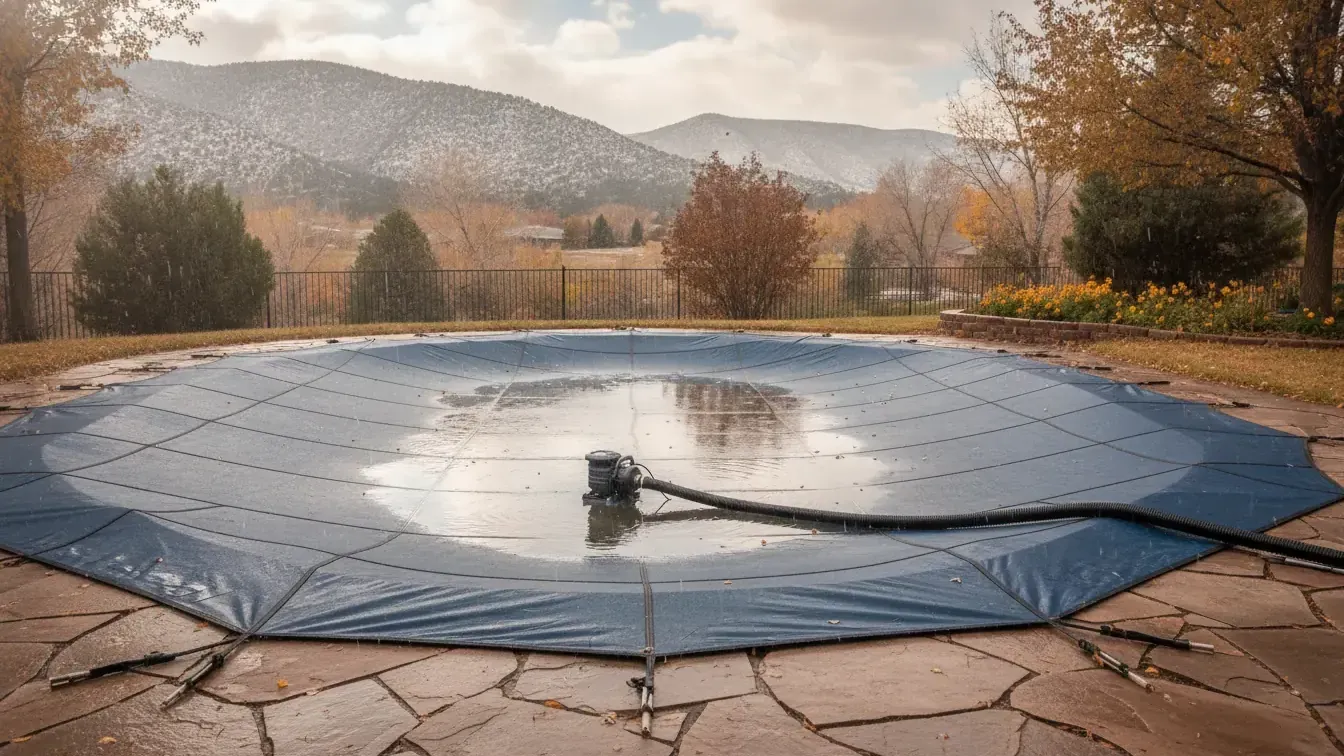
Standing water on a winter pool cover is more than an eyesore. Rain, melting snow, and leaves can collect in the lowest area, add strain to the cover, and create a slippery work area around the pool. A pool cover pump gives Denver homeowners a controlled way to remove that water without dragging a hose, scooping by hand, or putting weight on the cover.
The right choice depends on how often water collects and how closely you can monitor the pool. It also depends on whether you want a simple manual tool or an automatic pump that responds when water rises. This guide explains the difference, outlines a safe operating routine, and shows when a drainage or equipment concern should be handled by a professional.
What is a pool cover pump, and when is it useful?
Short answer: A pool cover pump is a small submersible device that sits on top of a pool cover and moves accumulated rainwater or meltwater through a discharge hose. It is useful when a cover collects water faster than it can drain safely, especially during Denver's spring storms, fall rain, and snowmelt.
A cover pump is not the same as the pump that circulates water through a pool's filter, heater, and plumbing. The cover pump handles water above the cover. It normally rests in the lowest collection area, draws in the water around it, and sends that water to a suitable discharge point through a hose. The pool's circulation system may be shut down for winter, while the cover pump is used only when water accumulates on top.
That distinction matters because the two pumps have different jobs, electrical requirements, and warning signs. A cover pump cannot replace winterization, repair a leaking circulation system, or make an unsafe cover safe to walk on. It is a targeted tool for removing surface water from the cover.
When does a cover pump make sense?
- Your cover has a low spot. Solid covers often collect water in one area after rain or snowmelt.
- Your property gets repeated wet weather. A pump is more practical when checking and removing water by hand becomes a recurring chore.
- You want to reduce cover strain. Removing water promptly helps limit the load placed on the cover and its anchors.
- You need a controlled discharge path. A hose can direct water away from the pool, foundation, deck, and neighboring property when routed correctly.
- You cannot safely use a manual method. No one should kneel, stand, or crawl on a pool cover to reach a puddle.
A pump is less useful when the cover is torn, badly sagging, improperly anchored, or collecting water because of a larger drainage problem. In those cases, pumping may remove the symptom without addressing the condition that created it.
Manual vs. automatic pool cover pumps: Which is better?
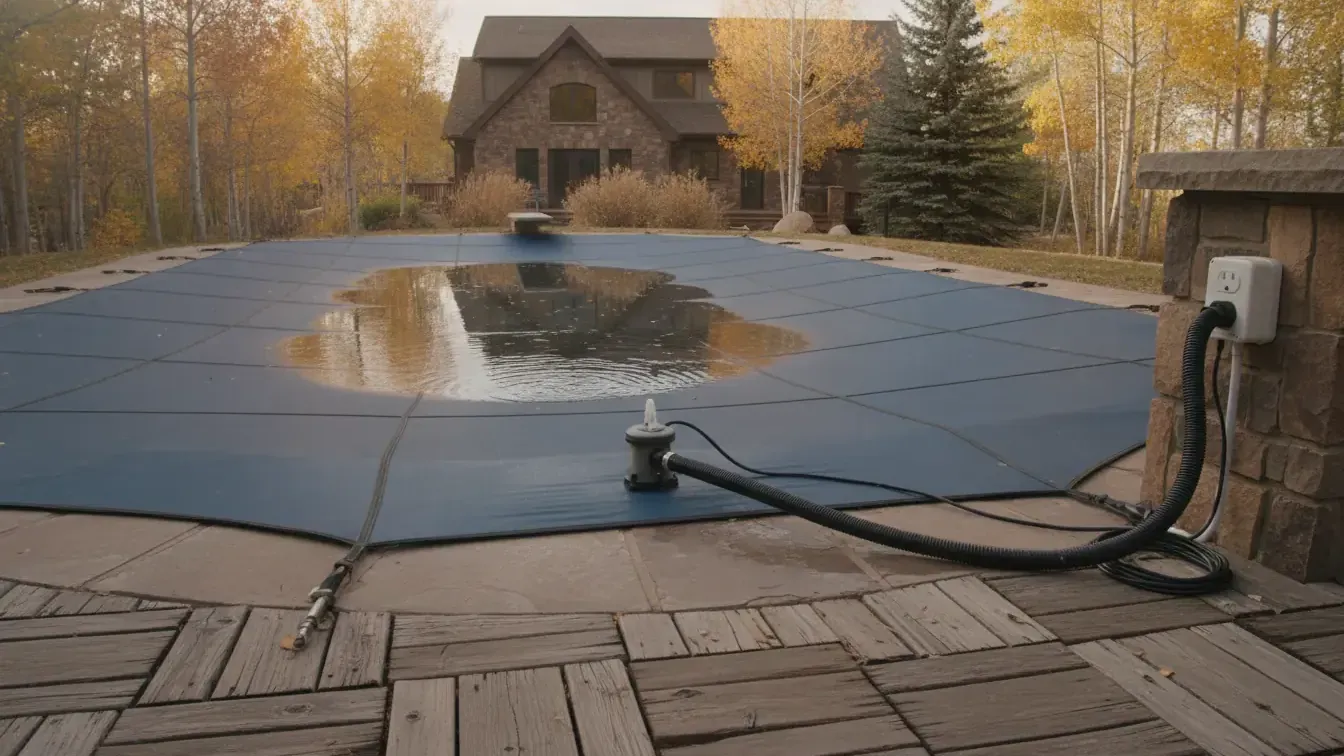
Short answer: Manual pumps are simple and work well when a homeowner can inspect the cover and switch the pump on and off. Automatic pumps use water-sensing controls to start when water reaches the sensor and stop when the water level drops. The better option is the one that matches your monitoring habits, cover conditions, and manufacturer's instructions.
Neither operating style is automatically safer in every situation. A manual unit can be straightforward because you control when it runs. An automatic unit can reduce the chance of leaving water in place after a storm, but it still needs correct placement, an approved power setup, and occasional inspection. Both types must be used only as directed for pool-cover water removal.
| Consideration | Manual pool cover pump | Automatic pool cover pump |
|---|---|---|
| How it starts | You turn it on when you see water that needs to be removed. | A water-sensing control starts it when the level reaches the sensor. |
| Best fit | Owners who check the cover after storms and want direct control. | Owners who want a more hands-off response to recurring rainfall or snowmelt. |
| Main responsibility | Remembering to inspect the cover, start the pump, and shut it off. | Keeping the sensor clear, confirming the pump is positioned correctly, and checking that it responds as expected. |
| Weather limitation | It does not respond while unattended, and it should not be left running outside its rated use. | It still may not be appropriate for ice, debris blockage, power interruptions, or conditions outside the product instructions. |
Which type fits a Denver homeowner?
Choose a manual pump if you already inspect the cover after storms and prefer to make the operating decision yourself. Choose an automatic model if water tends to collect between inspections and the product's sensing and power requirements fit your setup. For either choice, give more weight to the cover's condition and a safe discharge route than to a pump's marketing claims.
Do not treat a higher-capacity label as permission to place a pump on an unstable, damaged, or ice-covered surface. If the cover moves, the pump shifts, or the hose creates a trip or drainage hazard, stop and address the setup before running the unit again.
How do you choose the right pool cover pump?
Short answer: Choose a pool cover pump by matching the unit to the cover's design, water workload, discharge route, and approved outdoor power setup. Confirm that the unit can sit on the cover without damaging the material or becoming unstable.
1. Start with the cover, not the pump label
Inspect the cover's material, seams, anchors, water bags or restraints, and any existing drainage points. A pump should sit where water naturally collects, but a deep sag may indicate that the cover needs adjustment or repair. Do not use the pump to compensate for a loose, torn, or improperly supported cover.
2. Estimate the real weather workload
Think about the conditions your pool actually sees. A property exposed to open sky may receive more direct rain. A tree-lined yard may collect leaves that clog the intake. A Colorado yard can also move from autumn rain to snow and then to rapid melt. These conditions affect how often you need to inspect the cover and how much debris control matters.
There is no universal pump size for every pool. Follow the manufacturer's limits for the model, cover, water depth, hose length, lift, and duty cycle. Avoid choosing only by a large gallons-per-hour claim if the discharge route is restrictive or the cover cannot safely support the unit.
3. Plan where the water will go
Before the first storm, decide where the discharge hose will end. Direct water away from the pool, home foundation, equipment pad, electrical components, walkways, and neighboring property. Make sure the outlet does not create erosion, ice, or a new standing-water problem. If the only practical route crosses a walking area or drains toward the equipment, a professional should review the setup.
4. Confirm the power and control requirements
Read the product instructions for the approved outlet, cord length, outdoor use, sensor clearance, and any restriction on extension cords or adapters. Keep plugs and connections out of standing water. Do not handle electrical connections with wet hands, and never improvise a repair to a damaged cord, plug, housing, or control.
Pool-area electricity deserves extra caution. If the outlet, circuit, grounding, GFCI protection, or equipment connection is uncertain, do not guess. A qualified professional can inspect the electrical and equipment concern without turning a water-removal task into a shock or fire risk.
5. Account for debris and service access
Leaves, needles, and small debris can reduce flow or interfere with a sensor. Select a unit whose intake and filter arrangement can be checked according to the instructions. You should be able to inspect it without walking on the cover. If the pump requires you to reach the middle of a large or loose cover, the safe choice may be professional help rather than a different pump.
How should you use a pool cover pump safely?
Short answer: Inspect the cover from a safe position. Clear obvious debris without climbing onto it. Place the pump at the lowest stable collection point, route the hose away from hazards, and use only the approved power method. Monitor the setup while it runs, then stop when the water is removed or conditions become unsafe.
- Inspect before touching the equipment. Look for tears, displaced anchors, excessive sagging, ice, exposed electrical damage, and debris that could block the intake. If the cover looks unstable, do not proceed.
- Keep people and pets away. A covered pool can still be a drowning hazard. Keep children and pets off the cover and away from the work area. Never assume that a cover can support a person.
- Clear only what you can reach safely. Remove loose leaves from the deck or edge. Do not crawl, kneel, or stand on the cover to reach the pump location.
- Place the pump as directed. Set it at the lowest stable area. Keep the intake and sensor clear, and make sure it is not resting on a sharp object, folded seam, anchor, or damaged patch.
- Route the hose before powering the unit. Keep the discharge end stable and direct water to a suitable location. Remove trip hazards from the deck and keep the hose away from the equipment pad and electrical connections.
- Use the approved power setup. Follow the manual for the outlet and controls. Never connect or disconnect equipment from a wet position, and do not operate a damaged unit.
- Observe the first minutes of operation. Confirm that water is moving, the hose is not kinked, the pump has not shifted, and the discharge is not creating a new hazard.
- Stop when conditions change. If the pump runs dry, loses stability, trips a protective device, makes an unusual noise, or encounters ice, stop the pump. Follow the product instructions, and seek help if the cause is not clear.
What should Denver homeowners do in wet or freezing weather?
Short answer: Check the cover before and after major rain or snow, keep the discharge route open, and treat ice as a stop condition rather than something to force through. A cover pump is for removable surface water. It is not a substitute for winterization, freeze protection of pool equipment, or professional inspection.
Before rain or snow
- Confirm that the cover is secure and that anchors, restraints, and visible seams are in normal condition.
- Make sure the pump, hose, and approved power source are accessible from a safe position.
- Check that the planned discharge point is not blocked and will not send water toward the pool equipment or foundation.
- Remove loose debris from the deck and cover edge so it does not wash toward the pump intake.
After a wet-weather event
Inspect the cover from the deck. Look for a new sag, shifted pump, blocked intake, kinked hose, or water moving toward the house. A small amount of water may remain after pumping, but any growing puddle, repeated pump movement, or failure to drain as expected deserves attention rather than repeated operation.
When temperatures fall below freezing
Freezing water can immobilize a pump and add weight to the cover. Do not force a pump through ice, chip ice against the cover, or stand on the cover to reach a frozen unit. Follow the specific manufacturer's instructions for cold weather. If you cannot access the pump and electrical connection from a dry, stable location, leave it alone and request professional guidance.
Denver pool owners should also separate cover-water management from whole-system freeze protection. A pool closing may include water-level adjustment, equipment shutdown, line blow-out, winter cover installation, and a winter risk inspection. Those tasks protect plumbing and circulation equipment and are not accomplished by placing a cover pump on top of the cover.
When should a professional handle drainage or equipment concerns?
Short answer: Call a professional when the cover is damaged or unstable, or when water collects repeatedly despite proper pumping. Professional help is also appropriate if the discharge route threatens the property or the pump shows an electrical, mechanical, or circulation-system problem. Professional service is the right choice when safe access requires walking on the cover or working near wet electrical connections.
- The cover has a tear, broken anchor, severe sag, or a seam that is pulling apart.
- Water returns quickly because of a suspected leak, drainage issue, or structural problem.
- The pump trips a protective device, will not start, runs abnormally, or has a damaged cord or housing.
- The hose cannot discharge without flooding the deck, foundation, equipment pad, or neighboring property.
- Ice or snow makes the pump inaccessible or unsafe to approach.
- You are unsure whether the issue is on top of the cover or inside the pool's circulation and equipment system.
Neptune Pools provides equipment troubleshooting, pump repair, seasonal opening and closing services, and maintenance support across the Denver Metro area. A technician can help separate a cover-water problem from a pump, filter, plumbing, or winterization concern and recommend the next safe step.
FAQs: Pool Cover Pump Safety
Is a pool cover pump necessary?
Not every pool needs one. A pump is useful when rain or melting snow repeatedly collects on a solid cover and cannot drain safely. If your cover drains well and you can monitor it after storms, you may not need a dedicated pump. Never use the absence of a pump as a reason to walk on a cover.
What is the best way to remove water from a pool cover?
A properly selected and correctly placed pool cover pump is usually the most controlled option for recurring standing water. Use a manual unit when you can monitor the cover, or an automatic unit when its sensing and power requirements fit your setup. Follow the cover and pump manufacturers' instructions.
Can I leave an automatic pool cover pump running?
Only if the product instructions allow that operating pattern and the setup remains safe. Automatic operation does not remove the need to inspect the cover, sensor, hose, discharge point, and power connection. Stop if the pump shifts, runs dry, encounters ice, or shows damage.
Can a pool cover pump run during freezing weather?
Freezing weather requires caution because water and ice can immobilize the unit and add weight to the cover. Do not force a pump through ice or approach it by walking on the cover. Follow the model's cold-weather instructions and seek professional help if the unit cannot be reached safely.
Is a pool cover pump the same as a pool circulation pump?
No. A cover pump removes water from the top of a cover. A circulation pump moves pool water through the filter, heater, and plumbing. They have different purposes and should not be substituted for one another. A circulation or equipment problem needs the appropriate repair or winterization assessment.
Related Blogs