Pool Filter Replacement Cost in Denver: A Practical Budget Guide
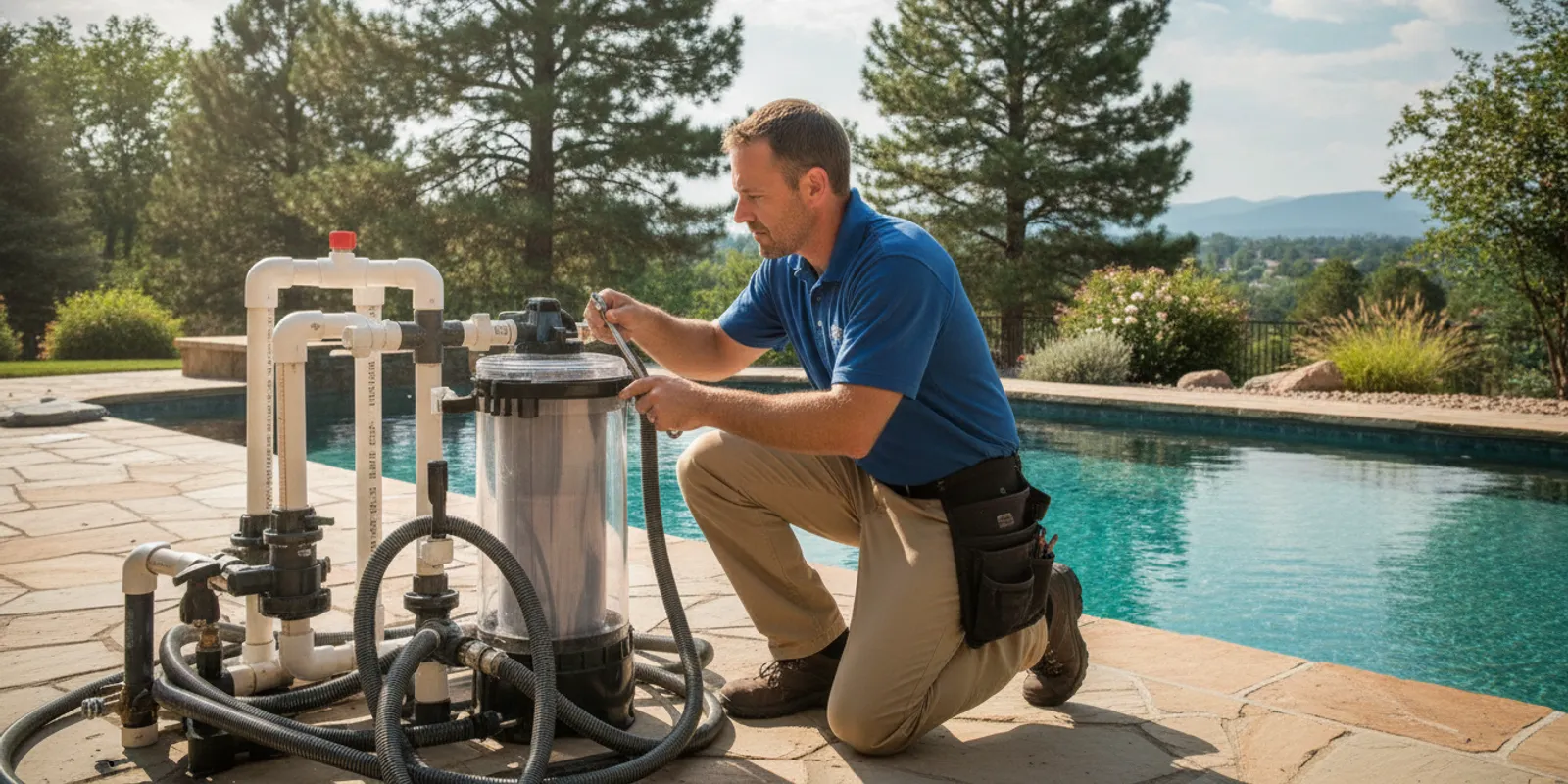
When you research pool filter replacement cost, the first question is not simply which filter costs least. In Denver, the right budget depends on the filter type, the condition of the plumbing and valves, whether the existing system is correctly sized, and how much of the assembly needs to change. A careful diagnosis helps separate a worn filter from a circulation or water-balance problem—and keeps a replacement quote focused on work your pool actually needs.
Ask Neptune Pools to inspect your pool filter system.
What Does Pool Filter Replacement Cost Include?
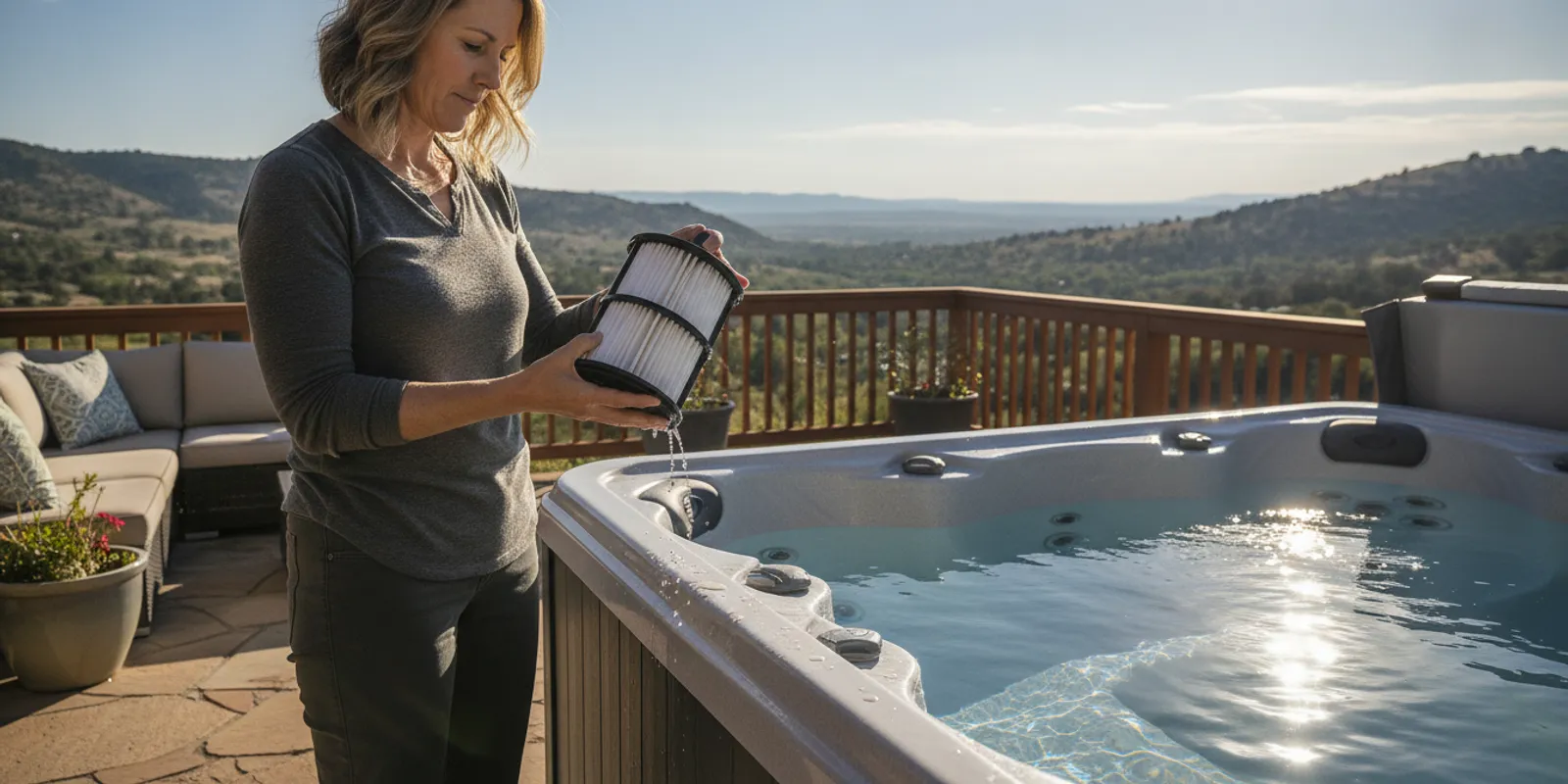
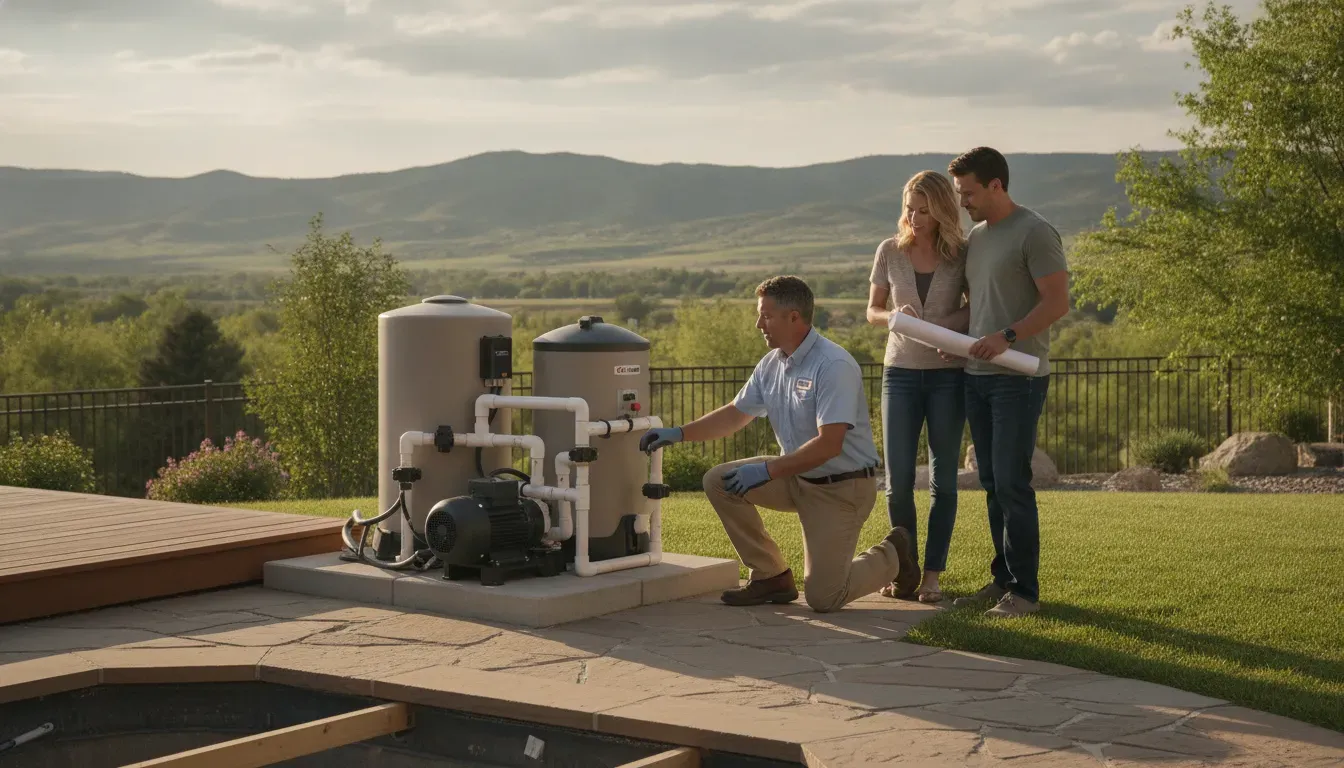
A filter replacement quote can refer to several different scopes of work. Replacing only the cartridge or other filter media is not the same as replacing the complete filter tank. A full installation may also include disconnecting old plumbing, adapting unions or pipe connections, replacing a multiport valve or shutoff valve, correcting a leak, and testing circulation after startup.
That is why two quotes for “a new filter” may not be comparable. One may cover a compatible filter vessel and basic labor; another may include needed plumbing changes, disposal, new fittings, pressure checks, and a return visit if the system needs adjustment. Ask the provider to identify what equipment is included, what work is excluded, and whether the quote assumes the pump and plumbing are in usable condition.
In practical terms, think of the budget in three parts:
- Equipment: the filter tank or body, internal parts, and any required valve or connection components.
- Installation: labor to remove and set the equipment, connect it safely, and verify operation.
- Related corrections: repairs to a leaking line, damaged valve, unsuitable plumbing, or another condition discovered during diagnosis.
For a broader look at what a technician may inspect, review Neptune Pools’ pool equipment repair and servicing information. A filter problem can overlap with pump, pressure, and circulation issues, so the quote should explain the finding rather than assume the filter is the only cause.
How Do Cartridge, Sand, and DE Filter Costs Compare?
The filter type affects both upfront spending and routine ownership. There is no universal least-expensive choice: tank size, brand and model, access, plumbing, and the condition of the old equipment all matter. The table below compares typical budget patterns, not guaranteed Denver prices. Use it to ask better questions when you request a written estimate.
| Filter type | Replacement scope to clarify | Upfront budget tendency | Ongoing ownership considerations |
|---|---|---|---|
| Cartridge | One or more cartridges only, or the complete tank and internal assembly | Often moderate for a complete system; a cartridge-only change is a smaller scope | Cartridges need periodic cleaning and eventual replacement; no backwashing cycle |
| Sand | Sand media alone, internal laterals and standpipe, valve, or complete filter | Often moderate, with plumbing or valve work affecting the total | Backwashing uses pool water; media and internal parts have separate service lives |
| Diatomaceous earth (DE) | Grids or elements, manifold, tank, valve, or a complete filter | Can be higher when internal components or the complete assembly are needed | Requires careful recharging and maintenance; ask what materials and service are included |
The type-specific details can change the scope substantially. With a cartridge system, clarify whether the quote covers every cartridge in the housing and whether the tank closure, air relief, or gauge needs service. With sand, ask whether the estimate is for media only or includes inspecting the laterals and valve; putting fresh media into a filter with damaged internals may not solve the problem. With DE, confirm whether the grids or elements, manifold, and valve were checked, and how the system will be recharged after service. A quote should use the exact filter type and model rather than a generic label.
These are planning categories, not a price list. A high-capacity cartridge filter may cost more than a smaller unit in a different category. A sand filter that needs only a media change has a different scope from one with cracked laterals or a failing valve. A DE filter with damaged grids is not comparable to a full new tank. Request an itemized quote for the exact model and work proposed. If replacement is being considered because the pool does not seem to clear, ask what result to expect and how long normal filtration and water care may take after the repair. The estimate should not promise that changing one component will correct an unrelated chemical or circulation issue.
When Is a Filter Part Enough, and When Is a Full Replacement Better?
Many apparent filter failures can be addressed without changing the complete unit. A cartridge may be clogged, worn, or damaged while its tank remains serviceable. Sand may need attention, or a valve may leak or fail to direct water correctly. On a DE system, damaged grids or a manifold problem can affect filtration even when the tank itself is sound. The age of a component matters, but age alone does not prove that the entire filter must be replaced.
A full replacement becomes more reasonable when the tank is cracked, has a persistent leak that cannot be repaired safely, or has deteriorated internal parts that are difficult to source. It may also be worth comparing replacement with repair when multiple components are failing or when the existing filter is a poor match for the pump and pool. The technician should explain why the proposed repair is reliable—or why it is not—rather than treating every pressure issue as proof of a bad filter.
Before approving work, ask these questions:
- What did the inspection find, and how does that finding explain the symptom?
- Is the proposed work a media or internal-part replacement, or a complete filter change?
- Can the existing tank, valve, and connections remain in service?
- Are replacement parts available for this make and model?
- What additional work could change the estimate, and how will that be approved?
If the pool is cloudy, the pump basket is losing prime, or the pressure reading is unusual, those signs deserve diagnosis; none identifies a failed filter on its own. For information about water safety beyond mechanical equipment, consult the Centers for Disease Control and Prevention’s public-health resources. For symptoms that may involve the pump, see this pool pump troubleshooting guide. Keep the filter question separate from the broader water-care routine described in pool cleaning and maintenance service information.
What Changes a Pool Filter Replacement Quote in Denver?
Filter size and flow needs. The replacement must suit the pool’s circulation system and the pump’s actual operating conditions. Choosing by tank dimensions alone can miss capacity and connection requirements. A technician may need to confirm the model, the plumbing layout, and how the system is intended to run.
Access and configuration. A filter placed in a tight equipment area can take more time to remove and install than one with open access. Unions, shutoff valves, pipe condition, and the space needed to service the new unit can affect labor. A quote should say whether ordinary connection adjustments are included or billed separately.
Compatibility and availability. The new unit needs suitable port placement, connection size, and valve arrangement. If the old model is discontinued or the new filter has a different footprint, plumbing modifications may be required. Confirm the make and model on the estimate so you know what is being installed.
Condition of connected equipment. A filter is one part of a system. A pump issue, air leak, damaged gauge, or failing valve can complicate the work or make a new filter appear ineffective. Have the provider identify any related repair as a separate line item, rather than bundling an uncertain diagnosis into a vague replacement charge.
Startup and cleanup. A complete job should account for safe removal, leak checks, normal system startup, and a clear explanation of the new filter’s maintenance. Ask whether disposal of old equipment and a follow-up inspection are included. If the pool is being opened or closed near the replacement, timing may also affect the work plan. See the steps involved in Denver pool closing and winterization when seasonal shutdown is approaching; freeze preparation is a separate task from changing a filter.
How Can You Compare Filter Replacement Estimates?
Ask for a written estimate with enough detail to compare like with like. A low total may omit a valve, fittings, or diagnosis, while a higher total may include those items. Compare the proposed equipment and work, not just the bottom line.
- Record the existing setup. Photograph the filter label, valve, pressure gauge, and plumbing connections. Note the filter type and any visible leak or damage. Do not open a pressurized filter to obtain this information.
- Describe the symptoms and recent service. Share when the issue began, whether pressure changes after cleaning or backwashing, and any relevant maintenance. This gives the technician a starting point without assuming the cause.
- Ask for the diagnosis. Request the observed condition and the reason it supports a part repair or full replacement. If the pool water is cloudy, ask whether circulation and water chemistry were considered alongside the filter.
- Compare the line items. Check the exact unit or component, labor, plumbing changes, valve work, disposal, startup, and any exclusions. Ask whether taxes or other charges are included in the total.
- Confirm system fit and operation. Ask how the proposed filter fits the pump and existing plumbing, and what pressure or leak checks are part of completion.
Use Neptune Pools’ guide to choosing a pool filter to understand the main filter styles before discussing a specific replacement. The goal is not to pick the biggest filter or the least expensive model. It is to choose equipment that suits the system and can be maintained properly.
For Denver-area owners, the timing of the work matters too. Outdoor pools have a strong seasonal rhythm, and a repair that can be planned before opening or before colder weather may be easier to coordinate than an unexpected failure during peak use. That does not mean a filter should be replaced preemptively without a reason. It means documenting the model and asking about lead time when a technician identifies a part that is near the end of its useful service.
Get a clear diagnosis before you budget for a replacement.
Can You Reduce the Cost Without Choosing the Wrong Filter?
Start with a diagnosis rather than replacing the tank based only on cloudy water or a pressure reading. Follow the manufacturer’s care instructions for the filter type, and keep a record of clean-filter pressure and routine service. Those notes help distinguish normal changes from a developing problem. Do not exceed the filter manufacturer’s pressure limits, and never loosen a clamp or open a filter while it is pressurized.
When a smaller repair is recommended, ask about its expected scope and what would lead to a full replacement later. When replacement is recommended, ask whether the current plumbing can be reused and whether the selected model has the right capacity and connections. Reusing sound components can avoid unnecessary work; forcing a new filter onto an unsuitable or deteriorated setup can create avoidable problems.
Also compare ownership needs, not just installation cost. Cartridge filters avoid backwashing but require cartridge cleaning and eventual replacement. Sand filters use backwashing as part of routine care and may need attention to internal parts. DE filters need the correct care and recharge process. The better fit depends on your maintenance preferences, equipment arrangement, and the manufacturer’s requirements. If water care is also on your list, Neptune Pools offers pool supplies, chemicals, and testing; chemistry and mechanical filtration work together, but chemicals cannot repair a damaged filter.
Schedule a pool equipment inspection with Neptune Pools.
Frequently Asked Questions About Pool Filter Replacement Cost
How much does it cost to replace a pool filter in Denver?
There is no single dependable price without the filter type, model, size, and work scope. A cartridge-only replacement, a new filter tank, and a complete installation with valve or plumbing changes are different jobs. Ask for an itemized local estimate after inspection, and confirm what equipment and labor it includes.
Is replacing filter media cheaper than replacing the whole filter?
Usually, replacing serviceable media or an internal part is a smaller job than replacing the complete assembly. But that is only a sound savings if the tank, valve, and remaining components are in good condition and compatible. Ask the technician to explain whether a part repair addresses the cause and what condition the other components are in.
Should I replace a filter and pump at the same time?
Not automatically. The pump and filter should work together, but one failing component does not prove that the other needs replacement. Have both assessed if there are circulation problems, unusual pressure behavior, leaks, or noise. A quote should separate necessary work from optional upgrades and explain any compatibility concern.
Does cloudy pool water mean I need a new filter?
No. Cloudy water can have several causes, including water-balance, circulation, or filtration issues. Check the system and water rather than assuming a new filter will solve it. If a technician recommends replacement, ask which observed defect is responsible and whether other causes were considered.
How can I get a more accurate replacement estimate?
Provide clear photos of the filter label and plumbing, describe the symptoms and recent maintenance, and request an on-site diagnosis when needed. Ask for the exact replacement model, labor, related parts, startup checks, and exclusions in writing. Neptune Pools serves Denver Metro communities; see its service area information for coverage details.
Plan the Replacement Around the Diagnosis
The most useful pool filter replacement budget is based on the actual fault, the right replacement capacity, and the plumbing work required—not just the filter category. Compare written scopes, ask what can safely remain in service, and make sure startup and testing are included. For questions about an estimate or equipment service in the Denver Metro area, contact Neptune Pools.
Contact Neptune Pools to discuss your pool filter replacement options.
A clear diagnosis and itemized quote can help you choose a filter solution that fits both your pool and your maintenance plans.
Related Blogs