A pool heat pump can extend a Denver swimming season without relying on a fuel burner. It uses electricity to move available heat from outdoor air into the pool. So its output and operating cost depend heavily on air temperature, water temperature, pool size, insulation, and how long you run it. This guide explains what to expect before you compare equipment or request a service recommendation.
Talk with Neptune Pools about pool heat pump equipment service.
What is a pool heat pump?
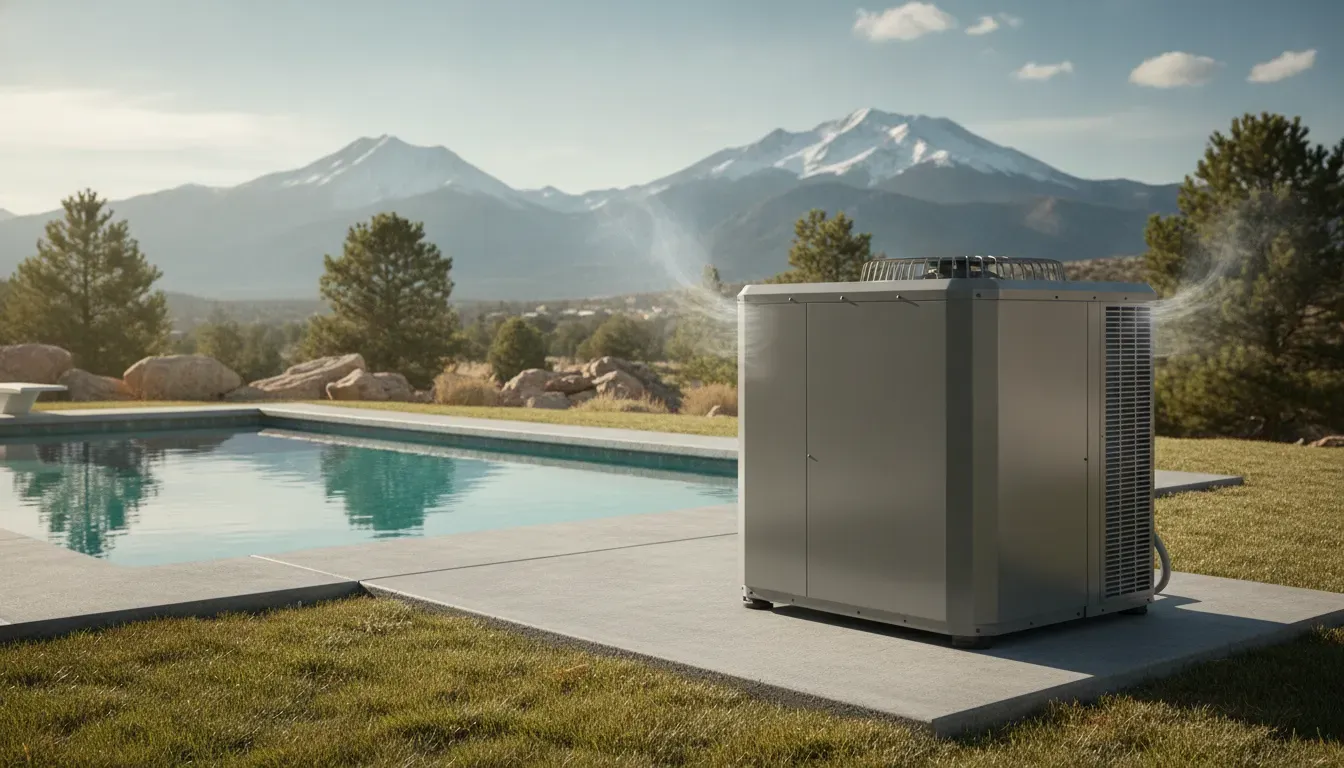
A pool heat pump is an electric heating appliance that transfers heat rather than creating heat through combustion. A fan draws outdoor air across a refrigerant coil. The refrigerant absorbs available heat, a compressor raises its temperature, and a heat exchanger transfers that heat to water moving through the pool system. The U.S. Department of Energy defines consumer pool heaters as appliances designed to heat nonpotable water in pools, spas, and similar applications. DOE's consumer pool heater resource provides the regulatory background.
That process gives a pool heat pump a different operating profile from a gas heater. A gas heater can deliver high heat output quickly when properly supplied and vented. A heat pump generally works best when outdoor air is mild enough to provide usable heat, and it may take longer to raise water temperature. The right choice depends on whether your priority is steady maintenance of a target temperature, rapid recovery, shoulder-season use, or occasional high-output heating.
How does a pool heat pump work?
A pool heat pump's basic cycle is simple: capture heat from outdoor air, increase its temperature through the refrigeration cycle, and transfer that heat into circulating pool water. It still needs electrical power for the fan and compressor, plus adequate water flow through the heat exchanger. It does not make the pool independent of weather, and it cannot compensate for an undersized system, a dirty filter, restricted flow, or major heat loss.
- Air intake: The fan moves outdoor air across the evaporator coil.
- Heat absorption: Refrigerant takes in heat from the air, even when the air feels cool.
- Compression: The compressor raises the refrigerant's pressure and temperature.
- Water transfer: The condenser or heat exchanger transfers heat to water returning to the pool.
- Repeat: The cycle continues while the controls call for heat and the system has safe airflow, electrical supply, and water flow.
Some newer units modulate output with inverter controls instead of cycling at one fixed output. That can make operation quieter and allow the system to match demand more closely, but model-specific performance still matters. A product label or sales description alone is not enough to determine whether a unit fits a particular pool and Denver installation.
What affects pool heat pump efficiency and cost?
The most useful way to think about pool heat pump efficiency is to separate equipment performance from heat loss. A well-sized unit can still run for long periods if the pool is uncovered, windy, cool at night, or being heated from a low starting temperature. The same unit may maintain a target temperature more comfortably when the pool is covered and outdoor conditions are favorable.
| Cost or efficiency factor | Why it matters | What to ask about |
|---|---|---|
| Outdoor air temperature | Warmer air generally gives the heat pump more usable heat and supports stronger output. | What outdoor temperature range is used for the performance rating? |
| Target water temperature | A larger temperature lift takes more time and energy than maintaining a stable setting. | What target temperature and use pattern do you want? |
| Pool surface and volume | A larger exposed surface and greater water volume increase the heating demand. | What are the pool dimensions, volume, and wind exposure? |
| Pool cover | Evaporation is a major source of heat loss from an uncovered pool. | Can the cover be used whenever the pool is not in use? |
| Wind and nighttime cooling | Moving air and cool nights can pull heat from the water faster. | Is the equipment placement sheltered without restricting airflow? |
| Water flow and maintenance | Restricted flow, dirty filters, or sensor issues can reduce safe operation. | Who will check the filter, flow, sensors, and heat exchanger? |
| Electricity rate and run time | Your bill reflects input power multiplied by operating hours and your utility rate. | What input power does the selected model use under your conditions? |
How can you estimate operating cost?
Do not estimate a pool heat pump's cost from the unit's heating capacity alone. A practical planning formula is: input kilowatts x hours of operation x electricity rate = energy cost for that period. Use the manufacturer's input-power data for the relevant outdoor and water temperatures, then compare that estimate with the hours needed to maintain your target. Actual results change with weather, cover use, water temperature, filtration settings, and whether the unit is maintaining heat or recovering after a cool night.
Installation cost is a separate question from operating cost. The project may involve electrical requirements, plumbing connections, equipment-pad space, drainage, controls, flow checks, and removal or retention of existing equipment. Because those conditions differ from pool to pool, a responsible quote requires an equipment and site review rather than a generic online number.
Why sizing and setup matter
Correct sizing is not simply a matter of matching a heater to pool gallons. A technician also considers the exposed water surface, prevailing wind, cover use, desired temperature, and how quickly the pool needs to recover after cool nights. A unit that is too small may run for long periods without meeting expectations. A unit that is poorly placed may lose performance because air cannot move freely through the coil.
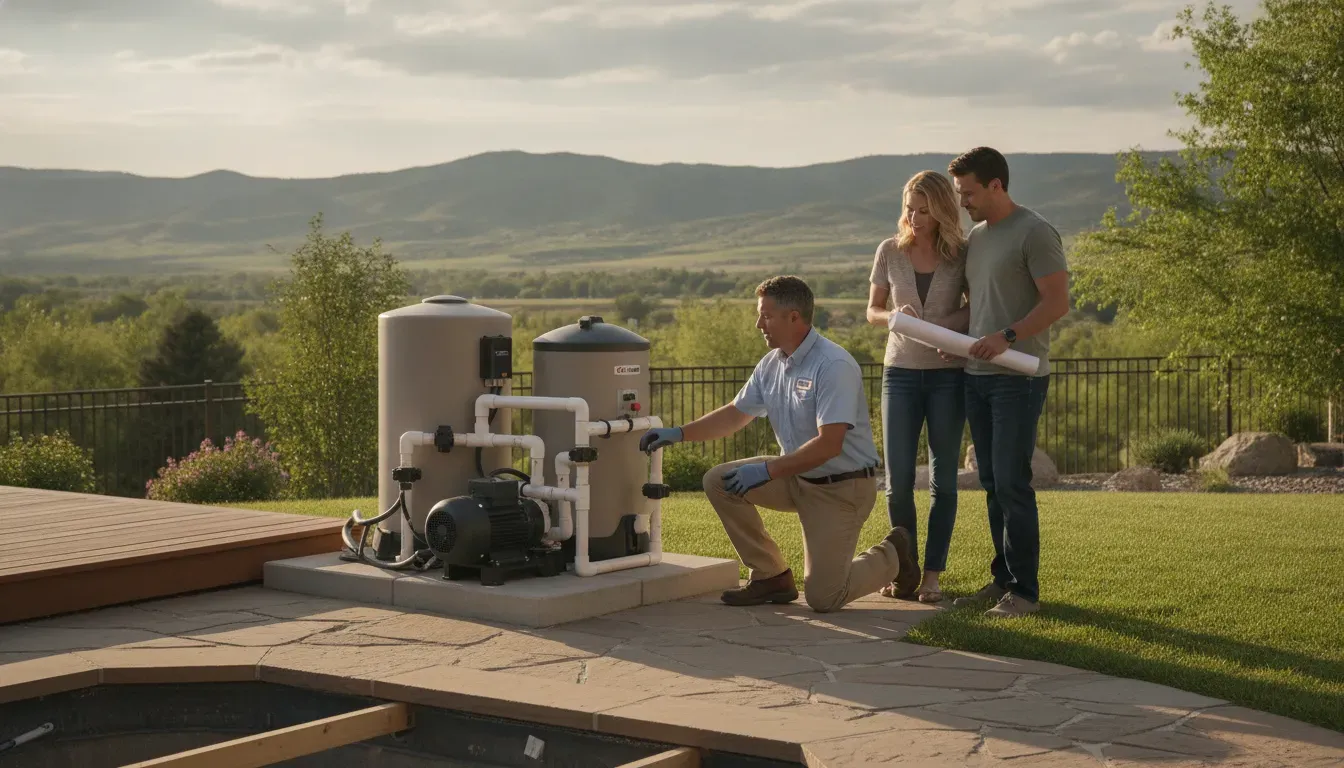
Setup also affects serviceability. The equipment pad should leave room for airflow, drainage, electrical access, plumbing connections, and future testing. Controls should be compatible with the existing circulation and automation equipment. Before installation, ask how the system will be isolated, drained, and protected when the pool is closed for winter. These details help prevent a heating upgrade from creating new maintenance problems.
Request a Neptune Pools equipment review for a pool heat pump recommendation.
How does Denver weather change pool heat pump performance?
Denver's elevation, dry air, strong sun, rapid weather changes, and cool nights all affect pool heating decisions. The city's outdoor conditions can be comfortable in the afternoon while still producing substantial heat loss after sunset. A pool heat pump may perform well during warmer daytime periods but need longer run time during a cold snap or early-season opening. Check the National Weather Service Denver climate resource for local climate context rather than relying on a single day's forecast.
Denver's normal pool operating season is concentrated from roughly April through October, while winter pool closing and freeze protection protect plumbing and equipment outside that window. That makes the shoulder seasons especially important. In April and early May, the air may be warm enough for comfortable afternoon operation but cool enough overnight to erase much of the day's gain. In September and October, shorter days and cooler nights can create the same pattern.
- Spring opening: A heat pump can help build temperature gradually, but the starting water temperature and cover strategy matter.
- Summer maintenance: Warm afternoons may support efficient maintenance of a target temperature, especially with a cover and consistent circulation.
- Fall extension: Plan for longer run times as nights cool and the pool loses heat faster.
- Freeze risk: A pool heat pump is not a substitute for winterization, line blow-out, or freeze-protection procedures.
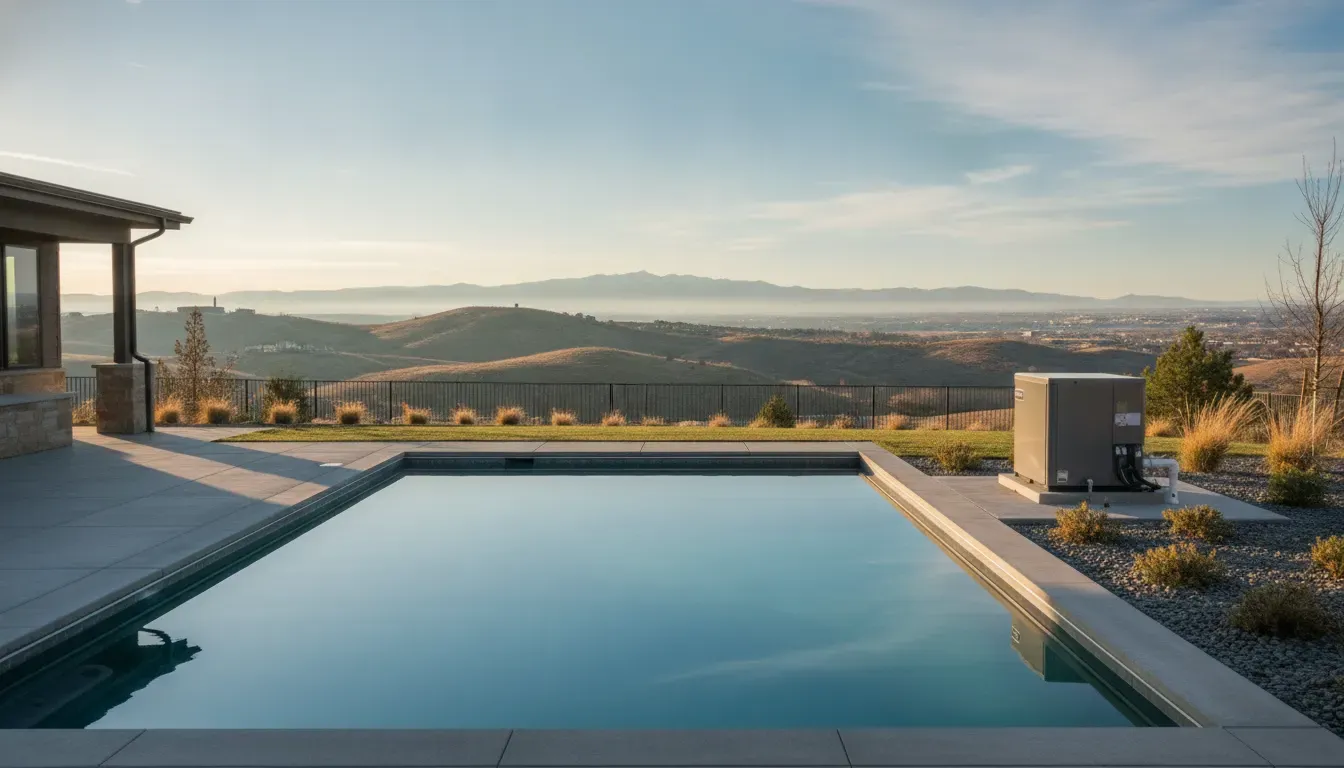
- Equipment placement: Keep the air intake and discharge clear. Enclosing the unit too tightly can reduce airflow and performance.
Is a pool heat pump a good fit for Denver?
A pool heat pump may be a good fit when you want steady temperature maintenance. Plan to use the pool regularly, and can operate the system during periods when outdoor air provides useful heat. It may be less suitable when you need rapid heating from cold water, expect frequent winter operation. Have limited electrical capacity, or cannot use a cover to control evaporation and nighttime loss.
The answer is not just heat pump versus gas heater. Compare the complete use case:
- How many weeks or months do you want to add to the season?
- Do you want fast temperature recovery or lower-intensity maintenance?
- Will the pool be covered when it is not being used?
- What electrical service and equipment-pad space are available?
- How will the system be protected when temperatures approach freezing?
- Will the existing pump, filter, automation, and plumbing support the new equipment?
Neptune Pools' broader Denver solar pool heater guide covers a different heating approach. Its energy-efficient pool equipment guide also provides wider upgrade context. Use those resources for comparison, then keep the equipment decision grounded in your pool's site conditions and service requirements.
What should you check before installing or replacing one?
Before selecting a pool heat pump, collect the details a technician will need. This reduces the chance of comparing an attractive headline specification with a system that does not match the actual pool.
- Measure or confirm pool volume and exposed surface area.
- Record the desired water temperature and the months you plan to swim.
- Note whether the pool has a cover and how consistently it will be used.
- Photograph the equipment pad, electrical panel, plumbing, and available clearances.
- Identify the existing pump, filter, automation, and heater model numbers.
- Describe any flow, pressure, sensor, or breaker problems before discussing an upgrade.
- Ask how the unit will be drained, protected, and serviced before freezing weather.
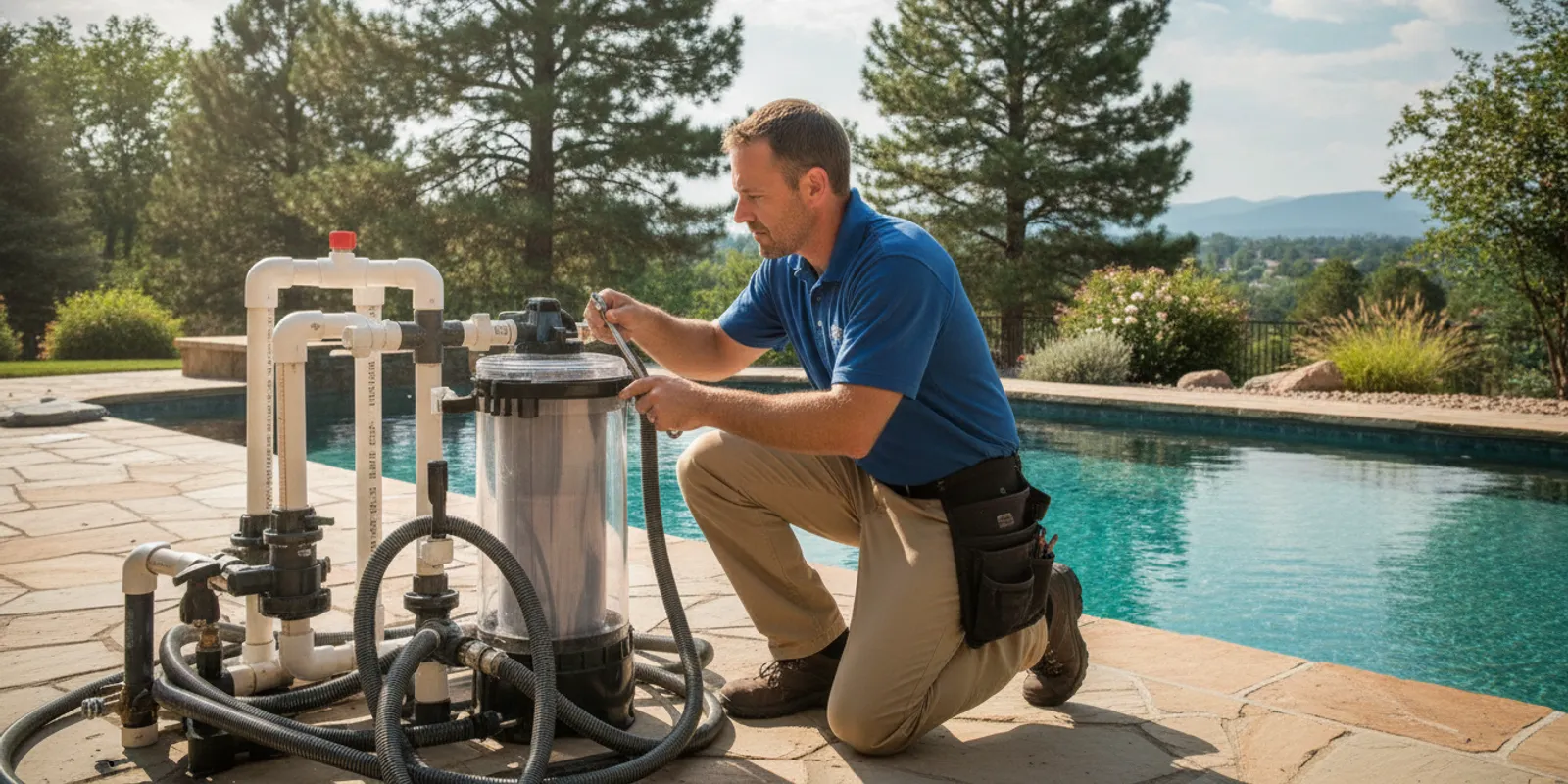
A qualified equipment review should cover temperature and sensor testing, flow checks, electrical requirements, installation compatibility, and repair or upgrade options. Neptune Pools provides equipment repair and servicing for major pool and spa equipment categories, including heaters, pumps, filters, automation, and installation support.
Have a Denver-area technician review your pool heat pump options and equipment compatibility.
Frequently asked questions about pool heat pumps
Is a heat pump for a pool worth it?
It can be worthwhile when you want regular pool use, steady temperature maintenance, and a longer season during favorable outdoor conditions. Value depends on pool size, cover use, target temperature, local electricity rate, equipment fit, and how quickly you need the water heated.
What is the cheapest way to heat a pool?
There is no single cheapest option for every pool. The lowest total cost depends on the equipment purchase and installation, energy source, run time, heat loss, climate, and desired speed. A cover can reduce heat loss regardless of the heating method, while a site-specific comparison is needed to estimate operating cost.
How long does a pool heat pump take to heat a pool?
Heating time varies with water volume, starting temperature, target temperature, outdoor air, wind, cover use, and unit capacity. A heat pump is generally better suited to gradual heating and temperature maintenance than an urgent same-day temperature increase from very cold water.
Does a pool heat pump work in cold weather?
A pool heat pump can operate in cool weather when the model's rated operating range and installation allow it. But output and efficiency decline as outdoor air gets colder. Denver owners should plan for longer run times in the shoulder seasons and use proper winterization when the pool is closed.
Can a pool heat pump replace a gas heater?
It can replace a gas heater in some use cases, but not every pool or operating schedule. The decision depends on desired heating speed, electrical service, outdoor temperatures, pool size, and whether the system is intended for maintenance or rapid recovery. Have the existing equipment and site reviewed before removing a working heater.
How do I know if my pool heat pump needs service?
Call for service if the unit will not start, runs without raising water temperature. Shows a fault, trips a breaker, leaks, has restricted airflow, or makes an unusual sound. Neptune Pools can evaluate temperature, sensors, flow, ignition or electrical components where applicable, and efficiency or repair recommendations.