Pool Maintenance Chemicals 101: The Ultimate Guide
Owning a pool in Colorado is fantastic, but our local climate brings unique challenges. The intense sun at high altitude, our notoriously hard water, and dramatic seasonal shifts all have a direct impact on your water chemistry. The advice that works for a pool owner in Florida won't always cut it here. To keep your pool sparkling, you need a specific approach to your pool maintenance chemicals that accounts for our environment. This guide is tailored for Denver-area pool owners, explaining how factors like UV exposure and high mineral content affect your pool and what you need to do to keep it perfectly balanced all year long.
Ready for a cleaner pool?
Denver's trusted pool care professionals since 1982. Get started today.
Schedule ServiceKey Takeaways
- Focus on the essential chemicals, not the entire aisle: A healthy pool relies on a few key players: a sanitizer to kill germs, water balancers (pH, alkalinity, and calcium) to create the right environment, and a weekly shock treatment to clear out contaminants.
- Balance is the key to effective sanitizing: Your sanitizer, like chlorine, can only work properly when your pH and alkalinity are in their ideal ranges; this balance also protects your pool surfaces and makes the water comfortable for swimmers.
- Test your water before you add chemicals to avoid guesswork: Consistently testing your water is the only way to know exactly what it needs, which prevents you from wasting money on the wrong products and helps you fix issues before they become big problems.
What Pool Chemicals Do You Actually Need?
Walking down the pool chemical aisle can feel overwhelming. With so many bottles, bags, and buckets all promising a crystal-clear pool, it’s hard to know where to start. The good news is that you don’t need every product on the shelf. Pool chemistry boils down to a few key players working together to keep your water safe, clean, and comfortable.
Think of it like a team: you have your main defenders (sanitizers), your support crew (water balancers), your weekly refreshers (oxidizers), and your special-teams players for specific problems (specialty chemicals). Understanding what each one does makes managing your pool much less intimidating. Getting the right mix of supplies and chemicals is the first step toward a healthy pool you can enjoy all season long. Let's break down the essentials you'll want to have on hand.
Sanitizers
Sanitizers are the foundation of your pool care routine. Their main job is to kill bacteria, viruses, and other unwelcome germs to keep your water safe for swimming. The most common sanitizer is chlorine, which you can find in slow-dissolving tablets, quick-acting granules, or liquid form. It’s a powerful and effective workhorse for most pools. Another popular option is bromine, which is a great alternative for spas or indoor pools because it remains stable and effective in warmer water temperatures. Whichever you choose, maintaining a consistent sanitizer level is non-negotiable for a healthy swimming environment.
Water Balancers
Water balancers are the unsung heroes of pool chemistry. They don’t kill germs, but they create the right environment for your sanitizer to work efficiently while also protecting your pool surfaces and equipment. The three main components are pH, total alkalinity, and calcium hardness. Keeping your pH in the ideal range (7.2 to 7.6) is crucial for swimmer comfort and chlorine effectiveness. Alkalinity acts as a buffer to prevent wild pH swings, while calcium hardness protects your plaster, vinyl, and fiberglass from damage. Proper balance prevents corrosion and scaling, which can save you from costly equipment repairs and servicing down the road.
Oxidizers and Shock Treatments
Sometimes your sanitizer needs a helping hand. Oxidizers, commonly known as pool shock, are used to give your water a powerful deep clean. Shocking your pool breaks down organic contaminants like sweat and oils, and it also eliminates combined chlorine (chloramines), which are the culprits behind that strong "chlorine" smell and eye irritation. You should typically shock your pool about once a week, or more often after heavy use, a big rainstorm, or a pool party. This quick treatment revitalizes your sanitizer and restores your water’s sparkle, making it a key part of any cleaning and maintenance schedule.
Specialty Chemicals
Specialty chemicals are your go-to solutions for specific problems that sanitizers and balancers can't handle alone. For example, if you spot the beginnings of green, black, or yellow growth, an algaecide can stop it in its tracks and prevent future blooms. If your water looks hazy or cloudy, a clarifier will help your filter collect the tiny particles causing the issue. For more stubborn cloudiness, a flocculant gathers those particles into heavy clumps that sink to the floor for easy vacuuming. You won't need these chemicals all the time, but having the right ones in your toolkit can quickly resolve common pool frustrations.
What Do Pool Sanitizers Do?
Think of pool sanitizers as your water’s personal bodyguards. Their main job is to keep your pool clean and safe for swimming by killing harmful bacteria, viruses, algae, and other tiny organisms that can make people sick. Without a sanitizer, your beautiful backyard oasis would quickly turn into a cloudy, green pond that’s unsafe for anyone. They are the most critical chemical you’ll use, forming the foundation of your entire water care routine and ensuring every swim is a healthy one.
Choosing the right sanitizer often comes down to your pool type, how you use it, and your personal preferences. The three most common options are chlorine, bromine, and saltwater systems, and each works a little differently to achieve the same goal: pristine, swim-ready water. Understanding how they function will help you make the best choice for your pool and keep your maintenance schedule on track. While the chemistry can seem complex, the goal is simple. If you're ever unsure which sanitizer is right for you, our team can help you find the perfect supplies and chemicals for your specific setup. Getting this first step right makes all the difference in maintaining a healthy pool all season long.
Chlorine: Tablets, Granules, and Liquid
Chlorine is the most popular and widely used pool sanitizer for a reason: it’s a powerful and effective workhorse. It actively kills bacteria and other contaminants to keep your water safe. You’ll find chlorine available in a few different forms, each with its own best use. Slow-dissolving tablets are perfect for automatic feeders or floating dispensers, providing a steady, consistent release of chlorine. Granular chlorine (or shock) dissolves quickly to give your water a fast sanitation boost. Liquid chlorine also acts fast, making it a great choice for quick adjustments. The right form for you depends on your pool’s needs and your cleaning and maintenance routine.
Bromine: The Gentler Alternative
If you find chlorine irritates your skin or eyes, bromine might be the perfect solution. It’s a fantastic sanitizer that is especially effective in the warmer water of spas and hot tubs, but it also works well in pools. Bromine tends to be more stable than chlorine at higher temperatures and pH levels, meaning it keeps working efficiently even when conditions aren't perfect. Many people who use our spa services prefer bromine because it has a less noticeable odor and feels softer on the skin, providing a more comfortable and relaxing experience without sacrificing cleanliness.
Saltwater Systems: Are They Really Chlorine-Free?
This is one of the biggest misconceptions in pool care. A saltwater pool is not a chlorine-free pool. Instead, it uses a salt chlorine generator to create its own chlorine right in the water. Here’s how it works: you add pool-grade salt to the water, and the generator uses a process called electrolysis to convert that salt into chlorine. This freshly made chlorine sanitizes the pool and then reverts back to salt, creating a continuous cycle. The result is silky-smooth water that feels less harsh than a traditionally chlorinated pool. Upgrading to a saltwater system is a popular choice, and our team can handle the full equipment installation.
Why Balancing Your Water Chemistry Matters
Think of your pool water as a delicate ecosystem. It’s not just about killing germs; it’s about creating a perfect balance where every chemical component works together. When your water chemistry is properly balanced, your sanitizer (like chlorine) works effectively, the water feels comfortable for swimmers, and your pool equipment and surfaces are protected from damage. Getting this balance right is the secret to clear, safe water and preventing expensive problems down the road.
Ignoring water balance is like setting a small problem on a path to becoming a big one. For example, if your pH is off, your chlorine can’t do its job, which can lead to algae blooms. If your calcium is too low, the water can literally start eating away at your pool’s plaster and metal parts. Regular cleaning and maintenance isn’t just about skimming leaves; it’s about consistently testing and adjusting these levels to keep everything in harmony. Let’s look at the key players you need to know.
pH Levels: The Foundation of Balanced Water
If your water chemistry were a team, pH would be the captain. It measures how acidic or basic your water is, and it affects just about everything else. The ideal pH range for a pool is between 7.2 and 7.6. When your pH is in this sweet spot, the water is comfortable on your skin and eyes, and your chlorine can work at peak performance. If the pH climbs too high, chlorine becomes sluggish and ineffective. If it drops too low, the water becomes acidic, which can cause irritation and corrode your pool equipment, like the heater and pump seals.
Total Alkalinity: Your pH Buffer
Think of Total Alkalinity (TA) as the anchor that holds your pH in place. It’s a measure of carbonates, bicarbonates, and hydroxides in the water, and its main job is to prevent your pH from swinging wildly. The recommended range for TA is between 80 and 120 parts per million (ppm). If your TA is too low, your pH will be unstable and can bounce all over the place with even a small amount of rain or chemical addition. If it’s too high, your pH can be difficult to adjust, and you might struggle with cloudy water.
Calcium Hardness: Protecting Your Pool Surfaces and Equipment
Calcium Hardness (CH) measures the amount of dissolved calcium in your pool water. Keeping this level right is all about protecting the investment you’ve made in your pool. The ideal range is between 200 and 400 ppm. If your calcium level is too low, the water becomes corrosive and will try to get the calcium it needs from other sources, like your pool’s plaster, vinyl liner, or metal components. This can lead to serious surface damage and costly equipment repairs. On the other hand, if calcium is too high, you’ll see ugly scaling on surfaces and inside your plumbing.
Cyanuric Acid: Your Chlorine's Best Friend
Cyanuric Acid (CYA) acts like sunscreen for your chlorine. For any outdoor pool, the sun's UV rays are constantly breaking down and depleting your free chlorine. CYA bonds to the chlorine, stabilizing it and protecting it from the sun so it can last much longer. This is especially important here in sunny Colorado. Without a proper CYA level (ideally 30-50 ppm), you’d be adding chlorine constantly just to keep up. It’s a balancing act, though. Too much CYA can actually reduce chlorine’s effectiveness, so it’s important to keep it within the recommended range.
When Should You Shock Your Pool?
You’ve probably heard the term "shocking the pool," and it sounds a bit dramatic. But it’s one of the most important steps in routine pool care. Shocking your pool is simply adding a strong dose of an oxidizing chemical to your water to clear out contaminants and keep it sparkling clean. It’s a reset button for your water, ensuring it’s safe and inviting for every swim. Understanding when and how to shock your pool is key to avoiding common problems like cloudy water and algae.
What Pool Shock Actually Does
Think of pool shock as a deep clean for your water. Over time, contaminants like sweat, sunscreen, oils, and leaves build up. These combine with your pool’s free chlorine, creating compounds called chloramines. Chloramines are the real culprits behind that strong "chlorine" smell and eye irritation, and they aren't effective at sanitizing. Pool shock is a powerful oxidizer that breaks down these chloramines and other organic waste. This process frees up your chlorine to get back to its main job: killing bacteria and algae. The result is clearer, healthier water without the harsh smell. We carry a range of professional-grade supplies & chemicals to get the job done right.
Types of Pool Shock
Not all shock treatments are created equal, and the right one depends on your pool's needs. The most common type is calcium hypochlorite (cal-hypo), a powerful, fast-acting chlorine shock. It’s effective but adds calcium to your water, which is something to watch in Denver’s already hard water. Another option is a non-chlorine shock, which uses potassium monopersulfate. This type is excellent for oxidizing contaminants without raising chlorine levels, and you can often swim just 15 minutes after using it. If you're unsure which product is best for your pool's specific situation, our professional cleaning and maintenance services can take the guesswork out of it for you.
How Often to Shock Your Pool
The key to effective shocking is consistency. As a general rule, you should shock your pool about once a week during the swimming season. However, you’ll need to shock more frequently in certain situations. Plan to shock your pool after a big pool party with lots of swimmers, as this introduces a high volume of contaminants. It's also wise to shock after a heavy rainstorm, which can dilute your chemicals and wash in debris. If you notice the water turning cloudy or see the beginnings of algae growth, it’s definitely time to shock. The same principles apply to keeping your hot tub clean, which often requires its own specific spa services and shocking schedule.
Tackling Specific Pool Problems with Chemicals
Even with perfectly balanced water, you might run into specific issues like a patch of algae or cloudy water after a pool party. That’s where specialty chemicals come in. Think of them as your problem-solvers, designed to handle targeted issues that sanitizers and balancers alone can’t fix. Using them correctly can save you a lot of headaches and keep your pool looking its best. Let’s walk through some of the most common ones you might need.
Algaecides: Prevention Over Cure
Nothing ruins a swim faster than seeing green, yellow, or black algae creeping into your pool. Algaecides are your best defense, working to prevent algae from ever getting a foothold. While a good chlorine level and regular shock treatments are your first line of defense, algaecides provide an extra layer of protection. They are especially helpful during warm, sunny weather when algae tends to thrive. Using a quality algaecide as part of your regular cleaning and maintenance routine is much easier than dealing with a full-blown algae bloom, which can be a stubborn and time-consuming problem to fix. Think of it as insurance for clear, beautiful water.
Clarifiers and Flocculants: Clearing Cloudy Water
If your pool water looks hazy or milky, it’s usually because of tiny particles of dirt and debris that are too small for your filter to catch. This is where clarifiers and flocculants come to the rescue. A clarifier works by binding these microscopic particles together into larger clumps that your filter can then easily trap. For more severe cloudiness, a flocculant (or "floc") causes the particles to clump together and sink to the bottom of the pool. You can then simply vacuum the sediment away. While both clear up cloudy water, clarifiers are great for minor issues, while flocculants are the heavy-duty solution for getting your water sparkling again quickly.
Enzyme Treatments: Breaking Down Organic Waste
Ever notice that greasy scum line that can form around your pool’s edge? That’s caused by organic waste like sunscreen, body oils, and lotions that swimmers leave behind. Enzyme treatments are a fantastic, natural solution for this. The enzymes work by breaking down these oils and other organic materials, which reduces the demand on your sanitizer and helps prevent that waterline buildup. By adding enzymes to your pool, you’re helping your filtration system work more efficiently and keeping your water feeling clean and fresh. It’s a simple step that makes a big difference in your pool’s overall cleanliness and water quality.
Metal Sequestrants: Preventing Staining and Discoloration
If you’ve ever seen ugly brown or reddish stains on a pool’s surface, the culprit is likely metals like iron or copper in the water. This is a common issue in areas with hard water, including here in Denver. Metal sequestrants are chemicals that prevent these stains before they start. They work by binding to the metal ions in the water, keeping them suspended so they can’t settle on your pool surfaces and cause discoloration. Using a metal sequestrant is a key part of protecting your investment, as it helps keep your pool plaster, vinyl, or fiberglass looking pristine and can prevent costly remodels and rehabs down the road.
How Do Pool Chemicals Work Together?
Think of your pool's water chemistry as a delicate balancing act. It’s not just about adding a bit of chlorine and calling it a day. Each chemical you add affects the others, and getting them to play nicely together is the secret to sparkling, safe water. When one level is off, it can create a domino effect that makes other chemicals less effective and can even damage your pool.
The three most important players in this chemical partnership are pH, total alkalinity, and calcium hardness. They form the foundation of balanced water. Understanding how they interact is the first step to taking control of your pool maintenance. When these three are in harmony, your sanitizer (like chlorine) can do its job properly, your water will feel comfortable for swimmers, and your pool equipment will be protected from unnecessary wear and tear. Let’s look at how this team works together.
Why pH Directly Affects Chlorine Efficiency
Think of pH as the manager that tells your chlorine how effectively to work. For chlorine to properly sanitize your pool, the pH level needs to be just right, ideally between 7.2 and 7.6. If your pH climbs too high, your chlorine becomes lazy and inefficient. You could have plenty of chlorine in the water, but it won’t be able to kill bacteria and algae effectively. On the flip side, if the pH drops too low, the water becomes acidic. This can cause stinging eyes for swimmers and corrode your pool’s surfaces and equipment. Keeping your pH in that sweet spot is essential for effective cleaning and maintenance.
How Alkalinity Stabilizes Your pH
If pH is the manager, then total alkalinity is its trusty assistant, keeping it stable and preventing it from having wild mood swings. Total alkalinity acts as a buffer for your pH, anchoring it in place. Without the right amount of alkalinity (ideally 80–120 ppm), your pH level can bounce all over the place with every rainstorm or chemical addition. This "pH bounce" makes it incredibly frustrating to keep your water balanced. If alkalinity is too high, it can be difficult to adjust the pH at all and may lead to cloudy water. Keeping alkalinity in check is the key to stable, predictable water chemistry.
The Link Between Calcium Hardness and Equipment Longevity
Calcium hardness is all about protecting your pool's structure and equipment. Your pool water needs a certain amount of calcium, with the ideal range being 200 to 400 ppm. If the calcium level is too low, the water becomes aggressive and will try to get the calcium it craves from other sources, like your pool’s plaster, vinyl liner, or metal components. This can cause serious and expensive damage over time. Conversely, if calcium levels are too high, the excess calcium will come out of the solution and form crusty scale deposits on your pool surfaces and inside your pipes, leading to clogs and costly equipment repairs.
Signs Your Pool Chemistry Is Off
Your pool has its own way of telling you when something isn’t right. Before you even grab your test kit, you can often spot the warning signs of a chemical imbalance just by looking at the water or noticing how it feels to swim in it. Learning to recognize these signals is the first step to fixing problems before they get out of hand. If your pool water is anything but crystal clear and comfortable, it’s time to pay attention. These signs are your cue to investigate the water chemistry and get things back on track.
Cloudy or Discolored Water
Clear, sparkling water is the goal, so if your pool looks hazy, milky, or has a green or yellowish tint, it's a major red flag. Cloudy water is one of the most common signs that your sanitizer levels, especially chlorine, are too low to fight off contaminants. It can also indicate a dirty filter, poor circulation, or that the pH and alkalinity are out of whack. Don’t just ignore it or hope it clears up on its own. Cloudy water isn't just unappealing; it can harbor bacteria and make your pool unsafe for swimming. If you're struggling to clear it up, our professional cleaning and maintenance services can diagnose the issue and restore your water's clarity.
Algae Growth
Seeing green, yellow, or even black patches on your pool walls, floor, or steps? That’s algae, and it’s a sure sign your water chemistry needs immediate attention. Algae blooms happen when chlorine levels are too low to kill the spores, often combined with poor water circulation and warm temperatures. While algaecides can help kill existing algae, they don't fix the root cause. Preventing algae is always easier than treating it. Regular shocking and maintaining a consistent sanitizer level are key. If you need the right products to fight an algae outbreak, we have the professional-grade supplies and chemicals you need to get your pool back to blue.
Skin and Eye Irritation
If a swim leaves you with red, stinging eyes and dry, itchy skin, it’s easy to blame the chlorine. However, the real culprit is usually an improper pH level. When the pH is too low (too acidic), the water becomes harsh and corrosive, causing that uncomfortable burning sensation. When the pH is too high (too alkaline), it can also cause irritation and reduces chlorine's effectiveness. A balanced pH is not only crucial for swimmer comfort but also for protecting your pool’s surfaces and equipment from damage. Getting this balance right is a core part of our spa services and pool maintenance routines.
Rapid Chlorine Loss
Do you feel like you’re constantly adding chlorine, but your test results always show low levels? This frustrating issue is known as rapid chlorine loss. In an outdoor pool, the sun's UV rays are the primary cause, as they break down and destroy chlorine. This is where Cyanuric Acid (CYA) comes in. Think of it as sunscreen for your chlorine; it stabilizes the chlorine and protects it from the sun, making it last much longer. If your CYA level is too low, you’ll be fighting a losing battle to keep your pool sanitized, especially during sunny Colorado summers. A professional water analysis can ensure all your levels, including CYA, are perfectly balanced for our climate.
How to Test Your Pool Water the Right Way
Think of testing your pool water as the first, most important step in any pool care recipe. Before you even think about adding a single chemical, you need to know what your water is asking for. Guessing can lead to using the wrong products, wasting money, and creating a swimming environment that’s uncomfortable or even unsafe. Consistent testing is a simple habit that saves you a lot of headaches, preventing bigger issues like algae blooms or equipment damage down the road. It puts you in complete control of your pool’s health.
The good news is that you have options when it comes to testing. You can choose from simple test strips, more detailed liquid test kits, or high-tech digital testers. Each method has its own benefits, and the best one for you is simply the one you’ll use regularly. We’ll walk through how each one works, what chemical levels you should be aiming for, and how often you need to perform these checks. Getting this part right makes all the difference. If you ever feel unsure, our team is always ready to help with professional water analysis and cleaning and maintenance.
Test Strips vs. Liquid Test Kits vs. Digital Testers
Choosing a testing method comes down to your preference for speed, accuracy, and budget. Test strips are the fastest and easiest option. You just dip a strip in the water, wait a few seconds, and compare the colored pads to the chart on the bottle. They’re great for quick, daily checks of chlorine and pH. Liquid test kits are a step up in accuracy. These require you to add drops of a reagent to a water sample and watch for a color change. They take a bit more time but give you a more precise reading, which is crucial for making accurate chemical adjustments. Digital testers offer the highest level of accuracy and are the easiest to read, displaying a clear numerical result, but they do come with a higher price tag.
Ideal Chemical Ranges to Know
Keeping your pool chemicals within their ideal ranges is the key to balanced water. It ensures your sanitizer works effectively, protects your pool surfaces, and makes swimming comfortable for everyone. If you find your levels are off, you can find all the supplies and chemicals you need to make adjustments. Here are the main targets you should aim for:
- pH: 7.2 to 7.6
- Total Chlorine: 1.0 to 4.0 parts per million (ppm)
- Total Alkalinity: 80 to 120 ppm
- Calcium Hardness: 200 to 400 ppm
Think of Total Alkalinity as the anchor for your pH, helping to prevent wild swings. Calcium Hardness protects your plaster, vinyl liner, and equipment from corrosion or scaling.
How Often Should You Test Your Pool Water?
Your testing schedule will change with the seasons and how much your pool is being used. During the peak of summer when you’re swimming often, you should test your chlorine and pH levels at least two to three times per week. These levels change quickly with sun exposure and swimmer activity. Other factors, like Total Alkalinity and Calcium Hardness, are more stable, so testing them once a month is usually enough. You’ll also want to test your water after specific events, such as a heavy rainstorm, a big pool party, or if your dog decides to join you for a swim. These events can throw your chemistry off balance, so a quick test helps you get it back on track right away.
How Colorado's Climate Affects Your Pool Chemistry
Owning a pool in Colorado is amazing, but our beautiful state comes with a few unique challenges for pool care. The chemistry advice that works for a pool owner in Florida or California won't always apply here. That's because our combination of high altitude, dramatic seasonal swings, and mineral-rich water creates a special environment for your pool. Understanding how these local factors influence your water chemistry is the key to keeping your pool clear, safe, and ready for fun. It's not about using more chemicals; it's about using the right ones at the right time. Let's break down what makes Denver pool care different.
How High Altitude Affects Your Pool Chemicals
Living a mile high has its perks, but it also means the sun's UV rays are more intense. This extra sun exposure, combined with lower atmospheric pressure, causes your pool's chlorine to break down and evaporate much faster than at sea level. If you feel like you're constantly adding chlorine, you're not imagining it. To combat this, you'll need to test your chlorine levels more frequently. Using a chlorine stabilizer, like Cyanuric Acid (CYA), is also essential. It acts like sunscreen for your chlorine, helping it last longer and work more effectively. Keeping a close eye on your stabilizer and chlorine levels is a non-negotiable part of high-altitude pool chemistry.
Seasonal Shifts and Chemical Adjustments
Colorado doesn't do seasons by halves, and your pool care routine needs to follow suit. In the summer, our warm, sunny days are perfect for swimming, but they're also perfect for algae growth. You'll likely need to be more vigilant with shocking your pool and using a preventative algaecide to keep the water sparkling. Then, as temperatures drop, your focus shifts to winterization. Properly balancing your water chemistry before you close your pool is critical to prevent freezing from damaging your pool's surfaces and equipment. This is a key part of our seasonal cleaning and maintenance plans, ensuring your pool survives the winter and is ready for a smooth opening next spring.
Denver's Hard Water and What It Means for Your Pool
If you've noticed chalky white residue on your faucets, you're already familiar with Denver's hard water. Our water is naturally high in minerals like calcium and magnesium. While this isn't harmful to drink, it can cause problems in your pool. High calcium hardness can lead to cloudy water and rough, white scale buildup on your tile, plaster, and inside your equipment. This scaling can clog filters and heaters, leading to costly equipment repairs. To manage this, you should regularly test for calcium hardness and use a sequestering agent. These products help prevent hard water issues by keeping minerals dissolved in the water so they can't stick to your pool surfaces.
How to Safely Store and Handle Pool Chemicals
Pool chemicals are powerful tools for keeping your water clean and safe, but they demand respect. Handling them correctly isn't just about getting the best results; it's about keeping you, your family, and your pets safe. A few simple, consistent habits can prevent accidents and ensure your pool care routine is stress-free. Let's walk through the essential practices for storing and using your chemicals the right way.
Safe Storage Practices
Think of your chemical storage area as a dedicated, no-go zone for anyone who isn't doing pool maintenance. Your chemicals should live in a cool, dry, and well-ventilated spot, far from direct sunlight and moisture, which can degrade them or cause dangerous reactions. A locked cabinet is ideal to prevent access by children and pets. According to the CDC's healthy swimming guidelines, one of the most important rules is to store chemicals separately. Never stack different chemicals on top of each other, and be especially careful to keep chlorine products away from acids. This simple step prevents the accidental mixing that can release toxic fumes.
Dosing and Handling Tips to Avoid Accidents
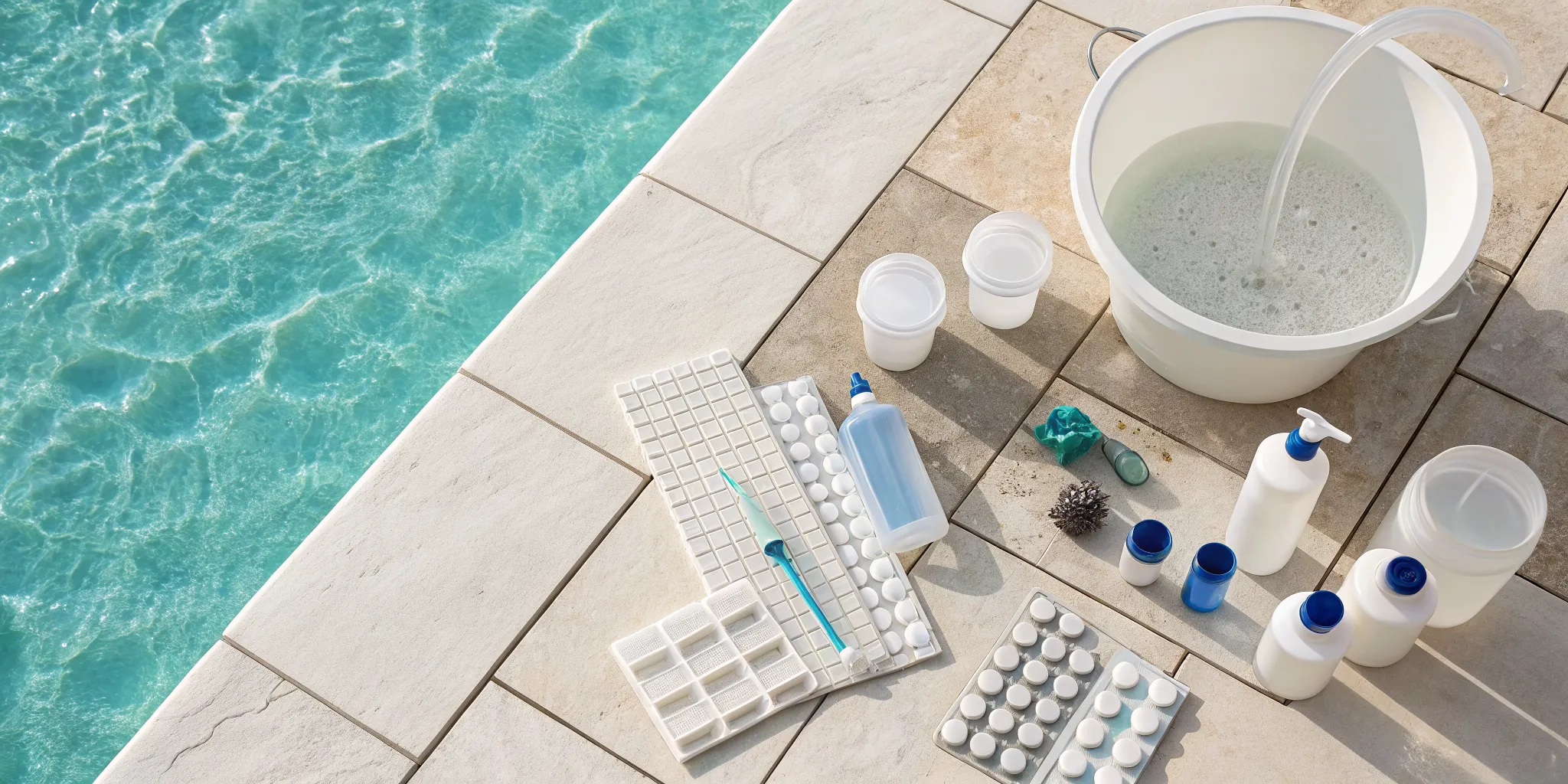
When it's time to add chemicals to your pool, precision and protection are key. Always start by reading the manufacturer's instructions on the label; they provide the exact dosage for your pool's volume. Use a clean, dedicated scoop or measuring cup for each chemical to avoid cross-contamination. Before you even open a container, put on your personal protective equipment (PPE). At a minimum, this means chemical-resistant gloves and safety goggles. Splashes happen, and protecting your skin and eyes is a simple precaution that makes a huge difference. A pro tip: always add chemicals to a bucket of pool water, not the other way around, to prevent a concentrated, hazardous splash.
Common Chemical Misconceptions That Can Cause Problems
A few common myths about pool chemicals can lead to real trouble. First, never assume that mixing different chemicals will create a "super solution." This is incredibly dangerous. Combining certain products, like chlorine and acid, can produce toxic gas or even cause a small explosion. Another frequent mistake is trying to fix cloudy water by just dumping in more chlorine. If your pH is too high or too low, the chlorine becomes ineffective. You end up wasting money and failing to solve the root problem. Understanding how these elements work together is crucial, which is why having the right supplies and chemicals and knowing how to use them is so important for a healthy pool.
Ready for a cleaner pool?
Denver's trusted pool care professionals since 1982. Get started today.
Schedule ServiceFrequently Asked Questions
My eyes burn after swimming. Does that mean there’s too much chlorine in the pool? It’s a common assumption, but that stinging sensation is almost always caused by an improper pH level, not too much chlorine. When your pool’s pH is too low or too high, it can cause skin and eye irritation. The other likely culprit is a buildup of chloramines, which are created when chlorine combines with contaminants like sweat and oils. Shocking your pool regularly breaks down these irritating compounds. So, before you blame the chlorine, test your pH and make sure you’re shocking the water weekly.
My pool water is suddenly cloudy. What’s the most likely cause? Cloudy water is usually a sign that something is off with your water chemistry or filtration. The three most common causes are low sanitizer levels, an imbalanced pH, or a dirty filter. If your chlorine is too low, it can’t keep up with the contaminants, leading to hazy water. If your pH is too high, it makes your chlorine less effective and can also cause cloudiness. Finally, if your filter is clogged or not running long enough, it can’t remove the tiny particles that make the water look dull. Your first step should always be to test your water to see what needs adjusting.
How is a saltwater pool different from a regular chlorine pool? This is one of the biggest points of confusion in pool care. A saltwater pool is not chlorine-free; it actually uses a special piece of equipment called a salt chlorine generator to produce its own chlorine. Instead of adding chlorine tablets or liquid, you add pool-grade salt to the water. The generator then uses that salt to create a steady, consistent supply of pure chlorine. Many people prefer saltwater pools because the water feels softer and less harsh on the skin and eyes.
I live in the Denver area. Is there anything special I need to do for my pool chemistry? Yes, our Colorado climate definitely plays a role. The two biggest factors here are the intense sun and our naturally hard water. The high altitude means stronger UV rays, which break down chlorine very quickly. Using a stabilizer, or Cyanuric Acid, is essential to protect your chlorine and make it last longer. Second, our water is high in minerals, which can lead to high calcium hardness in your pool. This can cause ugly scale buildup on your pool surfaces and equipment, so you’ll want to test your calcium levels regularly and use a sequestering agent if needed.
If I’m short on time, what are the absolute must-do chemical checks each week? If you can only manage the basics, focus on your sanitizer (chlorine) and pH levels. These are the two most important and fastest-changing elements of your water chemistry. Swimmers, sunlight, and rain can all cause these levels to fluctuate quickly. Testing them at least twice a week during swim season will help you prevent the most common problems, like algae growth and swimmer discomfort, and keep your water safe and clear.
Related Blogs