Pool Resurfacing Service Denver: How to Compare
Comparing pool resurfacing services in Denver? Look beyond the lowest estimate. A reliable contractor should explain the inspection, surface preparation, finish, schedule, water handling, and warranty in writing, while accounting for Colorado freeze risk and temperature swings. Use this checklist to compare proposals and choose a resurfacing plan with fewer surprises. The right provider should inspect the existing surface and identify related structural or equipment concerns. They should explain preparation and finish choices, then put the project scope, scheduling assumptions, and warranty questions in writing. Colorado conditions make that due diligence especially important. Freeze risk, rapid temperature changes, hard-water staining, and intense UV exposure all affect pool ownership.
A dependable pool resurfacing service denver provider should offer a documented inspection and a clear written proposal. Look for qualified technicians, realistic seasonal planning, and specific answers about preparation, finish specifications, cleanup, and warranty coverage.
Explore Neptune Pools' Denver pool resurfacing and restoration options.
Once you know what a complete service process should include, you can compare providers on evidence rather than promises. Start with their credentials, communication, and ability to define the work clearly.
How to Compare a Pool Resurfacing Service Denver Homeowners Can Trust
Choosing a pool resurfacing service in Denver should involve more than comparing a few estimates. The right provider should show that its team understands your pool's condition, the work required, and the conditions that affect Colorado projects. Use the following questions to compare providers consistently.
Verify credentials and relevant experience
Ask who will inspect the pool and supervise the work. Confirm the provider's certifications, insurance, and experience with your pool type. Neptune Pools has served the Denver Metro area since 1982, and its technicians are trained in pool chemistry, equipment, Colorado climate concerns, freeze protection, and altitude adjustments. Those details are documented in the company's pool service questions and technician credentials, rather than left as a general experience claim.
It is also reasonable to ask about the team's background with concrete or fiberglass pools. Neptune Pools reports that Doug Roenneburg has more than 40 years in the pool industry and has overseen construction of thousands of fiberglass and concrete pools. A provider's experience should match the materials and condition of your pool, not just the name of the service.
Compare the inspection and written scope
A useful proposal should explain what the contractor found and what the recommended work addresses. Ask whether the inspection considers the existing finish, structure, tile or coping, leaks, plumbing, and equipment-pad condition. Resurfacing may be one part of a broader rehabilitation project. Neptune's documented remodeling scope includes resurfacing, tile and coping replacement, structural repairs, leak detection, sealing, reinforcement, equipment-pad stabilization, and plumbing repair. Make sure any related work appears separately in writing, with exclusions and assumptions clearly stated.
Look for Colorado-specific planning
Denver's elevation is approximately 5,280 feet, and local pools face freeze damage, rapid temperature changes, hard-water staining, and intense UV exposure. Ask how the provider accounts for those conditions during preparation, material selection, scheduling, and post-project care. You do not need a promised result on the first call. But you should receive a clear explanation of which conditions affect your pool and which decisions remain to be made.
Evaluate communication and documentation
Reliable scheduling matters, but so does what happens when the scope changes. Ask who your contact will be, how approvals are recorded, and what documentation you will receive at each stage. Neptune Pools documents maintenance work with electronic reports, chemical readings, precise dosages, and before-and-after photos. Treat that as a useful standard to ask about for resurfacing, not an automatic project promise. Review the company's Neptune Pools team and local experience, then compare the clarity of each provider's answers and written next steps.
What Should a Resurfacing Inspection Cover?
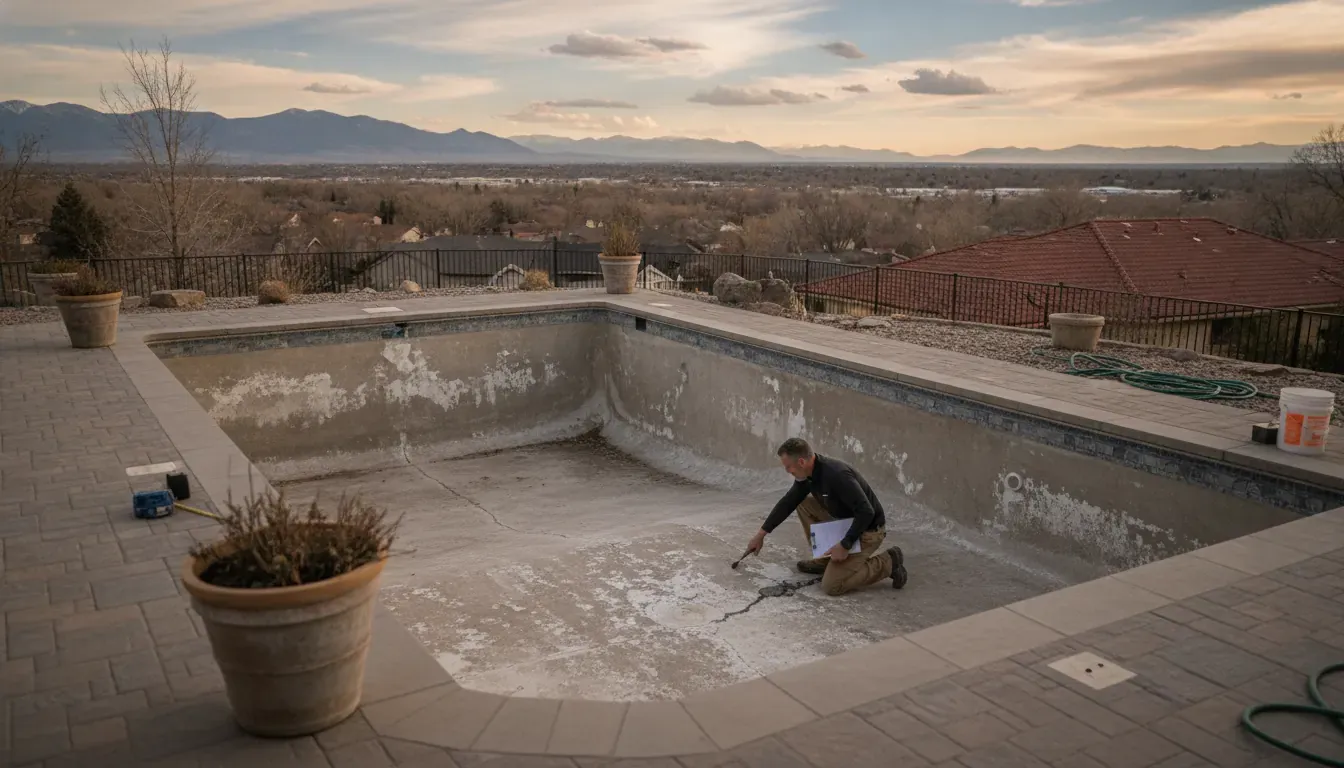
A useful inspection should do more than confirm that the pool surface looks worn. It should identify what needs to be resurfaced, what may need repair first, and what preparation the project will require. Ask the contractor to assess the interior finish for staining, cracking, flaking, rough areas, hollow-sounding spots, and other signs of deterioration. The pool's size, structure, and finish are major factors in determining the work involved. So the written evaluation should describe the existing conditions rather than rely on a general resurfacing label.
Look beyond the visible finish
The inspection should consider the pool shell and surrounding structure for movement, cracks, water loss, or other conditions that could affect a new finish. Resurfacing is not a substitute for structural repairs. If the evaluation identifies structural concerns, leak detection, sealing, or reinforcement needs, those items should be separated from the finish work and explained before you approve a scope. Neptune Pools describes renovation and rehabilitation work that can include resurfacing, structural repairs, leak detection, sealing, and reinforcement on its Denver pool resurfacing services page.
Tile and coping deserve their own review. Loose, cracked, stained, or damaged tile and coping may need replacement or repair, and the proposal should make clear whether those items are included, excluded, or optional. The same applies to drains, skimmers, returns, steps, lights, covers, and other components that could be affected by preparation or access.
Include plumbing, equipment, and water handling
A complete inspection should also look at the equipment pad and visible plumbing. Pumps, filters, heaters, valves, connections, and pad stability are separate concerns from the pool's interior finish. Equipment-pad stabilization and plumbing repair may be relevant to a broader rehabilitation, but they should not be quietly bundled into resurfacing without explanation. If the inspection finds equipment problems, request a separate recommendation or use a qualified pool equipment repair in Denver provider.
Ask how the contractor will handle draining, cleaning, surface preparation, debris removal, refilling, and protection of nearby property. These preparation and water-handling steps can affect the scope, and regional requirements may influence planning. Denver pool projects also face freeze-thaw cycles, intense high-altitude UV exposure, hard-water staining, and rapid temperature changes. The contractor should explain how those conditions affect preparation and curing coordination without promising an unsupported timeline.
Get the findings in writing
Before work begins, request a written scope that lists observed conditions, included repairs, exclusions, preparation responsibilities, finish specifications, water handling, equipment work, and the next decision points. Clear documentation gives homeowners, HOAs, and property managers a practical basis for comparing proposals and prevents resurfacing from being treated as a catch-all for unrelated repairs.
How to Discuss Finish Options With a Contractor
Finish names can sound more specific than they are. One provider may use a broad category such as aggregate, while another may separate quartz, pebble, or premium finishes into its own product group. For a homeowner comparing a pool resurfacing service in Denver, the useful question is not which label sounds best. It is what the contractor means by that label, how it fits the existing pool, and what will be documented before work begins.
Ask the contractor to show you the available finish categories and explain the differences in plain language. Request sample images or physical samples when available, but treat photographs as visual references rather than a guarantee of how a finish will look in your pool. Lighting, water depth, surrounding tile, and the existing structure can affect the final appearance.
| Finish category | What to ask about | Appearance and texture discussion | What to receive in writing |
|---|---|---|---|
| Quartz | What does this provider include under the quartz category, and what preparation does the existing surface require? | Ask how the color, aggregate appearance, and feel underfoot may present in your pool, rather than relying on the category name alone. | The exact product or finish description, selected color, preparation assumptions, and any exclusions. |
| Pebble | What material and texture does the contractor mean by pebble, and how will edges, steps, benches, and transitions be handled? | Discuss the visual character and expected tactile feel across areas where swimmers enter, sit, or walk. | The finish selection, areas included, surface-preparation details, and any care instructions supplied by the provider. |
| Aggregate | Is aggregate being used as a broad category or as a specific finish option? Which materials are included in the proposal? | Ask to review examples that resemble your pool's size, shape, water depth, and surrounding colors. | A clear material description, color or blend selection, scope of application, and identified add-ons. |
| Premium finishes | What makes this option premium in this proposal, and which details are included rather than assumed? | Request a direct explanation of the visual and texture goals without accepting unsupported claims about performance or lifespan. | The named finish, complete scope, preparation work, maintenance guidance, and terms that apply to the selected work. |
Terminology varies by provider, so compare written specifications instead of comparing labels alone. Neptune Pools lists resurfacing within its renovation and rehabilitation work, alongside services such as tile and coping replacement, structural repairs, sealing, and equipment-related repairs. Reviewing the full scope can help you identify whether the finish conversation is addressing the whole project or only the pool surface. See the pool remodeling and rehabilitation services page for the documented service scope, then ask for your selected finish and preparation details to appear in the proposal.
When Should You Schedule Pool Resurfacing in Denver?
Timing matters because resurfacing has to be planned around weather, site preparation, material requirements, and the date you want to use the pool again. Denver's conditions are not the same as a warm-climate market. The city sits at approximately 5,280 feet, and Colorado pools are exposed to intense UV, hard-water staining, rapid temperature changes, and freeze-related risks. Use this sequence to plan the project without relying on a generic calendar.
Start before the active pool season
The active pool season generally runs from April through October, so begin the conversation before the period when you expect regular swimming. An early inspection gives the contractor time to evaluate the surface, identify related repairs, and explain preparation requirements. Waiting until the first warm weekend can leave less flexibility if the pool also needs tile, coping, plumbing, leak, or equipment work.
Choose a weather-aware project window
Ask how temperature swings, overnight conditions, UV exposure, and the risk of an early or late freeze affect your proposed dates. Freeze-thaw cycles and wide seasonal temperature changes can increase wear on Denver pools, according to regional resurfacing guidance for Denver. Your contractor should identify the conditions required for each preparation, application, and curing stage. Do not accept a standard curing promise without written, project-specific guidance.
Confirm construction-season and access constraints
Denver's shorter construction season can make scheduling more competitive. Ask when the crew can access the pool, whether weather delays change the sequence. And how the project will be coordinated with landscaping, fencing, equipment-pad access, or other work. Keep the scope and any schedule assumptions in writing so a change in conditions does not create confusion.
Check permits and water-use questions early
Permit requirements and water-use regulations may affect the project's scope and timing. Ask the contractor to identify which approvals, notifications, drainage plans, or refill considerations apply to your property and municipality. Denver project guidance identifies permitting and water usage as local considerations, but the requirements for your address should be confirmed rather than assumed.
Coordinate preparation, application, and post-project care
Before approving dates, request a written explanation of water handling, surface preparation, access, finish application, and curing conditions. Ask when the pool can be refilled and returned to service. Also ask how the completed work will be documented and what maintenance steps protect the new surface through the next seasonal change. If the project approaches winter, coordinate closing and freeze protection with the contractor. Neptune's documented pool-closing process includes water-level adjustment, winter chemical treatment, equipment shutdown, line blow-out, cover installation, and a winter risk inspection. Learn more about Denver pool cleaning and maintenance when planning that handoff.
What Warranty Questions Should You Ask?
A warranty is useful only when you understand what it covers, what can void it, and how a claim will be handled. Before approving a pool resurfacing project, ask the contractor to provide the warranty in writing and attach it to the proposal or contract. Verbal assurances are difficult to evaluate later, especially if a surface issue appears after the work is complete.
Clarify the coverage
- How long does the warranty apply, and when does the coverage period begin?
- Does it cover workmanship, materials, or both?
- Which defects are included, such as delamination, cracking, discoloration, or installation-related failure?
- Are labor, materials, draining, refilling, testing, or other corrective work included if a covered problem occurs?
- Is the warranty issued by the contractor, the material manufacturer, or both?
Ask for precise definitions rather than broad phrases such as "quality guarantee." A clear document should identify the responsible party and explain the remedy available for each covered issue. It should also distinguish resurfacing from unrelated structural, plumbing, tile, coping, or equipment repairs that may be part of the broader project scope.
Ask about preparation and maintenance conditions
- What surface preparation must be completed for the warranty to remain valid?
- Are draining, cleaning, repairs, bonding, curing, or water-level requirements documented?
- What water chemistry, circulation, cleaning, and winterization practices are required after the work?
- What conditions are excluded, including freeze damage, structural movement, improper chemical handling, staining, or normal wear?
- Who is responsible for documenting the pool's condition before and after the project?
These details matter in Denver, where freeze risk, rapid temperature changes, hard-water staining, and intense UV exposure can affect pool surfaces. Ask the contractor to explain which local conditions were considered in the preparation plan and which maintenance records you should keep. If ongoing service is required, request the testing standards and reporting expectations in writing rather than assuming a maintenance plan automatically extends resurfacing coverage.
Confirm the claim process and transfer rules
Ask where and how to submit a claim, what photos or records are required, and who will inspect the concern. Confirm whether there is a response process, whether an on-site inspection is required, and whether you must notify the contractor within a particular period after noticing a problem. Keep the signed proposal, final invoice, product information, preparation notes, water-test records, and before-and-after photos together.
Finally, ask whether the warranty can transfer if you sell the home. Whether transfer requires written notice or a fee, and whether the coverage changes for a new owner. A written answer to each question makes it easier to compare a pool resurfacing service in Denver on scope and accountability, not just on the initial proposal.
What a Clear Resurfacing Proposal Should Include
A proposal should let you understand exactly what the contractor will do, what remains outside the project, and how decisions will be handled if conditions change. If the document only names a finish and gives a total, ask for more detail before approving the work.
Scope, preparation, and water handling
Look for a step-by-step description of the work. The scope should identify the areas being resurfaced, the planned surface preparation, and any related work found during inspection. It should also state whether cracks, structural repairs, tile or coping replacement, sealing, reinforcement, plumbing, or equipment-pad issues are included, excluded, or offered as separate options. Neptune Pools lists these types of renovation and rehabilitation work among its capabilities, but every proposal should still define the specific work for your pool.
Water handling deserves its own line items. Confirm who is responsible for draining, protecting the pool and surrounding property, disposing of or managing the water, refilling, balancing the water, and restarting equipment. These items can affect the project even when they are not part of the new surface itself. Also ask what access the crew needs, where vehicles and materials may be placed, and how landscaping, gates, decks, and other nearby features will be protected.
Schedule assumptions and change orders
A useful proposal explains scheduling assumptions without promising a fixed completion date that weather or site conditions could disrupt. Ask how the contractor will coordinate preparation, surface application, curing requirements, inspections, refilling, and equipment startup. Denver projects also need local planning because the active pool season generally runs from April through October. While freeze risk, rapid temperature changes, intense UV exposure, and water-use considerations can affect scheduling. Permits or local requirements should be identified when they apply, with responsibility for obtaining them clearly assigned.
Change-order rules should be written in plain language. The proposal should explain what triggers a change, who documents the condition, how additional work is priced, and whether your approval is required before the work proceeds. Avoid relying on verbal assurances for concealed damage, preparation changes, or add-on repairs.
Communication and documentation
Finally, confirm your point of contact, update frequency, approval process, cleanup standard, and the documents you will receive at completion. Ask whether the provider supplies photos, surface or preparation notes, equipment startup information, and care instructions. Neptune Pools documents maintenance work with electronic reports, chemical readings, precise dosages, and before-and-after photos. That is a useful standard to ask about for a resurfacing project, not an automatic promise. A clear paper trail makes follow-up questions easier and helps protect the quality of the finished renovation.
Review Denver pool resurfacing services with Neptune Pools.
Frequently Asked Questions
What should I ask a pool resurfacing service in Denver?
Ask how the provider inspects the shell and surrounding components, what preparation is included. Which repairs are excluded, how finish options will be documented, and how changes are approved. Request credentials, insurance information, references for comparable projects, a written scope, payment terms, cleanup details, and warranty coverage with exclusions.
When should I schedule pool resurfacing in Denver?
Plan around the condition of the pool, the provider's availability, and the weather requirements for preparation and curing. Denver's active pool season generally runs from April through October, while Colorado's freeze risk and rapid temperature changes make seasonal planning especially important. Ask the contractor which conditions must be met before work begins and how the pool will be protected if weather changes.
What should a resurfacing inspection cover?
A useful inspection should distinguish surface wear from structural, plumbing, leak, tile, coping, or equipment-pad concerns. Ask for photographs, documented findings, and a written explanation of which items are included in resurfacing and which require separate work. Pool size, structure, and finish can affect project scope, so a site-specific assessment is more useful than a generic estimate.
How can I compare pool resurfacing providers in Denver?
Compare the clarity of each proposal, relevant experience, communication process, documentation, and understanding of Colorado conditions. Denver is approximately 5,280 feet above sea level, and local pools may face hard-water staining, intense UV exposure, freeze damage, and temperature swings. Choose a provider that explains how those conditions affect inspection and planning, without making unsupported promises about results or longevity.
Should warranty details be part of the resurfacing proposal?
Yes. Ask for warranty terms in writing before approving the work, including what is covered. How long coverage lasts, exclusions, maintenance requirements, finish or workmanship provisions, and the process for reporting a concern. Do not rely on a verbal assurance or assume a warranty covers pre-existing structural or equipment issues unless the document says so.
Ready to Discuss Your Pool Resurfacing Options?
A clear inspection and written scope can help you understand which renovation steps fit your pool and property. Neptune Pools can help you discuss resurfacing and related rehabilitation needs for your Denver-area pool.
Contact Neptune Pools to discuss pool resurfacing and renovation options.
Related Blogs