Pool Supplies Denver: A Practical Guide to Chemicals and Equipment
Finding the right pool supplies denver homeowners need is not only a matter of buying sanitizer when the water looks cloudy. A dependable plan connects testing, chemical adjustments, cleaning tools, replacement parts, and the timing of Colorado's pool season. It also helps you avoid storing the wrong products or discovering a failed pump part when you are ready to swim.
Talk with Neptune Pools about your supply plan.
Denver Metro pool owners work around dry air, strong sunshine, wind, temperature swings, dust, and a concentrated outdoor season. These conditions can change how often you inspect the pool and what you keep on hand. The best inventory is therefore specific to your pool volume, surface, sanitation system, circulation equipment, and schedule—not a generic cart of products.
What should a Denver pool supply plan include?
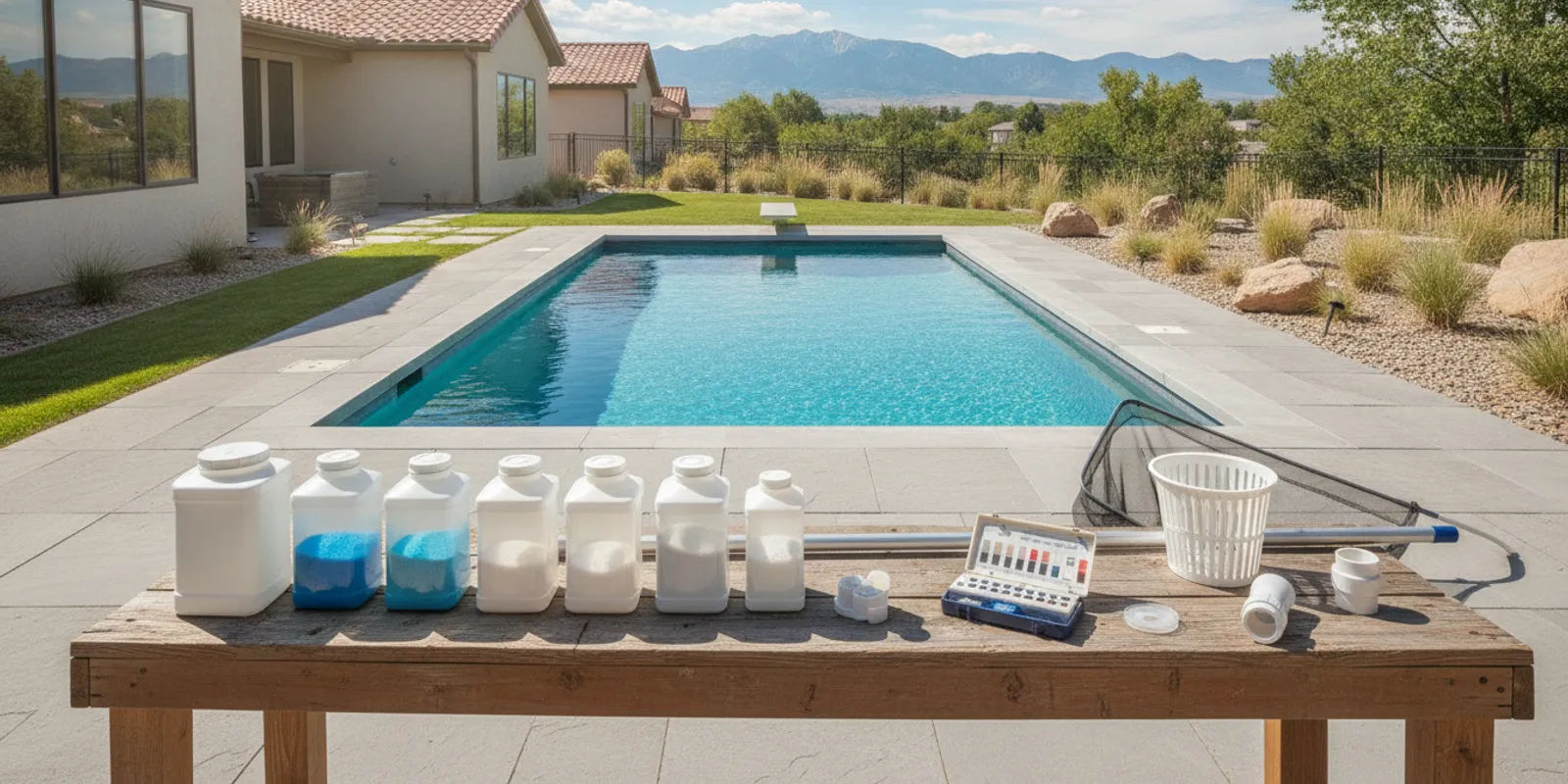
Start by separating supplies into five groups: water care, testing, cleaning, equipment, and seasonal protection. The exact products depend on whether your pool uses chlorine, salt, or another approved sanitation system. They also depend on the instructions for your filter, pump, feeder, heater, cover, and other equipment.
| Supply group | What to keep available | When to check it | Why it matters |
|---|---|---|---|
| Water care | Sanitizer, pH-adjustment products, and system-specific supplies | Before opening and during regular testing | Supports balanced, clear water without guesswork |
| Testing | Fresh reagents, quick-check strips, and a clean sample container | At opening and whenever results seem unusual | Helps you adjust from measurements rather than appearance |
| Cleaning | Skimmer net, brush, vacuum accessories, and replacement bags or heads | Weekly and before heavy-use periods | Removes debris before it adds to the water-care load |
| Equipment | Filter supplies, O-rings, baskets, fittings, and approved parts | During inspections and before startup | Reduces delays when a small part affects circulation |
| Seasonal care | Cover supplies, plugs, winterization items, and storage labels | At closing and before the next opening | Protects the pool and makes transitions easier |
Use the table as an inventory framework, not as a prescription to buy every item. A cartridge filter, sand filter, and diatomaceous earth system do not use the same maintenance materials. Likewise, a salt system may require different supplies from a traditional chlorine setup. Check model numbers and product directions before ordering replacements.
Do not buy a large quantity simply because a product is discounted. Chemicals have storage requirements, and some products must never be mixed. Keep containers in their original packaging, follow each label, and store products in a cool, dry, ventilated area away from children, pets, fuel, metal tools, and incompatible materials. Never transfer a chemical to an unmarked container.
Which chemicals and testing supplies should you buy first?
Testing comes before adjustment. Clear water can still have an imbalance, while cloudy water does not tell you which correction is appropriate. Keep a dependable way to check the measurements relevant to your sanitation system, and replace old reagents according to their instructions.
- Sanitizer supplies: Choose the product that matches your established pool system. Avoid switching products without understanding how the change affects water and equipment.
- pH and alkalinity supplies: Keep the adjustment products your test results and service plan call for. Adding more product is not a substitute for a measured correction.
- System-specific items: Salt systems, automatic feeders, heaters, and specialty equipment may require different maintenance materials. Confirm compatibility before purchasing.
- Testing materials: Store reagents as directed and replace them when expired, damaged, or producing results that do not make sense.
- Basic cleaning tools: A usable net, brush, vacuum connection, and basket are often more valuable than an extra container of a product you may not need.
When collecting a sample, take it below the surface and away from return jets. Use a clean container and test promptly. Record the date, results, weather, pool activity, and products added. A short log can reveal a pattern, such as results changing after a storm or after a busy weekend, that is easy to miss when every adjustment is made from memory.
For example, if a test result changes after heavy debris enters the pool, begin by documenting the change and checking circulation and filtration. Do not respond by repeatedly adding chemicals without confirming the reading and following the label. If a result remains unusual after a fresh test, the problem may involve equipment, contamination, or a water-care step that needs professional review.
Denver's sunshine, wind, and low-humidity conditions make routine testing especially useful during the active season. Rain, dust, debris, and periods of heavy use can also change demand. That does not mean every pool needs the same schedule. It means the schedule should respond to measured conditions.
How can you organize pool supplies around the Denver season?
Seasonal inventory prevents both overbuying and last-minute shopping. Neptune Pools operates a seven-month active pool season from April through October, while spa services continue year-round. Your dates may vary with weather, cover use, and pool condition, so use this framework rather than treating it as a fixed chemical prescription.
Before opening
Inspect stored supplies and discard products that are damaged or no longer usable according to their labels. Check the test kit, baskets, brush, vacuum equipment, cover hardware, visible fittings, and any replacement parts left from the previous season. Make a list before buying. If the pool was closed with a problem, address that problem rather than simply adding opening chemicals.
Review the pool opening guide for a step-by-step starting point. If the closing process, equipment condition, or startup sequence is beyond your comfort level, professional pool closing and winterization support can help you plan the transition.
During regular use
Keep frequently used tools together and make a replenishment list after each test or cleaning. Store chemicals separately from metal tools and electrical equipment. Rinse cleaning tools as appropriate, inspect them for damage, and label spare parts so you know what each part fits. A photograph of an equipment label and connection can be useful when you need to identify a replacement.
Use a simple three-level check: confirm what is on hand, confirm what is open and usable, and confirm what will be needed before the next scheduled service or heavy-use period. This avoids two common mistakes: running out of a necessary item and buying several incompatible alternatives because the original product was not identified.
Before closing
Plan closing as a process, not a single shopping trip. Confirm the condition of the cover, plugs, baskets, filter, valves, and exposed plumbing. Colorado weather can change quickly, so qualified help may be useful when freeze protection, drainage, or equipment isolation is involved. Winter water-level decisions should follow the closing plan for your pool and equipment; they should not be based on evaporation estimates alone.
Keep seasonal supplies together, but do not store incompatible chemicals beside one another. Write the pool's equipment model, recent test notes, and unresolved issues in the storage area or service record. That information can make the next opening faster and reduce the chance of ordering the wrong part.
How does pool supply delivery help Denver owners?
Delivery can make a recurring supply plan easier to follow. Instead of waiting until a container is empty, you can coordinate routine products with testing, service visits, and seasonal transitions. It may be especially useful for homeowners who cannot transport bulky containers, property managers coordinating multiple pools, and HOAs that need a consistent record of supply needs.
Neptune Pools offers pool supplies, chemicals, testing, and delivery in Denver. Use that page to review available supply support rather than treating delivery as a replacement for testing. A delivery schedule should change when pool usage, weather, equipment, or the sanitation system changes.
A practical reorder plan can be organized by frequency:
- Every visit or test: Record results, inspect water level, note products used, and identify anything that is nearly empty.
- Every few weeks: Check containers, test materials, cleaning heads, baskets, hoses, and visible equipment wear.
- Before heavy use: Confirm that testing materials, cleaning tools, and system-specific supplies are ready before guests or community use increases.
- Seasonally: Review opening and closing supplies, cover condition, fittings, and service needs.
- When a result changes: Pause automatic assumptions and investigate testing accuracy, circulation, debris, weather, and recent additions.
Delivery also creates an opportunity to ask for a coordinated plan instead of ordering isolated products. Have your pool volume, sanitation type, recent results, and equipment details available. A supplier or service professional can then help distinguish a routine reorder from a symptom that needs inspection.
When should pool supplies lead to equipment service?
Supplies can address routine care, but they cannot correct every pool problem. Repeatedly adding chemicals without checking circulation may waste product and delay the real repair. Cloudy water, an unusually dirty filter, weak returns, air in the system, a pump that will not start, or a heater that stops working can point to equipment or plumbing concerns.
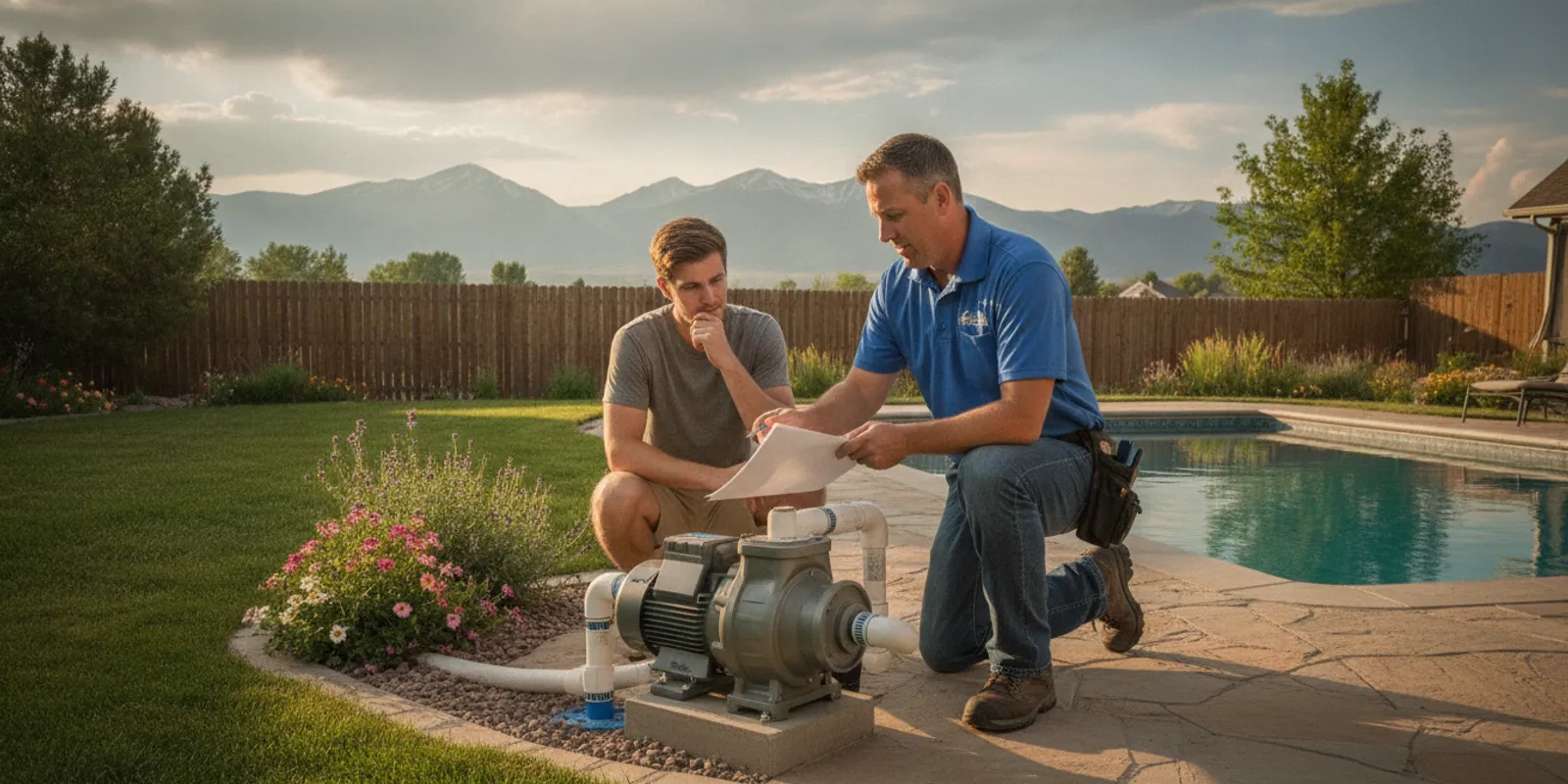
Pool turnover time can be estimated with the formula pool volume / (measured flow × 60). Use measured flow rather than assuming a pump's labeled capacity. If you do not know the pool volume, flow, or equipment condition, a technician can help assess the system safely. Neptune's equipment repair and servicing team can evaluate issues that are not solved by routine supplies.
Consider a worked example: suppose a pool's known volume is 24,000 gallons and measured flow is 60 gallons per minute. The estimated turnover time is 24,000 divided by 3,600, or about 6.7 hours. That calculation is only as useful as the measurements behind it. If the return flow is weak or the filter pressure is abnormal, buying more sanitizer does not establish that the system is circulating correctly.
Do not open electrical equipment or handle chemical combinations without the proper knowledge. Follow product labels and equipment manuals. If a chemical reaction, strong odor, skin or eye irritation, or suspected exposure occurs, leave the area and follow the product's emergency instructions.
Request help coordinating pool supplies and equipment care.
How can you compare local pool supply options?
Price is only one part of the comparison. A lower shelf price may not be the best value if the product is incompatible, the container is difficult to store, or you need repeated trips to replace a missing item. Ask these questions before choosing a source:
- Does the supplier carry products compatible with your sanitation and equipment systems?
- Can you get clear instructions for storage, handling, and use?
- Is delivery available when bulky or recurring supplies are difficult to transport?
- Can the supplier connect a supply question with testing, maintenance, or equipment support?
- Are product names, quantities, and charges clear on your order or service record?
- Can the supplier help identify a part from the equipment model rather than guessing from appearance?
For an additional local reference when comparing businesses, the Better Business Bureau directory of pool supplies near Denver is one place to review listings. Treat any directory as a starting point and confirm current services, product compatibility, storage guidance, and delivery terms directly.
What should Denver homeowners ask before ordering?
Have your pool type, approximate volume, sanitation system, recent test results, and equipment model information available. If you are asking about a replacement part, take a clear photograph of the label, dimensions, and connection. Explain whether the pool is open, closed, cloudy, losing water, or experiencing a circulation problem. These details help prevent an incorrect recommendation.
Property managers and HOAs should also record who is authorized to order, where supplies are stored, how access is arranged, and which results require escalation. Neptune's HOA pool support and commercial pool services can help organize needs beyond a single residential pool.
Before contacting a supplier, write down three things you want solved. For example: “I need a compatible replacement basket,” “my test results changed after a storm,” or “I want recurring delivery before the active season.” A focused request makes it easier to choose between a product order, testing appointment, maintenance plan, or equipment inspection.
Ask Neptune Pools for a Denver pool supply and service plan.
Frequently Asked Questions
How often should I buy pool chemicals?
There is no universal reorder interval. Track measured use, pool size, weather, pool activity, and the product label. Reorder before you run out, but avoid building an unsafe or excessive inventory.
Can I use any pool chemical in my system?
No. Compatibility depends on the sanitation system, equipment, water condition, and product directions. Confirm the product before adding it, and never mix chemicals unless the label specifically permits that use.
Should I buy supplies before opening my pool?
Yes, review your test materials, cleaning tools, cover items, and likely water-care needs before opening. Inspect what you already have first, then buy only what fits the opening plan and current system.
Does delivery replace professional pool service?
No. Delivery can simplify access to supplies, but it does not replace testing, cleaning, equipment inspection, repairs, or seasonal work when those tasks are needed.
What if I am unsure which part or product to order?
Pause before purchasing. Gather the equipment label, photos, pool details, and recent test results, then ask a qualified pool professional to confirm compatibility.
Contact Neptune Pools to organize your next pool supply order.
A thoughtful supply plan keeps Denver pool care safer, more predictable, and easier to manage from opening through closing, while giving you a clear point to bring in professional support when supplies are not enough.
Related Blogs