Pool Water Features: Colorado Design Planning Guide
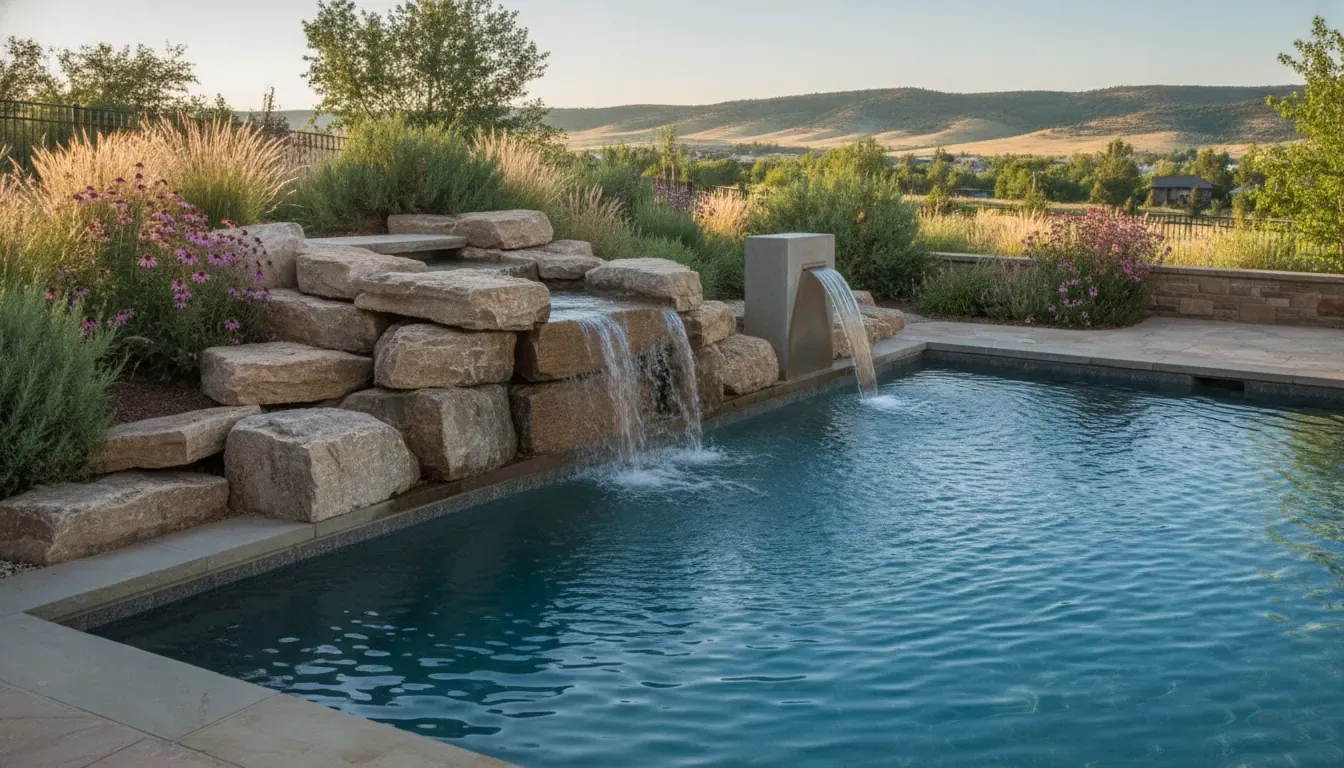
A water feature can change how a pool looks, sounds, and fits into the surrounding yard, but the most impressive option is not automatically the best one. In the Denver Metro area, design decisions also need to account for circulation, splash, access for cleaning, weather variability, and how the feature will be reviewed during seasonal service.
Explore pool remodel options for a planned water feature.
Quick answer: Pool water features are worth considering when their visual style and sound match the space, while the plumbing, equipment, maintenance access, and Colorado weather plan remain practical for the pool owner. Waterfalls, fountains, bubblers, spillways, and deck jets each create a different experience, so the right choice depends on the site and how you use the pool.
Start by separating the feature's appearance from its operating requirements. That makes it easier to compare the options, identify tradeoffs, and decide whether a new build or existing-pool upgrade can support the result you want.
What Are Pool Water Features and What Do They Add?
Pool water features are designed elements that move water beyond the basic circulation needed to keep a pool operating. They can include fountains, water bowls, deck jets, laminars, cascades, rain curtains, scuppers, spouts, and spillways connecting a raised spa to the pool. Some are built into a wall, ledge, or raised bond beam. Others are set into the deck or a shallow section of the pool.
The main difference is what the moving water contributes to the space. A narrow jet can create a clean visual line across the pool, while a cascade or spillway gives water a more continuous falling motion. A bowl, scupper, or fountain can become a focal point near a seating area. Depending on the design and flow, moving water may also add a gentle background sound. That sound can be relaxing, but a louder feature may not suit a small yard, close neighbors, or conversations near the pool.
Colorado homeowners should evaluate the setting before choosing a style. Consider the feature's sightlines from the house and patio, the amount of splash that could reach nearby surfaces, and whether the design fits the pool's existing proportions. A feature also needs an appropriate circulation plan, accessible equipment, and enough room for cleaning and inspection. These decisions are easier to coordinate during a new pool project or remodel than after surrounding decks, walls, and landscaping are complete.
Maintenance should be part of the design discussion, not an afterthought. Leaves, mineral deposits, changing weather, and seasonal shutdown requirements can affect how practical a feature is in a Denver Metro backyard. The right choice depends on the existing shell, plumbing, pump and controls, access, and the experience you want the pool to provide.
Which Pool Water Features Fit Different Backyards?
The best choice depends on the experience you want and the conditions around the pool. A feature that looks balanced in a large remodel may feel crowded in a compact yard, while a quiet visual accent may be more appropriate near a seating area. Use the comparisons below as planning considerations, not universal rules. Final performance depends on the feature design, available plumbing, equipment, layout, and how the water is directed.
| Feature. | Typical visual effect. | Sound and splash considerations. | Planning questions. |
|---|---|---|---|
| Waterfalls and cascades | A broad sheet or broken flow that can create a strong focal point, especially along a raised wall or natural-looking structure. | A longer or higher fall may produce more noticeable sound. Splash can vary with the landing area, wind, and water direction. | Where will the water land? Will the feature compete with views, seating, or nearby property? Is there enough access for cleaning? |
| Fountains | Vertical movement that can serve as a central accent or be grouped with other features. | Sound and spray depend on the pattern, height, wind, and surrounding surfaces. Open spray may be less suitable beside a walking route. | How visible should the feature be from the home? Could wind carry spray onto decking, furniture, or a neighboring area? |
| Bubblers | Low, playful jets that suit shallow ledges or beach-entry areas when the design and depth are appropriate. | They generally create a smaller-scale effect, but bubbling water can still add movement and localized splash. | Is the shallow area designed for this use? Would one feature look intentional, or would a small grouping better fit the ledge? |
| Deck jets and laminars | Clean arcs of water that connect the deck or surrounding structure to the pool, often emphasizing sightlines. | The arc can be visually precise, but wind and lighting conditions may affect how clearly it reads and where droplets land. | Can the jet align with the pool edge and primary viewing angles? Will the deck allow safe access around the feature? |
| Scuppers and bowls | Distinctive spouts or vessels that add architectural detail to a wall, raised bond beam, or patio edge. | The outlet shape and drop height influence the sound. Splash may matter where the feature meets a narrow deck or lounge zone. | Does the material and form complement the home's architecture? How will mineral deposits and debris be cleaned from visible surfaces? |
| Spa spillways | A direct visual connection between a raised spa and pool, making the elevation change part of the design. | A taller spillway may create a more pronounced sound and visual presence, while a lower transition can read more quietly. | Is a raised spa already planned? How should the spillway work with circulation, controls, seating, and access for service? |
For a Denver Metro project, also account for wind exposure, seasonal use, splash near hardscape, and access to the equipment and feature plumbing. Choosing the most attractive option is only part of the decision. The feature should fit the yard's scale and remain practical to inspect, clean, and operate.
How Do Waterfalls, Fountains, and Bubblers Change Sound and Style?
Water features shape more than the view from the patio. They can become a visual focal point, add movement to an otherwise flat pool edge, and change the background sound around the water. The best choice depends on where people sit, how the pool is used, and whether you want a quiet accent or a feature that announces itself across the yard.
Use height and fall length to control presence
A waterfall with a longer drop generally produces a more noticeable sound than one with a short, shallow fall. One pool builder describes this relationship for sheer-descent waterfalls, but it should be treated as a design observation rather than a universal volume specification. The surrounding walls, deck surfaces, wind, and distance to seating also affect what people hear.
Raised spa spillways offer a similar planning choice. A higher spillway may create a stronger visual line and more pronounced sound, while a lower transition can feel quieter and less dominant. The right height depends on the pool's elevations, sightlines, and the role you want the spa to play in the overall composition.
Place bubblers and accents where they will be seen
Bubblers are often considered for shallow tanning ledges or beach entries. Their upward movement can give a broad, low feature a focal point without requiring a tall structure. Grouping several bubblers may create rhythm across a ledge. An odd-number grouping is one designer's recommendation, not a rule, so spacing should follow the ledge shape, furniture layout, and the view from the house.
Plan sightlines and lighting together
Look at the feature from the kitchen, patio, and primary seating areas before finalizing its position. A waterfall hidden behind a raised wall may sound pleasant but have little daytime impact. Conversely, a fountain placed directly beside a conversation area may compete with the people using the pool. Lighting can reinforce edges, spillways, and bubbling water after dark, but fixtures should support the feature rather than create glare across the pool.
These choices make water features in a pool renovation a layout decision as much as a finish selection. Review sound, sightlines, splash, access, and the surrounding architecture together before committing to a design.
Actual results vary by site and installation, so confirm the final design with a qualified professional before construction.
Can You Add a Water Feature to an Existing Pool?
Yes, many existing pools can accommodate a new feature, but the retrofit has to work with the pool shell, deck, equipment, and available access. A careful sequence helps prevent a visually appealing addition from creating circulation problems or making routine service difficult.
- Inspect the pool, deck, and access. Start by checking the pool shell, coping, deck, raised walls, and nearby structures. The location of the feature affects how much demolition or surface work may be required. Also confirm that technicians can reach valves, fittings, pumps, and drains after installation. A feature that cannot be safely serviced is a poor long-term fit, even if it looks right from the patio.
- Assess the pump, circulation, and controls. An existing pump should not be assumed to have capacity for added water movement. The equipment review should consider the proposed feature, the pool's circulation needs, available control options, and how the feature will run alongside other equipment. If the system needs changes, review pool plumbing and circulation planning before finalizing the design.
- Plan plumbing and electrical routes. Map the path for dedicated feature plumbing, valves, drains, and any required electrical connections before opening the deck or hardscape. Keep penetrations, shutoffs, and control components accessible. In the Denver area, the plan should also account for seasonal operation and site-specific freeze-protection requirements rather than treating every pool system the same.
- Choose placement around sightlines and splash. Position the feature where its sound, spray, and visual movement support the way the pool is used. A waterfall may suit a raised wall, while a bubbler or jet may fit a shallow ledge. Check prevailing wind, nearby seating, landscaping, windows, and walking paths so splash does not create an avoidable nuisance.
- Test service access before closing the work. Confirm that filters, pumps, valves, controls, and feature components can be inspected, cleaned, adjusted, and winterized as needed. Ask how the feature will be isolated if it needs repair while the pool remains in service. This final check protects the investment and makes ongoing maintenance more practical.
What Should Colorado Homeowners Plan for Circulation and Maintenance?
A water feature should be planned as part of the pool's operating system, not treated as a decorative add-on. Before choosing a pump or flow arrangement, assess the existing circulation equipment, plumbing, controls, filter, and access points. The right setup depends on the feature, pool layout, and how the system is expected to run. A review of how to choose a pump for water features can help frame that conversation, but feature-specific sizing should be confirmed for the actual installation.
Plan for water movement to change the maintenance picture. Splashing, wind, sunlight, and the feature's operating schedule can affect water level and water use. Evaporation is also variable, and a lower water level is not proof of evaporation alone. The EPA identifies evaporation, cleaning, leaks, and splashing as sources of pool water consumption, and notes that thoughtful design and ongoing maintenance can help conserve water and energy: EPA outdoor pool water-efficiency guidance. Track unusual loss and inspect for leaks rather than relying on a fixed estimate.
Routine care should include skimming, brushing, vacuuming, filter and skimmer checks, water-chemistry testing, and equipment inspection. Feature surfaces, catch points, basins, and surrounding decking may need attention as leaves, dust, and splash-out accumulate. In Colorado, seasonal weather changes can make access and inspection especially important. During an opening, circulation equipment should be started and primed, operation verified, chemistry balanced, and the system inspected before regular use.
Water chemistry remains a safety requirement, even when a feature is mainly visual. The CDC advises residential pool owners to check chlorine concentration and pH regularly. Its guidance recommends a pool pH of 7.0 to 7.8 and at least 1 ppm chlorine: CDC home pool water-treatment guidance. Keep the feature, pump, filter, and controls accessible enough that testing and repairs are practical, and secure the area so children cannot climb on or enter feature structures unsafely.
Plan a water feature with a Colorado pool remodeling team.
How Should You Plan for Colorado Freeze Risk?
Colorado freeze planning should account for more than the visible basin. A waterfall, spillway, bubbler, or fountain can have separate plumbing, valves, controls, and equipment that respond differently to a fast temperature drop. The right winter approach depends on the feature layout, pipe routing, equipment pad, exposure, and the condition of the existing system. There is no single winter instruction that fits every pool water feature.
Start the review before the seasonal change, not after a freeze has already occurred. Neptune's fall and winter closing work may include adjusting water level, shutting down equipment, blowing out lines, installing a winter cover, and inspecting for winter risks. Those steps describe a broader closing process, not a universal instruction to apply identically to every feature line. Feature plumbing may require its own assessment so water is not left in a vulnerable section or removed from a component that needs a different operating plan.
Opening requires the same site-specific care. Neptune's opening process includes starting equipment, priming the circulation system, verifying operation, balancing chemistry, and inspecting the system. If a feature does not start, flows unevenly, or shows a leak after opening, avoid repeatedly cycling unknown equipment until the plumbing and controls have been checked.
Rapid temperature changes are one reason Colorado systems deserve local review. A complex setup with multiple pumps, filters, automation, raised features, or hard-to-access lines can make freeze protection more involved than a standard pool closing. Pool equipment repair and servicing can help identify problems with pumps, filters, or automation. For ongoing seasonal inspections and coordinated opening or closing work, Denver pool cleaning and maintenance provides a practical starting point.
When the feature plumbing is concealed, recently modified, or connected to a raised spa, have a qualified technician review the system before winter. That review can clarify which components need protection, what should be monitored during abrupt weather shifts, and how to bring the feature back online without guessing.
Are Pool Water Features Worth It for a Colorado Remodel?
Pool water features are worth considering when they support how you use the pool, fit the property, and remain practical to operate. Start with the experience you want. A feature might create a soft background sound, add a focal point to the pool, define a shallow ledge, or connect a raised spa to the main pool. If the feature looks impressive but blocks a sightline, creates unwanted splash, or is difficult to reach for cleaning, its visual appeal may not justify the compromise.
Evaluate the site before choosing the feature. Look at available deck and wall space, nearby seating, wind exposure, drainage, lighting, and the locations of existing plumbing and equipment. Sound matters too. A longer or taller waterfall can produce a more noticeable sound, while a quieter feature may be a better fit near a bedroom, conversation area, or property line. The right choice depends on the setting rather than a universal ranking of feature types.
Circulation and access should be part of the design conversation from the beginning. The existing pump, plumbing, controls, and electrical layout may need review, particularly when a feature is added during a remodel. Leave room to inspect components, clean catch points, and service the surrounding equipment without dismantling finished work. The EPA notes that thoughtful pool design and ongoing maintenance can help save water, energy, and money, while evaporation, splashing, cleaning, and leaks can all contribute to water use. Plan the feature as part of the whole pool system.
Colorado conditions make long-term planning especially important. Denver Metro homeowners should discuss freeze risk, rapid temperature changes, high-altitude chemistry, hard-water management, and seasonal operation with a professional who can assess the actual installation. Neptune technicians inspect equipment during routine visits, which can help identify maintenance concerns as the system is used. For visual inspiration and scope ideas, review these water features in a pool renovation before deciding what belongs in your remodel.
In practical terms, a feature earns its space when it improves the experience you want and can be maintained with the access, circulation, and seasonal care the property requires. If those pieces do not align, a simpler design may deliver more dependable value.
Explore Denver pool remodeling options.
Frequently Asked Questions
Are pool water features worth it?
They can be, especially when the feature supports how you use the pool. Waterfalls, fountains, bubblers, and spillways can add movement, sound, and a stronger visual focal point. The tradeoffs include splash, cleaning access, circulation needs, and possible added water loss. The right choice depends on your layout, maintenance plan, and tolerance for sound and upkeep.
Can I add a water feature to my existing pool?
Often, but the existing pool should be assessed before a design is selected. A professional should review the shell and deck, pump capacity, plumbing routes, controls, electrical access, and space for future maintenance. A retrofit may be relatively straightforward in one pool and require more substantial remodeling in another.
What are some practical water features for a pool?
Choose based on the effect you want. A raised spillway or waterfall creates a stronger focal point and sound, while a fountain or deck jet can provide movement with a different visual profile. Bubblers can suit shallow ledges, and scuppers or bowls can work as architectural accents. Placement and sightlines matter as much as the feature type.
Can you add water features to an above-ground pool?
Some above-ground pools can accommodate manufacturer-designed or compatible add-ons, but options are more limited than with a built-in pool. The wall structure, liner, filtration system, return fittings, and warranty should be reviewed first. Avoid drilling or modifying the pool without confirming that the design is safe and supported.
Will a water feature increase water loss?
It can, because moving water may increase splash and exposure to air. The EPA identifies evaporation, cleaning, leaks, and splashing as sources of pool water consumption: EPA outdoor pool water guidance. Actual impact depends on wind, feature design, run time, and how the pool is maintained, so avoid relying on a universal water-loss estimate.
Ready to Plan Your Pool Water Feature?
The right water feature should complement your pool, backyard layout, circulation setup, and maintenance plan. A site-specific conversation can help you compare design options and identify practical considerations before remodeling begins.
Contact Neptune Pools to discuss your water feature design and remodel planning.
Related Blogs