Best Hot Tub Filter: Colorado Buying Guide

A hot tub filter can look like a simple replacement part, but a small mismatch in fit or construction can create avoidable maintenance problems. Denver-area spa owners also need to account for year-round use, cold weather, and the practical need to access equipment for routine care.
Get help with hot tub filter selection and spa service.
The best hot tub filter is the manufacturer-approved cartridge that matches your spa's model, dimensions. End fittings, and circulation system, with media and surface-area specifications suited to your water-care routine. Confirm the manual or part number before comparing cleaning demands or replacement guidance.
Start with compatibility, then evaluate media, filtration performance, care requirements, and replacement timing. That sequence keeps attractive but unsuitable options from winning the comparison and makes Colorado-specific service considerations easier to weigh.
How to choose the best hot tub filter for your spa
The best hot tub filter is not simply the cartridge with the finest-sounding specification. It is the replacement that matches your spa's model, filter housing, circulation design, and maintenance requirements. Start with compatibility, then compare construction and media, consider how the cartridge will be cleaned, and follow the manufacturer's replacement guidance.
1. Confirm the exact fit first
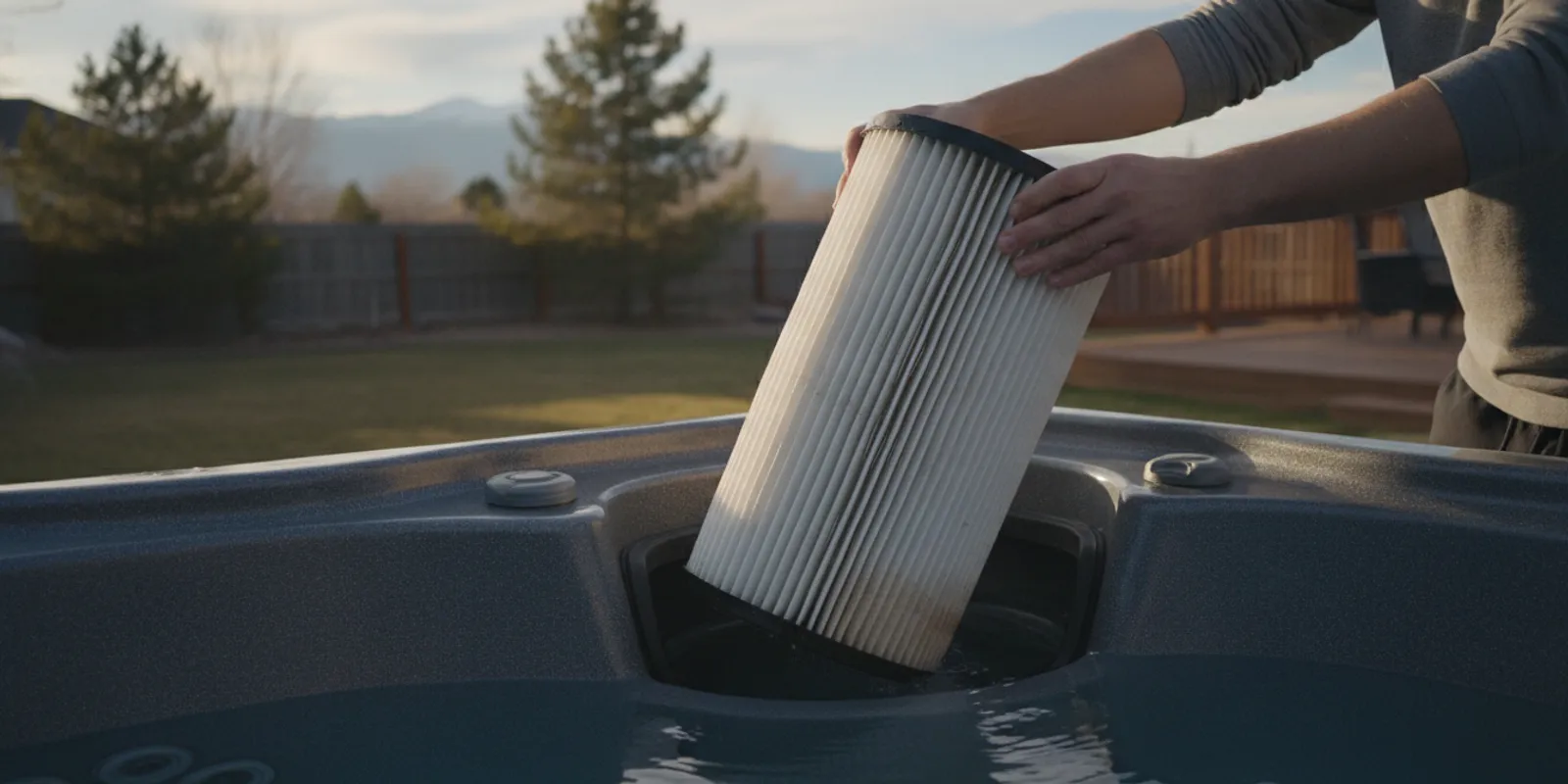
Before comparing filter media, record the information on the existing cartridge and check the spa owner's manual. Match the manufacturer, spa model, model year when available, and cartridge or part number. Filters that appear similar can differ in diameter, length, end-cap openings, threads, or attachment method. A drop-in cartridge and a screw-in cartridge are not interchangeable simply because their outside dimensions look close.
If the part number is missing, measure carefully. Measure the diameter edge to edge and the length from cap to cap, excluding handles and fittings. Also note whether the top or base is closed or open, the shape of each opening, and whether the cartridge uses a thread, locking feature, or another connection. A measurement that is close but not exact can still leave a bypass, prevent the cover from seating, or restrict circulation. When the model manual and the old cartridge disagree, pause and confirm the correct specification before ordering.
2. Compare the media with realistic expectations
Next, review the cartridge's construction and stated media area. A larger media-area specification can be useful when it matches the spa's design, but it does not make an otherwise incompatible cartridge a better choice. Be cautious with universal claims about micron capture, water clarity, or service life. Those results depend on the spa system, water chemistry, debris load, bather use, and the manufacturer's design. If a product makes a performance claim, look for a specification that applies to your exact model rather than relying on a generic label.
3. Keep filtration separate from sanitation
A cartridge removes suspended particles as water passes through it. It does not replace a disinfectant, pH control, or regular water testing. The CDC recommends that hot tub owners routinely check chlorine and pH. With a recommended pH range of 7.0 to 7.8 and at least 3 ppm chlorine in hot tubs: CDC water-testing guidance. Choose the filter for mechanical filtration, then manage sanitation according to the spa manufacturer and current water-care guidance.
Finally, consider access. A cartridge that is easy to remove, rinse, inspect, and replace is more practical than one that creates avoidable service difficulties. In Denver's year-round spa environment, a compatible filter and a realistic maintenance plan matter more than an unsupported claim that one cartridge is universally the best.
Start with fit: measure your hot tub filter before comparing brands
The best hot tub filter is not necessarily the one with the most media or the longest advertised service life. It is the cartridge that matches your spa's housing, water path, and manufacturer specifications. A filter that looks close can still leak, restrict circulation, or fail to seat correctly. Use the old cartridge, your spa manual, and the measurements below before comparing replacement options.
- Record the spa model, year, and filter part number. Start with the identification label on the spa cabinet, the owner's manual, or the existing cartridge. Filter compatibility can vary by brand, model series, and model year. Product listings may group cartridges by named spa brands or by a narrow model-year range, so a general statement such as "fits this brand" is not enough. If the part number is readable and still current, use it as your first cross-check rather than relying on appearance alone.
- Identify the cartridge type. Determine whether the filter is a standard drop-in cartridge or a screw-in design. A drop-in filter rests in the housing and may use a closed top, an open top, or a specific opening in the base. A screw-in cartridge uses threads and must match the receiving fitting. Do not substitute one style for the other simply because the diameter appears similar.
- Measure diameter edge to edge. Measure across the widest part of the cartridge, not across a handle, strap, or other fitting. Record the result carefully. For a practical comparison, round the measurement to the nearest eighth of an inch, then compare it with the spa manual and the candidate filter's specifications. Small measurement differences can matter when the cartridge must seal inside a restricted housing.
- Measure length from cap to cap. Measure the cartridge body from the top end cap to the bottom end cap. Exclude handles, threads, and projecting fittings from the length. Write down the measurement before removing the old cartridge from view. Because a replacement that is too long may not seat and one that is too short may leave the water path improperly supported.
- Inspect the top and base openings. Note whether each end is closed or open, then measure the opening and its shape where applicable. Some drop-in examples use a closed top with a one-inch open base, while others use one-inch openings at both ends. Other cartridges use larger openings, so matching only the outside dimensions is not sufficient.
- Check threads, fittings, and seating direction. For a screw-in filter, confirm the thread size and direction, not just the cartridge length and diameter. For a drop-in filter, check the base, top, gasket, and seating surface. Photograph the old cartridge beside your notes if you need to compare options later. Once the fit is confirmed, follow the manufacturer's care instructions and use this hot tub filter cleaning and replacement guide for maintenance details.
If any measurement conflicts with the manual or part-number lookup, pause before ordering. A spa technician can verify the housing and filtration path, especially when the original cartridge is damaged, modified, or missing.
How do filter media and surface area affect performance?
Once the cartridge fits your spa, the media construction and stated surface area become useful comparison points. They can help you understand cleaning demands and replacement options, but neither one identifies a universally best hot tub filter. The cartridge must work with the spa's flow path, pump, housing, and manufacturer specifications.
| Option | What it means | Best comparison question |
|---|---|---|
| Pleated polyester | A common cartridge construction with folded filter material that provides usable media area within a compact housing. | Does the replacement match the original cartridge's fit, flow requirements, and care instructions? |
| Ceramic or specialty media | Some spa systems use ceramic media instead of polyester. Specialty treatments or media labels may be model-specific rather than interchangeable. | Does the spa manual approve this media, and are its cleaning and replacement requirements clear? |
| Model-specific system | A cartridge or assembly designed around a particular spa, circulation layout, bypass arrangement, or filtration system. | Is the exact model, part number, end-cap design, and system type confirmed before ordering? |
What square-foot media area tells you
Listings may state media area in square feet. Examples in filter specifications include 3.7 square feet, 10 square feet, and 15 square feet, while a screw-in cartridge may list 10 square feet of inner media. Treat those figures as specifications for the amount of media in that cartridge, not as a promise of a particular cleaning result. A larger stated area does not automatically mean the cartridge will capture smaller particles, improve water quality in every spa, or fit your housing.
Micron performance is especially easy to overstate. Unless the spa or cartridge manufacturer provides a test method and a supported rating. Do not infer a micron number from pleat count, media area, or a product label. The best hot tub filter for one system may create poor flow or fail to seal in another. Match the approved media and dimensions first, then compare construction and service requirements.
Keep filtration separate from water care
A cartridge removes suspended material, but it is not a substitute for disinfectant or pH control. The CDC identifies chlorine and pH as core defenses against germs and recommends following manufacturer guidance, including regular cartridge replacement. In practice, a sensible media comparison ends with two checks: confirm the cartridge is approved for the spa, and confirm your ongoing water-care plan remains in place.
Which hot tub filter type fits your circulation system?
The right cartridge depends on more than its outside dimensions. Your spa's circulation design determines how water moves through the filter, whether a bypass path is present, and which replacement housing will seal correctly. Before choosing what appears to be the best hot tub filter, identify the system in your owner's manual and compare the existing cartridge with the specified part.
Standard filtration systems
A standard design commonly uses the larger jet pump during scheduled filtration cycles. In many spas, only part of the water moves through the cartridge while the remainder enters through bypass suction fittings. That means a replacement filter must match the system's intended flow path, not simply fit inside the compartment. Check the manual for the cartridge type, end-cap design, and any bypass or suction components before ordering.
Circulation-pump systems
A circulation-pump system uses a smaller pump to move water continuously or regularly through the filter. The same water path may also support heating, so the cartridge and housing need to match the spa's circulation specifications. Do not assume that a cartridge designed for a standard jet-pump system is interchangeable. A similar-looking filter can have different openings, seals, or flow requirements.
No-bypass designs
Some systems are engineered without bypass fittings. In a no-bypass design, water is directed through the filters when the jets operate, rather than taking a bypass route. This is a system-level feature, not a universal advantage that makes one cartridge suitable for every spa. The manufacturer may require a particular cartridge construction or housing, so use the model and part number as the final authority.
When checking compatibility, compare the old cartridge's top and base openings, locking or screw-in connection, diameter, and length with the manual or manufacturer parts list. If the cartridge is difficult to remove, the housing is cracked, or the pump behavior has changed, stop before forcing a replacement. A technician can verify the circulation path and inspect related equipment.
For a broader care routine, use this weekly hot tub filter maintenance checklist alongside the spa manufacturer's instructions. Filtration also works with, rather than replaces, proper water care and sanitation.
How often should you clean or replace a hot tub filter?
There is no single cleaning or replacement schedule that fits every spa. The right interval depends on how often the hot tub is used, how much debris reaches the water. Whether bathers rinse before use, how well the water stays balanced, and the condition of the cartridge. Follow the spa and filter manufacturer's instructions first, then adjust based on what you observe during routine checks.
Clean the cartridge when it is visibly dirty, when debris is restricting flow, or when the water-care system is working harder to maintain clear water. Heavy use, leaves, dust, lotions, and an overdue water change can load the pleats faster. Water chemistry matters too. Poorly balanced water can contribute to deposits or shorten the useful life of filter media. So a filter should not be treated as a substitute for regular testing and water care.
Replacement is appropriate when the cartridge remains damaged, cannot be cleaned effectively, has collapsed or torn pleats, or continues to restrict flow after proper cleaning. A cartridge that looks acceptable may still be the wrong replacement if its dimensions, end caps, or connection do not match the spa. Confirm the model and part number, and use the manufacturer's replacement guidance rather than relying on a universal calendar interval. The CDC specifically advises following manufacturer recommendations, including regular replacement of cartridge filters: CDC hot tub maintenance guidance.
It is also important to separate filtration from sanitation. A cartridge captures suspended particles, but it does not disinfect the water. The CDC recommends routinely checking chlorine and pH, including a pH range of 7.0 to 7.8 and at least 3 ppm chlorine in hot tubs. Those recommendations address water treatment, not filter selection. Maintaining disinfectant and pH levels is essential even when the cartridge is clean. For a broader maintenance routine, see this Denver hot tub maintenance service guide.
During each inspection, look for damaged pleats, unusual discoloration, excessive debris, weak circulation, or a cartridge that no longer returns to a clean condition. Record when it was cleaned and what changed afterward. That simple record helps you identify a pattern without assuming that the best hot tub filter has a fixed lifespan. If flow remains poor or the water does not respond normally after filter care and proper testing, have the spa system checked before buying a different cartridge.
Get practical help with hot tub filter care from Neptune Pools spa services.
What Colorado spa conditions mean for filter selection
A Colorado spa may be used through every season, so the best hot tub filter is not just a cartridge that fits on installation day. It should match the spa model, circulation design, and the way the equipment is accessed and maintained during cold weather. Denver winters can make an outdoor equipment area less convenient to reach. While changing temperatures and exposure to wind, dust, and debris can affect the condition of the spa system.
That does not mean every Colorado spa needs a special filter or the same winter routine. Filter construction, replacement timing, circulation settings, and freeze-protection requirements depend on the spa model, installation, manufacturer instructions, and whether the unit remains in regular use. If the spa is being used through winter, follow the equipment manual rather than assuming that a pool winterization rule applies to a hot tub. If it will be shut down, the correct preparation should be confirmed for that specific system.
Look beyond the cartridge
Cold-weather performance also depends on the surrounding equipment. A filter can be correctly sized and still be part of a system that needs attention if the circulation pump. Valves, heater, plumbing, or controls are not operating as intended. The CDC advises keeping mechanical and filtration components accessible for routine and preventive maintenance, and recommends following manufacturer guidance for cartridge replacement and other maintenance requirements. That is especially important when an equipment compartment is difficult to reach or a suspected freeze issue requires prompt evaluation.
Water care remains separate from filter selection. A cartridge removes particles, but it does not replace disinfectant or pH control. The CDC recommends routine testing of hot tub chlorine and pH, because those controls are part of protecting water quality. Temperature, sediment, biofilm, water age, and disinfectant residual can all influence conditions in a hot tub. So a filter should be treated as one part of the system rather than a stand-alone solution.
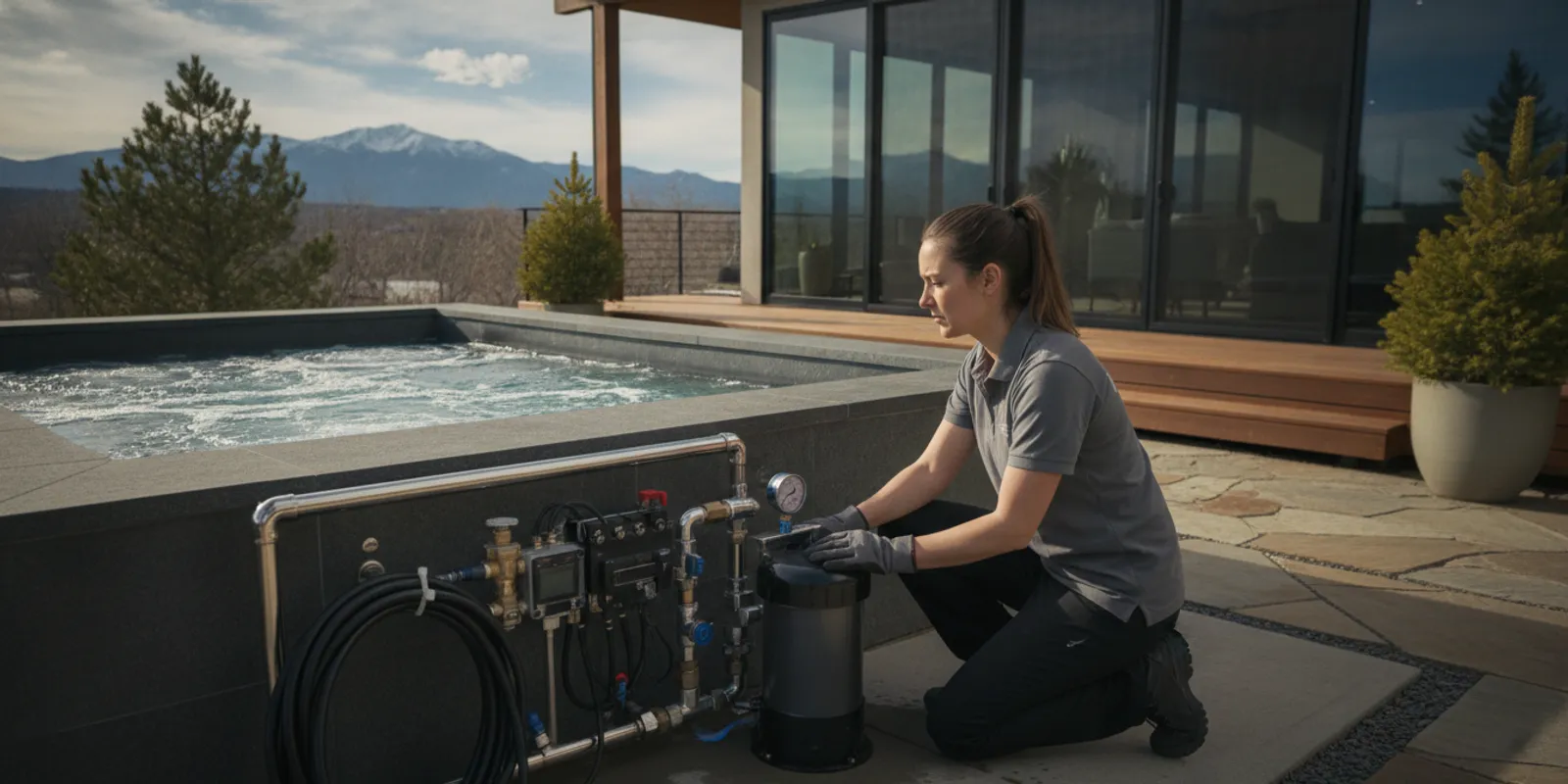
Neptune Pools provides year-round spa services in Denver, and its technicians have specialized high-altitude and freeze-protection training. Routine service can include a filter and skimmer basket check, chemical testing and balancing, and mechanical-room inspection. If the cartridge does not match the housing, flow seems abnormal, or winter operation raises questions, Neptune also provides spa equipment repair and servicing for troubleshooting, repair, and replacement decisions.
Get professional hot tub service for Colorado year-round spa care.
Frequently Asked Questions
How do you find the right hot tub filter size?
Start with the spa model and the cartridge part number in the owner manual. Then confirm the cartridge type, diameter, length, end-cap openings, and any threads or fittings. Measure diameter edge to edge and length cap to cap, excluding handles and fittings. A cartridge that is close in size but has the wrong connection can restrict flow or fail to seal.
Which hot tub filter types are available?
Most spa systems use a cartridge with pleated polyester media, while some models specify specialty or ceramic media. Filtration systems may also use a standard pump, a dedicated circulation pump, or a no-bypass design. The correct choice depends on the spa's plumbing and manual, not simply on the material that sounds most advanced.
Are hot tub filter cartridges interchangeable between brands?
Not automatically. Two cartridges can look similar while differing in length, diameter, top or base opening, thread, or bypass requirements. Use the exact spa model, cartridge number, and measured dimensions to confirm compatibility. If those details conflict, verify the replacement with the manufacturer or a qualified spa technician before installing it.
How often should you replace a hot tub filter?
Replace the cartridge according to the spa manufacturer's guidance and its actual condition. Usage, debris, water chemistry, and cleaning history can change service life, so a universal replacement interval is not reliable. The CDC recommends regular cartridge-filter replacement in line with manufacturer recommendations.
Does a hot tub filter sanitize the water?
No. A cartridge captures suspended particles, but it does not replace disinfectant, pH control, or routine water testing. The CDC advises hot tub owners to check chlorine and pH regularly. Keep filtration, cleaning, and sanitation as separate parts of the maintenance plan.
Ready to choose the right hot tub filter?
The correct filter depends on your spa model, cartridge fit, media, and maintenance needs. If you want a second opinion before ordering or need help keeping your spa ready for year-round use. Neptune Pools can help you sort through the options and identify the right service path.
Related Blogs