Denver Residential Pool Services: Homeowner Guide

Denver residential pool services can make pool ownership easier when changing temperatures, water chemistry, equipment questions, and seasonal deadlines compete for your attention. The right support should make those responsibilities clearer, not add another layer of guesswork.
For homeowners, professional pool support can bring together routine cleaning and water care, equipment diagnosis and repair, spring opening, fall closing, supplies, and year-round spa support. Neptune Pools has served the Denver Metro area since 1982. Its service approach reflects local conditions such as freeze risk, rapid temperature changes, hard-water staining, and intense UV exposure. The right mix depends on your pool, equipment, use, and maintenance history.
Denver homeowners can use denver residential pool services for ongoing cleaning and chemistry care, equipment repairs, seasonal opening and closing, pool supplies, and spa maintenance. Separating these needs helps you choose recurring care while knowing when a technician should inspect or repair the system.
Schedule service with Neptune Pools.
Here is what each part of residential pool support typically covers, and how the pieces fit together.
What Do Denver Residential Pool Services Include?
| Need. | Typical focus. | When to consider it. |
|---|---|---|
| Routine maintenance. | Cleaning, water testing, chemistry adjustment, and basic checks. | During the active pool season or as conditions require. |
| Equipment support. | Pumps, filters, heaters, automation, and circulation concerns. | When performance changes or a component needs diagnosis. |
| Seasonal care. | Opening, startup, closing, winterization, and risk inspection. | Before and after the active season. |
| Spa support. | Cleaning, testing, chemistry, and ongoing hot-tub care. | Year-round when the spa remains in use. |
For a Denver homeowner, pool care is more than removing leaves from the surface. A complete service plan can combine routine water care with equipment support, seasonal preparation, supplies, and help for an attached or standalone spa. The right mix depends on the pool's condition, how often it is used, and which responsibilities you want to keep in-house.
Recurring maintenance is the foundation for many homeowners. A typical program addresses visible cleanliness and water condition through tasks such as skimming, brushing, vacuuming, chemistry testing, and checks of filters and skimmer baskets. Neptune Pools describes its residential maintenance as ongoing care rather than a one-time cleanup. Homeowners comparing service frequencies or visit scopes can review the details of Denver pool cleaning and maintenance before choosing a plan.
Maintenance and equipment support are different needs
Water that looks cloudy, debris that accumulates quickly, or chemistry that drifts may call for cleaning and water-care attention. A pump that will not run, a filter that is not performing properly, or another mechanical problem requires inspection and repair. These services can work together, but one should not be treated as a substitute for the other. Neptune's residential service mix includes both maintenance and equipment repair, allowing a technician to identify when a routine visit needs a separate repair assessment.
Seasonal care protects a Colorado pool
Denver's operating conditions add another layer to residential pool ownership. Colorado homeowners may need to account for freeze damage concerns, high-altitude chemistry questions, rapid temperature changes, hard-water staining, and intense ultraviolet exposure to equipment. Seasonal services can include opening a pool in spring, preparing it for active use, and closing or winterizing it in fall. The timing and scope should reflect the pool's equipment, plumbing, exposure, and expected weather rather than a generic national calendar.
Residential support can also include pool chemicals and supplies, so homeowners have a practical way to maintain water between professional visits. Spa and hot tub care is another part of the service mix. Neptune Pools provides year-round spa services, including during the pool off-season, when a spa may remain in regular use. Renovation support is available when an older pool needs more substantial rehabilitation, but that is a different project from recurring maintenance.
In short, Denver residential pool services may range from scheduled cleaning and chemistry management to diagnosis, seasonal protection, supplies, spa care, and renovation planning. Looking at these categories separately helps homeowners select only the support their property and routine actually require.
How Routine Maintenance Protects Your Pool
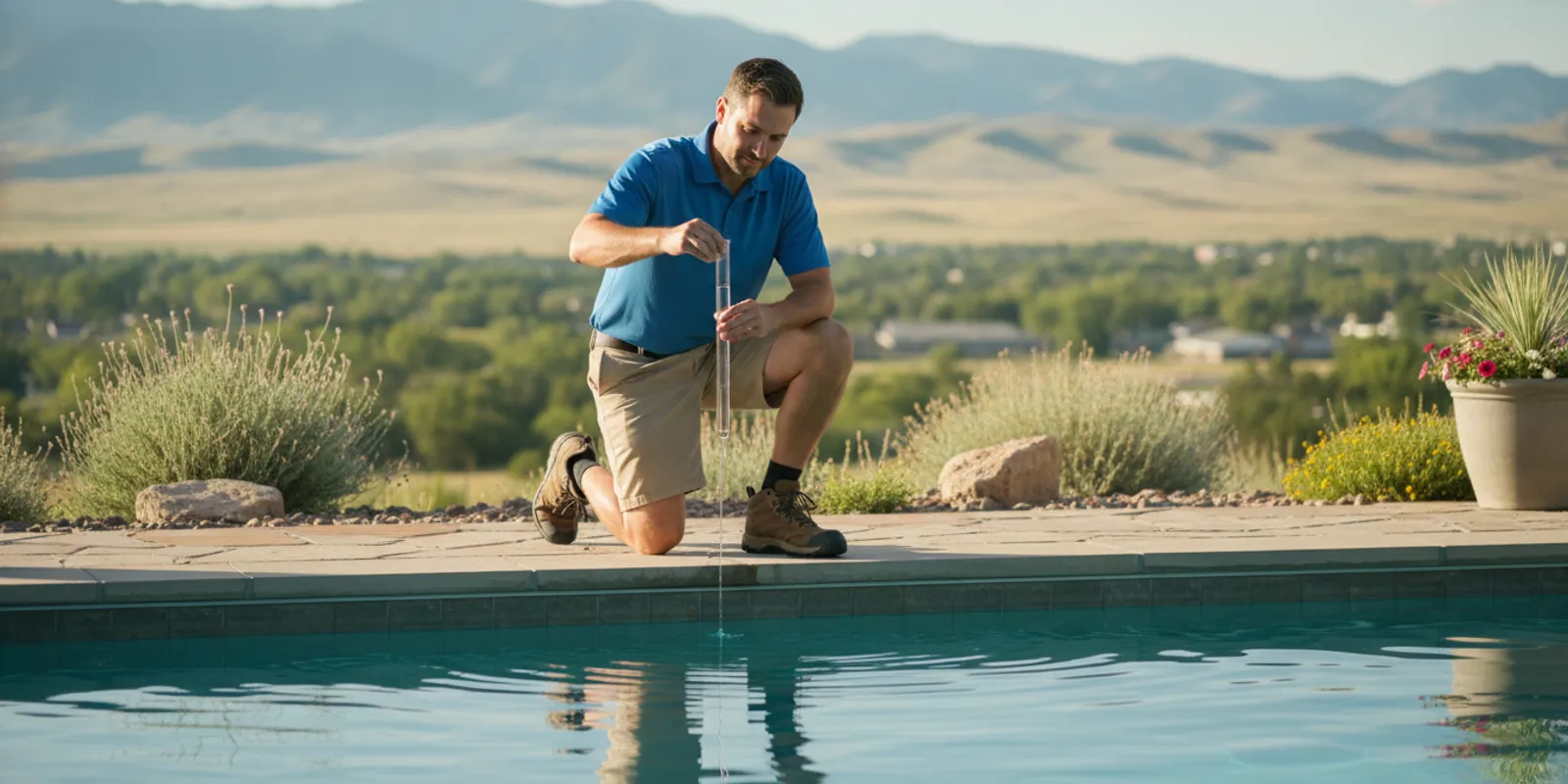
A routine visit is more than removing leaves from the surface. It is a practical check of the water, surfaces, circulation, and equipment before small changes become harder to manage. Neptune Pools' maintenance visits can include skimming, brushing, debris removal, vacuuming, algae prevention, water chemistry testing and adjustment, plus filter and skimmer-basket checks. The exact work depends on the pool's condition and the service plan.
Frequency should match how the pool is actually used and what Colorado conditions are doing to it. A pool with frequent swimming, heavy debris, strong sun exposure, or changing water conditions may need closer attention than a lightly used pool. Denver's rapid temperature changes, intense UV exposure, hard-water staining, freeze concerns, and high-altitude chemistry questions can all affect the right maintenance rhythm. Rather than assuming one schedule fits every home, review usage, recent test results, equipment performance, and seasonal conditions with a qualified technician.
Testing protects both swimmers and equipment
Water testing is a safety and maintenance task, not just a cosmetic preference. The CDC identifies chlorine and pH as the first defense against germs that can make swimmers sick and advises residential pool owners to check both regularly. The CDC recommends a pH range of 7.0 to 7.8, which helps balance germ control, pipe lifespan, and swimmer comfort. When pH rises, chlorine becomes less effective, especially above 8.0. When pH falls below 7.0, chlorine effectiveness increases, but pipes are more likely to corrode or break down.
Sunlight, sweat, dirt, and swimmer waste can reduce chlorine levels, so readings can change even when the water looks clear. A professional visit provides a measured basis for adjustments instead of relying on appearance or guesswork. Chemical handling should also be deliberate. Neptune Pools documents readings and dosages, using precision testing equipment and professional-grade chemicals rather than treating every pool with the same formula.
Documentation makes ongoing care easier
Each maintenance visit includes an equipment inspection and an electronic service report. Reports can record chemical readings, measured dosages, and before-and-after photos, giving homeowners a clearer history of what changed and what may deserve attention later. That record is useful when adjusting visit frequency, preparing for a seasonal opening or closing, or distinguishing a water-care issue from a mechanical repair.
Explore Denver pool cleaning and maintenance plans.
When Should You Call for Pool Equipment Repairs?
Pool equipment can continue to run while working poorly, so waiting for a complete shutdown is not always the best approach. A professional evaluation is appropriate when a pump, filter, heater, automation system, or related component is no longer performing as expected. Or when you cannot identify the source of a circulation or control problem. Repair work is different from routine cleaning: balancing the water and removing debris will not correct a mechanical failure.
Pumps, filters, and circulation equipment
Pumps may be variable-speed or single-speed models, and support can also involve pump and motor combinations. Filters require a different diagnostic path depending on whether they use cartridges, sand, or diatomaceous earth. These distinctions matter because the equipment type affects what a technician needs to inspect and how the system should be serviced. If the system is not circulating properly, a qualified technician can evaluate the equipment rather than asking you to replace parts based on guesswork.
Denver conditions add another reason to take equipment concerns seriously. Colorado homeowners contend with freeze damage concerns, rapid temperature changes, hard-water staining, and intense UV exposure to equipment. Those conditions do not point to one universal repair, but they make a documented inspection useful when equipment performance changes or seasonal operation is uncertain.
Heaters and automation systems
Equipment support can include gas heaters, heat pumps, solar systems, and pool automation. Automation problems are especially frustrating when the pool appears fine but schedules, controls, or remote access do not behave as expected. Service may include configuring the automation system, pairing apps, setting schedules and alerts, adjusting seasonal programming, and training you to use the controls. That practical setup can be more useful than simply restoring a single setting without explaining how the system works.
Choose diagnosis over trial and error
Before requesting help, note what you were trying to operate, when the issue began, and whether the concern involves circulation, heating, filtration, or controls. Avoid assuming that a chemical adjustment will solve an equipment problem. A technician can use those details to focus the visit and distinguish a repair need from a maintenance or seasonal-programming question.
For help with pumps, filters, heaters, automation, and related residential systems, review residential pool equipment repairs from Neptune Pools.
How Denver Weather Changes Seasonal Pool Care
Denver's pool calendar is shaped by more than warmer temperatures. Rapid weather changes, freeze risk, high-altitude chemistry questions, hard-water staining, and strong UV exposure can affect how a residential pool is prepared and maintained. A practical seasonal plan keeps each transition focused without treating one visit as permanent protection.
Open and inspect the pool in spring
Opening service can include equipment reassembly and startup, circulation-system priming, chemical balancing, and a system inspection. A premium opening may also include surface pressure washing and treatment when needed. The exact work depends on the pool's condition and service selected.
Maintain the pool through the active season
The active pool season generally runs from April through October. During that period, temperatures, sunlight, debris, and swimmer use can alter water conditions and add demands on circulation and filtration. Regular maintenance, testing, equipment checks, and timely adjustments help keep the pool ready for use.
Close and winterize before sustained cold
Fall closing should prepare the pool for cold-weather exposure and reduce avoidable risks to plumbing, equipment, and the cover. A Denver pool winterization service can include water-level adjustment, winter chemicals, equipment shutdown, line blow-out, winter-cover installation, and a winter risk inspection. Read more about Denver pool freeze protection when cold snaps raise specific concerns.
What Should Homeowners Know About Pool Chemicals and Supplies?
Pool chemistry is easier to manage when testing comes before dosing. Chlorine and pH are the first line of defense against germs, and the CDC recommends that residential pool owners check both regularly. For pools, the CDC recommends a pH range of 7.0 to 7.8 and at least 1 part per million of chlorine under its stated guidance. These readings are not just numbers to chase. Balanced water supports sanitation, swimmer comfort, and the service life of pool plumbing.
Conditions can change the result between visits. Sunlight, swimmer waste, sweat, and dirt can reduce chlorine levels, while a high pH makes chlorine less effective. A pH below 7.0 can increase chlorine effectiveness but also raise the risk of corrosion or breakdown in pipes. Read the full CDC guidance on home pool water testing for the underlying safety recommendations.
Test first, then measure the dose
A homeowner should use a reliable test method, record the result, and follow the product label for the appropriate application. Avoid adding chemicals based on guesswork or combining products because the water looks cloudy. Pool size, current readings, water temperature, recent use, and the product itself all affect what an appropriate adjustment may be. If the reading is unexpected or the water condition does not improve, pause and ask a qualified professional to evaluate it rather than repeatedly adding more product.
Professional service can add consistency through precision testing, professional-grade chemicals, and documented dosing. Neptune Pools' service reports can record chemical readings and measured dosages, giving homeowners a clearer record of what was adjusted and why. That documentation is particularly useful when several people share responsibility for the property or when water conditions change quickly in Colorado.
Store chemicals as a safety responsibility
Pool chemicals require deliberate storage and handling. Keep products in their original containers, follow label directions, and prevent incompatible chemicals from coming into contact. Store them in a dry, well-ventilated area away from children, pets, heat, and ignition sources. The EPA warns that swimming-pool chemicals can create fire, toxic vapor, and injury hazards when mishandled. Review its pool chemical storage and handling alert before reorganizing a chemical area.
Local support can simplify replenishment without turning chemistry into a guessing game. Neptune Pools provides testing, supplies, and local chemical delivery for Denver homeowners. Explore Denver pool chemicals and supplies to compare the support that fits your pool, your storage setup, and your comfort level with routine water care.
Can Residential Pool Service Include Spa Care?
Yes. Denver homeowners can coordinate pool support with ongoing care for a hot tub or spa, rather than treating the two systems as completely separate responsibilities. Neptune Pools offers year-round hot tub and spa services, including during the months when an outdoor pool may be closed. That matters in Colorado, where a spa may remain in use through the colder season and still needs consistent attention.
What spa care can address
A spa visit may include cleaning applicable surfaces, checking water condition, adjusting chemistry as needed, and inspecting the equipment that keeps the system circulating and heating. The exact work should match the spa's condition, equipment, and service plan. Routine water care is not a substitute for diagnosing a failed pump, heater, control, or other component, so those needs should be identified separately when they arise.
Professional service can also reduce the guesswork that comes with a smaller water volume and frequent use. A technician can document readings and dosages, explain what was adjusted, and identify issues that deserve follow-up. Homeowners should ask what is included in a recurring visit, whether filter or drain service is separate, and how recommendations change based on usage and water condition. There is no single schedule that fits every hot tub. Service frequency should reflect how often the spa is used, its maintenance history, and the technician's assessment.
Safety-focused hot-tub maintenance
The CDC says germs can spread through hot-tub water and cause respiratory, skin, or gastrointestinal illnesses. It advises owners to check sanitizer levels and pH regularly. For hot tubs, the CDC lists a pH range of 7.0 to 7.8. It lists at least 3 parts per million of chlorine or 4 to 8 parts per million of bromine. It also lists a water temperature no higher than 104 degrees Fahrenheit. See the CDC hot-tub safety guidance for the full recommendations.
Those figures are safety guidance, not a promise that every spa has the same treatment requirements. Water testing, correct dosing, secure chemical handling, and attention to circulation all belong in a responsible care plan. If your household uses both a pool and a spa, ask whether one provider can document each system's service separately while coordinating visits. That creates a clearer record and makes it easier to plan year-round care.
Compare residential pool service options with Neptune Pools.
Frequently Asked Questions
Do residential pools need weekly or biweekly service?
There is no single schedule for every Denver pool. Frequency should reflect pool use, equipment, water condition, debris, and the homeowner's ability to handle checks between visits. A technician can recommend a practical schedule after reviewing the property and its maintenance history.
Why test more than chlorine and pH?
Chlorine and pH are central to water safety, but broader testing helps identify whether the water is balanced and whether treatment is likely to protect surfaces and equipment. The CDC recommends keeping pool and hot-tub pH between 7.0 and 7.8, with chlorine requirements varying by setting. Read the CDC guidance.
Will I receive documentation after a maintenance visit?
Neptune Pools maintenance visits include an equipment inspection and an electronic service report. Reports can document chemical readings, measured dosages, and before-and-after photos, with delivery by email within 24 hours. Review the maintenance service details.
How should homeowners compare pool service costs?
Compare the actual scope, visit frequency, chemical handling, equipment checks, reporting, seasonal work, and repair terms rather than relying on a generic monthly number. Pool size, condition, access, and requested services can all affect the appropriate recommendation, so ask for a clear explanation of what is included.
When should seasonal pool service begin in Denver?
Denver's pool season generally runs from April through October, but timing depends on weather and the property's condition. Opening may include equipment startup, circulation priming, chemical balancing, and system inspection. Closing can include line blow-out, equipment shutdown, winter chemicals, and cover installation. See the winterization service options.
Get Started With Residential Pool Support in Denver
Choosing the right service mix can make pool ownership easier, especially when maintenance, equipment questions, seasonal care, supplies, or spa support overlap. Review the available options and consider which type of help best fits your pool, equipment, and routine.
Review residential pool service options and contact Neptune Pools.
Related Blogs