Pool Freeze Protection in Denver: A Practical Winter Guide
Pool Freeze Protection in Denver: A Practical Winter Guide
Denver can shift from a sunny afternoon to a hard freeze overnight. That change can put pool plumbing, pumps, filters, heaters, valves, and exposed connections at risk. Effective pool freeze protection is not one gadget or one temperature setting. It is a plan that matches your equipment, plumbing layout, power reliability, occupancy, and winter use.
Contact Neptune Pools to plan pool freeze protection before the next Colorado freeze.
Pool freeze protection combines circulation, temperature sensing, equipment monitoring, and protection for exposed components. An operating pool may need dependable circulation and tested automation. A closed or vacant pool may need professional winterization, including line blowout, equipment drainage, foam plugs, and a winter cover. The right approach depends on the property and equipment, not a universal temperature number.
This guide explains how freezing damages pool systems and how Denver homeowners, HOAs, and property managers can reduce that risk. It covers sensors, moving water, equipment housing, foam plugs, winterization, power outages, and safe post-freeze checks. The goal is a practical decision framework, not a risky one-size-fits-all temperature rule.
Why Pool Freeze Protection Matters in Colorado
Pool freeze protection matters because water expands as it freezes and trapped water can stress pool plumbing and equipment. In Denver, freeze-thaw cycles can expose the system to repeated temperature changes. A cover helps protect the water surface from debris, but it does not remove water from equipment or shield every exposed pipe.
Where Freeze Damage Begins
Water can remain in short pipe sections, pump wet ends, filter tanks, heater connections, check valves, and low points in the plumbing. When that water freezes, it can split a fitting or crack a housing. The damage may remain hidden until the system is restarted. Leaks, loss of prime, abnormal pressure, or motor problems can then appear.
Why a Cover Is Not Enough
A cover limits debris and may reduce exposure at the water surface, but it does not insulate every line or equipment component. The pump, filter, heater, valves, and visible plumbing may still face cold air and wind. Equipment housing can reduce weather exposure, but it is not a substitute for drainage, circulation, or complete winterization.
Preparation Creates More Safe Options
Preparing before a forecasted freeze gives you time to confirm power, test automation, inspect for leaks, and repair weak components. Neptune Pools serves Denver Metro homeowners, property managers, and pool operators with Colorado-specific maintenance and equipment support. If you see a leaking union, cracked housing, or unreliable pump, pool equipment repair and servicing should come before the next deep freeze.
How Freeze Sensors and Circulating Water Work
Freeze sensors monitor temperature near a pool system and can signal automation to run the pump as conditions approach freezing. Circulation helps because moving water is less likely to freeze than stagnant water. This approach can support an operating pool, but it depends on power, a working pump, accurate controls, and someone who can respond if the system stops.
Why Circulation Helps
When the pump moves water through the skimmer, filter, heater, returns, and connected lines, water spends less time sitting still in exposed sections. Circulation does not heat the pool enough to eliminate freezing risk. It reduces stagnant pockets while the system is running. A failing pump, blocked line, tripped breaker, or prolonged outage can still leave water vulnerable.
What a Freeze Sensor Can and Cannot Do
A sensor can start a pump when its control system detects a programmed condition. It cannot repair a failed pump, restore power, detect every colder spot on an equipment pad, or guarantee protection when a line is blocked. Activation temperatures vary by sensor and control panel. Follow the manufacturer's instructions, verify the sensor location, and test the automation before severe weather.
Monitoring Is Part of the Plan
Before a freeze, check that the controller displays normally and that the pump starts without unusual grinding, rattling, or repeated breaker trips. During the event, look for alarms, leaks, loss of flow, or a sudden change in water level. If the property will be vacant, arrange reliable monitoring instead of assuming a sensor can manage every failure.
Schedule seasonal pool maintenance to keep freeze-protection checks consistent.
What Equipment Housing and Foam Plugs Protect
Equipment housing and foam plugs address different parts of a winter plan. An enclosure can reduce wind and weather exposure around a pump or equipment pad. Foam plugs help seal selected openings after water has been cleared during seasonal winterization. Neither one makes a running pool automatically safe, and neither replaces inspection of the full plumbing system.
Equipment Housing Reduces Exposure
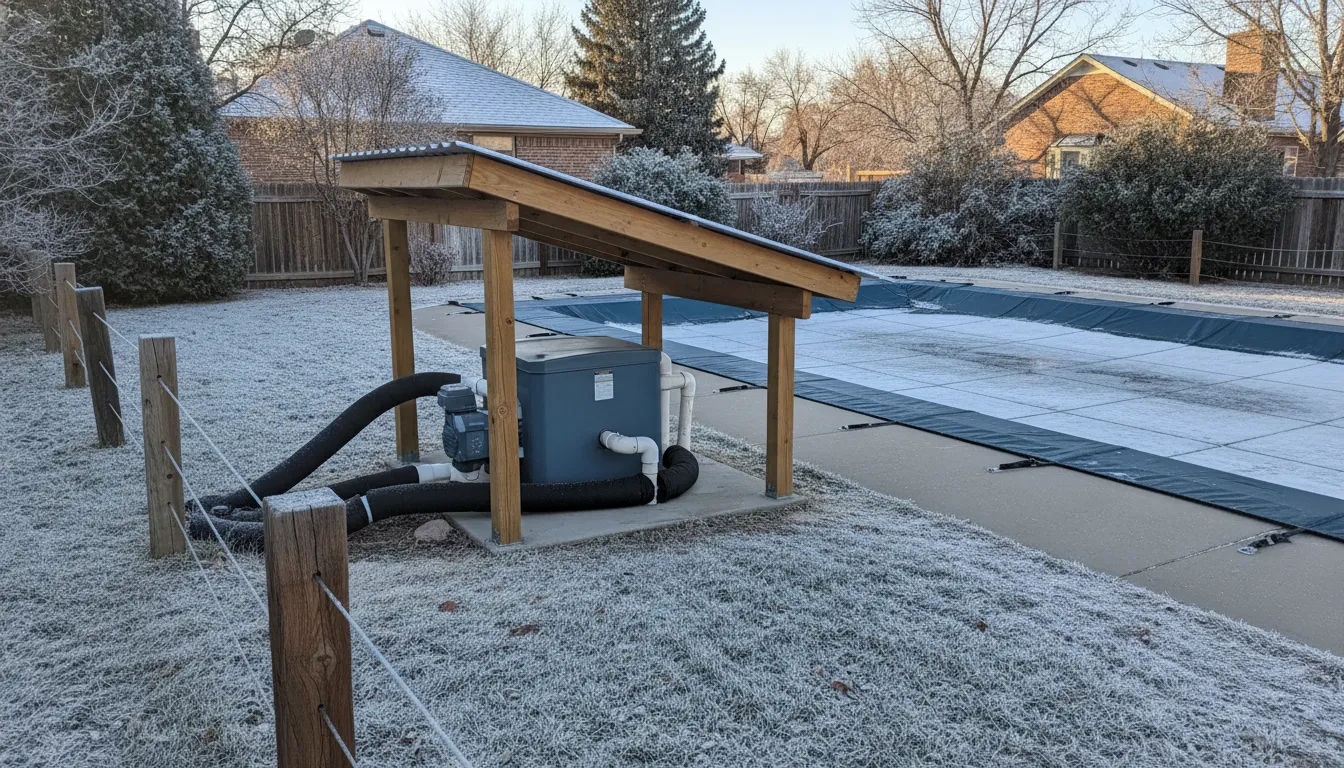
A suitable enclosure can help shield equipment from wind, snow, and direct weather. It must still allow the ventilation, service clearance, and drainage required by the equipment. A tightly enclosed or improvised cover can create its own problems. Treat housing as one layer of protection alongside a functioning operating plan or a complete winterization process.
Foam Plugs Belong in Seasonal Winterization
Foam plugs are used to close vulnerable plumbing openings after the appropriate lines have been cleared. They can reduce the water left in selected sections where freezing expansion might cause damage. Placement depends on the pool's returns, skimmers, valves, equipment, and winterization sequence. A plug cannot protect a line that still contains trapped water or a component that was not drained correctly.
Do Not Force Valves or Fittings
If you do not know what a valve controls, do not force it during a freeze. Do not loosen fittings on a pressurized system, reach into wet electrical equipment, or repeatedly reset a breaker after a pump problem. Take a safe visual look and arrange professional pool equipment service when the layout is unfamiliar or damage is suspected.
For owners who keep a spa operating through winter, year-round spa services can address a related equipment and water-care need without treating a pool closing and spa service as the same process.
When Should You Winterize Instead of Running the Pool?
Winterize instead of running the pool when the property will be vacant, power or automation is unreliable, equipment is already damaged, or an extended freeze is expected. Year-round circulation may suit an occupied property with dependable equipment and monitoring. The decision should consider how quickly someone can respond to a failure, not just the forecast temperature.
- Assess the expected duration. A short cold snap followed by moderate daytime temperatures may be manageable with circulation when the system is healthy. A prolonged freeze increases the time that a pump, sensor, or power supply could fail.
- Consider occupancy. A vacant home cannot quickly respond to an alarm, leak, outage, or unexpected temperature drop. Seasonal closure may be more dependable when no trusted person can inspect the equipment.
- Check power and controls. Circulation only helps while the pump is operating. Choose winterization when the breaker, timer, freeze control, wiring, or pump has a history of interruptions.
- Inspect exposed equipment. A noisy pump, leaking seal, cracked housing, exposed plumbing, or known control problem should be addressed before relying on continuous operation.
- Match the plan to the property. A professional can evaluate plumbing configuration, wind exposure, equipment condition, and service access before recommending year-round operation or seasonal closure.
| Operating plan | Best fit | Key requirement |
|---|---|---|
| Year-round circulation | Occupied properties and shorter cold events | Reliable power and monitoring. |
| Seasonal winterization | Vacant properties or long freezes | Cleared lines, drained components, plugs, and a cover. |
There is no universal answer for every Denver pool. Choose the plan that fits the property, equipment, and available monitoring. Year-round protection requires an operating system that can be monitored. Winterization requires a complete process that removes water from vulnerable areas. When the equipment condition or plumbing layout is unclear, a professional evaluation is safer than selecting a strategy from a generic temperature threshold.
Owners who keep using their pool during colder months can also use Neptune Pools' cleaning and maintenance service to keep inspections and equipment checks consistent.
A Colorado Pool Freeze Protection Checklist
A practical pool freeze protection checklist separates preparation, monitoring, and post-freeze inspection. Before temperatures fall, confirm the chosen strategy and inspect the equipment. During the event, verify operation without taking electrical risks. Afterward, look for leaks or unusual equipment behavior before returning the system to normal use.
Before a Freeze
- Confirm the plan. Decide whether the pool will circulate or be winterized. Do not switch between methods without understanding the equipment and valve positions.
- Test circulation and controls. Confirm the pump starts, the automation responds, and the freeze sensor is configured according to the equipment instructions.
- Inspect the equipment pad. Look for leaks, cracked housings, exposed pipe, loose unions, damaged insulation, or a missing enclosure.
- Check power reliability. A sensor cannot activate a pump during an outage, and circulation cannot protect water when the pump has stopped.
- Schedule winterization early. A complete closing may include water-level adjustment, winter chemical treatment, equipment shutdown, line blowout, foam plugs where appropriate, cover installation, and a risk inspection.
During a Freeze
Verify that power remains on and that the pump is operating normally. Look for alarms, leaks, unusual pressure, or a sudden loss of flow. Avoid changing automation settings repeatedly if you do not understand the system's freeze mode. If the property is vacant, ask a trusted person or service professional to check the equipment rather than assuming the sensor is working.
After Temperatures Rise
Inspect the pump, filter, heater, valves, and visible plumbing before assuming the system is undamaged. Look for cracks, displaced fittings, leaks, loss of prime, and new motor noises. Do not force a pump to start if it appears frozen or will not prime. Turn off affected equipment safely and arrange pool repair service for a professional assessment.
Neptune Pools' fall and winter workflow includes water-level adjustment, winter chemical treatment, equipment shutdown procedures, line blowout, cover installation, and a winter risk inspection. Those steps belong to a complete closing plan. They are not a substitute for an emergency response when a pump is leaking or electrical equipment is wet.
What to Do After a Freeze or Power Outage
After a freeze or power outage, inspect the system before restarting everything. Frozen water can damage plumbing even when the pool surface looks normal. A safe response is to check for water and electrical hazards, document visible damage, and listen for abnormal equipment sounds. Stop if the pump leaks, trips a breaker, or fails to prime.
Start With a Safe Visual Check
If electrical equipment is wet, water is collecting around the pad, or you smell burning, keep the system off and avoid the equipment area. If it is safe to approach, look for fresh water around the pump, filter, heater, valves, and visible lines. Check the pool level, but remember that evaporation, splash-out, and backwashing can also change it.
Listen Before Restarting
Grinding, rattling, humming, repeated clicking, or an immediate shutdown can point to ice, trapped air, a damaged impeller, or a motor problem. Do not repeatedly reset a breaker or force a pump to run. Photograph unusual conditions and tell the technician where water is collecting. This preserves useful information without turning a small issue into an electrical or mechanical hazard.
Know When to Call for Help
Call for professional help when the pump will not prime, a fitting is cracked. A housing leaks, the breaker trips, water is near electrical equipment, or the plumbing configuration is unclear. Neptune Pools serves Denver Metro homeowners and property managers with equipment repairs, seasonal maintenance, and winterization planning. Learn more about year-round spa services if your winter care needs extend beyond the pool.
Frequently Asked Questions
At What Temperature Does Pool Freeze Protection Start?
There is no single temperature that protects every pool. A sensor's activation point depends on its model, control panel, location, and configuration. Exposed plumbing may be colder than the sensor. Follow the equipment instructions. Test the system before freezing weather. Use a professional winterization plan when power or monitoring is uncertain.
How Does a Pool Freeze Protection Sensor Work?
A freeze sensor monitors temperature and can signal the pool control system to start circulation near a programmed condition. Moving water is less likely to freeze than stagnant water. Without power or a working pump, a sensor cannot protect the system.
Do I Need Pool Freeze Protection in Colorado?
Most Colorado pool owners need a plan for freezing weather because water trapped in plumbing and equipment can expand and cause damage. The plan may involve monitored circulation for an operating pool or complete winterization for a closed or vacant property. Equipment condition, exposure, occupancy, and power reliability determine the appropriate method.
Are Foam Plugs Enough to Protect a Pool?
Foam plugs are one part of seasonal winterization, not a complete freeze-protection system. They help seal selected openings after the correct lines have been cleared. They do not replace draining, blowing out plumbing, addressing equipment, or confirming that water is not trapped elsewhere. Their placement should match the pool's plumbing and winterization sequence.
What Happens If a Pool Pump Freezes?
A frozen pump may develop a cracked housing, damaged seal, split fitting, or motor problem. The damage may not be obvious until the pump warms or restarts. Do not force a frozen pump to run or repeatedly reset its breaker. Keep the area safe, inspect for leaks from a distance, and arrange equipment service before restarting.
Contact Neptune Pools for a Colorado pool freeze protection and winterization plan.
Related Blogs