High Altitude Spa Water Care: Essential Chemical Balancing Guide

High altitude spa water care requires a local approach because Denver's 5,280-foot elevation directly affects how your chemicals behave. Thin air causes your sanitizer to fade about 10 to 15 percent faster than at sea level, leaving your water at risk for bacteria growth if you follow a standard schedule. Rapid evaporation also concentrates minerals like calcium, often leading to scale buildup and cloudy water when pH is not strictly controlled. By testing your water at least twice a week and adjusting for local evaporation rates, you can maintain a safe, clear spa year-round. This simple method prevents common high-elevation issues like skin irritation and equipment damage.
Schedule professional spa water care in Denver today — Neptune Pools certified technicians handle your high-altitude chemical balancing so you can relax without the guesswork.
To keep your hot tub in peak condition, you must understand the local factors that impact your water every day. The path begins with understanding how Denver's altitude changes the chemistry in your spa.
How Does High Altitude Affect Spa Water Chemistry?
Denver's high altitude creates three distinct challenges for spa water: faster evaporation that concentrates minerals, low air pressure that causes rapid pH swings, and intense UV exposure that destroys sanitizer faster. These factors require a tailored maintenance approach compared to sea-level spa care.
A spa in Denver works differently than one at sea level. Thin air and low pressure create a new chemical environment for your water. Neptune Pools technicians see this every day across the Denver Metro area, and adjusting your water testing in Colorado is the first step toward keeping your spa safe and clear.
Faster evaporation and mineral concentration
At high altitudes, the air is dry and pulls water from your spa fast. Hot tubs in the mountains can lose water up to twice as fast as those at sea level. As water turns into vapor, it leaves behind minerals like calcium that become more dense over time. This can lead to hard water problems quickly — white flakes, rough spots, clogged filters, and even heater damage. Check your water level every day and add fresh water to keep mineral levels low.
Low air pressure and pH swings
Air pressure in Denver is low, which lets carbon dioxide escape from your spa water faster than at sea level. When CO2 leaves, the pH level starts to rise rapidly. A steady pH level is a fundamental indicator of water quality and balance. When pH climbs too high, chlorine cannot kill germs well, water turns cloudy, and skin irritation follows. You may need more pH decreaser than at sea level. Total alkalinity acts as a shield against fast pH shifts, but at high altitude these shields weaken. Neptune Pools recommends checking both pH and alkalinity twice a week.
Sanitizer loss from UV and thin air
Colorado's sun is intense. With less atmosphere to block the rays, UV light breaks down chlorine and bromine about 10 to 15 percent faster than usual. Thin air also means less oxygen in the water, which changes how some chemicals work. Check sanitizer levels before and after each use. Shock the water weekly to clear out waste and keep the water fresh.
What pH Levels Should Denver Spa Owners Target?
Denver spa owners should target a pH range of 7.2 to 7.6, slightly tighter than the standard 7.2 to 7.8 range. Total alkalinity should stay between 90 and 120 ppm to buffer against rapid shifts. Chlorine levels should run 3 to 5 ppm — higher than sea level recommendations — to compensate for faster UV breakdown.
High altitude directly impacts how your spa water behaves. In the Denver Metro area, lower pressure and dry air mean you must watch your water more closely. Following basic water balancing principles is the first step toward a healthy soak.
Why pH and Alkalinity Matter Most
Your spa pH level is the most vital number you will track. Keep pH between 7.2 and 7.6 to stay ahead of the fast shifts that high altitude causes. When pH drops too low, the water becomes acidic and can damage spa parts. When it climbs too high, you get scale on the heater and pump. Total alkalinity acts as a buffer for pH. In Colorado, this buffer depletes faster due to high evaporation rates, so aim for 90 to 120 ppm to prevent fast swings.
Keeping Your Sanitizer Strong
Thin air at high altitudes causes sanitizers to fade faster. You may need to use 10 to 15 percent more chlorine than someone at sea level. Bromine is another good choice for hot tubs, but check it for buildup. Regular testing ensures sanitizer levels stay high enough to protect you. Neptune Pools recommends using a quality spa cover when you are not soaking to block UV rays and preserve chemical levels.
Sea-Level vs. Denver-Altitude Chemistry Targets
| Parameter | Sea-Level Target | Denver Target |
|---|---|---|
| pH Level | 7.2 - 7.8 | 7.2 - 7.6 |
| Total Alkalinity | 80 - 120 ppm | 90 - 120 ppm |
| Chlorine | 1 - 3 ppm | 3 - 5 ppm |
| Bromine | 3 - 5 ppm | 4 - 6 ppm |
| Calcium Hardness | 150 - 250 ppm | 150 - 250 ppm |
Managing Minerals and Water Health
Calcium hardness in Colorado often falls between 150 and 250 ppm. Soft water can eat away at your spa's shell, while hard water produces white flakes and scale. High evaporation rates cause minerals to build up fast, making regular testing even more vital. Total dissolved solids, or TDS, track everything added to the water over time. When TDS climbs too high, chemicals stop working well. Drain and refill your spa every three to four months to reset this balance.
Daily and Weekly Spa Maintenance Checklist for Colorado Owners
Colorado spa owners need a stricter maintenance schedule than low-altitude regions. Check water level daily, test chemistry twice a week, shock weekly, and rinse filters every seven days. These steps compensate for the faster chemical breakdown and higher evaporation rates that come with Denver's 5,280-foot elevation.
Living in the Denver Metro area means your spa faces unique climate challenges. High altitudes speed up chemical and water loss. Use this checklist to stay on top of care.
- Skim the surface daily. Use a small net to remove leaves, bugs, and dust that blow in with Colorado winds.
- Check the heat. Keep your spa at or above 90 degrees to avoid freeze risks during cold snaps.
- Wipe the water line. Use a soft cloth to clean away oils and minerals that form a ring around the top.
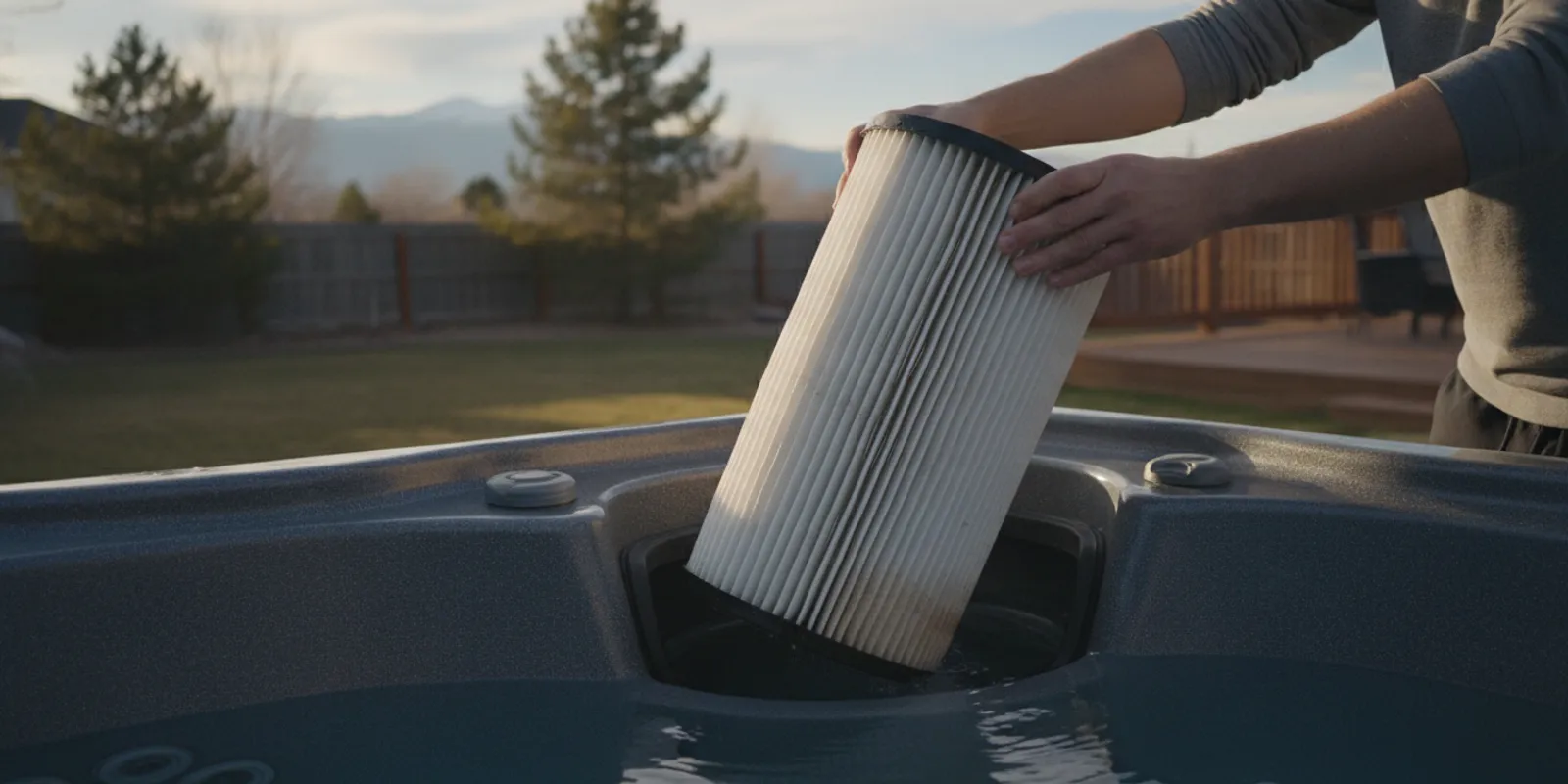
- Rinse your filters weekly. Pull out the filter and spray it with a hose to remove trapped dirt and debris.
- Add a weekly shock. Use a non-chlorine shock to break down waste and refresh sanitizer levels.
- Check your cover. Look for tears or heavy snow buildup that could let heat escape or damage the frame.
- Log your test results. Keep a small book to track your levels and spot trends before they become problems.
Get a free spa maintenance consultation with Neptune Pools — our Denver experts can set you up with a custom care plan that matches your spa and schedule.
Seasonal Spa Care: Winter Freeze Protection and Summer UV Management
Colorado's seasons demand opposite adjustments for your spa. Winter requires freeze protection — keep water above 90 degrees, clear snow from the cover, and check freeze sensors. Summer demands UV management — use a cover to block intense rays, increase sanitizer by 10 to 15 percent, and top off water more frequently to offset evaporation.
Winter freeze protection
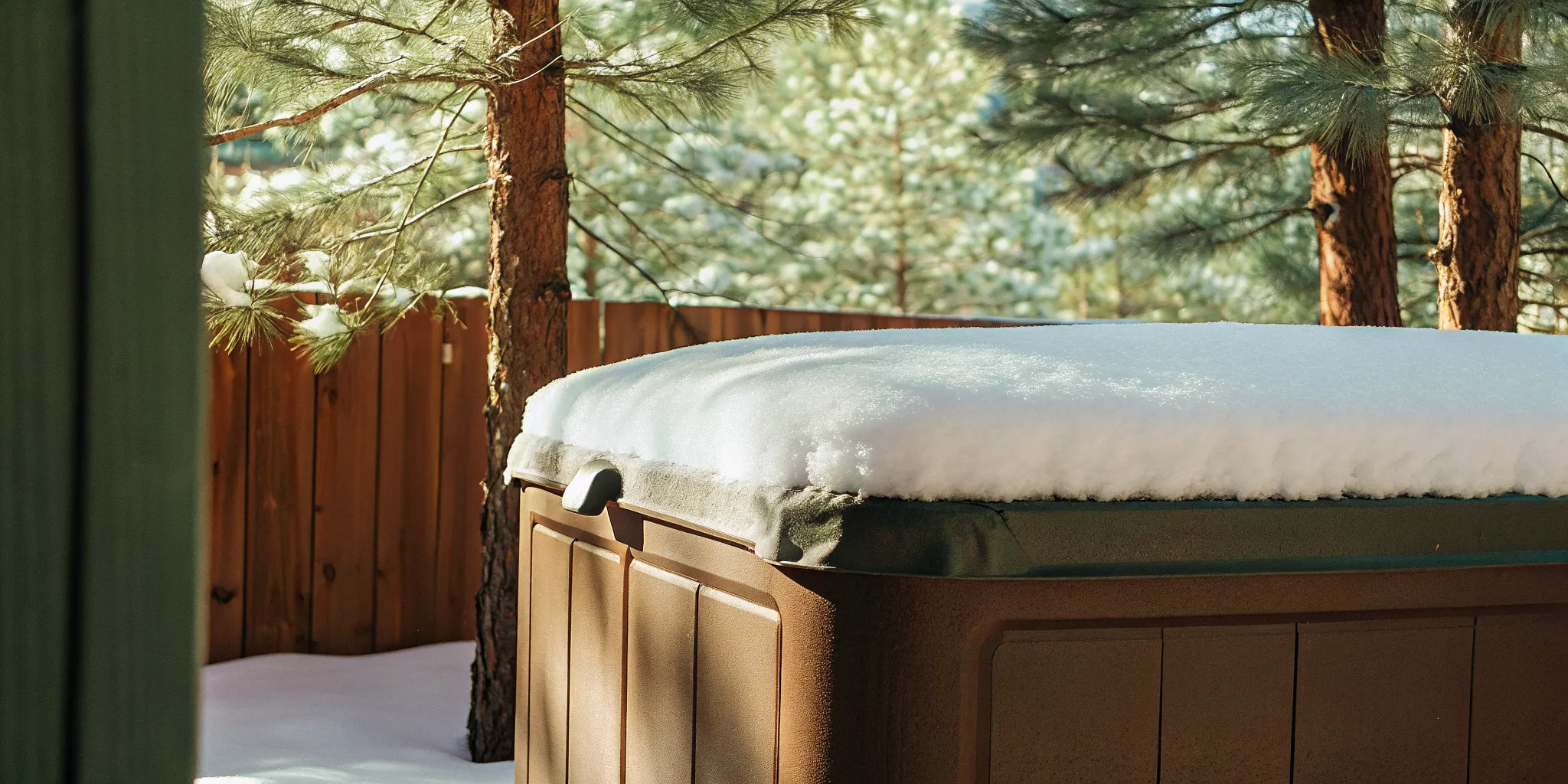
Winter in Denver demands focus on freeze protection to prevent costly pipe damage. Keep your spa water at or above 90 degrees Fahrenheit at all times. This heat acts as a thermal buffer that protects internal plumbing when air temperatures drop fast. Check that freeze sensors are active and the cabinet has enough insulation. Clear heavy snow from the cover often to prevent frame sagging. Consistent professional spa water care services from Neptune Pools ensure your system is ready for the coldest months.
Summer UV and evaporation
Summer brings intense sunlight that can ruin your chemical balance in hours. High-altitude UV rays are much stronger than at sea level and break down chlorine fast. You will likely need to add sanitizer more often during July and August. Using a cover when the spa is not in use blocks UV rays and preserves chemical levels. Evaporation also spikes in the dry Colorado air, leaving minerals behind and raising total dissolved solids.
Transition months and rapid swings
Spring and fall in the Denver Metro area often see 40-degree temperature swings in a single day. These rapid changes can cause pH and alkalinity to drift. Test your water at least twice a week during these months to catch issues early. Stable chemistry protects spa parts from corrosion and keeps the water comfortable for every soak.
Common High-Altitude Spa Water Problems and How to Fix Them
The most frequent high-altitude spa issues are cloudy water from pH swings, scale buildup from mineral concentration, sanitizer fade from intense UV, and foaming from high total dissolved solids. Each has a specific fix: balance pH to clear cloudiness, use a scale inhibitor for mineral deposits, increase sanitizer dosing for UV protection, and drain and refill for TDS buildup.
Cloudy water and pH swings
Cloudy water often starts with rapid pH changes. In thin air, gas leaves the water faster, causing pH to spike. This shift makes it hard for your filter to catch small debris. Test your levels at least twice each week. Keeping pH between 7.2 and 7.6 helps maintain water balancing principles and keeps the water clear. If water stays cloudy after balancing, clean your filter and apply a quick shock treatment.
Scale and mineral buildup
Scaling is a major risk for spa equipment in Colorado. Because water evaporates up to twice as fast here, minerals like calcium become highly concentrated, leaving hard white crust on the shell and pipes. Check total alkalinity levels to prevent this damage. Aim for 90 to 120 ppm to keep the water from becoming too hard. If you see scale, use a stain and scale shield product. For thick buildup, drain and refill the spa to reset mineral levels.
Sanitizer fade and bacterial growth
Sanitizers like chlorine and bromine fade fast under Colorado's strong sun. High-altitude UV rays can break down these chemicals in just a few hours, leaving your spa at risk for algae and germs. Increase chlorine sanitizer levels by 10 to 15 percent to account for this fast loss. Neptune Pools recommends testing your water more often than a standard schedule. If you find it hard to keep up, professional spa water care services can help manage these tricky chemical shifts year-round.
Foaming and TDS buildup
Foam on the water surface signals high total dissolved solids from lotions, soaps, and old chemicals. Denver's dry air makes this worse as water evaporates and leaves solids behind. For a quick fix, use a de-foamer, but the real solution is a full drain and refill every three to four months. Rinse off before entering the spa to keep oils and soaps out of the water.
When to Call a Professional for Spa Water Care
Call a professional when your spa water stays cloudy after balancing, chemicals shift daily despite correct dosing, equipment makes strange noises, water level drops more than one inch per week, or you need an annual deep clean. These issues often stem from high altitude compounding underlying mechanical or chemical problems that require expert diagnosis.
Persistent Chemical Imbalance
Low air pressure in Colorado causes CO2 to leave your spa water faster than at sea level. If you find yourself adding chemicals every day but levels will not stay in range, call for help. Neptune Pools technicians can check total dissolved solids and look for mineral buildup that blocks chemicals from working.
Equipment and Mechanical Issues
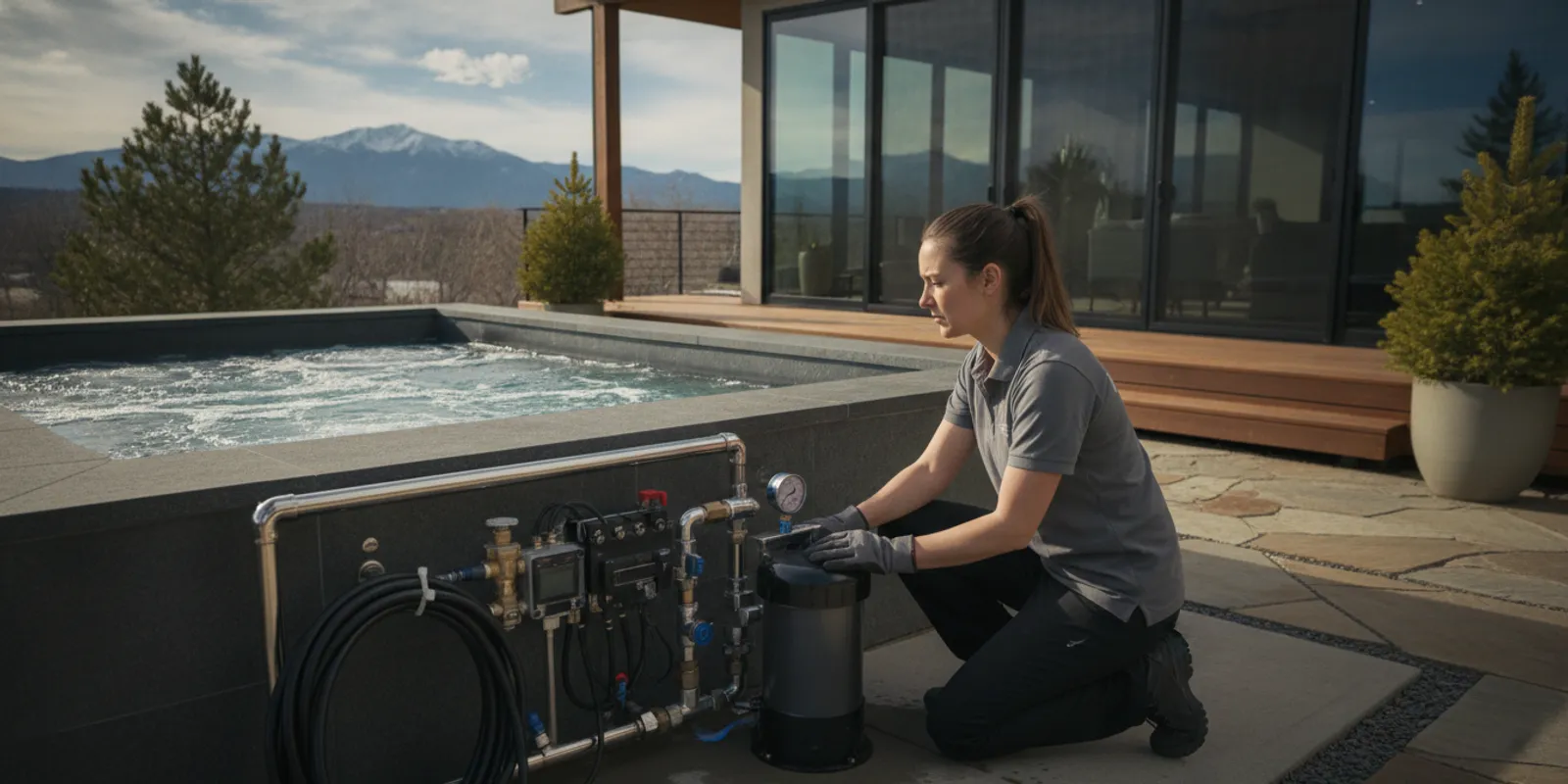
Spa water health depends on proper flow through your pump and heater. If you hear strange noises or notice jets have lost power, the issue may be mechanical. A failing heater can lead to cold water that is hard to treat. Neptune Pools certified technicians check pumps and seals to ensure your system runs properly.
Leak Detection and Freeze Risk
A small leak becomes a big problem during a Denver winter. If your water level drops more than an inch per week, you might have a crack in a pipe or a bad seal. In cold weather, a leak can lead to frozen lines that burst and cause extensive damage. Professional teams use pressure tests to find leaks before they lead to system failure.
Annual Deep Cleaning and Well Water Care
If you use well water, your spa may deal with heavy metals like iron or copper that can stain the shell and clog the heater. A professional drain and clean once a year removes built-up minerals and biofilm that regular chemical treatments miss. Neptune Pools uses specialized tools to scrub lines and remove buildup that standard chemicals cannot touch.
Frequently Asked Questions
Why does hot tub water evaporate so fast in Colorado?
Spas in high-altitude areas like Denver lose water up to twice as fast as those at sea level. The thin, dry air and low air pressure at 5,280 feet speed up water loss significantly. High winds common in the Rocky Mountain region also increase evaporation. Check your water level daily and top it off to protect your pump from running dry.
How often should I test spa water chemicals at high altitude?
Test your spa water at least twice per week when living in a high-altitude area. The thin air causes chemicals like chlorine and bromine to break down faster than in lower regions. Neptune Pools recommends keeping a log of your test results to track these rapid changes and maintain a safe, balanced soak.
What is the best temperature for a hot tub in Denver winters?
For the best mix of comfort and freeze protection, keep your hot tub at or above 90 degrees Fahrenheit during winter. This temperature provides a buffer against rapid cold-weather drops common in the Denver Metro area. Proper insulation and a well-fitted cover help retain heat and prevent freeze damage.
Does high altitude affect how much chlorine my spa needs?
Yes, you usually need 10 to 15 percent more chlorine in a high-altitude spa compared to one at sea level. Intense sun rays and lower air pressure cause sanitizers to break down much more quickly. Increase sanitizer levels to account for this faster loss. If you use bromine, check for buildup, as it behaves differently than chlorine in Colorado's thin air.
Ready to schedule professional spa water care at your Denver home?
Neglecting your spa water at high altitude leads to cloudy water and hard scale that can ruin your heater and pipes. If you do not act now, you may face high repair costs that keep your hot tub out of service for weeks. Neptune Pools has been helping Denver spa owners protect their hot tubs since 1982 with certified technicians who understand Colorado's unique water chemistry challenges.
Ready to book? Call (303) 431-8501 to schedule professional spa water care and maintenance with Neptune Pools. Our team of local experts is ready to protect your hot tub and help you relax starting today. Explore our spa services online to learn more.
Related Blogs