Hot Tub Cleaning Service Denver: What to Expect
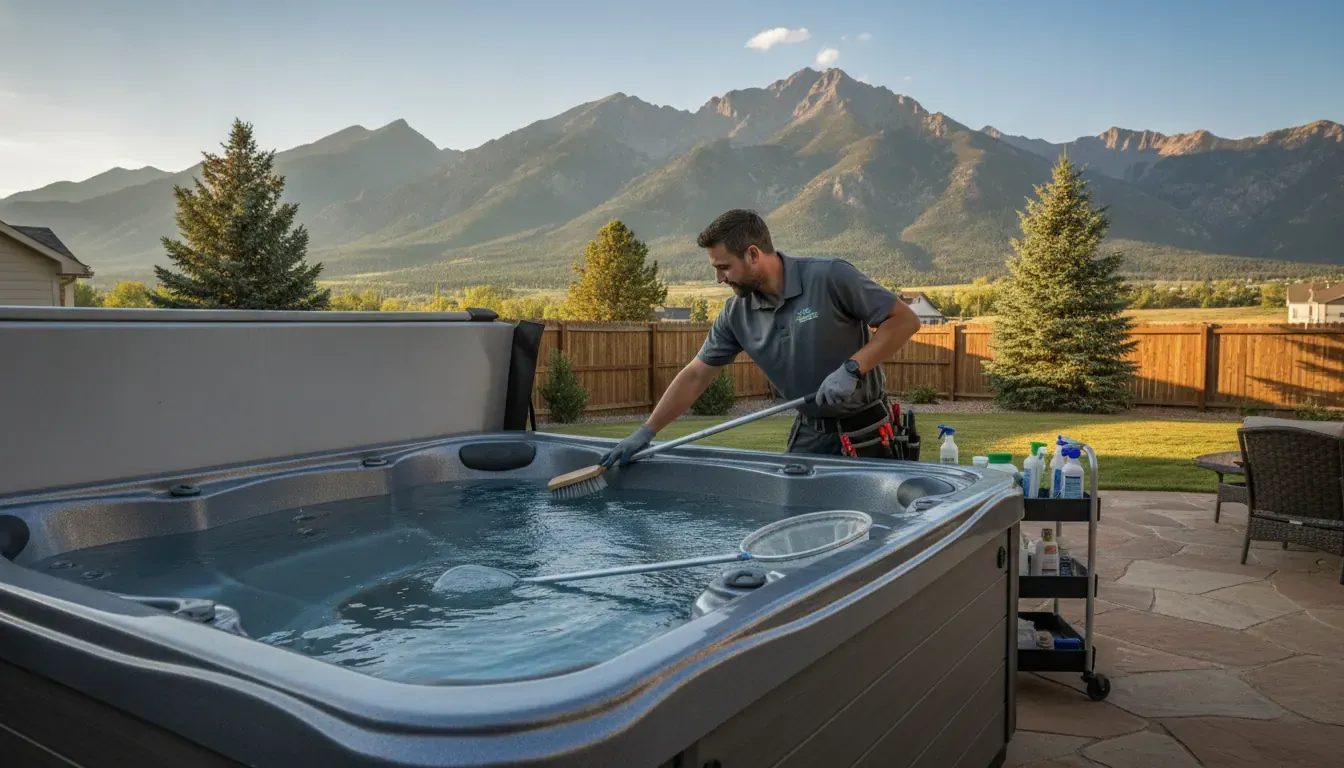
A hot tub can look clean while its water balance, filters, and equipment need professional attention. Denver homeowners also deal with temperature swings, hard water, and year-round use. A professional visit can separate routine cleaning from a repair need.
Schedule service with Neptune Pools.
A hot tub cleaning service denver homeowners can rely on may include debris removal, shell cleaning, filter care, water testing, chemistry adjustments, an equipment check, and service documentation. Cleaning improves water condition. It does not replace equipment repair.
The right visit depends on the tub's condition, use, and maintenance history. This guide explains what to ask for before you book, how to compare service types, and when a cleaning visit should lead to a separate equipment assessment.
What Does Hot Tub Cleaning Service Denver Homeowners Include?
A professional visit should distinguish cleaning, water care, inspection, and repair. The exact scope depends on the spa, its equipment, and whether the appointment is one-time or recurring. A clear provider should explain the work before starting instead of treating every tub as if it has the same needs.
Ask what the technician will check, document, and address. A visit may include removing debris, cleaning accessible surfaces, checking baskets and filters, testing water, and making chemistry adjustments. It may also include an observation of accessible circulation and heating equipment. An observation is useful, but it is not the same as a full repair or replacement project.
Routine cleaning and water care
Routine maintenance can include surface skimming, brushing, debris removal, vacuuming, water testing, and filter or skimmer-basket checks. Not every step applies in the same way to every hot tub. The provider should explain which steps fit the vessel and the selected service.
A reliable provider should explain the specific scope instead of presenting a generic checklist as a guarantee. Neptune Pools documents maintenance visits with an equipment inspection and an electronic service report. Reports can record chemical readings, measured dosages, and before-and-after photos. That record helps homeowners understand what changed and what may need follow-up.
Recurring care can reduce the burden of monitoring water and cleaning tasks between visits. It can also give a household a consistent process when more than one person uses or maintains the spa. Frequency is not universal. Usage, water condition, maintenance history, cover condition, and technician guidance all matter.
Colorado-specific considerations
Denver service planning must account for local conditions. Colorado homeowners may face freeze damage concerns, rapid temperature changes, high-altitude chemistry questions, hard-water staining, and strong ultraviolet exposure. These conditions do not create one automatic service plan, but they are useful topics to discuss before scheduling.
Spa care can remain relevant during the pool off-season because Neptune Pools provides year-round spa services. Before booking, ask whether the appointment is routine upkeep, a seasonal reset, a drain and refill, or a response to a water concern. Confirm what is included and what would be recommended separately.
How Does Hot Tub Cleaning Service Denver Work?
A professional visit is more than removing debris. The technician evaluates the spa, addresses routine cleanliness, tests the water, and records the work. This creates useful information for future visits and helps keep a small water volume from becoming difficult to manage.
Routine care may include surface debris removal, brushing, filter and skimmer-basket checks, vacuuming, and circulation inspection. Water testing and adjustment are central parts of responsible care. The goal is not to chase one reading. The goal is to understand the water condition and choose a measured next step.
Testing guides the work
The CDC identifies chlorine and pH as the first defense against germs that can make swimmers sick. It recommends regular checks for residential pool and hot-tub owners.
For hot tubs, CDC guidance lists at least 3 parts per million of chlorine. It lists 4 to 8 ppm of bromine as another sanitizer range. The listed pH range is 7.0 to 7.8. These figures are reference points, not a reason to add product without testing.
The CDC notes that pH from 7.0 to 7.8 helps balance germ control, pipe life, and comfort. High pH can reduce chlorine effectiveness. Low pH can increase corrosion risk. Sunlight, sweat, dirt, and mist from hot-tub jets can also affect chlorine levels.
Documentation improves recurring care
A service report can record readings, measured dosages, observations, and before-and-after photos. Reviewing those records helps identify patterns related to use, water balance, filtration, or equipment. It also gives a homeowner a clearer explanation of what changed during the visit.
There is no universal schedule for every hot tub. A lightly used spa may need a different plan from one used several times each week. A household should reconsider the plan after a change in use, a long period without care, a water-quality problem, or an equipment change.
Schedule pool and spa cleaning and maintenance plans.
Cleaning Visit or Repair? Compare the Right Service
Cleaning and repair are different appointments. The table below gives homeowners a practical way to describe the need when they contact a provider.
| Need. | Primary focus. | What to ask for. |
|---|---|---|
| Cleaning and water care. | Surfaces, debris, filters, testing, and chemistry. | Visit scope and service report. |
| Equipment repair. | Pumps, filters, heaters, controls, and leaks. | Diagnosis and repair recommendation. |
| Seasonal planning. | Winter use, freeze risk, startup, or draining. | Spa-specific timing and scope. |
Use cleaning when the main concern is debris, surfaces, water condition, or routine upkeep. Use repair when the concern involves circulation, heating, filtration, controls, or a possible leak. When signs overlap, ask whether the provider can inspect the system and explain the distinction.
When Does a Hot Tub Need Equipment Repair Instead?
Cleaning and water care address water and surfaces. Equipment repair addresses the systems that circulate, heat, filter, control, or contain that water. Keeping these services distinct helps you avoid repeatedly adjusting chemicals when the underlying issue is mechanical.
Pumps and circulation equipment
Concerns involving a variable-speed pump, a single-speed pump, or a pump and motor combination belong in an equipment evaluation. An inspection is not the same as repairing a failed part. A technician may need to understand when the problem began, whether circulation changed, and whether other equipment was recently serviced.
Neptune Pools supports variable-speed and single-speed pumps. Read more about equipment repairs and servicing before choosing the appointment type. Avoid replacing parts based only on a sound or a guess about the model.
Filters, heaters, and controls
Filters need a mechanical review when the concern involves the filter assembly rather than routine cleaning. Neptune supports cartridge, sand, and DE filter systems. Heater concerns also need equipment evaluation. Neptune's equipment support covers gas heaters, heat pumps, and solar systems.
Automation issues may involve schedules, alerts, seasonal programming, app pairing, or system configuration. Neptune technicians can configure automation, pair apps, set schedules and alerts, adjust seasonal programming, and train customers. That work is different from changing a chemical dose.
Leaks and diagnosis
A suspected leak deserves diagnosis before you assume it is a water-care problem. Describe an unexplained water-level change or moisture near equipment. Note whether the change occurs while the pump runs, if you can do so safely. Avoid assuming a part replacement, cost, or timeline before an inspection.
How Should Denver Homeowners Plan Seasonal Spa Care?
A spa does not follow the same calendar as a swimming pool. Denver's active pool season generally runs from April through October. Spa and hot-tub service continues throughout the year. Your plan should reflect household use, changing temperatures, water condition, and equipment history.
Plan a spring review
Review the spa before regular use increases. A professional visit can focus on water chemistry, circulation, the cover, and visible equipment concerns. Confirm that controls and filtration work as expected after colder weather.
Maintain the spa during active use
Frequent use can change water conditions. Keep a service rhythm based on use and water condition. Ask whether surface cleaning, water testing, filter checks, and equipment inspection are included.
Prepare for colder weather
Fall planning should address freeze risk and temperature changes. Do not assume every spa should be drained or shut down. Ask a technician to evaluate winter use and freeze-protection needs. The correct choice depends on the unit, exposure, equipment, and intended use.
Pool winterization has its own scope. It may include equipment shutdown, line blow-out, winter chemicals, cover installation, and a winter risk inspection. Those steps do not automatically apply to every spa. Review pool closing and winterization service for related planning. You can also read the Denver freeze-protection guidance before discussing service.
What Should Homeowners Know About Hot Tub Chemicals?
Hot tub water care is not just adding sanitizer when water looks cloudy. Heat, jets, frequent use, sunlight, sweat, and dirt can affect balance. Neptune Pools uses precision testing equipment, professional-grade chemicals, documented dosing, and proper chemical handling.
The CDC recommends regular chlorine and pH checks. Its hot-tub guidance lists pH from 7.0 to 7.8, at least 3 ppm of chlorine, or 4 to 8 ppm of bromine. These figures are reference points. Treatment should follow test results, water volume, sanitizer system, and current condition.
Measured dosing and safe storage
Overcorrecting can create new problems. Underdosing can leave water inadequately treated. Chemical adjustments cannot repair a failing pump, clogged filter, or mechanical fault. Persistent cloudiness, odor, irritation, or unstable readings may need professional assessment.
Keep chemicals in original, labeled containers. Store them away from children, pets, heat, moisture, and incompatible products. Never mix chemicals or transfer them to unmarked containers.
The EPA warns that pool chemicals can create fire, toxic-vapor, and injury hazards when handled improperly. Review Neptune Pools' pool and spa supplies and chemicals when you need supplies or help interpreting test results.
Can Professional Service Include Year-Round Spa Care?
Yes. Denver homeowners can coordinate pool support with ongoing care for a hot tub or spa. Neptune Pools offers year-round hot tub and spa services, including during months when an outdoor pool may be closed.
A spa may remain in use while an outdoor pool is closed. It still needs attention to water condition, surfaces, filtration, circulation, and equipment. Smaller water volume and frequent use can make changes noticeable, but appearance alone does not tell you whether a problem is chemical or mechanical.
What spa care can address
A spa visit may include cleaning applicable surfaces, checking water condition, adjusting chemistry, and inspecting equipment. The exact work should match the spa's condition and service plan. Ask whether filter or drain service is separate.
Professional service can reduce guesswork when a household has limited time or several people share responsibility. Ask how recommendations change with usage and water condition. There is no single schedule that fits every hot tub.
Safety-focused maintenance
The CDC says germs can spread through hot-tub water. It advises owners to check sanitizer levels and pH regularly. The CDC lists pH from 7.0 to 7.8, at least 3 ppm of chlorine or 4 to 8 ppm of bromine. And a water temperature no higher than 104 degrees Fahrenheit.
These are safety guidelines, not a promise that every spa has the same treatment requirements. Water testing, correct dosing, secure chemical handling, and attention to circulation belong in a responsible care plan.
Review residential pool and spa service options.
How Can You Prepare for a Professional Visit?
Preparation helps a technician make the visit more useful. Share the spa's make and model if you know it. Note when the water last looked clear, when the filter was cleaned, and whether the spa has been drained recently.
Describe the result you want. You may need a one-time cleanup before guests arrive. You may want help restoring water quality after a long gap. You may also want recurring care that reduces work between visits. Each goal can call for a different scope.
Make the equipment area accessible when possible. Tell the technician about recent chemical additions, unusual sounds, water-level changes, or controls that do not respond as expected. Do not mix products while waiting for service. Keep relevant product containers and prior service reports available.
Questions worth asking
- What cleaning and water-care steps are included?
- Is filter cleaning, draining, or chemical product a separate service?
- Will the visit include an equipment inspection and report?
- What findings require a separate repair appointment?
- How should the spa be cared for between visits?
- How will winter use change the recommended plan?
Clear answers help you compare providers. They also help you avoid paying for a service that does not match the spa's condition. A professional recommendation should explain the next step without promising that cleaning alone will solve a mechanical failure.
Frequently Asked Questions
How often should a hot tub be professionally cleaned?
There is no single schedule for every Denver hot tub. Frequency should reflect use, water condition, equipment, cover condition, and maintenance history. Ask for a recommendation based on the actual spa rather than a universal calendar.
Why test more than chlorine and pH?
Chlorine and pH are central to water safety. Broader testing can provide a fuller picture of balance and help identify whether treatment may protect surfaces and equipment. The CDC recommends regular testing and lists hot-tub pH from 7.0 to 7.8.
Will I receive documentation after a maintenance visit?
Neptune Pools maintenance visits include an equipment inspection and an electronic service report. Reports can document chemical readings, measured dosages, and before-and-after photos. They provide a clearer history for future care.
How should homeowners compare cleaning service costs?
Compare scope, visit frequency, chemical handling, equipment checks, reporting, seasonal work, and repair terms. Spa size, condition, access, and requested services can affect the recommendation. Ask what is included before comparing a quoted service.
When should Denver homeowners schedule seasonal spa service?
Spa service can be useful year-round. Timing should reflect use, weather, water condition, equipment, and maintenance history. Before colder weather, ask whether the spa should remain in operation, be drained, or receive a freeze-protection evaluation.
Contact Neptune Pools to discuss the right hot tub cleaning or spa-care service.
Related Blogs