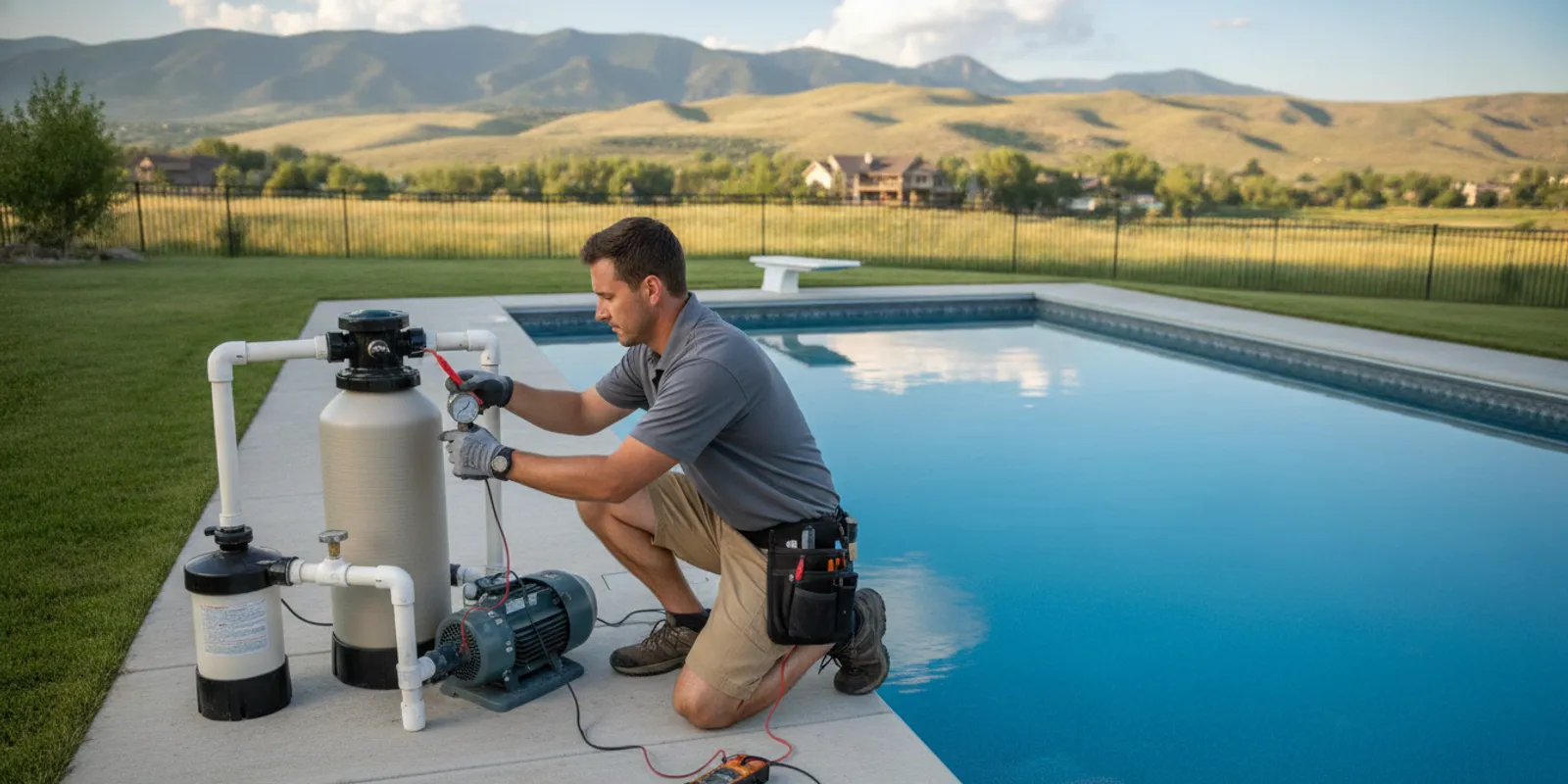
Hot Tub Control System Repair in Denver: A Guide

A malfunctioning hot tub can disrupt a quiet evening at home, a rental property’s amenities, or a shared community space. The first instinct may be to reset the breaker or order a replacement control board. However, repeated resets can hide serious electrical problems, and the wrong part may not match your spa’s model or configuration. Hot tub control system repair in Denver should address the cause behind the symptom. A professional inspection can separate a control failure from low water, restricted flow, a worn pump, damaged heater, faulty sensor, or corroded connection. This guide covers warning signs, safe homeowner checks, repair costs, brand-specific diagnostics, and practical ways to prevent future problems.
Ready for a cleaner pool?
Denver's trusted pool care professionals since 1982. Get started today.
Schedule ServiceKey Takeaways
- Treat recurring control problems as diagnostic issues: Blank displays, unstable temperatures, error codes, weak jets, and repeated GFCI trips can involve sensors, wiring, pumps, heaters, or the control board.
- Perform only low-risk checks: Record error codes, confirm the water level, inspect the filter, and look for visible moisture or damage. Keep electrical covers closed and stop if the GFCI trips again.
- Choose model-specific professional service: Provide the spa’s brand, model, serial number, and repair history. Request an itemized estimate that explains parts, labor, warranties, compatibility, and whether repair or replacement makes better sense.
Which Hot Tub Control Problems Need Repair in Denver?
Hot tub controls coordinate nearly every function that makes a spa usable. They regulate heating, monitor water temperature, operate pumps and jets, control filtration cycles, and manage features such as lights, blowers, and ozone systems. When a control issue develops, the symptoms can resemble a filter, pump, heater, or water chemistry problem.
Some causes are simple. A low water level, clogged filter, incorrect temperature setting, or air lock can affect spa performance without requiring a new control board. Other problems involve sensors, relays, wiring, the topside panel, or the control pack. These components require careful testing because replacing the wrong part can add unnecessary expense.
Electrical symptoms require extra caution. Turn off the spa and arrange for service if the GFCI trips repeatedly, you notice a burning smell, wiring looks damaged, or water has entered the equipment compartment. Do not keep resetting the GFCI or remove electrical covers to investigate internal components.
Denver’s freezing temperatures, snow, dry climate, power interruptions, and hard-water conditions can all affect spa equipment. Routine spa services from Neptune Pools can help identify developing problems before they lead to more extensive repairs. The symptoms below indicate when your hot tub may need control-system testing.
What the Control System Includes
A hot tub control system includes more than the topside panel used to adjust temperature and activate jets. The control pack usually contains a circuit board, relays, sensors, wiring, and connections that communicate with the heater, pumps, blower, lights, ozone system, and circulation equipment. The topside panel sends commands to the board, while sensors report conditions such as water temperature and flow.
These parts work as a system, so one failed component can create several symptoms. A faulty temperature sensor, for example, may prevent heating, display an error code, or shut down the spa as a safety measure. A loose or corroded connection may affect one pump or several functions at the same time.
Replacement parts must match the spa’s brand, model, and control-pack configuration. A board from another system may not work correctly, even if the connectors appear similar. Neptune Pools provides equipment repairs and servicing for spa components throughout the Denver Metro area.
No Heat or Unstable Temperature
A spa that will not heat, takes much longer than usual to reach temperature, or shifts between hot and cool may have a control-related problem. Possible causes include a faulty temperature sensor, high-limit sensor, heater relay, circuit board, or connection between these components. Low water, a clogged filter, an air lock, and poor circulation can create similar symptoms, so replacing the heater should not always be the first step.
Check that the water level is correct, the filter is clean, and the programmed temperature is set properly. If the spa displays a flow or temperature error, record the exact message before turning the system off. Repeated heating problems need prompt attention because poor water flow can damage the heater.
A technician can test the heater, sensors, relays, and circulation system together. This helps distinguish a control failure from a flow restriction or worn heater. Neptune Pools can also address related cleaning and maintenance needs when water quality or equipment buildup contributes to the problem.
Error Codes, Sensor, and Thermostat Failures
Error codes offer useful clues, but their meanings vary by manufacturer and model. A temperature, flow, or sensor code may indicate a failed component. It can also result from low water, a dirty filter, trapped air, or a communication problem. Write down the exact code and note when it appears, such as during heating, filtration, or startup.
A failed sensor can cause inaccurate temperature readings, unexpected shutdowns, or a spa that refuses to heat. A thermostat or high-limit fault may also interrupt operation to protect the equipment. Avoid repeatedly clearing the code without finding the cause. The warning may return, and continued operation could place stress on other components.
A technician should compare sensor readings with the actual water conditions and test related wiring and connections. This matters because replacing a sensor will not correct a damaged wire or circuit-board fault. Keep the owner’s manual available, since the manufacturer’s troubleshooting information can help identify the correct code for your model.
Blank, Flickering, or Unresponsive Panels
A blank or unresponsive topside panel can result from a failed display, damaged cable, loose connection, power interruption, or circuit-board issue. Flickering buttons or an intermittently working display may indicate moisture, corrosion, or a communication problem. If the panel works only after a reset, the underlying fault may still be present.
First, determine whether the entire spa has lost power or only the control panel has stopped responding. You can check whether the GFCI has tripped, but do not remove electrical covers or handle internal wiring. Water and electricity create a serious safety risk, especially near the spa equipment area.
A repair technician can inspect the panel cable, connectors, control board, and power supply. The correct replacement depends on the spa’s model and control system, not simply the panel’s appearance. Neptune Pools can evaluate control issues as part of its professional equipment repair service.
Pumps, Jets, Blowers, Lights, or Circulation That Won’t Start
When a pump, blower, light, or circulation system will not start, the control board may not be sending power to the component. The problem may also involve a tripped breaker, air lock, blockage, failed motor, worn relay, or loose connection. If only one feature has stopped working, the related component or relay may be the source.
Check the water level and filter first, since low water and restricted flow can prevent safe operation. Listen for unusual humming, clicking, or silence when you activate the feature. Do not keep switching a stalled pump on and off, because a struggling motor can overheat.
A technician can test voltage, relays, motors, and flow conditions to locate the fault. The inspection should also confirm that circulation is adequate for heating and filtration. If several related components need attention, a professional can explain whether repairing individual parts or replacing part of the control pack is the more practical option.
GFCI Trips, Moisture, Corrosion, or Damaged Wiring
A GFCI that trips once may respond to a temporary electrical event, but repeated trips indicate a problem that needs attention. Possible causes include water in the equipment compartment, damaged insulation, a failing heater, pump, blower, circuit board, or incorrect electrical connections. Never keep resetting the GFCI to force the spa to run.
Look for visible moisture, corrosion on exterior connections, cracked conduit, or signs of overheating without opening electrical enclosures. A burning smell, melted plastic, buzzing, or discoloration requires immediate shutdown. Turn off power at the appropriate disconnect if you can do so safely, then contact a qualified professional.
Denver’s snow, freezing temperatures, and sudden weather changes can expose equipment areas to moisture and temperature stress. A technician can test the GFCI circuit, inspect connections, and determine whether the fault comes from the spa or its electrical supply. Electrical work should be handled by someone qualified to perform the necessary testing and repairs.
Control Failures vs. Filter, Flow, Heater, or Pump Problems
A control-panel symptom does not always mean the control board has failed. A dirty filter can restrict flow and trigger a safety shutdown. Low water or an air lock can prevent circulation. A worn pump may not move enough water, while a damaged heater can cause a no-heat complaint even when the control system is working correctly.
Before approving a board or panel replacement, ask for a complete diagnosis. The technician should evaluate water level, filter condition, circulation, pump operation, heater resistance, sensors, wiring, and control-board output. This reduces the chance of replacing a costly part when the underlying issue is a maintenance or flow problem.
Keep a record of recent filter cleanings, water changes, repairs, and performance changes. Details such as a new humming sound or an error that appears only during heating can help identify the cause. Neptune Pools’ maintenance services can address routine conditions that often contribute to control-related symptoms.
How Denver Weather, Power, and Water Chemistry Affect Controls
Denver’s climate creates several conditions that can affect hot tub controls. Freezing temperatures can damage water-filled components and plumbing if a spa loses power or is not winterized correctly. Snow and moisture may reach poorly protected equipment areas, while rapid temperature changes can contribute to condensation and connection problems.
Power interruptions and electrical surges can affect circuit boards, displays, and other electronic components. After an outage, check the spa for error messages or unusual behavior before using it. A qualified technician can discuss electrical inspections or surge protection based on the spa’s installation and history.
Water chemistry matters, too. Unbalanced water can contribute to scale, corrosion, cloudy water, and sensor or heater problems. Test the water regularly, clean filters as recommended, and maintain proper circulation. Neptune Pools provides pool and spa chemicals and can help Denver homeowners choose products and maintenance practices that suit their equipment.
Which Denver Hot Tub Brands Need Model-Specific Diagnostics?
Hot tub control problems require more than identifying the brand on the cabinet. A blank display, failed heater, or unresponsive jet control can result from different components depending on the model, production year, control pack, wiring layout, and optional features. Before recommending a replacement, a technician should identify the exact system and test the related components.
This is particularly important in the Denver Metro area, where freezing temperatures, snow, moisture, and seasonal electrical issues can affect spa equipment. A control problem may also begin with a clogged filter, low water level, restricted circulation, or unbalanced water chemistry. Inspecting the full system helps prevent an unnecessary circuit board or panel replacement.
Some manufacturers use widely available control components, while others rely on proprietary connections, mounts, displays, and boards. Hot Tub University’s brand guide explains why proprietary designs can make repairs more dependent on the specific model and available replacement parts. Neptune Pools can inspect the controls, electrical connections, pumps, heaters, and sensors through its professional spa services.
Model-specific diagnostics also help technicians compare the repair with the spa’s age and condition. In some cases, a sensor or wiring repair may resolve the issue. In others, an obsolete control pack or damaged board may make a larger replacement more practical.
Master Spas Twilight and Clarity Systems
Master Spas Twilight and Clarity models can include multiple pumps, circulation systems, lighting, advanced jet configurations, and different control layouts. Two spas from the same product line may still use different circuit boards, topside panels, wiring harnesses, or programming based on their size, production year, and selected features.
Some Master Spas systems use Balboa heating and control components, but that does not make every part interchangeable. Connections, programming, amperage requirements, and panel layouts must still match the spa’s configuration. A board that fits inside the equipment cabinet may not communicate correctly with the display or operate each pump safely.
When a Twilight or Clarity spa loses heat, displays an error code, or has a panel that will not respond, the technician should record the model and serial number before ordering parts. Testing the sensors, heater, pumps, and power supply can then confirm whether the control system is at fault. This process reduces the risk of installing a similar-looking component that is not compatible with the spa.
Jacuzzi Panels, Connections, and Smart Features
Jacuzzi hot tubs may include features such as the FreshWater Salt System, specialized water-care equipment, remote monitoring, and smart-device controls. These features add convenience, but they also create additional connections that must communicate with the main control system. Jacuzzi’s overview of luxury hot tub features describes the range of systems included in some of its models.
A blank panel may point to a power or connection issue, while a failed smart feature may involve communication, configuration, or a separate accessory. Jacuzzi models can also use proprietary connections and mounts, making generic substitutions a poor choice.
Before replacing a Jacuzzi panel or circuit board, a technician should verify the model, control pack, software requirements, and accessory setup. Testing the power supply, wiring, sensors, and communication lines can reveal the actual fault instead of focusing only on the most visible symptom.
Sundance Displays, Jet Controls, and Proprietary Parts
Sundance spas may use model-specific displays, jet controls, pumps, sensors, mounting systems, and connection components. If one jet zone stops working, the cause could be a pump, air control, valve, wiring fault, or control signal rather than a failed topside panel. A technician should confirm whether the command reaches the affected component before replacing the display.
Some Sundance repairs also require careful attention to part availability. A newer replacement may need an adapter, updated harness, or revised programming. A panel that works on one series may not work on another, even when the two displays appear nearly identical.
Intermittent controls, unexplained jet activity, and repeated error codes call for more than a visual inspection. Service may include voltage testing, wiring checks, sensor testing, and review of manufacturer information. Model-specific diagnostics are especially useful when the original component has been discontinued or replaced by a revised part.
Hot Spring Panels and Control Packs
Hot Spring spas may develop control-panel problems related to the panel, wiring, moisture, or power supply. The Hot Spring troubleshooting guide recommends checking the power connection and related conditions before assuming that the panel itself has failed.
Different Hot Spring product families and production years may use different control packs, panel styles, cables, and programming. A replacement panel may need to match the control box or require a compatible cable and configuration. The same error message can also have different causes depending on the spa’s specific system.
A qualified technician should inspect the power source, GFCI, cable connections, sensors, heater, and control pack before selecting a replacement. If moisture has entered the panel or equipment area, the source must be addressed as part of the repair. Otherwise, a new component may experience the same failure.
Why Symptoms Vary by Model and Configuration
A hot tub that will not heat may have a failed heater, temperature sensor, flow problem, circulation-pump issue, wiring fault, or control-board failure. Likewise, a panel displaying an error code may be reporting a genuine flow restriction rather than malfunctioning. The Spa Brothers troubleshooting guide explains how digital panels report abnormal conditions, including flow and temperature faults.
The spa’s configuration also affects the diagnostic process. A model with two pumps, a dedicated circulation pump, salt-water care, remote controls, or additional lighting has more components and connections than a basic spa. Each option can change the correct testing sequence and the parts required.
Technicians should therefore test the system in stages rather than replace the first component associated with the symptom. Confirming the water level, filter condition, circulation, power, sensors, and communication lines helps separate a control failure from a problem elsewhere in the spa.
How Model and Serial Numbers Confirm Part Compatibility
Model and serial numbers provide the most dependable starting point for identifying compatible control parts. They can confirm the spa’s product family, production year, control-pack version, and original equipment configuration. This information is valuable when a panel, circuit board, sensor, or cable has several similar versions.
Photos of the topside panel, equipment area, circuit-board label, and control-box sticker can provide additional information. However, photos should support the model and serial numbers rather than replace them. Labels may be difficult to read, and previous repairs may have changed the original equipment.
This step is especially important when a spa uses proprietary components. As Hot Tub University notes, brand-specific parts and connections can vary by model. Confirming compatibility before ordering helps prevent delays, return fees, wiring changes, and damage from an incorrect component.
Discontinued Boards, Panels, and Brand-Specific Replacements
Older hot tubs may have discontinued circuit boards, displays, control packs, or wiring harnesses. When the original part is no longer available, the repair may require an approved replacement kit, an adapter, a compatible retrofit, or a broader control-pack conversion. The best option depends on the spa’s electrical requirements and the condition of its connected components.
A generic board is not automatically a safe substitute. It must match the heater, pumps, sensors, panel, voltage, amperage, and communication system. Replacing one obsolete part can also reveal wear in other connected components, making a complete control-pack replacement more practical.
Ask for an itemized explanation of the proposed repair, including the part number, labor, warranty, and any required modifications. Neptune Pools provides equipment repair and servicing for Denver-area homeowners and property managers, helping them determine whether a repair is practical or whether replacement offers better long-term value.
What Can You Safely Check Before Calling for Repair?
Some hot tub problems have simple causes, such as low water, a dirty filter, restricted circulation, or an air lock. Checking these basics can give you and your technician useful information before a service visit. It may also help identify a maintenance issue instead of a failed control component.
Start with observations, not repairs. Note what the hot tub was doing before the problem appeared, which features stopped working, and whether the issue occurs continuously or only during heating or filtration cycles. Take photos of the control panel, equipment area, and any visible leak or damage.
Only perform checks that do not involve live electrical components. Never remove the control-box cover, bypass a safety switch, replace a fuse with a different type, or repeatedly reset a breaker. If you notice water near electrical equipment, burning odors, damaged wires, or repeated GFCI trips, stop troubleshooting and contact Neptune Pools for spa services.
Record Error Codes and Performance Changes
Write down every error code shown on the control panel before turning the spa off. Take a clear photo too, since a code may disappear after a reset. The meaning of an error depends on the hot tub’s brand, model, control pack, and sensor setup. Check the owner’s manual or manufacturer’s troubleshooting guide instead of relying on a general internet search. Twin City Jacuzzi’s troubleshooting guide explains why codes and recommended solutions vary between manufacturers.
Also record changes in performance. Note whether the water is not heating, the jets are weak, the circulation pump is noisy, the display flickers, or only one feature has stopped working. Include when the issue began and whether it followed a power outage, freezing weather, water change, or recent service visit. These details can help your technician distinguish a control fault from a filter, pump, flow, or water chemistry issue.
Check Water Level, Filters, Circulation, and Visible Leaks
Check that the water level reaches the manufacturer’s recommended mark. Low water can restrict circulation and trigger heating or flow errors. Look at the filter area for debris, a loose cover, or a filter coated with dirt or scale. If your owner’s manual provides cleaning instructions, follow them carefully and use only approved cleaning products.
Observe the jets and listen for unusual sounds. Weak jet pressure may result from a clogged filter, trapped air, or pump strain. The Spa Brothers’ troubleshooting guide explains how filter cleaning or replacement can restore water movement in some circulation-related situations. You can also check the cabinet, equipment pad, and visible plumbing for standing water or active drips. Do not remove panels to locate a hidden leak, and do not operate the spa if water is approaching electrical equipment.
Use Only Manufacturer-Approved Resets
Some hot tubs include a simple reset procedure for a flow sensor, heater, control panel, or other component. Use a reset only when the owner’s manual specifically recommends it for the error or symptom you are seeing. Follow the exact sequence and wait the required amount of time before checking the display again.
A reset may clear a temporary fault, but it cannot repair a failed sensor, damaged circuit board, loose connection, or wiring problem. If the same code returns, record it and stop repeating the procedure. Your manual may identify fuse locations and replacement types, but fuse replacement is not a routine homeowner task when the cause of the failure is unknown. Leisure Time’s electrical troubleshooting guidance notes that an unresponsive or inaccurate panel can result from a board, wiring, or control-panel fault.
Test the GFCI Once, Never Keep Resetting It
A ground-fault circuit interrupter, or GFCI, helps protect people from electrical shock by shutting off power when it detects an imbalance. If the GFCI has tripped, make sure no one is using the spa and look for obvious water around the equipment area before attempting one reset. Use the test and reset buttons according to the GFCI or spa manufacturer’s instructions.
If the GFCI trips again immediately, or trips when the heater, pump, or another feature starts, leave it off. Do not hold the button down, bypass the device, or keep resetting it to restore power. Repeated trips can indicate moisture, damaged wiring, a failing heater, a pump problem, or another electrical fault. Leisure Time’s electrical guidance recommends checking GFCI function, but persistent trips require professional diagnosis.
Check for Moisture, Corrosion, Burning Smells, or Damaged Wiring
You can visually inspect accessible areas without opening the control box. Look around the cabinet, equipment pad, and visible conduit for standing water, dampness, rust, corrosion, or signs that water has run from the spa. Pay attention to burning smells, melted plastic, discolored terminals, scorch marks, or unusual buzzing. These signs require immediate caution, especially if the spa remains connected to power.
Do not touch exposed wires or electrical terminals, even if the topside panel is switched off. Moisture and corrosion can damage connections and create unsafe operating conditions. Bath and Spa Parts identifies burn marks, corrosion, melted terminals, and water damage as signs that a circuit board may need attention. If you can do so safely, turn off power at the breaker, keep people away from the equipment, and arrange professional service.
Turn Off Power Before Checking Exterior Components
Before inspecting exterior equipment, switch off the hot tub at its dedicated breaker or disconnect. Do not rely on the topside control panel, since it may place the spa in standby mode without removing power from every component. If you are unsure which breaker supplies the spa, do not guess. Ask a qualified professional to identify it.
With power off, you can look for obvious damage around the cabinet, cover, visible plumbing, and equipment pad. Do not remove the control-box cover or reach into the cabinet unless you are trained to work on spa electrical systems. Bath and Spa Parts advises turning off power at the breaker before opening a control box. For most homeowners, the safest inspection ends with an exterior visual check and a clear description of what you found.
Know When to Stop Troubleshooting
Stop troubleshooting when the GFCI trips more than once, the breaker will not stay on, or the spa shows signs of electrical damage. You should also stop if the control panel remains blank after a basic power check, a burning smell is present, water has reached electrical equipment, or a fuse has failed. These symptoms may involve line-voltage components and create risks of shock, fire, or further equipment damage.
Call for service when a reset works only briefly, an error code returns, the spa overheats, or the pump and heater operate unpredictably. Avoid testing individual wires, jumping terminals, bypassing sensors, or running the spa with a safety component disconnected. Electrical problems, including tripped breakers, blown fuses, and failed components, can affect both operation and safety, as Leisure Time explains in its electrical troubleshooting guide. Document what happened and leave the power off when appropriate.
Leave Electrical Components to Professionals
Hot tub control systems combine water, line voltage, circuit boards, heaters, pumps, sensors, and safety devices in a compact space. A visible symptom does not always identify the failed component. For example, a blank display could result from a panel problem, loose connection, tripped safety device, failed board, or issue elsewhere in the control pack. Replacing a part without testing the system can waste money and leave the original fault unresolved.
Leave control-box work, fuse replacement, wiring repairs, GFCI diagnosis, circuit-board testing, and control-pack replacement to a qualified spa technician or licensed electrician. Bath and Spa Parts recommends professional help for anyone without electrical and spa repair experience. When contacting Neptune Pools, provide the brand and model, error codes, photos, recent maintenance details, and the checks you completed. This gives the technician useful information while keeping you safely outside the electrical system.
What Does Hot Tub Control Repair Cost in Denver?
Hot tub control repair in Denver can cost anywhere from a few hundred dollars to more than $1,500. A sensor, thermostat, or wiring repair is generally less expensive than replacing a circuit board or complete control pack. The final price depends on the failed component, the spa’s brand and model, equipment access, labor time, and whether compatible parts are available.
General pricing guides, such as HomeGuide’s hot tub repair cost guide, can provide a starting point. However, online averages cannot account for every installation. A technician needs to inspect the spa, test its electrical and control components, and identify the underlying cause before recommending a repair.
A reliable estimate should separate the diagnostic fee, labor, parts, and additional charges. It should also explain whether the recommended work solves the root problem or replaces only one failed component. Neptune Pools provides spa services for homeowners and property managers throughout the Denver Metro area, with clear communication about the work required and the expected cost.
Diagnostic and Service-Call Fees
Most hot tub control repairs begin with a diagnostic or service-call fee. This charge usually covers travel, time on site, and initial testing. Depending on the company and the complexity of the visit, minor repair calls may fall within the $200 to $500 range.
A technician may inspect the GFCI, control panel, circuit board, sensors, heater, pumps, wiring, water level, and circulation. They may also review error codes and look for moisture, corrosion, overheating, or signs of water intrusion.
The diagnostic fee may not include replacement parts or all repair labor. Ask whether the fee applies toward approved work and exactly what the first visit covers. This makes estimates easier to compare and helps prevent unexpected charges if the technician needs to return with a part.
Sensor, Thermostat, and Wiring Repairs: About $200–$500
Sensor, thermostat, and wiring repairs often cost about $200 to $500, although the total depends on the part and how easy it is to reach. These components help the spa measure water temperature, regulate heating, and communicate with the main control system.
A damaged temperature sensor may cause inaccurate readings, overheating protection, or a spa that will not heat. Loose, burned, or corroded wiring can cause similar symptoms, including intermittent operation and recurring error codes. Replacing a sensor may be straightforward, while tracing a wiring fault can take additional labor.
A technician should test the system before replacing any component. Professional equipment repair and servicing can help determine whether the problem involves one part or a larger control failure.
Control-Panel and Circuit-Board Replacement: About $300–$1,000+
Control-panel and circuit-board replacements commonly cost $300 to $1,000 or more. The final price depends on the hot tub’s brand, model, part availability, and the labor required for installation and testing.
The control panel is the user-facing component that displays temperature, error codes, and operating settings. The circuit board is inside the control system and manages communication among the heater, pumps, sensors, lights, and other components. A blank display does not always mean the panel has failed. A fuse, connection, power supply, or circuit board may be responsible.
Ask the technician to explain how the failed part was tested before approving a replacement. Model-specific components can look similar while using different connections or software. Correct identification matters especially for brands with proprietary controls.
Complex Board and Control-Pack Repairs: $1,500 or More
A complete control-pack repair or replacement may cost $1,500 or more. The control pack can include the circuit board, enclosure, relays, heater connections, sensors, and other components that operate the spa. When several parts have failed, replacing the full assembly may be more practical than repairing each component separately.
This type of repair can follow water intrusion, a power surge, severe corrosion, or years of heat and moisture exposure. Older spas may also require a compatible retrofit instead of a direct replacement from the original manufacturer.
A high estimate does not automatically mean replacement is the right choice. Ask whether the proposed control pack is new, refurbished, or an approved aftermarket option. Confirm what the part controls, what the warranty covers, and whether the quoted work includes testing the connected pumps, heater, and safety systems.
How Labor, Access, Parts, and Brand Affect Cost
Two hot tubs with the same symptom can have very different repair prices. Labor may increase when the equipment area is difficult to access, the spa must be moved, or the technician needs more time to trace an intermittent fault. A cramped enclosure, damaged connection, or moisture inside the cabinet can make a simple repair more involved.
Brand and model also affect pricing. Some spas use widely available components, while others require brand-specific boards, panels, or control packs. Special orders, shipping, and limited inventory may add to the total cost.
The condition of the installation matters as well. Water leaks, poor drainage, damaged insulation, and improper electrical work may need attention before the control system can operate safely. Neptune Pools’ repair and servicing team can assess related equipment instead of treating one symptom in isolation.
Warranty Coverage and Discontinued Parts
Review your owner’s documents before authorizing work. A manufacturer’s warranty may cover certain parts, labor, or control-system defects, but coverage often depends on the spa’s age, installation, maintenance history, and specific failure. Some warranties also require service through an approved provider.
Older hot tubs can present another challenge when the original circuit board or display is no longer manufactured. The available solution may be a refurbished component, retrofit kit, or compatible replacement. These options can differ from the original system and may require additional installation or programming.
Ask whether the replacement part is new, refurbished, or aftermarket. You should also ask how long the part is expected to remain available and what warranty applies. If a component is discontinued, request a written explanation of the available alternatives and their expected service life.
What an Itemized Estimate Should Include
A clear estimate should show more than one total price. Look for separate line items for the diagnostic visit, labor, parts, shipping, disposal, electrical work, and additional service. The estimate should identify the recommended component by brand and part number when possible.
It should also describe the problem in plain language and explain why the proposed repair is necessary. If the technician recommends a circuit board, control panel, or full control pack, ask what tests confirmed the failure and whether related components were checked.
Before approving the work, confirm whether the price includes installation, programming, testing, cleanup, and a return visit if needed. Ask about the parts and labor warranty, payment terms, and estimated timeline. Clear details make it easier to compare quotes and reduce unexpected charges.
For a property manager, the estimate should include the service address, equipment location, tenant or access requirements, and any documentation needed for maintenance records.
Repair or Replace an Older Hot Tub?
A major control repair may lead you to compare the cost of repair with the spa’s age and overall condition. One general guideline is to consider replacement when a repair exceeds about half the cost of a comparable new hot tub. This is not a strict rule, but it provides a useful starting point.
Consider more than the control system. A spa with a sound shell, recent pumps, a working heater, and a well-maintained cover may be worth repairing. Replacement may make more sense when the tub also has leaks, worn pumps, damaged insulation, a failing heater, or repeated electrical problems.
Ask the technician for two opinions when practical: the recommended repair and an assessment of the spa’s remaining service life. You can then compare the immediate repair cost with likely future maintenance, energy use, parts availability, and installation expenses. If the spa needs more than one control component, Neptune Pools can also discuss remodel and rehabilitation services.
How Does the Hot Tub Control Repair Process Work?
Hot tub control repairs should follow a careful diagnostic process, not begin with replacing the first part that appears faulty. A blank display, failed heater, or nonresponsive jet may point to the control panel, but the underlying issue could also involve low water, restricted flow, a tripped GFCI, damaged wiring, a failing pump, or a worn sensor. Testing each related component helps identify the actual cause and prevents unnecessary repairs.
Neptune Pools’ spa services address control problems alongside the equipment connected to them. A qualified technician can review the symptoms, inspect the control system, explain the repair options, and test the spa after the work is complete. This process is especially useful in the Denver Metro area, where freezing temperatures, snow, moisture, power fluctuations, and seasonal use can affect hot tub equipment.
Prepare the Model Number, Error Codes, and Service History
Before scheduling service, gather the hot tub’s brand, model number, serial number, and approximate installation date. This information helps the technician identify compatible control panels, circuit boards, sensors, and control packs. Parts that look similar may not work with the same model, so accurate identification matters.
Write down every error code shown on the display and note when it appears. Record whether the spa heats, whether the pumps start, and whether the problem began after a storm, power outage, water change, or freezing weather. Photos of the display and equipment compartment may also help with the initial assessment.
Include recent repairs, replaced parts, filter changes, water-care concerns, and repeated GFCI trips in the service history. These details give the technician a clearer starting point and may reveal a recurring equipment issue.
Provide Access to the Spa, Panel, and Equipment Area
The technician needs safe access to the spa, control panel, equipment compartment, electrical disconnect, and surrounding work area. Clear snow, stored items, furniture, or landscaping that blocks the equipment cabinet. If the hot tub is built into a deck or enclosure, make sure the access panel opens without damaging the structure.
Keep the owner’s manual and previous service records nearby. If the hot tub is at a rental property or shared facility, arrange access with the property manager before the appointment. The water level should also be adequate for testing, unless a leak or electrical concern makes draining the spa necessary.
Do not remove the control panel, open the electrical box, or pull on wiring before service. A control cabinet may contain line-voltage connections even when the display is blank. Leaving the equipment intact helps the technician identify the original fault and keeps the work area safer.
Inspect the GFCI, Wiring, Sensors, Heater, Pumps, and Board
A complete inspection looks beyond the display. The technician may examine the GFCI, disconnect, fuses, terminal connections, wiring, temperature sensors, pressure or flow switches, heater, circulation pump, jet pumps, and circuit board. Each component can affect how the control system operates.
Repeated GFCI trips may indicate moisture, damaged insulation, a failing heater, pump trouble, or another electrical fault. The equipment area should also be checked for heat marks, loose connections, corrosion, insect damage, water intrusion, and signs of previous repairs.
The control board receives information from sensors and sends power to equipment such as the heater and pumps. A failed board can stop several functions at once, but a sensor or water-flow problem may produce similar symptoms. Neptune Pools also provides equipment repair and servicing for connected pool and spa components.
Find the Root Cause Before Recommending Parts
The visible symptom is not always the underlying problem. For example, a low-flow message may result from a dirty filter, low water level, air lock, closed valve, blocked suction fitting, or circulation problem. Replacing the control board without checking these conditions may leave the original fault unresolved.
A technician should compare the error code with the spa’s actual behavior and test related components. If the display reports a temperature fault, the sensor, wiring, water flow, and heater should all be considered. If the panel is blank, the inspection should include the GFCI, fuses, incoming power, connections, and board.
Once the cause is confirmed, the technician can explain whether the repair involves an adjustment, failed component, moisture cleanup, wiring work, or larger control-system replacement. Ask for the diagnosis in plain language and request photos when the problem is difficult to see.
Compare Resets, Component Repairs, Board Replacements, and Control Packs
Some control problems respond to a manufacturer-approved reset after the underlying issue has been corrected. A reset may clear a temporary fault, but it will not repair a damaged sensor, failing heater, corroded connection, or defective circuit board. Repeated resets can also hide an electrical problem.
A component repair may involve replacing a sensor, fuse, relay, connector, or damaged section of wiring. In other cases, the circuit board may need replacement. A complete control pack, which may include the board, heater, sensors, and enclosure, could be a better option for an older system with several failing components.
The right choice depends on the spa’s age, brand, condition, parts availability, and expected service life. Ask the technician to compare the cost, warranty, estimated lifespan, and possible limitations of each option. Neptune Pools can assess broader spa needs through its spa service offerings.
Confirm Parts, Labor, Warranty, and Timing
Request an itemized estimate before approving the work. It should identify the suspected failure, diagnostic or service-call charges, labor, parts, taxes, and fees for difficult access or follow-up visits. If a part must be ordered, ask whether the price could change if the original component is discontinued.
Confirm whether the replacement part is new, refurbished, or manufacturer-approved. Some spas require a specific board revision, software configuration, sensor set, or control panel. Providing the model and serial numbers early can reduce delays caused by ordering an incompatible part.
Ask about parts and labor warranties, including exclusions. Clarify the expected appointment date, repair time, and whether the spa must be drained or remain out of service afterward. Clear pricing and timing help homeowners and property managers plan for the repair.
Test Heating, Pumps, Jets, Displays, and Safety Features
After the repair, the technician should test the complete system rather than only the replaced part. This includes checking that the display responds correctly, error codes are cleared, the temperature reading is accurate, and the heater starts when the system calls for heat.
The pumps, jets, blower, circulation system, lights, and filtration cycle should also be checked. The technician may listen for unusual sounds, confirm proper water movement, inspect for leaks, and verify that equipment starts and stops as expected. Separate controls for seats, therapy zones, and lighting should be tested when applicable.
Safety checks are equally important. The GFCI, bonding, grounding, wiring connections, and equipment compartment should be reviewed according to manufacturer requirements and applicable electrical standards. If the GFCI trips during testing, the spa should remain out of service until the cause is identified.
Document Completed Work and Follow-Up Care
Ask for a written record of the repair before the appointment ends. It should include the reported symptoms, diagnostic findings, parts installed, work completed, test results, warranty details, and recommendations for future service. Keep this record with the owner’s manual for future inspections.
The technician should explain care steps that protect the repaired system. These may include cleaning or replacing filters, maintaining the proper water level, keeping water chemistry within the manufacturer’s recommended range, checking the cover, and keeping the equipment area dry and accessible. Proper water care helps limit scale and corrosion that can affect heaters, sensors, and control components.
If the same error returns, the GFCI trips, the display becomes hot, or you notice a burning smell, sparks, moisture, or unusual pump noise, stop using the spa and request service. Record what happened and when it occurred. Those details can help determine whether the issue relates to the original repair or another equipment problem.
How to Choose Reliable Hot Tub Control Repair in Denver
A hot tub control problem may involve the display panel, circuit board, sensors, heater, pumps, wiring, or electrical supply. A reliable repair company should inspect the full system instead of replacing a part based only on an error code or visible symptom. This approach helps identify the underlying cause and reduces the risk of repeated failures.
Denver homeowners also need to consider local conditions. Freezing temperatures, snow, power fluctuations, and changes in water chemistry can affect spa equipment. Before scheduling service, compare each provider’s qualifications, repair process, pricing, communication, and availability.
Start With Neptune Pools’ Certified Repair Team
Neptune Pools has certified technicians who service residential pools and spas throughout the Denver Metro area. Their experience allows them to assess the control system alongside connected components, including sensors, heaters, pumps, wiring, and circuit boards.
A complete inspection can show whether the control system caused the problem or is responding to another issue, such as restricted water flow or a failing circulation pump. This distinction matters because replacing a panel or board will not solve the problem if another component continues to affect the system. Review Neptune Pools’ spa services to learn more about professional hot tub care and repair.
Confirm Denver Metro Coverage and Reliable Scheduling
Choose a company that regularly serves your part of the Denver Metro area and offers realistic appointment windows. Local experience can help technicians account for seasonal freeze risks, outdoor equipment placement, and conditions common to Colorado homes.
Ask how quickly the company can inspect the spa, how appointments are confirmed, and what happens if the repair requires a second visit. Reliable scheduling is especially important when the hot tub belongs to a rental property, apartment community, or shared amenity. Prompt service can also help limit damage when a small control issue affects heating, circulation, or electrical safety.
Choose Experience With Your Brand, Model, and Controls
Hot tub control systems are not interchangeable. Master Spas, Jacuzzi, Sundance, Hot Spring, and other manufacturers may use different panels, sensors, circuit boards, software, and wiring layouts. Models from the same brand can also have different configurations.
When you call, provide the manufacturer, model, serial number, and photos of the control panel when possible. Ask whether the technician has worked on that system and how they confirm replacement-part compatibility. Neptune Pools also offers equipment repair and servicing, which can help when a control fault involves the heater, pump, or other connected equipment.
Ask Who Handles Line-Voltage Work and Permits
Some hot tub repairs involve low-voltage controls, while others require work on the spa’s line-voltage electrical supply. These tasks should be performed by professionals with the proper training and qualifications. Incorrect wiring can damage the control system and create shock or fire risks.
Ask who will handle electrical work, whether permits or inspections may apply, and whether the company works with a licensed electrician when necessary. A dependable provider should explain these requirements clearly. Do not remove electrical panels or work on energized components yourself. If the spa has a burning smell, visible damage, water near electrical connections, or repeated GFCI trips, turn off power and request professional service.
Verify Qualifications, Insurance, Reviews, and Experience
Before approving work, ask about the company’s insurance, technician training, certifications, and experience with hot tub controls. Reviews can provide useful information about punctuality, workmanship, communication, and how the company handles unexpected findings.
Look for patterns across several reviews instead of relying on one comment. Details about careful diagnostics, clear estimates, clean work areas, and dependable follow-up can help you assess service quality. You may also ask for references or examples of similar repairs. A professional company should explain its process and answer questions about who will work on your spa.
Request Transparent Pricing Before Approving Repairs
Ask for an itemized estimate before authorizing repair work. It should identify the diagnostic or service-call fee, labor, parts, electrical work, disposal fees, and any other potential charges. If the technician finds another issue, request approval before the scope of work changes.
Repair costs vary based on the failed component and the spa’s configuration. Minor sensor, thermostat, or wiring repairs may cost around $200 to $500, while control-panel, circuit-board, or control-pack replacements may cost considerably more. Neptune Pools emphasizes transparent service, and its equipment repair services provide a useful starting point for discussing the equipment involved.
Ask About Parts, Labor Warranties, and Obsolete Components
Ask whether the repair includes a parts warranty, labor warranty, or both. Confirm how long the coverage lasts, what it excludes, and whom to contact if the same problem returns. Request these details in writing before work begins.
Older hot tubs may use discontinued panels, circuit boards, or control packs. A compatible replacement may be available, but some systems require a repair, refurbished component, aftermarket part, or broader control-system conversion. Ask how compatibility will be confirmed and whether the proposed part is new, refurbished, or aftermarket. This information can help you compare repair costs with the value and condition of the spa.
Compare Communication, Appointment Windows, and Follow-Up Support
Good communication begins before the technician arrives. A reliable company should explain what information it needs, confirm the appointment, and tell you how to prepare the hot tub and equipment area. You should also know whom to contact if the symptoms change before the visit.
Ask how the company handles delays, special-order parts, and follow-up testing. After the repair, the technician should explain the work completed and identify any remaining concerns. They should also test the display, heater, pumps, jets, circulation, and relevant safety features. Clear communication makes the repair easier to manage and helps prevent unexpected charges.
Coordinate Service for Homeowners, Rentals, and Property Managers
Homeowners can usually provide direct access to the spa and equipment area, but rental properties and managed communities may need additional planning. Confirm who can authorize repairs, where the electrical shutoff and equipment panel are located, and whether tenants or guests need advance notice.
Property managers should keep the hot tub’s model details, service history, warranty information, and access instructions together. A company that provides both repair and ongoing cleaning and maintenance can help address recurring issues before they become larger service calls. Consistent care also makes it easier to track error codes, water-care concerns, and equipment performance over time.
How to Prevent Hot Tub Control Problems in Denver
Hot tub control systems depend on more than the display panel and circuit board. Water chemistry, circulation, electrical connections, weather, and routine maintenance all affect how reliably the system operates. In Denver, freezing temperatures, snow, dry conditions, mineral buildup, and power interruptions can place additional strain on outdoor spas.
Preventive care helps you identify problems before they become expensive repairs. Keep the water balanced, clean the filter, protect the equipment area from moisture, and watch for changes in heating, circulation, or display performance. You can handle several basic tasks yourself, but electrical components, recurring error codes, and persistent equipment problems should be evaluated by a qualified technician.
Balance Water Chemistry and Prevent Scale
Test your hot tub water regularly and keep the pH, alkalinity, and sanitizer levels within the ranges recommended by the manufacturer. Unbalanced water can irritate skin, damage equipment, and contribute to mineral scale inside the plumbing, heater, and sensors. Scale buildup can restrict water flow and interfere with heating, which may make a water-quality problem look like a control-system failure.
Mineral deposits can become more noticeable when hard water is heated. Use only products approved for your spa, and follow the label directions carefully. Avoid adding chemicals based on guesswork, since excessive levels can damage surfaces and components.
Watch for white deposits, cloudy water, repeated heater warnings, or weaker jet performance. These signs may indicate a circulation or scale problem that needs more than a chemical adjustment. Neptune Pools offers professional spa services to help maintain clean, properly balanced water and identify equipment concerns early.
Clean Filters and Maintain Proper Water Flow
A dirty filter can restrict circulation and make the pump work harder. When water does not move properly, the spa may display a flow-related warning even though the control board is functioning normally. Check the filter according to the manufacturer’s instructions, rinse it regularly, and replace it when cleaning no longer restores adequate flow.
Keep the water level high enough to cover the intake, especially after heavy use or evaporation. Remove leaves, dirt, and other debris from the water before they reach the filter. It is also helpful to inspect the filter housing for cracks, loose fittings, or signs of leakage.
Weak jets, poor circulation, or repeated flow warnings should not be ignored. Continuing to operate the spa with restricted flow can place extra stress on the pump and heater. Neptune Pools can inspect the system and provide spa cleaning and maintenance for homeowners and property managers throughout the Denver Metro area.
Prevent Air Locks, Low Water, and Dry Operation
Air can enter the plumbing after a drain, refill, or sudden drop in water level. An air lock may stop the pump from circulating water, leaving the heater without the flow it needs. Running the spa under these conditions can cause overheating or damage to the pump and related components.
After refilling the hot tub, confirm that the water reaches the correct level before turning on the system. Check for strong, consistent circulation from the return fittings, and listen for humming, rattling, or other unusual sounds. If the pump runs but water does not move, turn off the power and avoid repeated restart attempts.
Some air locks require access to pump fittings or other equipment connections. Do not loosen fittings while the spa is energized. Have a qualified technician inspect the system and release trapped air safely. Southeast Spas’ troubleshooting guidance also recommends addressing air trapped in the plumbing after a refill before continuing normal operation.
Protect Controls From Freezing Weather, Snow, and Moisture
Denver winters can expose outdoor hot tubs to freezing temperatures, snow, ice, and rapid weather changes. Keep the cover secured, and remove heavy snow so excess weight does not damage the cover or strain the cabinet. Check that the equipment compartment stays dry and that water cannot run onto the control panel, wiring, or circuit board.
Do not shut off a filled outdoor hot tub for an extended period during freezing weather unless it has been properly winterized. Without heat and circulation, water inside the plumbing can freeze and expand, causing cracked pipes or damaged components. If the spa stops heating during cold weather, arrange an inspection promptly.
Electrical problems can also affect operation and create safety concerns. Tripped breakers, blown fuses, and wet electrical components should not be treated as routine reset issues. Review this hot tub electrical safety guidance, and contact a qualified professional if the problem returns.
Maintain the Cover and Keep Equipment Accessible
A well-fitting cover keeps debris out, reduces heat loss, and helps protect the spa from snow and rain. Inspect the vinyl, seams, straps, and hinges regularly. Small tears may be repairable, but a cover that sags, absorbs water, has broken hardware, or no longer seals properly may need replacement.
Keep the area around the hot tub and equipment panel clear enough for inspection and service. Do not stack items against the cabinet or block ventilation openings. Good access makes it easier to identify leaks, corrosion, damaged connections, and other concerns before they affect the controls.
A damaged cover can also increase heating demands and allow more moisture into the surrounding area. Jacuzzi’s cover care guidance recommends repairing minor damage promptly and replacing covers with significant heat loss, broken hardware, severe sagging, or other structural problems.
Consider Surge Protection and Electrical Inspections
Power interruptions and electrical surges can damage control boards, displays, sensors, and other sensitive spa components. Ask a licensed electrician or qualified spa technician whether surge protection is suitable for your installation. The equipment should match the hot tub’s electrical requirements and comply with local code.
Test the GFCI according to the manufacturer’s instructions, and confirm that it trips and resets as expected. A single trip may result from moisture or a temporary electrical fault, but repeated trips require an inspection. Do not keep resetting the breaker to restore operation.
Turn off the power and arrange service if the GFCI will not reset, trips again immediately, or shows signs of heat or physical damage. Leave line-voltage work, wiring repairs, and electrical inspections to a qualified professional familiar with hot tub installations.
Schedule Routine Spa Maintenance With Neptune Pools
Regular maintenance gives you a consistent way to catch water, circulation, and equipment problems before they affect the control system. A basic care schedule may include testing and balancing the water weekly, cleaning or replacing filters as needed, and draining and refilling the spa according to usage and manufacturer recommendations.
Professional service can include inspecting the pump, heater, sensors, plumbing connections, cover, and control components. A technician may also identify small leaks, corrosion, restricted flow, or unusual equipment sounds that are easy to miss during routine cleaning.
Neptune Pools provides spa services for homeowners and property managers across the Denver Metro area. Routine appointments can be especially useful for rental properties, second homes, and spas used throughout the winter. Consistent maintenance also gives you a service history that can help technicians diagnose future problems more efficiently.
Address Warning Signs and Recurring Error Codes Quickly
A single warning may result from a low water level, dirty filter, or temporary power interruption. Recurring error codes deserve closer attention, particularly when they appear alongside weak jets, unstable temperatures, unusual sounds, or a blank or flickering display. Record the code, when it appears, and what the spa was doing at the time.
Avoid replacing parts based only on a code or online suggestion. The same symptom may come from a sensor, heater, pump, wiring connection, or control board. A technician can test each related component and identify the underlying cause before recommending a repair.
Prompt attention can help prevent a small circulation or electrical issue from affecting additional components. Neptune Pools’ equipment repair and servicing team can evaluate persistent problems, explain the recommended repair, and help restore dependable hot tub operation.
Frequently Asked Questions
How do I know if my hot tub has a control-system problem?
Common signs include a blank or flickering display, recurring error codes, inconsistent water temperature, or jets, pumps, lights, and blowers that do not respond. These symptoms can also come from low water, a clogged filter, poor circulation, or a failing heater, so professional testing is important before replacing a control part.
What should I check before scheduling hot tub repair?
You can safely check the water level, filter condition, visible leaks, error codes, and whether the GFCI has tripped. Follow only the reset instructions in your owner’s manual. Do not open electrical covers, handle wiring, bypass safety devices, or repeatedly reset a tripped GFCI.
Does my hot tub brand or model affect the repair?
Yes. Master Spas, Jacuzzi, Sundance, Hot Spring, and other brands may use different panels, sensors, circuit boards, wiring, and control packs. Provide the technician with the brand, model, serial number, control-panel photos, and error codes so they can identify compatible parts.
How much does hot tub control repair cost in Denver?
Costs vary by the failed component, labor, access, brand, and parts availability. Sensor or wiring repairs may cost less than a circuit-board or complete control-pack replacement. Request an itemized estimate that separates diagnosis, labor, parts, electrical work, warranty coverage, and any follow-up service.
When should I stop using my hot tub and call Neptune Pools?
Turn off the spa and arrange service if the GFCI trips repeatedly, you smell burning, see damaged wiring, find water near electrical equipment, or notice melted plastic, buzzing, or scorch marks. Neptune Pools provides professional spa services and equipment repairs throughout the Denver Metro area.
Related Blogs