Pool Inspection Cost in Denver: What a Professional Evaluation Includes
If you are comparing pool inspection cost in Denver, the most useful question is not just what the visit costs. It is what the evaluation covers, what it does not cover, and whether the findings will help you make a repair, purchase, or renovation decision. Inspection scope varies, so request a clear description before scheduling.
Ask Neptune Pools about a pool evaluation.
What does a professional pool inspection cover?
A professional pool evaluation is a structured look at the pool and its visible operating systems. The exact checklist depends on why you need the inspection and what the technician can safely access. It may include a review of the water, circulation equipment, visible plumbing, pool interior, deck or coping, and the general condition of controls and accessories.
Before the visit, confirm whether the evaluation is intended to identify current operating concerns, support a purchase decision, help plan repairs, or inform a renovation. These are related but not identical assignments. A service visit focused on a pump that will not run, for example, may not include a full review of the pool shell or deck. A buyer evaluating an unfamiliar property may need a broader look and clear notes about items that were not tested.
- Water and circulation: The technician can observe water clarity and circulation behavior and may test water as part of the agreed scope. Ask whether testing and written results are included.
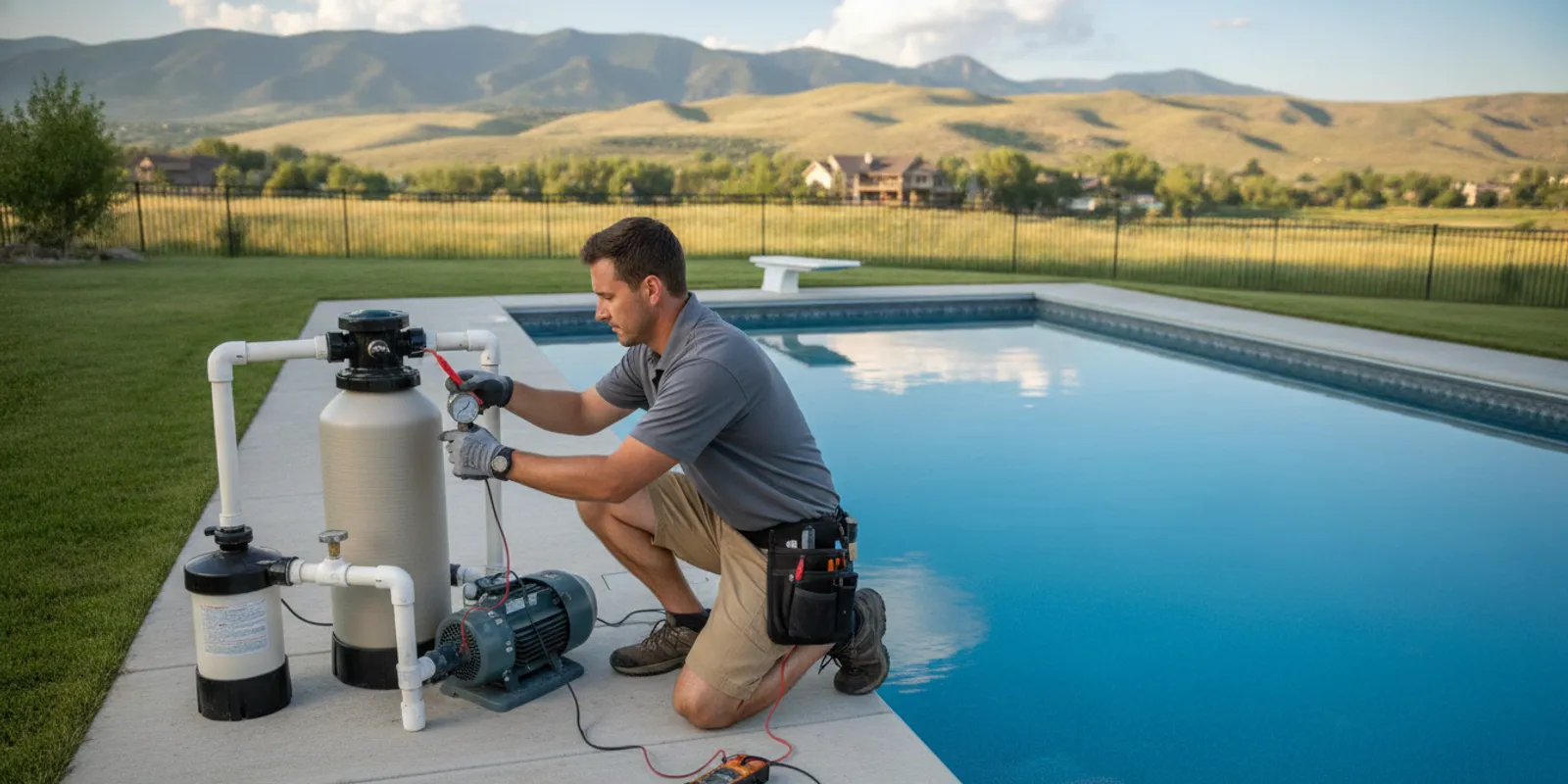
- Visible equipment: A review may include the pump, filter, heater, valves, accessible plumbing, and controls. Equipment should be described by observed condition and operation, rather than assumed to be in good order because it powers on.
- Pool surfaces and fittings: The visible interior, tile, coping, skimmers, returns, and accessible fittings may be checked for apparent wear or damage.
- Safety-related features: Ask which barriers, covers, or other features are included in the visual review. A service evaluation should not be treated as a substitute for a code, insurance, or dedicated safety-compliance inspection unless that is expressly the agreed service.
- Findings and next steps: Clarify whether you will receive verbal observations, a written summary, photos, repair recommendations, or an estimate for additional work.
The word “inspection” can mean different things to different providers. It does not automatically mean every component will be disassembled, pressure-tested, or evaluated under every operating condition. If you need a particular item examined, name it when requesting the appointment and ask whether that work is included.
What affects pool inspection cost in Denver?
There is no single inspection price that fits every pool and purpose. Neptune Pools does not publish a general inspection fee in the information provided for this article, so we will not quote an invented figure. Instead, ask for a price tied to a defined scope. A clear estimate can explain what the visit includes and whether further diagnosis would be a separate charge.
Several practical details can affect the time and work involved:
- Pool and equipment complexity. A pool with multiple pumps, a heater, automation, water features, or several control systems may take longer to review than a simpler setup. Tell the provider what equipment is present if you know.
- Access and readiness. Locked gates, covered equipment, obstructed panels, or a pool that is closed for the season can limit what can be observed. Ask whether the pool needs to be open and equipment running, and what happens if a system cannot be operated safely.
- Reason for the evaluation. A focused assessment of a suspected equipment issue may be narrower than a pre-purchase review or a renovation-planning visit. State the decision you are trying to make so the scope fits the need.
- Diagnostic testing. Inspection and troubleshooting are not always the same service. Confirm whether electrical checks, pressure tests, leak investigation, or component removal are included or would require approval as additional work.
- Written documentation. A concise service note and a detailed report with photos, itemized observations, and recommendations take different amounts of preparation. Ask exactly what documentation you will receive.
- Location and scheduling. Travel, access arrangements, and timing can affect a quote. Confirm that the provider serves your neighborhood; Neptune Pools serves Denver Metro communities including Denver, Lakewood, Littleton, and Cherry Creek. You can review the listed Denver-area service locations.
When you compare quotes, compare the included work rather than only the total. One provider may be quoting a visual review, while another may include operating checks, water testing, or a written report. A lower number is not a meaningful comparison if it leaves out the issue you need addressed.
How do inspection options compare?
Use the table below to clarify what kind of evaluation matches your situation. It is a planning guide, not a promise that every provider includes each item. Confirm scope, access, and charges directly before booking.
| Evaluation purpose | Typical focus to discuss | Useful questions to ask |
|---|---|---|
| Focused equipment concern | Observed operation and condition of the named system, such as a pump or heater | Is diagnosis included? Are tests or parts removal extra? Will you receive repair options? |
| Pre-purchase review | Visible pool, equipment, and operating concerns relevant to a buying decision | What can be tested? Are findings documented? What is excluded or inaccessible? |
| Repair planning | Condition of affected components and the information needed to scope a repair | Does the visit include a repair estimate? Will hidden damage require a separate diagnostic step? |
| Renovation planning | Visible surfaces, fittings, and features that may shape a proposed project | Can the provider discuss finish or rehabilitation options? Is this a consultation or a full condition report? |
When should you arrange an inspection?
An evaluation is most useful when you have a decision to make and need better information before acting. It can help you distinguish an obvious symptom from a broader concern, prioritize next steps, and understand what should be quoted separately.
Before buying a home with a pool
A pool may look clean while its equipment history, age, and operating condition remain unclear. Ask for an inspection before you rely on assumptions about its condition. Coordinate access with the seller or agent, and confirm whether the pool will be open and systems can be operated during the visit. If the pool has been winterized, drained, or shut down, the technician may not be able to evaluate normal operation. A review also cannot guarantee that a hidden defect will not appear later.
Share any seller disclosures, known repair history, recent service notes, and questions about the equipment. Then ask for findings in terms you can use: what appears to work, what needs attention now, what merits further diagnosis, and what is simply a longer-term planning item. For ongoing care after the purchase, compare available pool cleaning and maintenance services.
Before approving a repair
Schedule an evaluation when a pump is noisy, a heater is not behaving as expected, circulation seems weak, or another equipment concern keeps returning. Write down when the symptom occurs and what changed beforehand. Photos of an error display or a short description of the sound can help the service provider prepare, but avoid opening electrical panels or dismantling equipment yourself.
Ask whether you are booking a general evaluation or targeted troubleshooting. A visit may identify visible symptoms without establishing the cause of every intermittent problem. If the issue needs additional testing, get approval and an explanation of the next diagnostic step before work expands. Neptune Pools offers pool equipment repair and servicing for customers who need to discuss a repair path.
Before planning a renovation
When a surface is rough, tile is deteriorating, or the overall layout no longer suits the property, an evaluation can help separate maintenance needs from renovation questions. Bring a list of desired changes and identify the areas that concern you most. A preliminary visit can inform a conversation, but final project scope may require closer measurements, material choices, and a written proposal.
For a renovation discussion, ask whether the provider can assess the visible pool condition and explain the next steps for defining the project. Neptune Pools describes its pool remodel and rehabilitation services online.
Discuss a pool equipment concern with Neptune Pools.
How can Denver conditions affect the evaluation?
Pool systems in Colorado operate through a pronounced seasonal cycle. Denver's pool season is not identical to year-round operation in a warm climate, and the timing of an inspection matters. An open, circulating pool gives a technician a different opportunity to observe water and equipment than a pool that has been closed or prepared for cold weather.
Do not assume that an inspection should require a closed pool to be restarted. Ask the provider what can be evaluated in its current state and whether a later visit is needed once conditions allow safe operation. Likewise, do not treat a general inspection as winterization. Closing procedures depend on the pool, equipment, and conditions; obtain guidance specific to the property rather than applying a universal water level or freeze-protection instruction.
For a pool approaching seasonal closure, review the company's pool closing and winterization information and ask which services fit your situation. If water care or circulation is part of your concern, share recent symptoms and service history; Colorado's elevation and local operating conditions make a one-size-fits-all assumption unhelpful.
What should you ask before booking?
A few direct questions can prevent misunderstandings about the fee and the result. Request the answers in writing when the scope is complex or the inspection supports a purchase decision.
- What is the purpose and scope of this visit?
- Which pool components will be visually checked, operated, or tested?
- Does the quoted fee include water testing, troubleshooting, or a written report?
- What conditions could prevent testing, such as a closed pool or inaccessible equipment?
- Will you contact me before performing additional diagnostic work?
- Will recommendations separate urgent concerns from optional or future work?
- Can I receive a repair estimate or renovation consultation based on the findings?
It also helps to have the pool address, approximate age if known, equipment information, and a concise symptom list ready. Do not guess at technical specifications. A photo of labels or the equipment area can help identify the setup, but the provider should confirm what is actually installed.
How can you prepare for the appointment?
Preparation helps the technician spend the visit on the questions you actually need answered. Before the appointment, send the pool address and a short explanation of why you want an evaluation. If you are buying a home, say whether you are looking for an overall condition overview or have specific concerns from a disclosure or walkthrough. If you are troubleshooting, describe when the problem occurs and what you have already noticed.
Gather available service records, equipment manuals, recent repair invoices, and any notes about recurring problems. You do not need to diagnose the issue yourself. A simple timeline—when the symptom started, whether it is constant, and whether anything changed around that time—can be more useful than a guess about the cause. If the pool has automation, note whether controls are accessible and whether you know how to operate them.
Make sure the provider can reach the pool area and equipment, and ask in advance whether the pool should be uncovered or systems should be running. Do not restart closed or winterized equipment just to prepare for an inspection. If a gate, cover, or other access restriction applies, arrange access with the property owner or manager. For a shared or managed pool, confirm who can authorize testing and follow-up work.
Finally, identify the decision you need to make after the visit. You might want to know whether to proceed with a purchase, which repair to prioritize, or what information is needed for a renovation estimate. When the goal is clear, it is easier to agree on a useful scope and avoid paying for a broad review when a focused evaluation is what you need—or requesting a narrow visit when you need a more complete picture.
How do you use the findings?
Read the results as observations and recommendations, not as a guarantee of future performance. Separate findings into three groups: issues that need prompt attention, items that need more testing, and improvements you may plan later. If a report uses broad language such as “inspect further,” ask what the next step would involve and whether it carries a separate charge.
For a home purchase, share the written findings with the appropriate people involved in your transaction and determine what follow-up is needed before making a decision. For an existing pool, ask for a prioritized repair plan and an estimate with clear inclusions. For a renovation, confirm which observations affect project scope and which require a more detailed consultation. You can also explore Neptune Pools' broader pool service options or contact the team with questions about next steps.
For general public-health information about recreational water, consult the Centers for Disease Control and Prevention; that resource is not a property-specific inspection or repair assessment.
Plan a pool remodel or rehabilitation consultation.
Frequently Asked Questions
How much does a pool inspection cost in Denver?
The price depends on the requested scope, pool and equipment complexity, access, testing, and documentation. Neptune Pools has not provided a published general inspection fee for this article. Request a written quote that lists what is included and how additional diagnosis would be approved.
Is a pool inspection included with a repair visit?
Not necessarily. A repair appointment may focus on a specific symptom or piece of equipment rather than review the entire pool. Ask whether the appointment includes broader inspection, what parts of the system will be assessed, and whether any extra testing costs more.
Can a pool be inspected when it is closed for winter?
Some visible conditions may be reviewed, but normal circulation and equipment operation may not be available to assess. Tell the provider that the pool is closed and ask what can be evaluated safely now. A second visit during the operating season may be appropriate for items that cannot be tested while closed.
Does an inspection guarantee that the pool has no hidden problems?
No visual or operating evaluation can establish that every concealed or intermittent issue is absent. Ask what was tested, what could not be accessed, and which findings need further diagnosis. Use the report as a snapshot of observed conditions at the time of the visit.
Should I get an inspection before resurfacing or remodeling?
An evaluation or renovation consultation can help identify visible conditions and clarify what information is needed to plan the project. Confirm whether the appointment is a general inspection, a project consultation, or a detailed written assessment, and ask what follow-up is required for a final scope.
A clear scope makes pool inspection cost easier to compare and helps you use the findings for the decision that matters, whether you are buying, repairing, or improving a Denver-area pool.
Related Blogs