Pool Water Feature Installation Cost in Denver: What Homeowners Should Budget For
Planning a waterfall, deck jet, or other pool feature can make a backyard feel more personal, but the pool water feature installation cost depends on much more than the feature itself. In Denver, the existing pool structure, equipment capacity, site access, and seasonal schedule all affect the project scope. This guide explains how to compare options and what to ask before you budget.
Contact Neptune Pools to discuss your project.
What determines pool water feature installation cost?
A useful estimate starts with the work required to make the feature function safely and reliably, not just the visible finish. A feature may need a dedicated water line, changes to the return plumbing, a separate pump, electrical work, structural support, deck modification, waterproofing, or some combination of these. The more the project changes the existing pool and surrounding hardscape, the more scope there is to plan.
There is no single dependable price for every Denver pool. Two homeowners choosing a similar-looking waterfall can have very different projects: one may have a nearby equipment pad and accessible plumbing, while another may need excavation, a new circulation arrangement, and repairs to surrounding surfaces. Water-feature projects vary widely in design, existing pool conditions, equipment, access, and finish work, so a generic dollar range can be misleading. Ask for a site-specific scope and itemized estimate that separates the feature from the supporting work.
- Feature design: size, height, width, water volume, finish, and controls.
- Pool compatibility: available circulation capacity, plumbing layout, and the condition of existing equipment.
- Construction: excavation, structural work, deck changes, waterproofing, and finish restoration.
- Access and utilities: space for workers and materials, electrical supply, and distance to the equipment pad.
- Project coordination: permits or inspections where required, scheduling, startup, and verification that the feature operates as intended.
Ask the contractor to distinguish the feature itself from enabling work. That separation makes it easier to understand why two estimates differ and which items are essential versus optional. For broader planning, review Neptune's pool remodel and rehabilitation services and share what you want the feature to do, not only the look you have in mind.
It can help to think about the budget in layers. First define the visible feature and finish. Next identify the system work needed to supply and control water. Then account for construction, surface restoration, and startup. This is not a substitute for an estimate, but it gives you a practical way to ask whether a quote includes the complete project or only the feature component.
For example, if a proposal lists a spillway but says nothing about its water supply, controls, or the wall opening, ask whether those items are included or simply assumed to be usable. If another proposal includes those items as separate lines, its total may be easier to evaluate even if the headline figure looks higher. Request the same level of detail from every bidder.
How do common pool water features compare?
Feature type is an early design choice, but it does not determine the full price on its own. The table below compares typical scope considerations, rather than quoting unsupported local prices. A contractor should confirm the details against your pool and property.
| Feature type | Typical project considerations | Scope that can add complexity | Questions to ask |
|---|---|---|---|
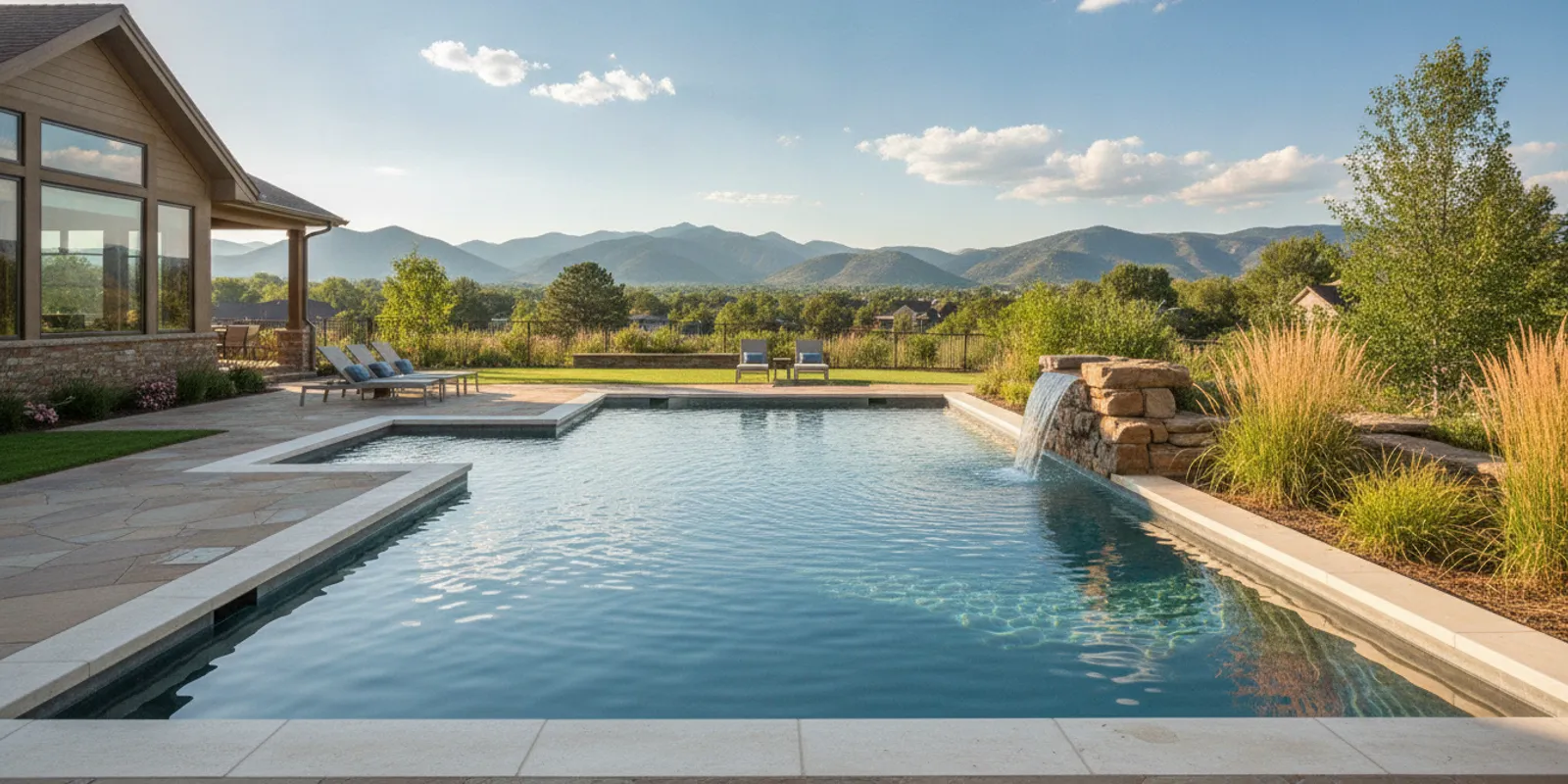
| Waterfall or raised wall | Visible structure, water delivery, catch basin or return path, and finish coordination | Structural support, waterproofing, stone or other finish, and integration with the pool edge | How will water be captured and returned? What surfaces and joints are included? |
| Deck jets or laminar jets | One or more directed streams from the deck toward the pool | Deck cutting, underground plumbing, electrical controls for some designs, and precise alignment | Where will lines run? Can the jets be adjusted and serviced without extensive deck removal? |
| Scuppers or wall spouts | One or more outlets through a wall or raised feature | Wall construction, finish penetrations, plumbing access, and splash management | How will the wall be protected from leaks and staining? Where will the plumbing be accessible? |
| Sheer descent or sheet waterfall | A controlled sheet of water from a ledge or feature wall | Level installation, suitable flow, a built structure, and finish details along the spillway | What flow does the selected unit need, and how will the structure stay level? |
| Integrated spa spillway | Water moving from an elevated spa into the pool | Shared system design, elevation and water-level details, and coordination with spa circulation | How does the spillway affect pool and spa operation, and what controls are included? |
These categories are not interchangeable. A small spout can still require difficult wall access, while a more prominent feature may be straightforward if the pool was built to accommodate it. A quiet, low-flow feature may suit a relaxation area; a taller or wider cascade may create more sound and splash. Ask to review the expected water path and operating behavior before selecting a finish.
Consider two simple planning examples. A homeowner who wants a short, quiet sheet of water may prioritize a level ledge, a controlled flow, and a location near seating. Another household may prefer a stronger visual focal point and accept more construction, sound, and splash management. Those preferences change the design questions before they change the material choice. Bring photos or sketches, but treat them as inspiration rather than proof that the same construction fits your pool.
Ask to see how the feature will look from several positions: standing at the house, sitting beside the pool, and viewing it from the water. A feature can look balanced in a close-up image but feel oversized from the patio, or disappear from the main seating area. Reviewing sight lines early can help avoid spending on a detail that does not serve your main goal.
Does your existing pump and plumbing support the feature?
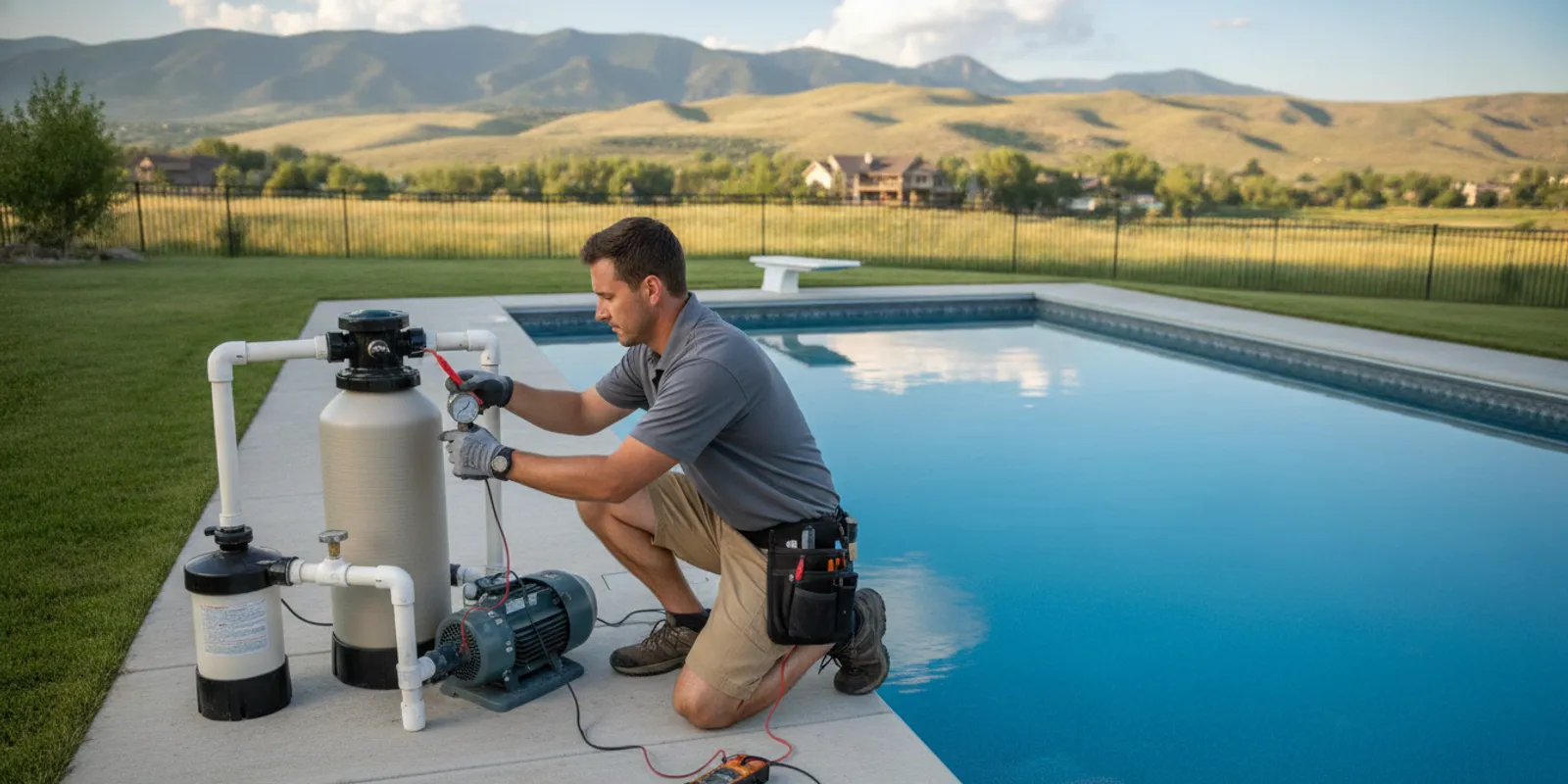
Water features need water delivered at a suitable flow and pressure. The existing pool system may or may not have enough capacity for the new demand while continuing to circulate the pool. A contractor should inspect the pump, filter, valves, pipe sizing, return lines, and controls, then explain whether the feature can share the existing system or needs dedicated equipment.
Sharing a pump can reduce the amount of new equipment, but it may mean the feature and normal pool circulation cannot run at their preferred settings at the same time. A dedicated pump can provide more independent operation, but adds equipment, plumbing, electrical coordination, and future maintenance considerations. These are design tradeoffs, not automatic recommendations. Have the installer describe how the system will operate in each mode.
Ask whether the controls will let you turn the feature on and off separately, and whether the feature can be adjusted. Also ask how a service technician will isolate the feature for inspection. Neptune's pool equipment repair and servicing page provides context on the equipment side of pool ownership; a new installation should make future access and servicing part of the design conversation.
Filter performance is another practical consideration when equipment is modified. The U.S. Environmental Protection Agency advises installing a pressure gauge with a filter to help indicate when backwashing is necessary in its guidance on pools and outdoor water features. That is a maintenance point, not an installation price or a substitute for checking the specific filter and system design.
Before choosing a shared or dedicated arrangement, ask the installer to describe at least three operating situations: ordinary pool circulation with the feature off, the feature running by itself, and the feature running while the pool is in its normal operating mode. If the feature should be independently controlled, confirm how that will work in practice and whether any existing automation needs adjustment. A clear explanation can reveal a limitation before equipment is ordered.
Also ask what information supports the equipment recommendation. The answer should address the existing system and the selected feature, not rely only on a generic statement that a pump is powerful enough. If changes are proposed, have the estimate identify the equipment, valves, wiring, and control work involved, along with any service access that must remain clear after construction.
How do site conditions change the project scope?
The area around the pool can be as important as the feature. An installer may need to know where underground utilities run, whether the deck can be opened and restored, how equipment and materials can reach the work area, and whether nearby walls or landscaping limit construction. Tight access or a finished patio can make work more involved even when the proposed feature is relatively simple.
On a new wall or raised structure, ask how the design handles water behind and around the finish. The estimate should state which structure, waterproofing, coping, tile, deck, and surface restoration work is included. If the feature ties into an existing wall, ask whether the wall has been evaluated for the added load and water exposure. A sketch, photos, and a site visit are often more useful for scoping than a feature name alone.
Also discuss sound and splash. Water that lands outside the intended basin can wet the deck, affect nearby seating, or run toward planting beds. Wind can change how a stream falls, and a feature's sound may be more noticeable near a patio or a neighbor's property. The right design should account for the actual setting rather than a showroom image.
A practical site walk-through should trace the proposed route from the pool to the equipment area and note where work may disturb finished surfaces. Ask the contractor to point out the likely access path for materials, any deck or wall sections that might need to be opened, and how disturbed areas will be restored. If the route is uncertain until demolition begins, ask for that assumption to be written down so you understand how a change would be handled.
Take a few photos before the visit: the full pool, the proposed feature location, the equipment pad, and any narrow gates or finished areas between them. Mark the location where you expect to sit or walk most often. These details do not replace an on-site assessment, but they help focus the discussion and reduce misunderstandings about access, visibility, and the desired water path.
What should Denver homeowners plan for in Colorado?
Denver's seasonal pool use makes timing and winter planning part of the decision. Discuss the intended operating season, how the water feature will be shut down when the pool is closed, and what must be drained or protected. Do not assume every feature can follow the same winter procedure. The correct approach depends on its plumbing, equipment, construction, and the pool's overall winterization plan.
Ask the installer to identify any exposed or low points in the feature plumbing and explain how the system will be prepared for cold weather. Confirm whether a feature can be isolated and what steps belong to the pool closing. Neptune's guide to pool closing and winterization in Denver is a useful companion, but your specific installation should have its own clear operating and shutdown instructions.
Colorado's sun, wind, and changing weather can also influence how a feature feels and performs in daily use. A tall stream may be more affected by wind than a low spillway, and splash or overspray can matter in a dry setting. These are design considerations, not a reason to assume a fixed water loss or a particular water bill. Ask how the proposed flow, placement, and controls fit your pool and household habits.
Timing deserves a direct conversation as well. Ask how long the work is expected to take, which stages depend on weather or material availability, and whether the pool will be usable during construction. Clarify when the feature can be tested and adjusted, and whether startup must happen before the pool is closed for the season. The calendar can affect the practical value of a project, even when the design itself is settled.
If you are already planning a larger renovation, compare whether the feature should be coordinated with other work on the pool edge or deck. Combining related construction may reduce repeated disruption, but it also requires a unified schedule and clear responsibility for each part. Ask for the proposed sequence rather than assuming that all work can happen at once.
What should a remodel consultation clarify?
Bring a short list of priorities to the consultation. Decide whether your main goal is sound, movement, visual interest, a spa-to-pool connection, or a feature that can be switched off when you want a quiet pool. If you have reference photos, note which details you like and which are flexible. That gives the contractor room to suggest a buildable option that fits the property.
It can also help to separate must-haves from preferences. For example, independent controls may be essential if you want to operate a feature only occasionally; a particular stone finish may be flexible if it complicates the existing wall connection. Ranking those choices makes it easier to discuss alternatives without losing the reason you wanted the feature.
Request an estimate that spells out the following:
- Defined feature: dimensions, materials or finish, water outlet, controls, and operating modes.
- Equipment plan: pump arrangement, plumbing changes, electrical scope, valves, and control integration.
- Construction scope: demolition, excavation, structural work, waterproofing, deck or coping changes, and restoration.
- Site assumptions: access, utility locations, condition of existing surfaces, and any work excluded pending inspection.
- Startup and handoff: testing, adjustment, owner instructions, and maintenance or winter shutdown guidance.
- Price clarity: separate line items for feature components and supporting work, plus a description of how unforeseen conditions will be handled.
Ask what is not included as carefully as what is. For example, does the estimate include repairing a surface opened for plumbing, electrical work, automation changes, and cleanup? If a permit or inspection may apply, ask who determines the requirement and who coordinates it. Local rules can vary by project and jurisdiction, so do not treat a general online checklist as approval for your specific work.
Before approving a proposal, ask what happens if a concealed condition changes the planned route or reveals a repair need. The estimate should explain how the contractor will document a change, communicate its effect on scope and schedule, and receive approval before proceeding. You can also ask which decisions need to be made before work starts, such as finish selection, control preferences, or the precise feature location.
Discuss your water feature with the remodel team.
How can you compare estimates fairly?
Compare scope before comparing totals. One proposal may include a new pump, controls, and restoration, while another may assume the existing equipment can handle the feature and leave deck repairs outside its price. Those are not equivalent bids. Put estimates side by side and mark whether each item is included, excluded, or still needs an on-site determination.
A simple comparison sheet can use one row per major part of the job: feature unit and finish, plumbing, pump or other equipment, electrical and controls, structure and waterproofing, surface restoration, startup, and seasonal instructions. For each contractor, mark the line as included, excluded, allowance, or unresolved. This makes omissions visible without implying that every project needs every item.
Use the same questions for each contractor:
- What exact feature and finish are being supplied?
- What plumbing and equipment changes are included?
- How will the contractor confirm that existing equipment can support the design?
- What surfaces will be opened, repaired, or replaced?
- How will the feature be operated, serviced, and prepared for the off-season?
- Which assumptions could change the final scope after work begins?
Do not select a proposal solely because it has the lowest initial figure. An estimate that leaves major enabling work unresolved can appear cheaper while providing less certainty. A clear scope helps you decide whether to simplify the feature, phase work, or invest in a more complete design. If the water feature is one element in a larger update, review the remodel and rehabilitation options together rather than treating each change as an isolated project.
When two bids differ, ask each contractor to explain the difference in assumptions rather than asking one to match the other's total. For instance, one may propose an independent pump while another plans to share existing equipment; one may include deck restoration while another has left it out. Once you understand the tradeoff, decide which operating outcome and completeness of scope matter most to your household.
Get a clear scope for your pool remodel.
Frequently Asked Questions
Can I get a reliable water feature price without an on-site review?
You can discuss a concept and learn what information an installer needs, but a reliable project estimate depends on the existing pool, equipment, plumbing route, construction access, and finish work. Ask for a site-specific scope before treating a preliminary figure as a final budget.
Is a waterfall always more expensive than deck jets?
Not necessarily. A waterfall can require a structure and finished wall, while deck jets can require deck cutting and carefully routed underground lines. The amount of construction, access, plumbing, and restoration matters more than the feature label alone.
Can a new feature use my current pool pump?
Possibly, but it should be confirmed by reviewing the pump, plumbing, filter, and desired operating modes. A shared system may create compromises in flow or independent control. Ask the installer to explain the design and whether a separate pump is appropriate for your pool.
Will I need to change my pool's winterization plan?
A new feature may affect shutdown steps, especially if it adds plumbing or equipment that needs to be isolated or protected. Get written instructions for your specific setup and have the feature included in the pool's seasonal closing discussion.
What details should I bring to a consultation?
Bring photos of the pool and equipment area, the feature style you prefer, approximate dimensions if known, and priorities such as sound, control, and ease of seasonal shutdown. Also share any known constraints around access, deck work, or construction timing.
Start planning your pool feature remodel.
A well-scoped feature should fit the pool, property, and way you plan to use the space, with equipment and seasonal care considered from the start.
Related Blogs