Hot Tub Maintenance Cost in Denver: A Practical Guide
A hot tub can look simple to maintain, but the annual budget includes more than sanitizer and a quick wipe-down. Denver owners may also pay for filters, electricity, drain-and-refill cycles, professional visits, and occasional equipment repairs. Winter cold, dry air, evaporation, high-altitude water chemistry, and freeze-protection needs can increase the attention a spa requires.
Explore Neptune Pools spa services.
National planning range: A broad national estimate for DIY annual upkeep is about $350 to $1,100. That range excludes major repairs and depends on tub size, usage, water quality, utility rates, and supply costs. Your hot tub maintenance cost may be higher or lower in Denver based on testing frequency, spa use, and whether you handle the work or choose scheduled service.
For a useful local plan, separate recurring care from one-time repairs. Then decide which tasks fit your schedule, experience, and tolerance for equipment risk. The categories below give you a practical way to estimate the total without treating a national average as a Neptune Pools quote.
What Does Hot Tub Maintenance Cost Include?
Short answer: Hot tub maintenance cost includes water-care supplies, electricity, filter and surface cleaning, drain-and-refill work, scheduled service, and a separate repair reserve. Track each category separately so a low chemical bill does not hide an underfunded equipment budget.
When owners ask about maintenance cost, they often mean chemicals alone. A realistic budget includes electricity to maintain water temperature, sanitizer and balancing products, testing supplies, filter care, cleaning, and drain-and-refill work. It should also leave room for professional service visits and repairs.
Recurring cost categories
- Water care: Sanitizer, pH and alkalinity products, shock, testing supplies, and other routine chemistry items.
- Energy: Electricity varies with utility rates, tub size, insulation, cover condition, set temperature, and use.
- Filters and cleaning: Cartridge cleaning, replacement filters, surface care, and the tools used to do the work.
- Water changes: Drain-and-refill cycles include water, startup chemistry, cleaning, and your time or a service visit.
- Service and repairs: Scheduled maintenance, inspections, diagnostics, and component repairs are separate from basic supplies.
For context, Jacuzzi's ownership guide explains that routine costs vary by model and use. Thumbtack reports a national maintenance visit range of about $155 to $320 in its hot tub cost data. These figures are planning context, not local pricing. A heavily used spa with an older cover or equipment problem can cost more, while a lightly used and well-insulated tub may require fewer supplies.
The most useful budget separates costs you can predict from costs that arrive when something changes. Track monthly energy and chemical spending, then set aside a separate amount for service and repairs. This makes a DIY, hybrid, or professional plan easier to compare.
How Much Do Water Chemistry and Supplies Add?
Short answer: Chemistry spending changes with bather load, water temperature, and evaporation. Testing before adding sanitizer, pH, or alkalinity products helps prevent wasted supplies. It also protects the spa's plumbing, heater, and shell.
Water chemistry is one of the most regular parts of hot tub care. Sanitizer, pH, alkalinity, and testing supplies can be a modest monthly purchase for a careful DIY owner. The amount changes with bather load, water temperature, evaporation, and how quickly the water balance drifts. Adding chemicals without testing can waste supplies and create new water-quality or equipment problems.
Why chemistry affects the budget
Hot tubs operate warm and create aerosols, conditions that can accelerate disinfectant decay. The CDC hot tub guidance emphasizes maintaining an appropriate disinfectant residual and pH. Balanced water also helps protect the shell, plumbing, heater, and other components from scale and corrosion.
Denver adds local variables. High-altitude conditions, dry air, evaporation, snow, and winter temperature changes make regular observation important. A spa used heavily may need more frequent attention than one used occasionally. Water brought in during a drain-and-refill can also change the starting balance, so the same chemical routine will not work perfectly for every home.
Ways to control supply spending
- Test before adjusting, and keep a simple record of results and additions.
- Follow product labels and manufacturer instructions rather than combining products casually.
- Check the cover, water level, and circulation when chemistry changes unexpectedly.
- Budget for a complete water-care cycle, not just the sanitizer bottle.
Neptune Pools provides local service and can help homeowners who prefer not to manage every supply run themselves. Visit the pool and spa chemical delivery page to see another way to make recurring water care easier to plan.
What Do Filters, Cleaning, and Drain-and-Refill Add?
Short answer: Filter care and drain-and-refill work add labor, cleaning supplies, replacement cartridges, water, and startup chemistry. A dirty filter can restrict flow and make balancing harder, so these less frequent tasks belong in the annual budget.
Filter care and water changes are easy to overlook because they are not daily purchases. They still influence both your maintenance cost and the condition of the equipment. A dirty filter can restrict flow, make the system work harder, and complicate water balancing. A neglected shell or plumbing system can leave contaminants that chemicals alone do not solve.
Filter and cleaning expenses
Rinse cartridge filters according to the manufacturer's instructions, clean them when buildup is visible, and replace them when they no longer clean effectively. The cost may include a replacement cartridge, filter-cleaning solution, a hose attachment, labor, or a professional cleaning visit.
Surface cleaning is another consistent task. Wipe the waterline, remove debris, clean the cover, and watch for buildup around the shell and fittings. Use this hot tub cleaning guide as a practical reference for routine work.
Planning for a water change
Drain-and-refill work includes more than the water bill. Plan for startup chemistry, filter cleaning, surface scrubbing, disposal or drainage requirements, and the time needed to bring new water back into balance. Many national guides describe a three- to four-month interval as a common starting point, but bather load, use, water quality, and manufacturer guidance should shape the schedule.
For a lightly used private spa, a water change may be straightforward DIY work. A heavily used tub, recurring chemistry problems, or suspected buildup may justify professional cleaning. Regular draining gives you a chance to inspect fittings and equipment before a small issue grows.
Why Denver Winters Can Change Your Spa Budget
Short answer: Denver winter care can increase monitoring and energy demands. Cold snaps, dry air, evaporation, snow, and freeze risk make circulation, water level, temperature, and equipment checks important even when a spa is used less often.
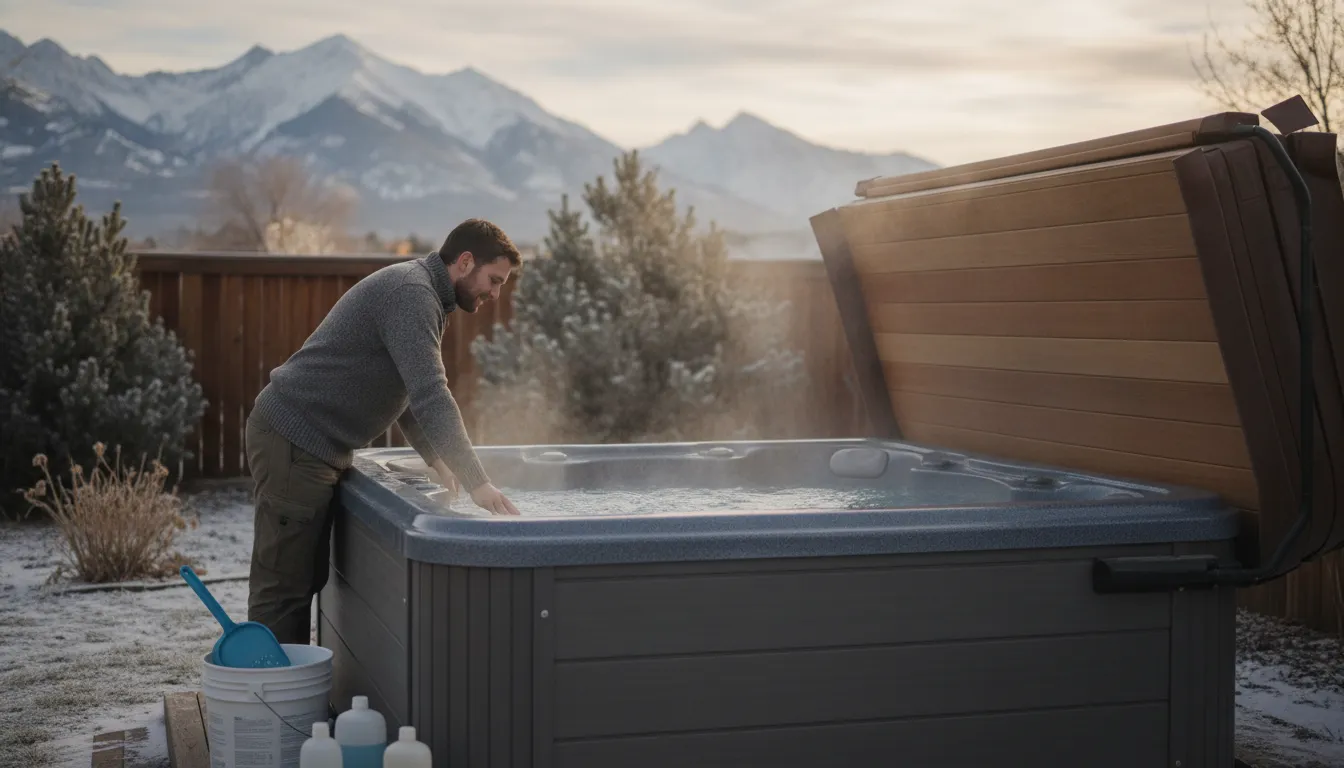
Denver winter conditions change the work required to keep a hot tub safe and ready. Cold snaps increase the importance of maintaining circulation and temperature. Dry air and evaporation can change water levels and chemistry. Snow and freezing conditions can make access, inspections, and drain-and-refill work less convenient.
Temperature and freeze protection
A tub operating through winter needs dependable circulation, a properly fitted cover, and routine checks of its water level and equipment. If the spa sits unused, winter care still matters. Turning attention away from the system without a clear protection plan can leave pumps, plumbing, or heaters exposed to a preventable freeze-related problem.
When a spa is used frequently, schedule checks instead of waiting for cloudy water or a strong chemical smell. When it is used rarely, keep a documented plan for temperature, water level, circulation, and safe shutdown or winterization. Seasonal care cannot guarantee that equipment will never fail, but consistent checks can identify changes while the response is simpler.
Where local expertise can help
High-altitude water chemistry is a Denver-specific consideration. A routine that worked in another climate may require different observation and adjustment here. Local technicians can also spot conditions that become more urgent before a deep freeze, such as unusual pump noise, poor circulation, leaks, or heater behavior.
Ask Neptune Pools about Denver spa maintenance support.
Is DIY Hot Tub Care Cheaper in Denver?
Short answer: DIY care can lower service charges when an owner has time for consistent testing, cleaning, and water changes. A hybrid or professional plan may be better value when missed checks, difficult chemistry, winter exposure, or overlooked equipment problems create larger costs.
DIY care can reduce direct service charges, but the lowest invoice is not always the lowest overall cost. The right approach depends on how often the spa is used, how comfortable you are with water chemistry, and whether you can respond quickly when equipment behaves differently.
| Care model | What you handle | Where the cost appears | Best fit |
|---|---|---|---|
| DIY | Testing, balancing, cleaning, filter care, and drain-and-refill tasks. | Supplies, water, electricity, equipment, and your time. Mistakes can add repair costs. | Consistent owners who enjoy hands-on upkeep. |
| Hybrid | Routine testing and light cleaning, with professional visits for inspections or difficult work. | DIY supplies plus occasional visit charges. | Owners who want control over simple tasks and support for technical needs. |
| Professional | Scheduled water testing, chemical balancing, cleaning, and equipment inspection. | Service-plan charges vary by spa and service scope. | Busy households, frequent-use spas, property managers, and owners who want reliable scheduling. |
What DIY time and risk are worth
DIY is workable when you can follow a repeatable schedule rather than checking the water only when it looks cloudy. Colorado conditions make that consistency especially important. High-altitude chemistry, dry air, evaporation, snow, and winter temperature changes can affect how much attention a spa needs.
The hidden cost is often time. Each visit may involve testing, interpreting results, adding chemicals in the correct sequence, waiting for circulation, cleaning surfaces, and recording what changed. If a small equipment issue is missed, the eventual repair may cost more than an inspection would have. Use this hot tub maintenance checklist as a baseline before deciding whether DIY fits your schedule.
When professional or hybrid care makes sense
A hybrid model can be a sensible middle ground. You may handle simple checks and surface cleaning while arranging professional help for deeper cleaning, seasonal adjustments, equipment inspection, or recurring chemistry support. Full professional care is a stronger fit when the spa has frequent bathers, serves an HOA or rental property, or sits unused while freeze protection still matters.
Professional service can combine water testing, chemical balancing, cleaning, equipment inspection, and early issue detection. That does not eliminate every repair or utility expense, but it can make the schedule more consistent and reduce guesswork. Compare the time, supplies, and risk involved with your routine against professional hot tub service plans.
How Should You Budget for Hot Tub Repairs?
Short answer: Keep repairs outside the routine maintenance total. Set a reserve based on the spa's age, equipment condition, leak history, prior repairs, and exposure to Colorado weather. Unusual noise, weak jets, temperature loss, leaks, or repeated chemistry changes justify an inspection.
A good annual plan treats repairs as a separate category rather than assuming they will not happen. Pumps, heaters, controls, plumbing, covers, and seals can eventually need service. The right reserve depends on the tub's age, condition, prior repair history, component availability, and weather exposure. Do not use a generic repair number as a promise.
Recognize changes early
Watch for unusual pump noise, reduced jet pressure, a heater that does not maintain temperature, unexplained water loss, repeated chemistry changes, or a breaker that trips. These signs do not identify one failed part, but they are reasons to stop guessing and inspect the system. Continuing to run equipment with poor circulation or a leak can create additional wear.
If you need help diagnosing the system, Neptune Pools offers hot tub equipment repair through certified technicians. Ask what inspections include, which repairs are separate, how emergency visits are handled, and whether parts are billed independently.
A Simple Annual Hot Tub Maintenance Budget
Budgeting rule: Start with recurring supplies, electricity, and water-care work. Then add professional visits and a separate repair reserve. Broad national figures are planning context only, not a Denver quote or Neptune Pools price.
A useful budget separates predictable operating costs from occasional service and repairs. The ranges below are broad national planning estimates, not Neptune Pools pricing. Your actual hot tub maintenance cost will depend on bather load, tub size, insulation, water conditions, utility rates, and how much work you handle yourself.
| Cost category | Planning range | What changes the number |
|---|---|---|
| Recurring supplies | $120-$360 | Sanitizer, pH and alkalinity products, testing supplies, cleaning items, and filter care. |
| Electricity | $240-$1,200 | Utility rates, water temperature, cover condition, insulation, tub size, and winter use. |
| Drain and refill | $60-$240 | Water and startup supplies, frequency, disposal requirements, and labor. |
| Professional care | Variable | Visit frequency, water balancing, cleaning, inspection, travel, and equipment condition. |
| Repair reserve | Separate annual reserve | Age of the tub, pump and heater condition, prior repairs, and parts availability. |
These categories are more useful than a single annual total because they show where money goes. National consumer estimates commonly place basic annual upkeep, including chemicals, electricity, and filters, around $350-$1,100. Electricity is often the largest recurring variable. A well-fitted cover and sound insulation can matter as much to the budget as the number of chemical bottles you purchase.
Denver conditions deserve their own adjustment. Dry air, evaporation, high-altitude chemistry, snow, and cold snaps can change the time needed for checks. Keep a record of supplies, water changes, service visits, and equipment symptoms. After one season, your own records will be more useful than a generic national average.
Use a four-step planning method
- Add expected monthly supplies and electricity.
- Schedule water changes and include startup chemistry and labor.
- Choose DIY, hybrid, or professional support for recurring work.
- Keep repairs in a separate reserve and update it after each inspection.
Compare your maintenance routine with Neptune Pools spa service options.
Frequently Asked Questions About Hot Tub Maintenance Cost
What is the average monthly cost to run a hot tub?
A cautious national planning estimate is about $30 to $100 per month for electricity, with chemicals, filters, water, cleaning, and service added separately. One broader estimate places annual DIY upkeep around $350 to $1,100. Actual hot tub maintenance cost depends on tub size, insulation, usage, utility rates, water quality, and service frequency.
Is owning a hot tub worth the ongoing cost?
It can be worth it when you use the spa regularly and are prepared to test the water. Clean the filter, monitor equipment, and protect it during Colorado weather. The value is lower when the tub sits unused or maintenance is repeatedly postponed. Compare expected use and time commitment with recurring costs.
What is the downside of owning a hot tub?
The main downsides are recurring electricity and chemical costs, hands-on maintenance, occasional repairs, and the need to respond quickly when water chemistry or equipment changes. Proper care includes maintaining sanitizer and pH, as the CDC recommends.
How long does a hot tub typically last?
There is no dependable single lifespan for every hot tub. Construction quality, installation, weather exposure, water balance, maintenance history, and timely repairs all affect how long the shell, plumbing, heater, and pumps remain serviceable. Consistent chemistry and filter care can support longevity, but they do not eliminate replacement.
Does hot tub maintenance cost more in winter?
It can, especially in Denver when cold snaps, snow, evaporation, and freeze-protection needs increase monitoring and energy demands. There is no universal winter surcharge. Budget based on insulation, location, usage, utility rates, and whether you handle seasonal checks yourself or use professional service.
Ready to Plan the Right Hot Tub Care?
DIY maintenance can work well when you have the time and consistency to test, balance, clean, and monitor your spa. If you prefer recurring care, equipment support, or a practical mix of both, Neptune Pools can help you choose an approach that fits your hot tub and routine.
Review Neptune Pools spa services for hot tub maintenance support.
Related Blogs