Hot Tub Maintenance Schedule for Denver Homes

Denver hot tub care is not a set-it-and-forget-it task. Hard water, intense UV exposure, rapid temperature changes, and freezing weather can all affect water quality and equipment, even when the spa looks clean. A routine makes small checks easier to manage before they become uncomfortable water or avoidable repair problems.
Explore Neptune's hot tub services.
A hot tub maintenance schedule should include a quick reset after each use and water and surface care every week. Add equipment and water-quality checks each month, seasonal preparation for Colorado weather, and a deeper drain-and-review cycle at the interval recommended for your spa and usage. Regularly testing and adjusting chlorine and pH is central to keeping the water properly treated. The CDC recommends a pH of 7.0 to 7.8 and at least 3 ppm of chlorine in hot tubs. Read the CDC guidance.
The right cadence depends on how often your household uses the spa, how it is equipped, and whether it operates through Denver winters. Start by separating the tasks that belong after every soak from those that need a weekly, monthly, or seasonal place on your calendar.
What Belongs on a Hot Tub Maintenance Schedule?
A hot tub maintenance schedule is more useful than a long list of tasks because not everything needs attention at the same frequency. Water chemistry can change after use, surface and filter checks fit naturally into a weekly routine, and equipment or water-quality concerns may justify a monthly review. Seasonal conditions then add another layer, especially in Denver, where freezing weather, rapid temperature changes, hard-water staining, intense UV exposure, and high-altitude chemistry can affect spa operation.
| Cadence | Main focus | Denver note |
|---|---|---|
| After each use. | Reset the water, secure the cover, and note changes. | Watch for heavy use, windblown debris, and temperature changes. |
| Weekly. | Test water, clean surfaces, and check the filter area. | Account for hard water, UV exposure, and frequent winter use. |
| Monthly. | Review equipment, water age, cover, and cabinet condition. | Look closely after sharp temperature swings. |
| Seasonally. | Prepare for winter or inspect after a winter shutdown. | Address freeze risk and spring temperature swings. |
| Annually. | Deep-clean, review the filter and cover, and assess equipment. | Confirm the plan still fits the spa and local conditions. |
Why maintenance tasks have different cadences
Start with the water. The CDC identifies chlorine and pH as the first defenses against germs in hot tubs, and residential owners should regularly check both. Keeping pH between 7.0 and 7.8 helps balance germ control, pipe lifespan, and user comfort. If pH rises too high, chlorine becomes less effective. If it drops too low, pipes are more vulnerable to corrosion. Those are reasons to test on a recurring schedule rather than wait until the water looks cloudy or smells unusual.
Usage also changes the timing. A spa used several times each week by a family may need more frequent observation than one used occasionally. Jets, sunlight, and substances introduced by bathers can reduce chlorine concentration. So a check after heavy use may be appropriate even when the regular weekly appointment is already on the calendar. Follow the spa and product manufacturer's directions when adjusting chemicals. Do not assume that one dosing routine fits every model, water source, or usage pattern.
Homeowner checks and professional review
Homeowners can handle routine observations: test the water, note changes in clarity or odor, remove visible debris, and watch for unusual sounds, leaks, or temperature problems. A schedule should also leave room for documenting what changed and when. This makes it easier to identify a pattern instead of treating every symptom as an isolated problem.
Professional review covers the parts that are easy to overlook or unsafe to diagnose by guesswork. Neptune's maintenance visits include chemical testing and balancing, dosage records, mechanical-room inspections, photos, and electronic service reports. A technician can assess pumps, heaters, filters, automation, and remote-management systems, then flag a developing equipment issue before it becomes a larger interruption. Neptune provides year-round spa and hot tub services, so Colorado weather does not make winter an off-season for hot tub care. The next sections translate this foundation into after-use, weekly, monthly, seasonal, and annual timing.
After Each Use: Reset the Spa for Its Next Session
The minutes after a soak are the easiest time to keep the next session comfortable. Bathers leave behind sweat, skin oils, lotions, and other contaminants, while sunlight and active jets can reduce chlorine levels. A quick reset also gives you a chance to catch a loose cover, low water level, or unusual equipment behavior before a small issue becomes a service call.
Rinse away what users leave behind
Remove visible debris from the water and wipe the waterline if oils or residue are noticeable. If your spa has a skimmer basket, empty it when leaves or other debris collect there. Neptune's routine maintenance process includes surface skimming, brushing, debris removal, vacuuming, and filter and skimmer basket checks, so these simple homeowner actions fit into a larger cleaning routine.
Test and adjust the water when usage was heavier than usual, when several people used the spa, or when the water looks or smells different. Chlorine and pH are the first defenses against germs in hot tubs, and proper maintenance requires routinely testing and adjusting both. Follow your spa manufacturer's product directions for any chemical dosage rather than guessing from another model's instructions. The CDC recommends a hot tub pH of 7.0 to 7.8 and at least 3 ppm of chlorine. Your complete water-care plan should account for the sanitizer system and directions specific to your equipment.
Secure the cover and inspect the equipment
Replace the cover fully after the water has settled. Check that it sits evenly, the straps or clips are secure, and no edge is folded under. A properly positioned cover helps keep out debris and limits unnecessary exposure to Colorado's intense sun and quick temperature changes.
Before walking away, look and listen. Check for drips around accessible connections, a tripped breaker, warning lights, unusual pump noise, or jets that do not behave normally. Do not remove equipment panels or reach into moving equipment. If the water level is falling, the heater is not maintaining temperature, or a pump sounds strained, record the symptom and arrange a professional inspection.
Record the reset
Keep a short note after each use: date, number of users, unusual debris or foam, test results, chemical additions, cover condition, and anything that sounded or looked different. This record makes patterns easier to spot and gives a technician useful context. It also helps you tailor your hot tub maintenance schedule to actual use instead of relying on memory.
Weekly Hot Tub Maintenance Schedule for Water and Surfaces
Set aside one consistent maintenance day each week, then adjust the timing when the spa sees heavy use or unusual weather. Start with a water test before adding anything. The goal is not to chase a single reading, but to test, make one measured adjustment. Allow the water to circulate, and test again when the product instructions call for it.
Test and adjust the water
Check pH, alkalinity, hardness, and sanitizer levels as part of the weekly routine. For hot tubs, the CDC recommends a pH of 7.0 to 7.8 and a chlorine concentration of at least 3 ppm. Keeping pH in that range helps balance germ control, pipe life, and comfort. A reading above 8.0 can reduce chlorine's germ-killing ability, while a reading below 7.0 can increase the risk of pipe corrosion. Follow your spa and chemical manufacturer's directions for the order, dosage, and circulation time of every adjustment.
One weekly test may not be enough for every household. A published hot tub checklist recommends testing and rebalancing two or three times per week, particularly when use is frequent. At minimum, test on your scheduled maintenance day. Add another check after several sessions, heavy guest use, or a noticeable change in water clarity or odor. Sunlight and jet activity can reduce chlorine concentration, so an uncovered spa or frequent use may need closer observation. For Colorado-specific context, review this high-altitude spa water care guide before making assumptions about Denver water chemistry.
Clean the shell, cover, and waterline
Remove floating debris, then skim the surface and wipe the waterline and shell with a product approved for your spa. Brush areas where residue collects, including seats, steps, jets, and corners. Cleaning these surfaces weekly keeps small deposits from becoming a larger buildup and gives you a chance to notice stains, cracks, or unusual discoloration early. Do not use household cleaners unless the manufacturer specifically approves them, because residue can affect water quality.
Inspect the cover while it is open. Brush or rinse away dirt, check the underside for moisture or damage, and allow it to dry as appropriate before securing it. A clean, properly fitted cover limits debris entering the water and helps protect the spa from Denver's intense UV exposure and rapid temperature changes.
Check the filter and skimmer basket
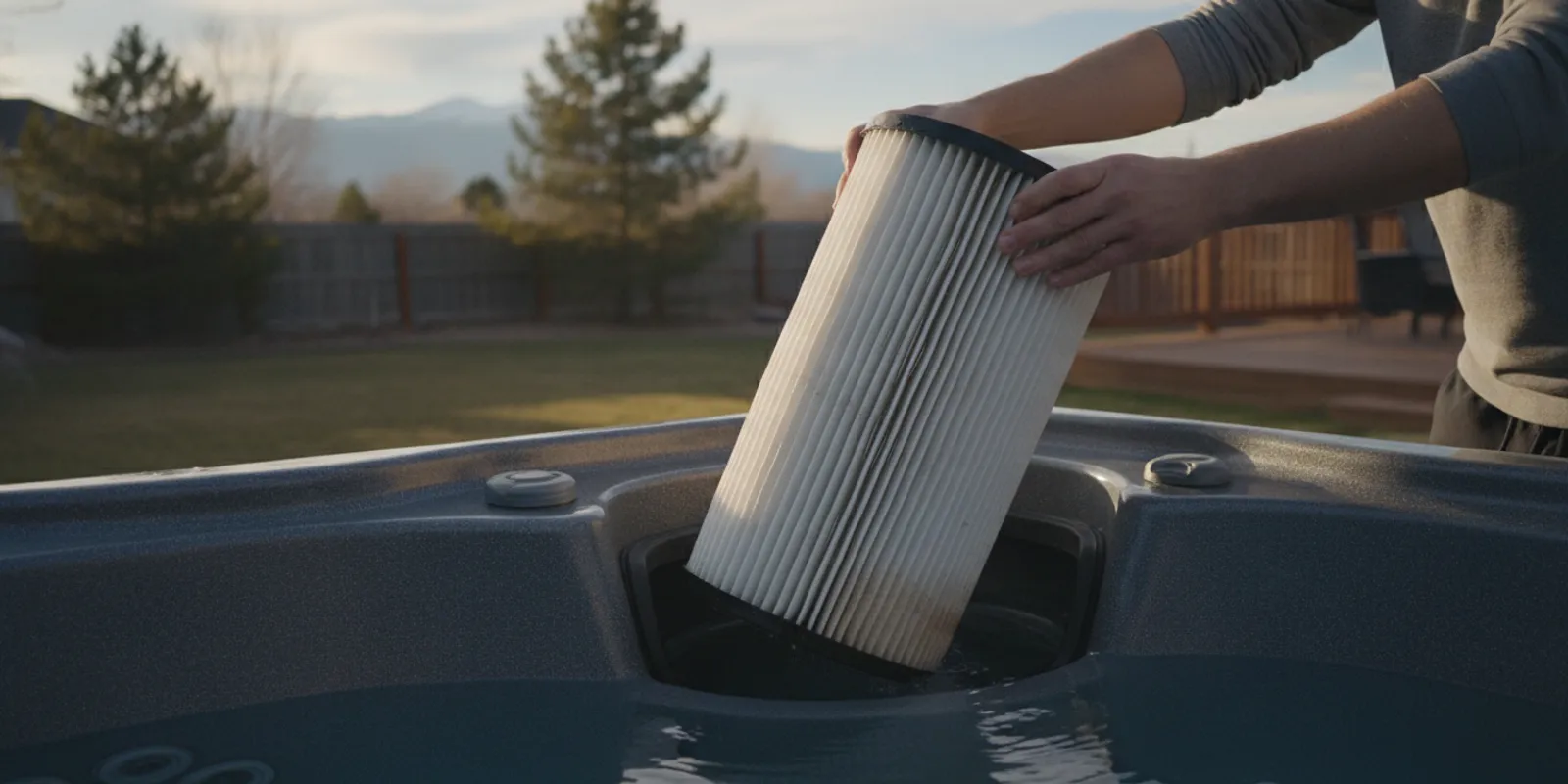
Remove the skimmer basket and empty leaves, hair, and other debris. Look at the filter for visible dirt or restricted flow, and rinse or clean it according to the manufacturer's instructions. Contaminants can build up in a dirty filter and make the circulation pump work harder. A weekly check is quick, but it can prevent a neglected basket or filter from quietly reducing circulation.
Finish by looking over the equipment area for leaks, unusual sounds, or error messages. Record what you tested and changed so the next adjustment is based on a pattern rather than a guess. Neptune's routine maintenance scope includes surface cleaning, water chemistry testing and adjustment, plus filter and skimmer basket checks. That scope is useful when weekly upkeep becomes difficult to maintain consistently.
Monthly Checks That Catch Equipment and Water Problems
A monthly review is the point in your hot tub maintenance schedule where you look beyond the water surface. Denver conditions can be hard on spa systems, with freeze risk, hard-water staining, rapid temperature changes, and intense UV exposure all affecting equipment over time. A short inspection can identify a developing problem before it becomes a no-heat, low-flow, or water-quality issue.
Inspect the equipment area
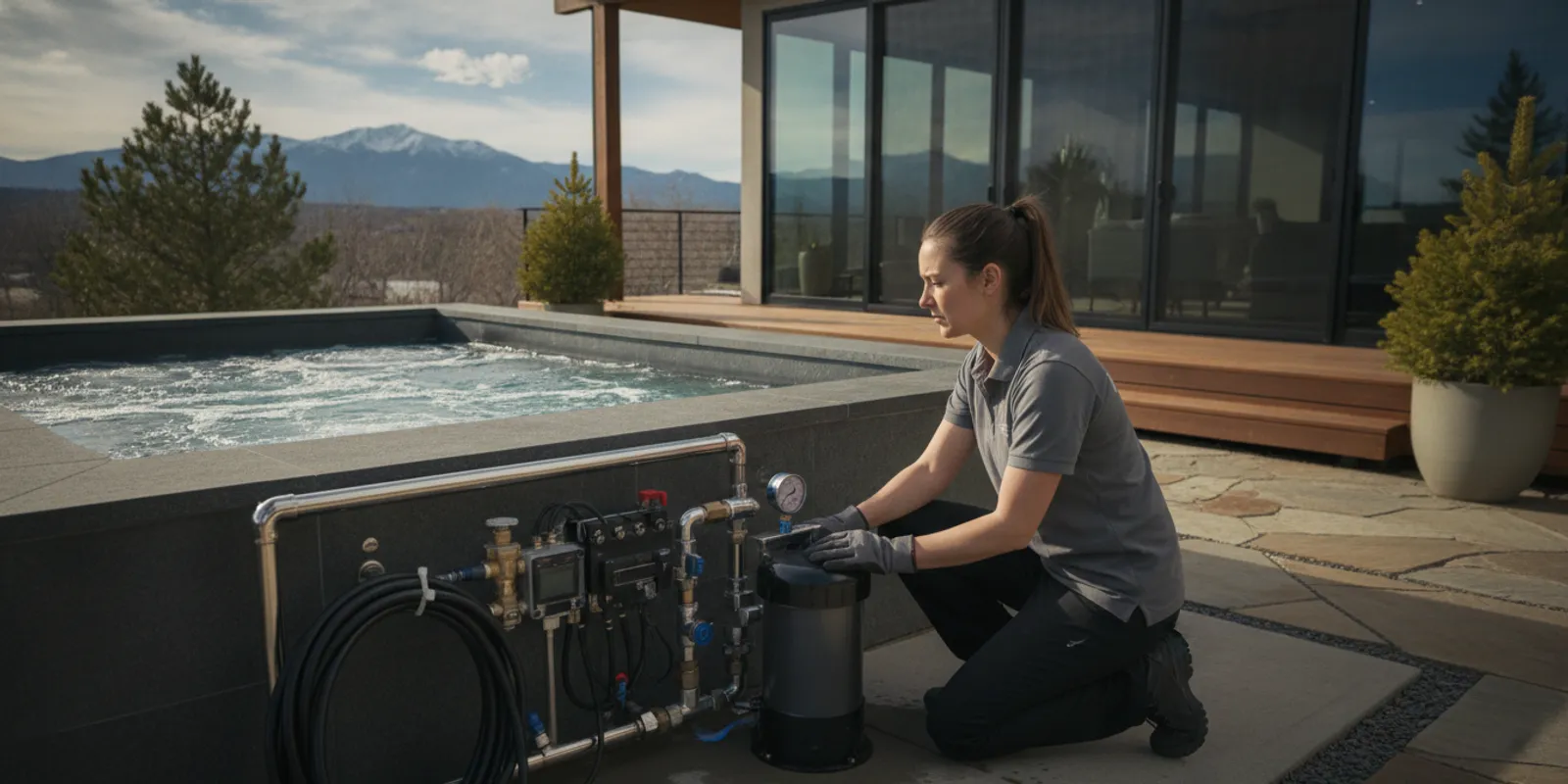
With the system operating normally, look around the equipment area for leaking unions, damp insulation. Standing water, cracked fittings, unusual vibration, or a pump and heater that sound different than usual. Check that the filter housing, skimmer area, and visible plumbing are free of obvious debris. Neptune's service process includes a mechanical-room inspection, chemical testing and balancing, precise dosage records, photos, and an electronic service report. That documentation helps turn a monthly concern into a specific service conversation rather than a guess.
Do not remove electrical panels or reach into moving equipment. If you notice a burning smell, exposed wiring, active leaking near electrical components. Repeated breaker trips, a heater that will not operate, or circulation that has stopped, stop troubleshooting. Keep the spa out of service until a qualified technician evaluates it. Neptune supports pumps, heaters, filters, automation, and remote-management systems through its equipment service team. You can review options for spa equipment repair when a problem is beyond a safe homeowner check.
Review water age, TDS, and filtration
Monthly water review is not just a question of whether the water looks clear. Total dissolved solids, or TDS, rise as hot tub water absorbs minerals, chemicals, and contaminants. Higher TDS can make sanitizer work less effectively. If the water becomes difficult to balance, develops persistent foam or cloudiness, or seems to require increasingly frequent chemical adjustments. Ask whether the water is approaching the end of its useful service life instead of continuing to add products.
Inspect the filter for loading and rinse it according to the manufacturer's instructions. Contaminants that build up in a filter can make the circulation pump work harder. Look at the cover, cabinet panels, and base for water intrusion, warping, cracks, or deterioration. A cover that no longer seals well can allow debris into the spa and increase the system's workload. In Colorado, pay particular attention after large temperature swings and before freezing weather.
Homeowners can observe, record, and report these changes, but should not diagnose electrical, gas, pressure, or refrigerant problems. A technician can test the system, identify the source, and document the repair or maintenance needed.
Schedule professional spa care with Neptune Pools.
Seasonal Hot Tub Care in Denver: Winter and Spring
Denver hot tubs do not follow the same seasonal schedule as outdoor pools. Neptune provides year-round spa and hot tub services, so a properly equipped spa can remain in use through winter rather than being treated as a summer-only system. The maintenance priority changes with Colorado weather, however. Rapid temperature changes, freeze risk, hard-water staining, high-altitude chemistry considerations, and intense ultraviolet exposure can all affect spa water and equipment.
Winter: Protect an Operating Spa From Freeze Risk
If you keep the hot tub running, winter care starts with consistent operation and closer attention to the equipment area. Check that the circulation, heating, and filtration systems are operating as intended, and do not assume a brief warm spell eliminates freeze risk. A sudden temperature drop can expose a fault in a pump, heater, filter, automation component, or remote-management system before the problem is obvious at the water surface.
Keep the cover properly fitted and in good condition so it can help retain heat and limit exposure to snow, wind, and debris. Continue the normal water-care schedule instead of reducing attention because usage is lower. Colorado conditions can make water balance more confusing, while hard water may contribute to staining and mineral buildup. Follow the spa and chemical manufacturers' directions for testing, dosage, and equipment operation.
Pool-closing procedures are not universal hot-tub instructions. If a particular spa, plumbing configuration, or equipment problem requires shutdown, winterization should be based on the manufacturer's guidance and the system's design. Do not drain, shut down, or blow out lines simply because pool-closing advice recommends it. For broader Colorado equipment considerations, see Colorado freeze protection.
Spring: Restart Carefully After the Weather Turns
Spring in Denver can bring warm afternoons, freezing nights, wind, and sharp temperature swings in the same week. Before increasing use, inspect the cover, cabinet area, visible plumbing, and equipment operation. Look for signs of leaks, unusual sounds, reduced heating, or a system that does not circulate normally. Addressing those symptoms early is safer than waiting for a minor winter issue to become a failed component.
A seasonal restart is more than removing the cover. Neptune's documented startup work includes cover removal, debris cleanout, system restart, shock treatment, high-altitude chemistry balancing, and a full equipment check. That sequence is especially useful when a spa has been shut down or neglected during winter. If the hot tub stayed active, use spring as a structured inspection point rather than repeating a pool-opening routine automatically.
Record what you find and return to the regular schedule once the system is stable. Seasonal checks should complement, not replace, routine testing, cleaning, and equipment observation throughout Denver's year-round spa season.
Annual Hot Tub Maintenance: Drain, Deep-Clean, and Review
A complete maintenance review is the point where you reset the water. Inspect the parts that are easy to overlook, and confirm that your routine still fits the spa's condition and use. Do not treat one calendar interval as right for every hot tub. Follow the owner's manual and product instructions, then adjust the timing for bather load, water quality, equipment design, and the advice of a qualified service professional.
Plan the drain and deep-clean around the manufacturer
Some published maintenance guidance recommends draining and refilling every three to four months. It gives the same quarterly timing for cleaning and conditioning a hot tub cover. Those are useful planning references, not a universal rule. Your manufacturer may specify a different interval, and a service professional may recommend an earlier reset when water age, heavy use, or persistent buildup becomes a concern.
When the water is drained, use the opportunity for a thorough cleaning rather than simply refilling the shell. Remove residue from the shell and waterline, clean the cover according to its care instructions, and inspect areas where sediment or biofilm may collect. The goal is to start the next water cycle with clean surfaces and a clear view of the equipment condition.
Review the filter, cover, and equipment once a year
Inspect the filter cartridge for wear, damage, and reduced flow. Many hot tub filter cartridges have an approximate 12-month lifespan, depending on frequency of use. So replacement should be based on the cartridge's condition and the manufacturer's guidance rather than an automatic date. Check the cover for waterlogging, damaged seams, poor fit, or degraded insulation. A worn cover can make it harder to retain heat and protect the water from debris.
Include the pump, heater, filter housing, controls, automation, and any remote-management equipment in the review. Neptune supports these equipment categories, so a professional inspection can identify a developing issue before it becomes a no-heat, low-flow, or circulation problem. Neptune's maintenance visits include mechanical-room inspection, water testing and balancing, precise dosage records, photos, and electronic service reports. Its documented cleaning protocol also includes equipment inspection after cleaning and a follow-up electronic report. These records give homeowners, property managers, and HOAs a practical history of what was checked and what needs attention next.
Neptune's Gold, Silver, and Bronze schedules describe broader maintenance-plan cadences, from weekly to biweekly or monthly visits. They should not be read as universal hot tub drain or inspection intervals. For Denver-area spas, year-round service can help account for local freeze risk, hard-water staining. Rapid temperature changes, and other Colorado conditions while keeping the annual review documented and repeatable.
Schedule recurring spa care with Neptune Pools.
Frequently Asked Questions
What kind of maintenance does a hot tub need?
A hot tub needs routine water testing and adjustment, surface cleaning, debris removal, filter and skimmer-basket checks, and periodic equipment inspections. After each use, check the cover and water condition. Weekly, test sanitizer and pH, clean the shell and filter area, and remove debris. Monthly, look for leaks, unusual sounds, weak jets, cloudy water, or scale. Drain and deep-clean on the interval recommended for your model and usage. In Denver, include seasonal freeze protection, hard-water awareness, and checks after sharp temperature changes.
How long can water sit in a hot tub without chemicals?
Do not plan to leave an actively used hot tub untreated. Test and adjust the sanitizer and pH routinely, even when the water looks clear. The CDC identifies chlorine and pH as the first defenses against germs in hot tubs. It recommends a pH of 7.0 to 7.8 and at least 3 ppm chlorine when chlorine is your sanitizer. CDC water-treatment guidance explains why appearance alone is not a reliable safety check.
Why is there a 15-minute hot tub rule?
The phrase may refer to a circulation or pump cycle, not a universal rule for every spa. Some models circulate automatically, while older or non-self-circulating units may need scheduled pump operation. Follow your owner's manual for the correct cycle and never change filtration or heating settings based only on a generic timer recommendation. If circulation is weak or the pump sounds different, schedule an equipment inspection.
Why do you put a tennis ball in a hot tub?
A clean tennis ball is sometimes placed in the water to collect a small amount of surface oils. It is not a substitute for testing, sanitizer, filtration, or cleaning, and it will not correct cloudy or contaminated water. Use only spa-safe cleaning methods and follow the manufacturer instructions for your cover, shell, and water-care products. Remove the ball if its material begins to break down or leave residue.
Contact Neptune Pools for Ongoing Spa Care
A consistent maintenance schedule helps Denver homeowners keep hot tub care manageable through changing weather, winter temperatures, and regular use. If you would rather have recurring spa care handled with a reliable service plan. Neptune Pools can help you discuss an approach that fits your hot tub and routine.
Contact Neptune Pools to discuss recurring hot tub and spa care.
Related Blogs