Pool Care Handoff Colorado Homeowners: A Practical Checklist
A useful pool care handoff Colorado homeowners can rely on is more than a list of equipment. It gives the next owner a clear picture of what is installed, what has been serviced, what the water-care routine looks like, and which seasonal tasks are coming due. Gather the records before closing or the change in responsibility, then walk through the pool area together if possible.
Request help planning pool care.
What should a pool handoff accomplish?
The handoff should reduce guesswork, not promise that every system is trouble-free. A buyer or new property manager needs enough reliable information to identify equipment, understand the current routine, recognize unresolved concerns, and arrange the next service. If something is unknown, label it as unknown instead of filling in a likely answer.
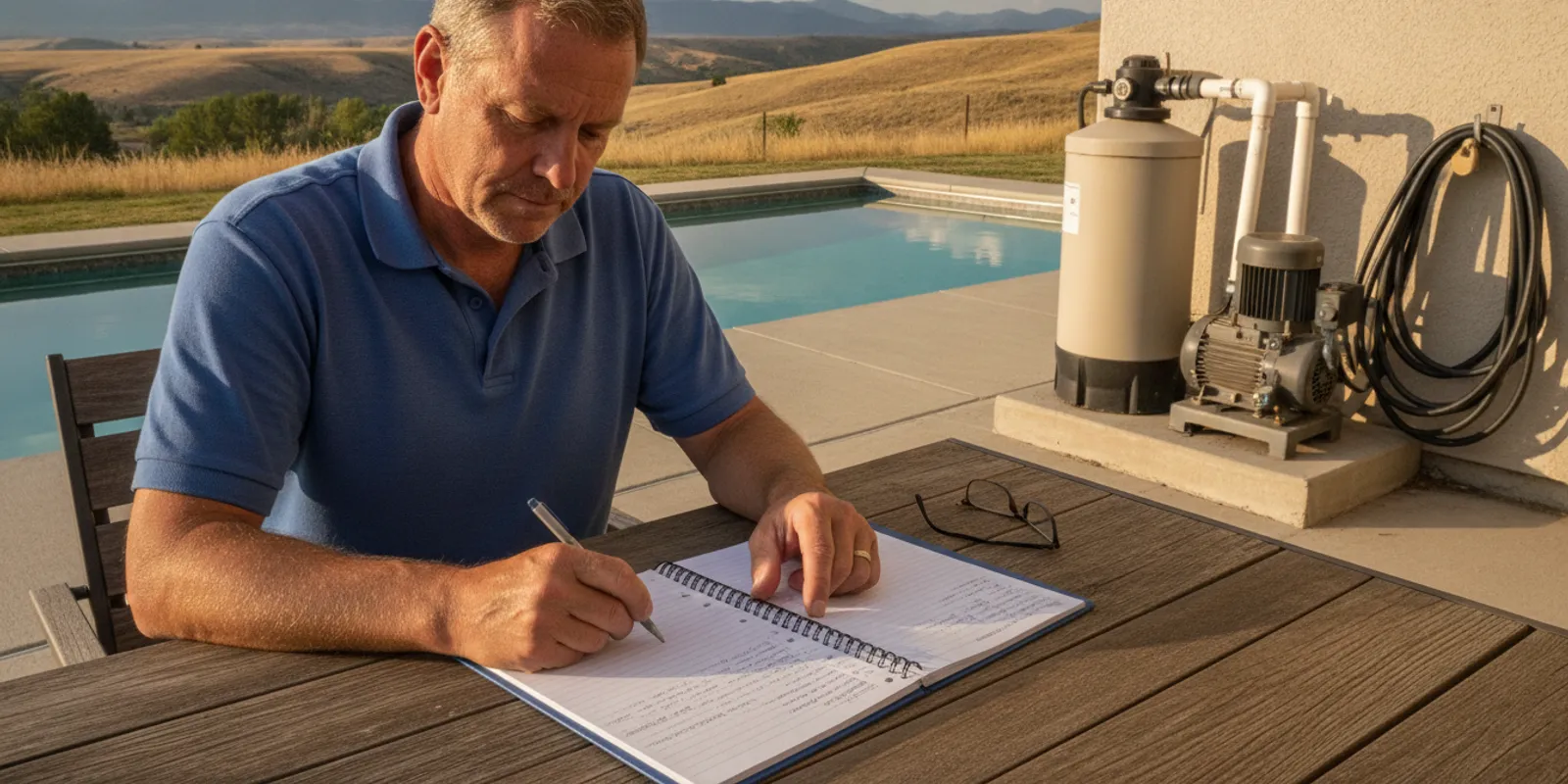
Start with a single folder, whether paper or digital. Include dated service records, equipment manuals, receipts, water test records, and a short list of open questions. Photograph equipment labels and visible plumbing before the walkthrough. Keep personal account details and access codes in a secure method rather than writing them on a sheet left beside the pump.
For recurring help, the new owner can review the available Colorado pool care options and compare them with the current schedule. A handoff is a good point to decide whether the pool will be maintained by the owner, a property team, or a service provider.
Which records should you collect first?
Collect the records that explain the pool as it exists today. A binder that includes dates and clear labels is more useful than a large stack of unorganized invoices. The following checklist can be adapted for a single-family home, an HOA pool, or a rental property.
| Handoff item | What to record | Why it helps the next owner |
|---|---|---|
| Equipment inventory | Equipment type, brand and model from labels; location; available manuals | Helps identify what is installed before troubleshooting or ordering parts |
| Service history | Visit dates, work performed, parts replaced, and unresolved recommendations | Shows the sequence of care and what may need follow-up |
| Water-care notes | Dated test results, products used, and the source of the readings | Provides context for the current routine without treating old readings as current |
| Seasonal plan | Opening, closing, freeze-protection, and cover-related dates or instructions | Helps the new owner plan ahead for Colorado weather changes |
| Access and safety | Gate or equipment access process, safety devices, and known operating limitations | Supports a safe, orderly transfer of responsibility |
| Open issues | Leaks, unusual sounds, visible damage, alarms, or pending service questions | Prevents a known concern from disappearing between owners |
How do you document the equipment?
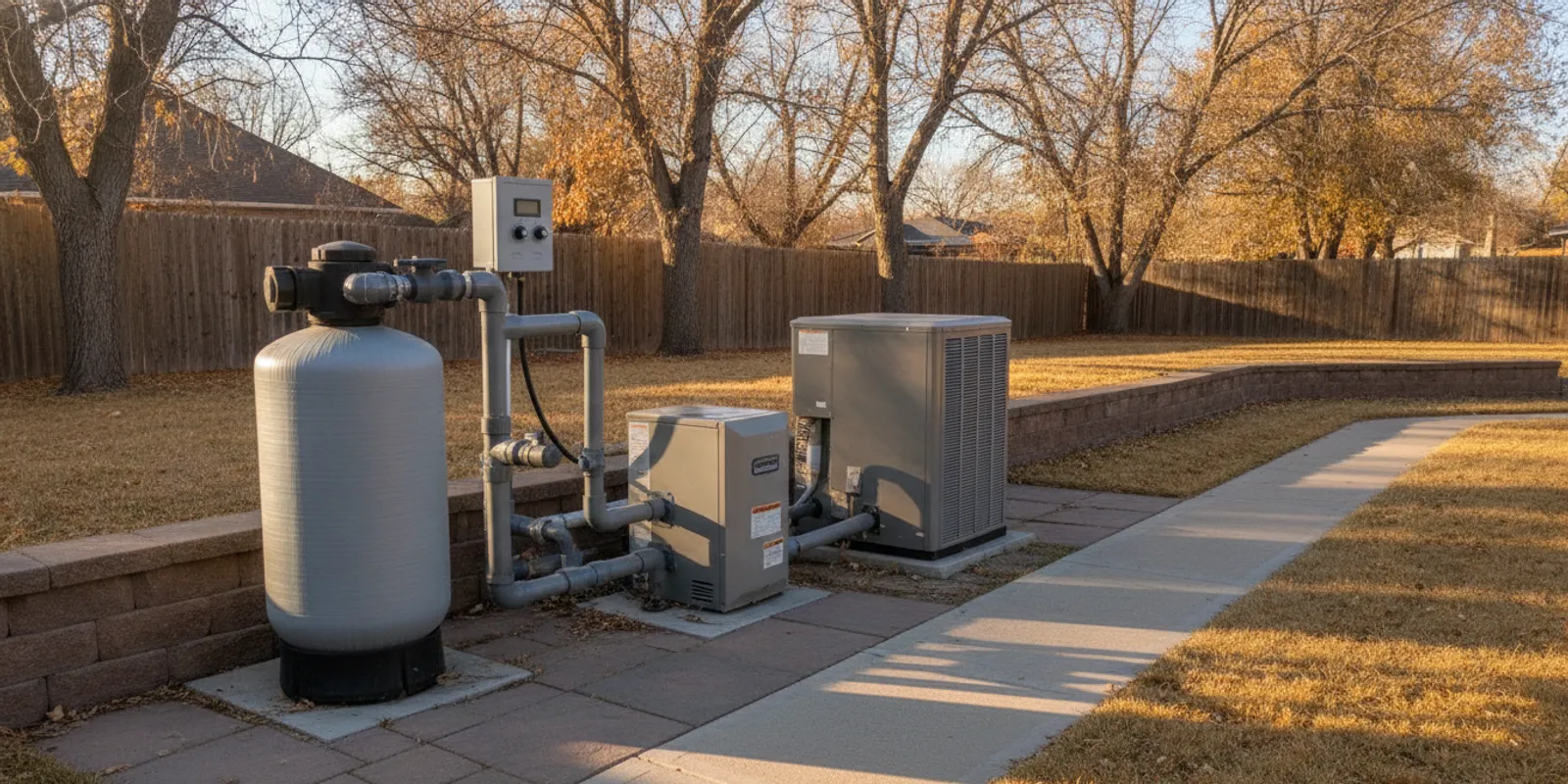
Walk from the pool to the equipment pad and make an inventory. Identify the pump, filter, heater, sanitizer or chemical-feeding equipment, automation controls, valves, and any cleaner or water-feature equipment present. Use the equipment label for the make and model rather than relying on memory. Record the label information in a note and take a well-lit photo that shows the full unit as well as its identification plate.
Do not assume a control label explains every valve position or that a switch should be operated during the walkthrough. Note which controls are normally used, who provided that instruction, and anything that should be checked by a qualified technician. If there is uncertainty about an electrical component, gas line, pressure vessel, or a damaged part, leave it undisturbed and record the concern.
Include manuals, warranty paperwork if available, installation documents, and recent repair invoices. In the service history, separate completed work from recommendations that were discussed but not completed. The equipment repair and servicing page is a relevant next step if the handoff surfaces a fault that needs assessment; the written notes should still describe the symptom, not diagnose its cause.
What water-care information belongs in the folder?
Make a dated record of recent water tests, including who performed each test and whether it was a field test, store test, or service-visit record. Preserve the actual results when available. A note that says “chemicals added” without naming the product, amount, or date is difficult to interpret later. If those details are missing, say so plainly.
List the products currently kept for the pool, their labels, and where they are stored. Leave products in their original labeled containers, follow the label directions, and do not combine chemicals. Tell the new owner which products are on site and whether any are nearly empty or have been set aside. Keep chemical storage dry, secure, and away from children and pets.
Old test results are history, not a current reading. The new owner should test the water and follow product labels before making adjustments. For a neutral professional-association reference, the NEHA water-quality page includes pool and spa topics. Keep the citation in perspective: it is a resource listing, not a substitute for pool-specific testing or equipment instructions.
For local supplies and water testing options, the new owner can review pool chemicals, supplies, and testing. A service handoff should not imply that a particular chemical routine suits every pool; construction, equipment, use, and measured water conditions matter.
How should you transfer the service schedule?
Write down the normal visit frequency and the work that is actually included in the current routine. Record the last completed visit and the next expected one, and attach service reports or invoices that support the dates. If the pool is serviced weekly, for example, identify the most recent visit rather than assuming a new owner knows which weekday a technician usually arrives.
Make a separate list of items that are not part of routine cleaning: equipment repairs, unusual water conditions, planned replacements, and seasonal opening or closing work. Include the name of a service provider only when the owner has permission to share it, and confirm any future appointment directly. Do not present a schedule as guaranteed if it has not been confirmed.
Property managers and HOA boards should identify who can approve service, who receives reports, where records are retained, and how an urgent concern is communicated. For shared facilities, an assigned contact and a documented access process help prevent uncertainty when staff or board members change. Neptune Pools provides information for HOA pool needs as well as residential care.
Review pool maintenance options for the new owner.
Which Colorado seasonal tasks need a clear handoff?
Colorado weather can shift quickly, so pass along the actual plan for this pool rather than a generic calendar date. Record whether the pool is currently operating, covered, or prepared for a seasonal shutdown. Note the date and provider for the most recent opening or closing, and identify any step still pending. If freeze protection instructions are pool-specific, keep the written instructions from the service provider or equipment manufacturer with the records.
Winterizing and freeze protection are not one-size-fits-all. Equipment configuration, pool design, weather, and the owner’s operating plan affect what should be done. Do not tell the next owner to drain a line, change water level, or shut down equipment based on a general checklist alone. They can refer to the pool closing and winterization information and confirm any uncertain or incomplete work with a qualified professional.
For a handoff in spring, document whether the pool has been opened, what was restarted, and whether any equipment or water-quality follow-up remains. For a handoff in fall, note what is still running and who is responsible for scheduling winter preparation. If the property has a spa as well as a pool, keep its care schedule and records separate; the spa services information addresses a different set of care needs.
How can you make the walkthrough useful?
Set aside enough time to review the folder and walk around the pool without rushing. Use a short sequence so each major subject is covered:
- Review the current status. Explain whether the pool is in regular use, temporarily closed, or awaiting work. Point out known issues without guessing at their cause.
- Locate the records. Show where manuals, invoices, test results, and service reports are stored. Identify which dates are confirmed and which details are missing.
- Identify equipment visually. Match each item in the inventory to its label and photo. Explain only controls or procedures you know to be accurate.
- Review the next dates. Identify the latest service visit, the next scheduled visit if confirmed, and seasonal work that needs to be arranged.
- Confirm responsibility. Agree who will manage access, purchase supplies, receive service updates, and make decisions about repairs.
- Leave an open-question list. Put unresolved concerns in writing, with a date and the person expected to follow up.
Take a final set of photos after the walkthrough, especially if any equipment or condition may be hard to describe. Keep photos factual and dated. They can help establish what was visible at handoff, but they do not replace a technical inspection or establish the condition of concealed plumbing.
If the property is outside the central Denver area, confirm service availability for its exact location instead of assuming every community has the same schedule. Neptune Pools lists its Denver-area service locations online.
How do you keep the handoff records clear?
Use a simple, consistent format so another person can update the file without decoding shorthand. Put the property address and the date the record was prepared on the first page. For each entry, note the date, the person or company who performed the work, the task or observation, and any follow-up. If a report uses technical terms that are unfamiliar, preserve the original report and add a question for the provider instead of rewriting it as a diagnosis.
Separate confirmed facts from statements that need verification. For example, write “pump label photographed on transfer date” rather than “pump recently replaced” unless you have a dated invoice or other record. Distinguish a scheduled appointment from completed work, and do not record a conversation as a repair completion. These small distinctions can prevent confusion months later when seasonal work is due or a component needs attention.
Give the new owner copies of the records and keep an agreed copy with the property file. If a paper binder is used, include a brief index and put the newest records at the front. For a digital folder, use descriptive file names such as a date followed by the equipment or service item. Store access credentials separately and share them only with authorized people. A concise record that is easy to update is more useful than a folder no one can navigate.
Ask Neptune Pools about a pool-care handoff.
Frequently asked questions
Should the seller balance the water before the handoff?
The useful handoff is an accurate, dated record of the water condition and any recent treatment. A reading can change, so the new owner should test the water before making a new adjustment. Avoid claiming that a past test guarantees current water condition.
What if there are no maintenance records?
Start a new record from the date of transfer. Photograph equipment labels, note visible conditions and current water-test results, and list what is unknown. Arrange an inspection or service visit if the operating history or equipment condition is uncertain.
Does the handoff need to include a pool inspection?
A handoff checklist organizes information; it is not a technical inspection. If a buyer or property manager needs an assessment, clarify the scope and arrange it separately. Record any reported concern and avoid presenting an unverified opinion as a diagnosis.
How should a property manager handle a community pool handoff?
Transfer the service calendar, reports, access process, approval contact, and list of unresolved issues to the person taking responsibility. Keep the records in a location accessible to authorized staff, and make sure a change in personnel does not leave service requests without an owner.
Schedule a conversation about ongoing pool care.
A careful handoff gives the next owner a practical starting point: documented equipment, dated water-care notes, a clear service calendar, and honest information about what remains unknown.
Related Blogs