Spa Equipment Inspection Denver: A Practical Owner Guide

Spa equipment problems are easier to address when you notice a change early. If you are researching spa equipment repair denver, start with a careful visual inspection of heating, circulation, controls, and the accessible area around the spa. The goal is to document symptoms safely, not to open electrical components or guess at a repair.
Contact Neptune Pools to discuss spa service.
What should you check before inspecting the spa?
Choose a time when you can observe without rushing. Keep the cover clear enough to view the water and controls, and have the owner’s manual available. Do not remove equipment panels, reach into machinery, or handle wiring. If you see damaged cords, exposed wiring, water around electrical components, or smell burning, stop using the spa and arrange qualified help. For general consumer product safety information, consult the U.S. Consumer Product Safety Commission.
Before changing settings or restarting anything, note what the spa was doing. Record the displayed temperature, error code, whether the pump is running, and when the symptom began. If others use the spa, ask whether they changed a setting or noticed a sound. These details can help a technician distinguish a sudden failure from a recurring condition.
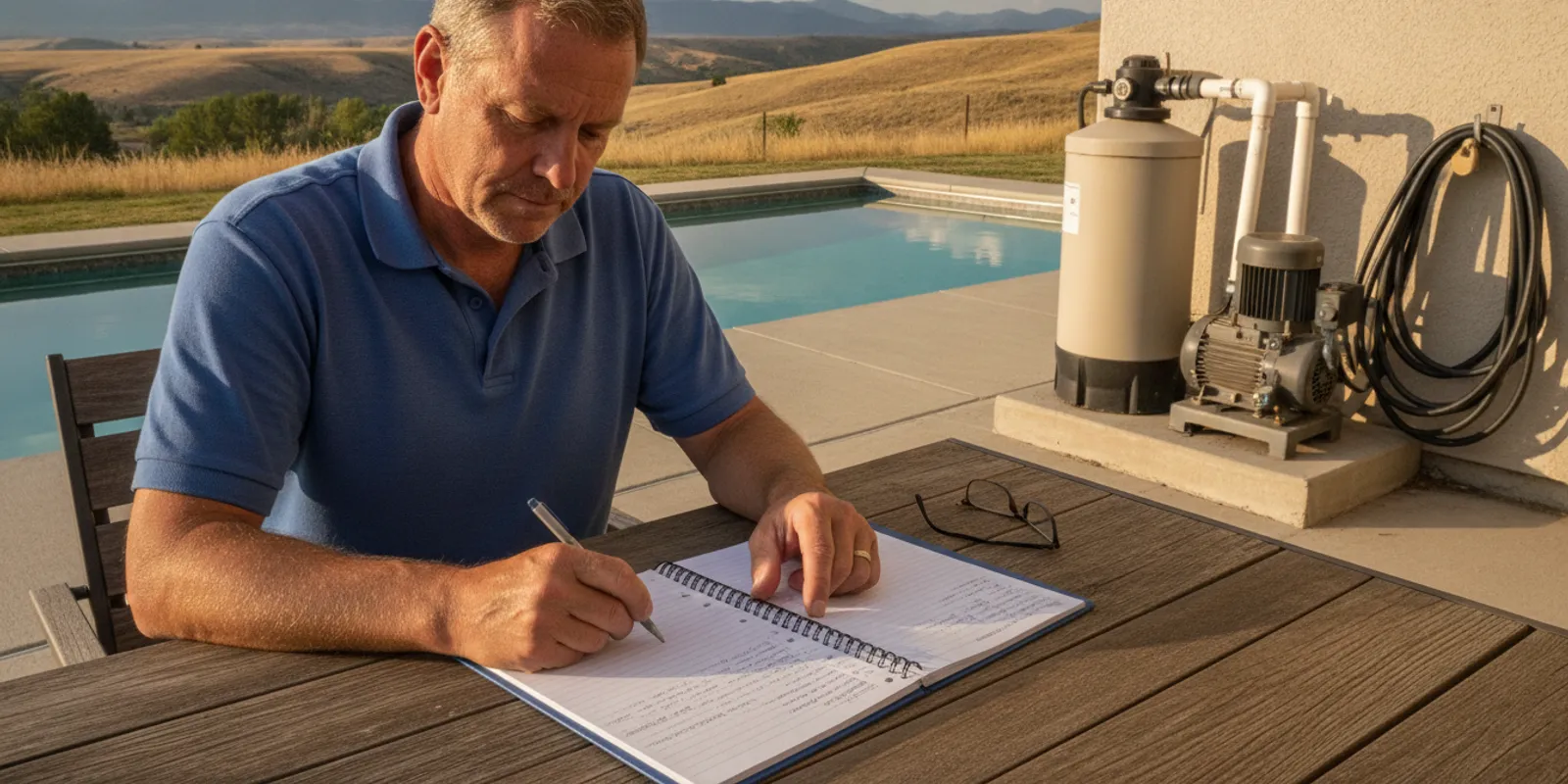
Keep a phone or notebook handy, but take photos only from a safe, dry position. Avoid leaning over wet equipment or moving objects to improve a view. Write down the date, approximate outdoor temperature, whether the cover was on, and whether the spa was in use. A clear record is more useful than a quick diagnosis based on one observation.
How can you assess the heater?
Compare the displayed water temperature with the temperature you expect, allowing for the spa’s normal heating cycle. A spa that heats slowly, stops short of its set point, or displays a heater-related code needs further diagnosis. Note whether the problem occurs after a long period without use or persists during normal operation; one observation may not establish the cause.
Look for simple clues without opening the cabinet. Is the control panel showing a warning? Does the spa appear to have power? You may observe a breaker’s position, but do not repeatedly reset one that trips again. Repeated tripping can signal an electrical fault. Stop using the spa and request qualified service rather than testing it by repeatedly restoring power.
Denver’s changing outdoor temperatures can make heat loss more noticeable. A cold snap may expose a developing heating or circulation issue, but weather alone does not prove a heater has failed. Note the conditions, how long the spa was uncovered, and whether the temperature display changed steadily or abruptly. This context can help separate an operating pattern from a symptom that needs inspection.
Do not use a thermometer reading taken at a different location as proof that a sensor is wrong. Water temperature can vary by location and timing, and the control system has its own operating procedures. Record the reading shown on the spa and any code exactly. Avoid changing multiple settings at once, since that makes it harder to explain what happened.
What does circulation tell you?
Circulation moves water through the spa’s filtration and heating system. Observe whether water moves through the usual returns and whether the pump starts and runs as expected. Weak or absent flow, repeated pump cycling, unusual rattling, or a new hum can indicate a circulation concern, but these signs do not identify a single failed part.
Check the water level against the spa’s normal operating mark. If it is too low, the system may not circulate properly. Look at a dirty or displaced filter only if the manufacturer’s instructions describe a safe, routine user procedure; turn the spa off before handling removable components. Do not operate it with the filter removed unless the manual explicitly allows that step.
Make a note of when the flow changes. Does it happen immediately after start-up, only on a particular setting, or after the spa has been running for a while? Describe what you see rather than labeling the pump or plumbing as defective. For service context, review Neptune Pools’ spa services and its information about equipment repairs and servicing.
A simple observation log can distinguish a consistent problem from one that appears under particular conditions. For example, write “flow looked weaker after the pump had run for ten minutes” rather than “the pump is failing.” If the sound or flow changes with a setting, record which setting and whether the change repeats. Do not keep running the system to reproduce a worrying noise.
Which control symptoms deserve attention?
Controls connect user settings with the spa’s operating components. A blank display, buttons that do not respond, settings that revert, or an error message can be useful diagnostic evidence. Photograph the display, including the exact code, if it is safe to do so. Consult the manual for the code’s meaning, but do not assume a label identifies the part that needs replacement.
Check whether the issue is limited to one function. For example, note if the temperature setting responds while the jet setting does not. Avoid repeated power cycling or changing several settings at once: that may erase a useful pattern or make the event harder to describe.
If a control fault occurs with electrical warning signs, water intrusion, or a breaker that trips, stop operating the unit. Do not open the control box. A qualified technician can assess electrical and control components using appropriate procedures. Keep the equipment area clear for a service visit, but do not move or disconnect components yourself.
How should you look for visible leaks?
Look around the spa cabinet, equipment pad, and nearby floor for fresh moisture, mineral deposits, or a change in water level. Splashing and weather can leave misleading marks, so note whether the area becomes wet again after it has dried. Do not crawl beneath an unsupported spa or remove panels to search for a hidden leak.
Record the location and timing. A photo from a safe position can show whether water appears near an accessible connection, beneath the cabinet, or along the shell. Note whether the leak seems to occur only while the pump is running. These observations describe circumstances without claiming a cause. If water is approaching electrical equipment, avoid contact and seek professional help; shut down only using a safe, accessible control.
Water on the ground does not always establish a leak. Consider whether the spa was recently used, whether rain or snowmelt could account for moisture, and whether the water level changes over time. Do not deliberately run the spa longer to test a suspected leak. If water loss is rapid or the wet area is near electrical components, treat it as a reason to stop use and ask for guidance.
What should you document for a service visit?
A concise record can make a service conversation more productive. Include the spa make and model if known, when you first noticed the problem, the exact error code, the settings, and any sounds or water movement. Share whether the symptom is constant or intermittent and what changed shortly before it began, such as a temperature drop or a period of non-use.
| Area | Safe observation | Information to record | Stop-use warning |
|---|---|---|---|
| Heating | Compare display and expected temperature; note warnings. | Displayed temperature, set point, time, and weather. | Repeated breaker trip, burning odor, or electrical warning. |
| Circulation | Observe normal return flow and pump behavior. | Flow changes, sounds, and when they occur. | No circulation or water near electrical parts. |
| Controls | Check whether display and buttons respond normally. | Exact code and which controls fail. | Exposed wiring, water intrusion, or power fault. |
| Visible moisture | Look for fresh moisture from accessible areas. | Location, timing, water level, and safe photos. | Leak near electrical equipment or rapid water loss. |
Keep the observations factual. “The pump made a new grinding sound for about two minutes after start-up” is more useful than “the pump is broken.” A service provider may need to test the system before identifying a failed component or recommending work. Share the log even if some details are uncertain; label estimates as estimates rather than presenting them as measurements.
Before calling, gather the spa’s brand and model information if it is readily available, the approximate age if known, and any recent service paperwork. Do not search for a model plate in a place that requires removing panels or reaching behind electrical parts. A photo of the accessible control screen and the area where moisture appears may be enough to explain the concern.
How do Denver weather changes affect inspection timing?
Colorado weather can shift quickly, and outdoor spas experience changes in ambient temperature and exposure. Pay attention when a warm period is followed by a cold snap, particularly if the spa has shown a heating, circulation, or control symptom. Do not assume every temperature change requires a repair; use it as a prompt to observe and document operation.
If you will not use the spa for a period, follow the manufacturer’s operating and freeze-protection instructions. Winter procedures differ by spa and installation, so do not rely on generic advice to drain a unit or leave it running. If the system is not maintaining temperature or circulation in cold conditions, contact a qualified service provider promptly to discuss the specific equipment and safe next steps.
Wind, snow, and rapid temperature changes can affect the conditions around an outdoor spa. Keep observations tied to what you can see: when the cover was in place, whether the display showed a warning, and whether circulation appeared normal. Do not alter freeze settings based on a general article; use the manual and advice that applies to your equipment. Owners who also manage pools can review Neptune Pools’ pool cleaning and maintenance information and the Denver Metro service areas page.
When should you arrange professional spa equipment repair in Denver?
Arrange service when a symptom persists, returns after a safe basic check, or affects heating, circulation, or reliable control. Stop using the spa for electrical hazards, repeated breaker trips, a burning smell, or water near electrical components. Do not attempt work that requires electrical testing, sealed equipment access, or specialized tools.
When you contact a provider, describe the symptom and share your notes or photos. Ask what inspection or diagnosis is appropriate, what the next steps might be, and whether the spa should remain off while you wait. Neptune Pools provides spa service information; you can also contact the team about your spa concern. For related reading, see the guide to spa pump repair symptoms and service options.
A useful comparison is not “repair versus no repair” based on a guess. It is the difference between a symptom that can be safely observed and a condition that calls for prompt professional assessment. A slow temperature change with normal circulation and no warning signs is different from a breaker that trips repeatedly or water reaching electrical equipment. In either case, clear notes help the provider recommend a sensible next step.
Ask what the visit will assess, whether the spa should stay off, and what information is needed before a technician arrives. A diagnosis may involve more than one component, so avoid agreeing to replace a part solely because one display code or sound seems familiar. Neptune Pools serves the Denver Metro area; its company information and service area details provide additional context.
Book spa service for an equipment concern.
Frequently asked questions
Can I inspect spa equipment without opening the cabinet?
Yes. You can observe the display, water flow, pump sounds, water level, and visible moisture from accessible areas. Leave wiring, internal components, and unsafe access to a qualified technician.
Should I keep running a spa that is not heating?
It depends on the symptoms and conditions. Follow the manufacturer’s guidance if circulation appears normal and there are no electrical warnings while arranging diagnosis. If a breaker trips, wiring is exposed, water is near electrical components, or the system is not circulating in cold weather, stop using it and seek professional advice.
Does an error code tell me which part to replace?
Not necessarily. A code points to a condition the system has detected, but diagnosis may require checking connected components. Record the exact code and share it with the service provider rather than replacing parts based on the code alone.
What should I provide when booking a spa inspection?
Share the make and model if known, symptoms, when they began, any exact error code, and what you observed about heating, circulation, controls, or leaks. Photos taken from a safe position can help explain the problem.
Get a clear next step for a spa concern
Contact Neptune Pools to discuss spa equipment service.
Careful observations help you describe what is happening without taking risks or guessing at a repair. For spa equipment repair in Denver, use your notes to start a clear service conversation.
Related Blogs