Pool Cover Types: A Denver Homeowners Guide
In Denver, choosing a cover is not just a matter of keeping leaves out. Snow, wind, intense UV exposure, rapid temperature changes, and a pool season that typically runs from April through October all affect how well a cover fits your routine.
A pool cover can limit debris, evaporation, sunlight, and heat loss. The right option depends on whether your priority is daily convenience, seasonal protection, easier maintenance, or a properly engineered safety barrier. No cover replaces supervision, secure barriers, water testing, equipment care, or professional winterization.
Understanding what each cover can and cannot do makes the decision clearer. Especially when a Denver winter may require protection for the pool surface as well as its plumbing and equipment. The first step is separating the cover's maintenance role from its safety role.
Contact Neptune Pools for cover and seasonal pool service.
What does a pool cover actually do?
A pool cover is not just a lid for keeping leaves out. The right cover can limit debris, reduce exposure to sun and weather, and make seasonal pool care more manageable. Its value depends on the cover's design, how well it fits the pool, and whether the pool is open for regular use or being prepared for winter.
Contact Neptune Pools for cover and seasonal pool service.
Debris control and reduced maintenance
A covered pool is less exposed to leaves, branches, dust, and other debris. That can reduce the amount of skimming and cleanup needed, particularly during windy weather or when the pool is closed. It does not eliminate maintenance. Debris can collect on the cover, fine material may pass through some porous covers, and the water still needs testing and treatment when the pool is in use. Routine care can include skimming, brushing, vacuuming, filter and skimmer-basket checks, water-chemistry testing, and equipment inspection. A cover supports those tasks; it does not replace them. See Neptune's guidance on pool cleaning and maintenance in Denver for the broader care plan.
Evaporation, sunlight, and heat management
Some covers help slow evaporation and limit the exchange between the water and outdoor air. Solar or bubble-style covers are intended mainly for heat retention and evaporation control, while other cover designs may block more sunlight and contaminants. Limiting sunlight can also reduce the conditions that contribute to water-care demands, but a cover is not a substitute for checking water chemistry. Colorado's intense UV exposure, rapid temperature changes, and high-altitude conditions make regular testing and adjustment especially important for Denver-area pools.
Seasonal and winter protection
During the approximately April-through-October active pool season, a cover can help protect the water between uses. For winter, the cover is one part of a larger closing plan. The pool may also need water-level adjustment, winter chemical treatment, equipment shutdown, line blow-out, and an inspection of winter risks. A cover protects the pool surface, but it does not protect plumbing or equipment from freezing by itself. Denver's rapid temperature changes make proper winterization important, so homeowners should not treat cover installation as the entire closing procedure. For more detail, read how to winterize a pool in Denver.
Important safety limits
Not every pool cover is a safety cover. A lightweight debris or solar cover is not designed to support a person, and even a safety-rated cover must be correctly selected, installed, secured, and maintained. Covers do not replace active supervision, secure access, or a compliant barrier around the pool. Before choosing one, consider the pool's shape, anchoring, drainage, snow and wind exposure, and how the pool will be used throughout the year.
Which pool cover types should Denver homeowners compare?
The right pool cover depends on what you need it to do. A cover for daily heat retention is not automatically a winter cover, and a basic debris cover is not a safety barrier. For Denver homeowners, compare the cover's intended use, pool shape, anchor points, drainage. Exposure to snow and wind, and whether the pool stays open seasonally or closes for winter. Those factors matter as much as the material itself.
| Cover type | Best use | Strengths | Limitations and Denver fit |
|---|---|---|---|
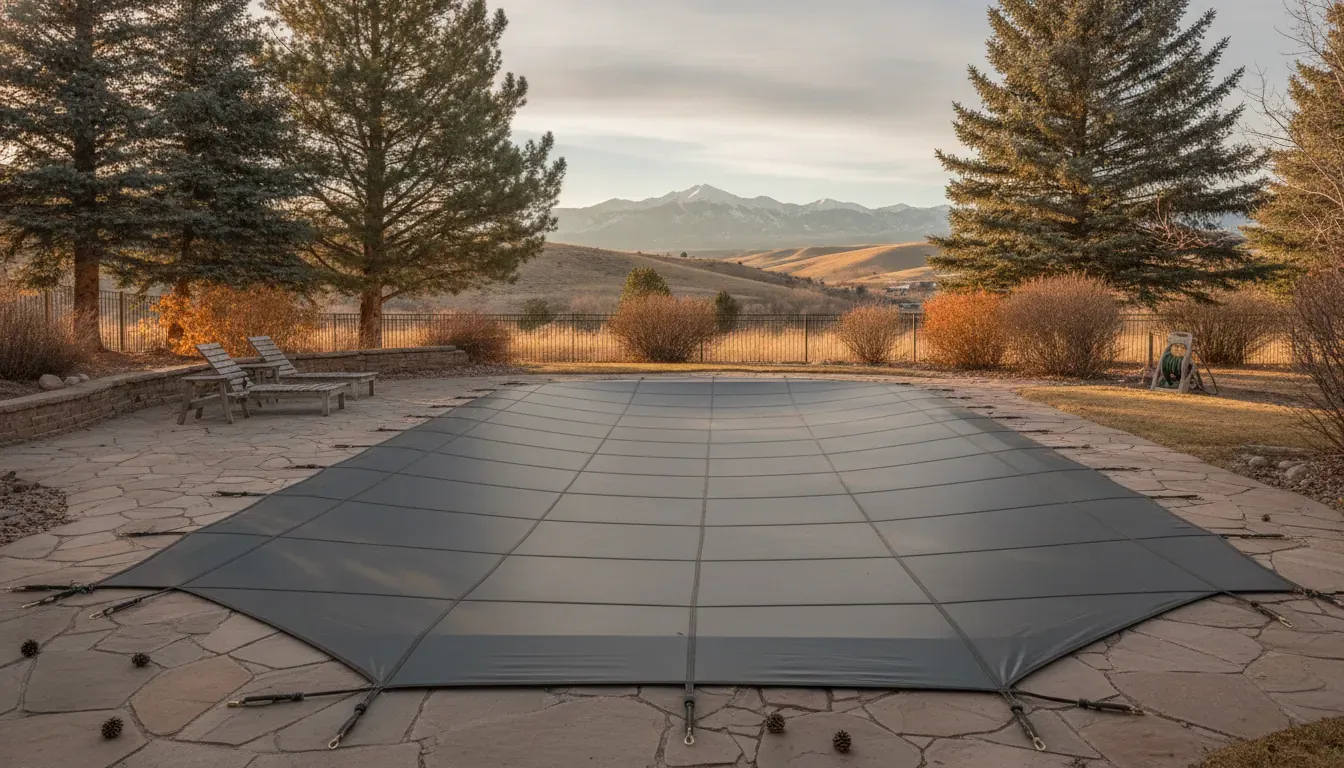
| Solid safety | Seasonal closure and a designed safety barrier | Impermeable material blocks sunlight and contaminants. It can provide a strong barrier when properly engineered, anchored, and maintained. | Rain and snowmelt collect on the surface, so drainage and a cover pump require attention. Solid material is also heavier to handle than mesh. |
| Mesh safety | Winter closing where drainage is a priority | Tensioned anchors secure the cover to the pool deck. Porous mesh lets rain and snowmelt drain through while helping control debris. | Fine silt can pass through, which may mean more spring cleanup. It is a safety cover only when the complete system is designed and installed for that purpose. |
| Automatic | Frequent daily opening and closing | A motor and integrated track make routine use convenient. When closed, the cover can help conserve heat and reduce chemical loss. | Tracks and mechanisms need maintenance, and the system must match the pool's shape and deck. It should not be assumed to replace a winter cover in heavy snow conditions. |
| Solar or thermal | Seasonal heat retention and evaporation control | Bubble cells help trap solar energy and reduce exposure of the water surface when the pool is covered. | These covers are not anchored safety barriers and can blow off in wind. They are a poor choice when the primary goal is child protection or winter closure. |
| Winter | Protecting a closed pool through Colorado's off-season | Selected and installed as part of a broader closing plan, it helps limit winter exposure while the circulation system is shut down. | The cover cannot compensate for incomplete winterization. Water-level adjustment, equipment shutdown, line protection, and inspection still matter when freeze damage is a concern. |
| Basic debris | Keeping leaves and larger debris out during short periods | Simple to use for routine debris control when the pool remains accessible and supervised. | It is not a tensioned safety barrier and should not be presented as one. It also may not withstand Denver wind, snow, or a full winter closing without additional planning. |
Denver's rapid temperature changes and freeze risk make seasonal planning especially important. Neptune's closing service includes water-level adjustment, winter chemical treatment, equipment shutdown, line blow-out, winter-cover installation, and a winter risk inspection. For ongoing upkeep, pool cleaning and maintenance plans can help keep the cover, water, and equipment from being treated as separate problems. A cover should support the plan, not substitute for it.
How should Colorado weather change your pool cover choice?
Denver's weather makes the cover decision more than a question of keeping leaves out. A pool cover has to fit the way you use the pool. The months it will remain open, and the conditions it will face when the water is closed for winter. Snow, wind, sharp temperature changes, intense ultraviolet exposure, and high-altitude water-care demands all affect the right combination of cover, anchoring, drainage, and service.
Plan for winter closure, not just winter weather
Neptune's active pool season generally runs from April through October, so many Denver homeowners need a cover that can remain secure during a long seasonal closure. A winter cover should be selected for the pool's shape, deck and anchor layout, expected snow and wind exposure, and how water will drain from its surface. A mesh design may allow rain and snowmelt to pass through. While a solid design may provide a stronger barrier against sunlight and contaminants but require a way to remove accumulated water. Those tradeoffs should be evaluated before installation, not after the first storm.
Most importantly, a cover alone does not prevent freeze damage. It protects the pool surface from exposure, but plumbing, pumps, filters, heaters, and other equipment need their own winter plan. Denver's rapid temperature changes make proper winterization important. Depending on the system, closing service may include adjusting the water level, treating the water. Shutting down equipment, blowing out lines, installing the winter cover, and inspecting the pool for seasonal risks. Homeowners comparing options should coordinate the cover with that process rather than treating it as a substitute for it.
Learn more about pool freeze protection in Denver.
Account for wind, sun, and the next opening
Wind exposure matters both during storms and during the cover's everyday use. A solar or thermal cover can help with heat retention and evaporation control during the swimming season. But it is not a safety barrier and may move in wind if it is not anchored for that purpose. A winter or safety cover needs a properly fitted installation and secure hardware suited to the pool and surrounding deck. If the pool has unusual geometry, limited deck space, damaged anchors, or frequent drifting snow, professional assessment is worthwhile.
Colorado's intense UV exposure also makes routine inspection important. Check the cover, seams, anchors, drainage, and surrounding barriers before putting the pool into service. When spring arrives, the cover choice can affect the amount of sediment, debris, and water that must be managed before circulation restarts and chemistry is balanced. That is why the most useful choice is the one that matches both winter exposure and your ability to inspect, remove, clean, and store the cover safely.
Are pool covers a safety feature?
Sometimes, but the label matters. An engineered safety cover is designed to act as a secured barrier across the pool when it is correctly fitted, anchored, installed, and maintained. A solar bubble cover, winter cover, or lightweight debris tarp has a different job. It may limit leaves, sunlight, evaporation, or heat loss. But it should not be treated as a weight-bearing safety barrier or assumed to prevent a child or pet from entering the water.
For a cover to contribute to a safety plan, start with the specific cover system rather than its appearance. Confirm that it is intended for safety use and that the manufacturer's installation requirements match your pool. The pool shape, deck layout, anchor locations, cover tension, drainage, and hardware condition all matter. An improvised fit, missing anchor, torn material, loose strap, or damaged mechanism can change how the system performs. Do not use a cover with visible damage as a substitute for a professional assessment.
Safety covers are not a substitute for barriers
A secured cover should support other layers of protection, not replace them. Keep the pool area enclosed with appropriate barriers, secure gates and access points, and remove objects that could make climbing easier. The CDC recommends a four-sided fence at least four feet high that fully encloses a pool. It also notes that drowning can happen in seconds and is often silent. Children who know how to swim still need close and constant supervision around water. Read the CDC drowning prevention guidance for the broader safety measures that belong alongside a cover.
Use the cover only as directed. Keep people and pets off it unless the product is specifically engineered and approved for that use. Keep the cover fully secured when the pool is unattended, and do not leave gaps at the edge. If the cover is removed, store it so it cannot become an access hazard. Before seasonal use, inspect the fabric or panels, seams, anchors, springs, tracks, and surrounding deck. Wind, snow, freezing conditions, unusual pool geometry, or worn hardware are good reasons to have the installation reviewed.
In Denver, seasonal timing adds another consideration. A winter cover is part of a complete closing and winterization plan, not a standalone safety solution. Water level, equipment shutdown, freeze protection, and the condition of the cover system should be checked together before the pool is left unattended.
How do you maintain a pool cover in Denver?
Denver pool-cover maintenance follows the season. Snow, wind, intense sun, rapid temperature changes, and spring debris can all affect the cover and the equipment around it. A cover can reduce debris and exposure, but it does not replace water testing, equipment checks, secure barriers, or professional winterization. Use the following checks as a maintenance framework, and follow the cover manufacturer's instructions for your specific material and hardware.
- Complete a pre-season inspection. Before opening the pool for regular use, inspect the cover in good light. Look for torn material, stretched areas, frayed seams, damaged straps, loose anchors, displaced springs, and problems with the surrounding deck or track. For an automatic cover, check that the track is clear of obvious debris and stop if the cover binds, shifts, or makes unusual sounds. Do not force a mechanism or walk on a cover unless it is specifically designed, installed, and maintained as a safety cover. If winter conditions have left sediment or debris on the cover, arrange safe removal rather than dragging heavy loads across the material. A Colorado pool opening checklist can help coordinate the cover inspection with the broader spring opening.
- Monitor the cover during the active season. Neptune's active pool season generally runs from April through October, but Denver weather can change quickly. Remove leaves and loose debris using the method approved for your cover. Check the water level beneath or around the cover as appropriate for its design, and do not pump or drain water without confirming the manufacturer's requirements. Solid covers may require a cover pump for accumulated rainwater, while porous materials may be designed to drain through. Keep the cover folded, rolled, or stored only as directed, away from sharp edges and unnecessary UV exposure. A cover reduces maintenance demands, but routine skimming, water-chemistry testing, basket checks, and equipment inspection still matter. See Neptune's pool cleaning and maintenance in Denver for recurring care support.
- Inspect after wind or storms. After strong wind, hail, heavy rain, or an early snow, check the cover from the deck without entering the water or placing yourself on an unsupported surface. Look for shifted anchors, lifted edges, pooled water, fallen branches, punctures, and debris pressing against seams or hardware. Keep children and pets away while the cover is being assessed. Never use a pump, electrical equipment, or chemical product in wet conditions unless it is intended for that use and handled according to its instructions. If the cover has moved or the pool level has changed substantially, stop using it until a qualified professional confirms that the cover and anchoring system remain appropriate.
- Coordinate winter checks with closing and freeze protection. A winter cover protects the pool surface, not every pipe, pump, heater, or filter. Before sustained freezing weather, coordinate water-level adjustment, winter chemical treatment, equipment shutdown, line protection, cover installation, and the winter risk inspection. Neptune's professional pool closing and winterization in Denver service can handle that broader process. During winter, check the cover after major snow or wind events. But do not climb onto it or remove snow and ice in a way that could damage the material or anchors. For solid covers, remove surface water only as the system requires. For mesh covers, allow designed drainage and watch for excessive debris or sediment. If freeze risk affects exposed equipment, review Colorado pool equipment freeze protection rather than treating the cover as the solution.
Document unusual damage, inspections, and service visits with photos and notes. If seams, anchors, tracks, drainage, or equipment need attention, use pool equipment repairs and servicing instead of improvising a repair that could compromise the cover or pool system.
Which pool cover is right for your pool?
The right pool cover depends less on a single "best" product and more on how your pool is shaped, used, closed, and maintained. In Denver Metro, the decision also needs to account for wind, snow, rapid temperature changes, and the difference between protecting the water surface and protecting plumbing or equipment.
- Start with the pool shape and deck. Measure the pool accurately and note steps, attached spas, raised walls, unusual corners, ladders, and nearby obstructions. A cover must fit the actual pool and work with its anchoring points, drainage needs, and surrounding deck. Irregular geometry may require a professional assessment rather than a generic cover.
- Match the cover to how you use the pool. If the pool is opened and closed every day, convenience may make an automatic cover worth evaluating. Automatic systems use tracks and a motor, but the track system still needs maintenance. If you mainly want to limit evaporation, sunlight, and heat loss during the swim season, a solar or thermal cover may fit that narrower goal. It is not a safety barrier and can be displaced by wind.
- Define the safety objective precisely. If the priority is reducing access risk around children or pets, compare a cover specifically designed, rated, installed, and maintained as a safety cover. A leaf tarp or ordinary solar cover is not equivalent. A cover also does not replace a four-sided barrier, compliant gates, close supervision, or local safety requirements.
- Plan for winter closure. Neptune's active pool season is approximately April through October, so many Denver homeowners need a cover that works through a real winter closing. Ask how the material handles snow, wind, rain or snowmelt, drainage, anchors, and spring removal. Mesh and solid safety covers have different debris and water-management tradeoffs. The cover is only one part of winterization, which also includes water-level decisions, equipment shutdown, line protection, and inspection.
- Consider exposure and access. A windy, open yard needs dependable anchoring and a plan for storm checks. Heavy snow or standing water can change which cover system is practical. Keep pump lids, filters, heaters, and other service access in mind. A cover should not make necessary equipment inspection or freeze protection harder.
- Be honest about maintenance willingness. Every cover requires inspection, cleaning, hardware checks, and attention after severe weather. Solid covers may require removal of accumulated water. Mesh can allow fine sediment through. Automatic covers need track and mechanism care. If you do not want to manage seasonal inspections, water care, and opening or closing tasks yourself, build professional service into the decision.
Use this checklist to narrow the options, then confirm the final choice against the pool's measurements, anchoring, drainage, safety requirements, and winter plan. A cover can reduce debris and exposure, but it cannot correct damaged equipment, poor water chemistry, or inadequate freeze protection.
Get professional pool closing and winterization in Denver.
FAQs: Pool Cover Questions
What is the best pool cover to get?
The best pool cover depends on what you need it to do. For a Denver pool closed through winter, compare a properly fitted safety cover with the pool's shape, deck anchors, drainage, and expected snow and wind exposure in mind. A solid cover can block sunlight and contaminants, while a mesh safety cover allows rain and snowmelt to drain through, although fine silt may enter the pool. An automatic cover may be convenient for frequent opening and closing during the active season. But it should not automatically be treated as a winter cover in heavy snow. A solar cover is mainly for heat retention and evaporation control, not safety. Choose based on the pool's use, seasonal schedule, safety requirements, and your ability to maintain the cover.
Is it better to cover a pool or leave it open?
In most situations, covering a pool is more practical than leaving it open when the pool is not being used. A cover can help limit leaves and other debris, reduce exposure to sunlight, and support heat or evaporation management, depending on its design. In Colorado, a properly planned winter cover is part of a broader closing and winterization process. It does not replace water-level adjustment, winter chemical treatment, equipment shutdown, line blow-out, or inspection for freeze risks. During the swimming season, remove or secure the cover according to the manufacturer's instructions before anyone enters the pool. Never assume that an installed cover eliminates the need for supervision, barriers, or local safety requirements.
What is the cheapest way to cover a pool?
The lowest purchase price is not always the lowest overall cost. A basic debris cover may keep out leaves, but it may not provide a safety barrier, reliable drainage, or the anchoring needed for a seasonal Colorado closing. A solar cover can address evaporation and heat retention, but it is not anchored and does not provide safety protection. Before choosing a budget option, account for the pool's dimensions and shape, hardware, installation, storage, cleaning, and winter weather exposure. A qualified assessment can help prevent a poor fit or an unsuitable cover from creating additional maintenance or repair needs. Do not select a cover based on price alone when child safety or winter protection is a primary goal.
What are the negatives of a pool cover?
Every pool cover involves tradeoffs. Covers require regular inspection and cleaning, and some can be heavy or difficult to handle. Solid covers may need a pump to remove rainwater from the surface. Mesh covers allow drainage but can let fine silt into the pool. Automatic covers include tracks and motors that need maintenance, while solar covers can blow off in wind and provide no safety protection. A cover can also conceal water or hardware problems until the pool is opened. In Denver, rapid temperature changes and freeze risk make proper winterization especially important. Inspect the cover, anchors, seams, drainage, and surrounding barriers, and seek professional help when hardware is damaged or snow, wind, unusual geometry, or freeze conditions create uncertainty.
Get Help Choosing a Pool Cover in Denver
The right pool cover depends on more than the cover material. Your pool's shape, anchor layout, winter exposure, drainage needs, safety goals, and seasonal schedule all matter. Denver homeowners also need to separate surface protection from freeze protection for plumbing and equipment. A cover can reduce debris and exposure, but it does not replace water care, equipment checks, secure installation, barriers, or supervision.
Neptune Pools can help you evaluate the practical fit for your property, prepare for seasonal closing, and identify related maintenance or equipment needs. Bring questions about your current cover, unusual pool geometry, damaged hardware, wind or snow exposure, or spring opening concerns.
Contact Neptune Pools for pool-cover guidance and service help.
Related Blogs