Pool Water Feature Repair in Denver: Common Problems and Service Options
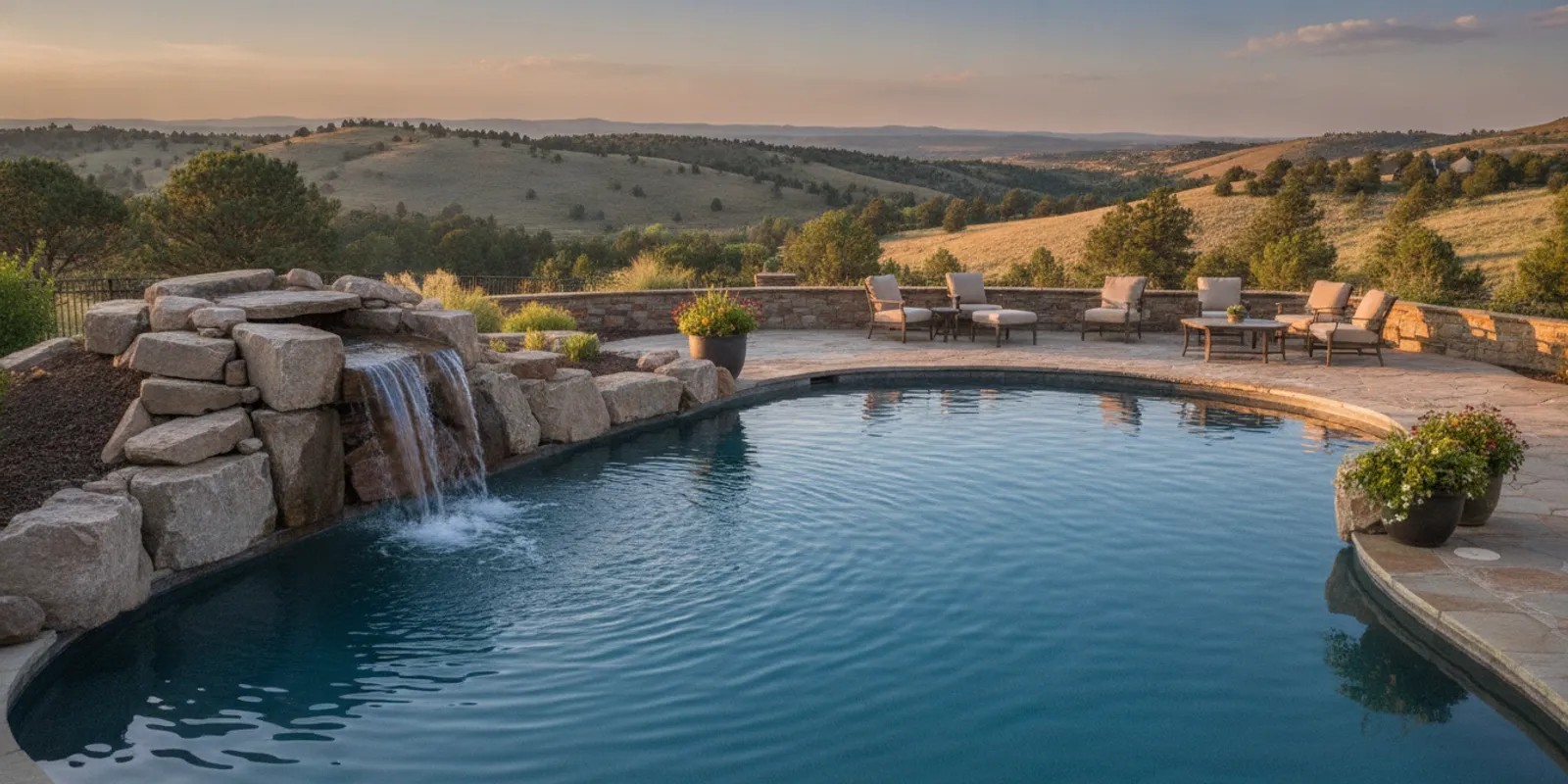
A pool waterfall or fountain adds movement and sound, but a change in flow, a leak, or a pump that will not start can turn it into a concern. Pool water feature repair begins with identifying what changed and which part of the system is responsible. For Denver homeowners, that means looking at the feature, its circulation equipment, and how the system is exposed to seasonal weather—not guessing at a repair from the symptom alone.
Ask Neptune Pools about a pool equipment inspection.
What counts as a pool water feature problem?
Waterfalls, sheer descents, deck jets, fountains, and other water features can use dedicated pumps and plumbing or share parts of the pool’s circulation system. The exact layout varies. A feature that suddenly runs weakly, unevenly, or not at all may have a problem with its water supply, pump, plumbing, control, or the feature itself. A leak can also come from a connection or basin rather than the visible waterfall.
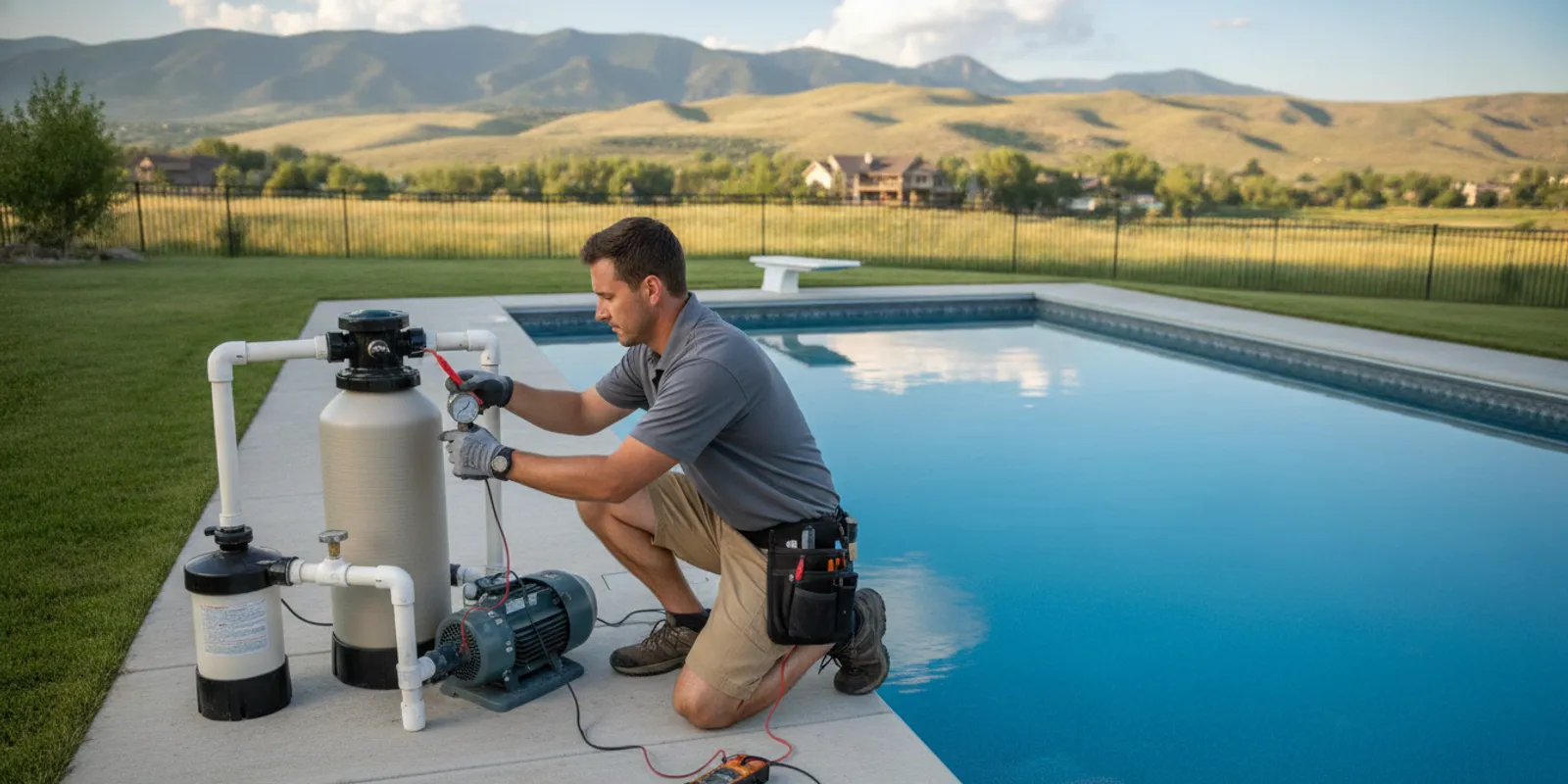
Start by noting what you can see, not by taking apart equipment. Record when the change began, whether it happens every time the feature runs, whether the pool’s other returns look normal, and whether water appears outside the pool or feature basin. Those details help a technician distinguish a feature-specific issue from a broader circulation problem. Neptune’s pool equipment repair and servicing page describes the appropriate service route for mechanical concerns.
Which symptoms can point to a repair?
A symptom is a useful clue, but it is not a confirmed diagnosis. Several components can produce similar signs, and repeated adjustment without finding the cause can make the problem harder to trace. Use the table to organize observations before requesting service.
| What you notice | Possible area to inspect | Useful observation |
|---|---|---|
| Flow is weaker than usual | Water supply, pump, valve position, filter or plumbing | Check whether other pool returns have also changed and note whether the feature flow varies. |
| Feature does not start | Control setting, power supply, pump or interlock | Note whether the pump makes a sound, whether a control shows an error, and whether other equipment runs. |
| Flow is uneven or sputtering | Air entering the line, inconsistent water supply, blockage or pump issue | Record when the sputtering begins and whether it stops or continues through the cycle. |
| Water collects near the feature | Feature basin, plumbing connection, splash-out or drainage | Observe where water appears and whether the area stays wet when the feature is off. |
| Unusual sound or vibration | Pump, motor, mounting or plumbing | Describe the sound and whether it changes as the feature starts or runs. |
The possibilities listed are starting points, not a do-it-yourself fault list. A filter or valve should not be blamed just because the feature has low flow; the system’s design and current operating conditions matter. If several features or pool returns change at once, tell the service provider. That pattern can point beyond the visible feature.
Why can a waterfall lose flow?
A waterfall depends on a steady supply of water and a route that moves it to the spillway. Low or irregular flow can relate to a pump or control problem, a valve setting, a restriction, air in the circulation path, or a feature-specific issue. The right test depends on whether the waterfall has dedicated equipment or shares circulation with other parts of the pool.
Look for a change in the shape of the falling sheet or stream. Does the water fall evenly across the spillway, break into narrow streams, or stop at one side? Has the pool’s normal circulation changed too? A sudden change after equipment was adjusted is worth mentioning, but do not assume the adjustment is the only cause. Mineral deposits, debris, wear, and other conditions may also affect a feature; a technician needs to assess the actual construction and equipment before recommending a cleaning or repair.
Do not remove a pump cover, open electrical enclosures, or put a hand or tool into a running mechanism to investigate. If you see exposed wiring, smell something burning, hear severe grinding, or see water reaching electrical equipment, stop using the feature and keep clear. Contact a qualified pool service professional. For broader recurring care, compare repair needs with a pool cleaning and maintenance plan rather than treating each symptom in isolation.
What should you check when a fountain stops working?
For a fountain or deck jet, first note whether the issue affects one outlet or all of them. One weak jet may point to a local obstruction or line issue, while several outlets changing together could involve shared equipment or controls. This is a distinction to report—not proof of a particular failure.
- Confirm the feature is meant to be on and note any control message or schedule setting.
- From a safe distance, observe whether the feature pump appears to start and whether the sound is different from normal.
- Look for visible debris or an obstruction at an accessible outlet, but do not force tools into a nozzle or disassemble a fitting.
- Check whether the pool water level is noticeably different from its usual operating level, and mention that when you call.
- Take a brief video of the symptom if it is intermittent; include the control display only if it can be recorded safely.
Do not repeatedly reset a breaker or cycle power to make equipment run. If a breaker trips, equipment is hot, or a control shows an electrical fault, leave the system off and seek professional help. A technician can determine whether the cause is in the control, pump, plumbing, or feature outlet and whether further testing is needed.
Could the problem be a leak?
Water around a waterfall or fountain does not automatically mean a pipe has failed. Splash-out, wind, an overflowing or poorly draining basin, and a plumbing leak can all leave a wet area. Pay attention to where and when the water appears. If the area becomes wet only while the feature runs, say so. If it remains wet with the feature off, that observation is also useful, but it still does not identify the source by itself.
Keep a simple log of pool water level and recent operation if you suspect water loss. Weather, pool use, and normal splash-out can affect what you see, so avoid drawing a firm conclusion from one observation. A controlled assessment is more useful than sealing a visible joint or adding a product without knowing the leak location. If the pool is losing water or the surrounding surface is changing, arrange a professional evaluation before operating the feature for extended periods.
Water features can involve more than a pump: the hydraulic route, basin, filtration, and related systems may all matter. A municipal fountain renovation proposal, for example, describes hydraulic, structural, filtration, and chemical-system design and engineering as parts of a project’s scope (Winter Springs fountain renovation proposal). That is not a diagnosis of a residential pool, but it illustrates why the visible outlet is not always the whole system.
When is repair better than replacement?
There is no single rule that says a water feature should always be repaired or replaced. The decision depends on the failed component, its condition, compatibility with the rest of the system, access to the work area, and whether the feature still suits the pool. A diagnosis and a clearly scoped estimate are more useful than replacing parts based on a guess.
| Option | When it may make sense | What to clarify first |
|---|---|---|
| Repair a component | The issue is localized and the existing feature and related equipment remain serviceable. | Which part failed, what caused it, and whether the repair addresses that cause. |
| Replace equipment | A pump, control, or other component is not practical to repair or cannot reliably serve the system. | Compatibility, required changes to plumbing or controls, and what is included in installation. |
| Rework the feature system | The problem involves multiple areas, recurring failures, or access/layout limitations. | Whether the proposal covers diagnosis, plumbing, structure, controls, and any finish restoration that applies. |
| Leave the feature off temporarily | Continued operation may worsen a leak, noise, or suspected electrical issue while awaiting evaluation. | Whether other pool circulation can safely continue and what shutdown steps are appropriate for this system. |
Ask for the observed failure, recommended work, and any exclusions to be written down. If the issue is intermittent, find out whether the estimate includes testing under the conditions that produce it. Also ask whether the repair could affect the pool’s normal circulation or automation. These questions make it easier to compare options without assuming that the most extensive proposal is automatically necessary—or that the lowest initial repair will solve a recurring problem.
What may a professional inspection involve?
The inspection should begin with the feature’s actual operating pattern and equipment layout, not an assumption based only on its appearance. Depending on the system, a technician may review the pump and control, observe the feature while it is running if it is safe to do so, and compare its flow with the pool’s other circulation points. If the symptom is intermittent, sharing a recording or describing when it occurs can help reproduce the condition.
When water loss is part of the concern, the technician may need to distinguish splash-out or drainage from a plumbing or basin issue. Access to buried lines, concealed fittings, and built-in structures can affect how much evaluation is needed. Ask what has been confirmed and what remains uncertain before authorizing additional work. If the initial check does not locate the cause, ask what the next diagnostic step is and whether it requires a separate visit or work authorization.
A useful estimate identifies the specific repair being proposed, what parts or labor it includes, and whether related work—such as access, plumbing changes, controls, or finish repair—is excluded. It should also state whether the recommendation is to repair one component or replace a larger part of the system. This level of detail helps you understand what the proposal is intended to resolve and what it does not promise to address.
What does Denver weather change about water feature service?
Denver-area pools face a seasonal operating cycle, and exposed plumbing or feature equipment may be more vulnerable to cold weather than protected components. Do not apply one winter shutdown or restart procedure to every waterfall and fountain. The correct approach depends on the feature’s design, location, manufacturer directions, and the pool’s overall winterization plan. If a feature was shut down for the season, have its condition and operating instructions checked before restarting it.
After a cold snap, look for newly visible cracks, loose fittings, unexpected water loss, or a change in flow. Do not run a feature simply to see whether a suspected frozen line will clear. Stop and ask for service if you suspect freeze damage or see a leak. Neptune offers pool closing and winterization service in Denver; owners should discuss water features as part of the pool’s specific seasonal plan, rather than assuming they are covered by a generic checklist.
For local scheduling or to confirm whether service is available in your area, check Neptune’s Denver Metro service areas. Homeowners and property managers with shared-use pools can also find the company’s HOA pool service information when the feature is part of a community pool.
What should you prepare before contacting a pool technician?
A concise description helps a service provider understand the issue and plan an inspection. You do not need to identify the failed part. Gather the following details:
- Feature type and where it sits in relation to the pool.
- What changed, when you first noticed it, and whether the problem is constant or intermittent.
- Whether normal pool returns and other equipment appear to be operating as usual.
- Any visible wet areas, water-level changes, unusual noise, error message, or recent service or adjustment.
- Whether the feature has been shut down or winterized and whether the problem appeared after a weather change.
Photographs of the equipment labels and a short video can help, but never remove a safety cover or enter an equipment area to get them. If you need an inspection or repair advice, use the pool service options page or contact Neptune directly. A technician can inspect the system and explain what further testing or work is appropriate.
Contact Neptune Pools to discuss your water feature repair.
Frequently asked questions
Can I keep using the pool if the waterfall is not working?
It depends on how the feature is connected to the pool system and what caused it to stop. If the pool’s regular circulation appears normal and there is no leak, electrical concern, or unusual equipment noise, the issue may be limited to the feature. Do not assume that is the case; turn off the feature and seek advice if anything seems unsafe or the pool circulation has changed.
Why does my waterfall run sometimes but not others?
An intermittent symptom can relate to a control setting, pump, connection, or another condition that changes during operation. Note the time, duration, control display, and whether other equipment changes at the same time. A video can help document it, but intermittent behavior still needs proper diagnosis.
Is water around a fountain proof of a plumbing leak?
No. Splash-out, drainage, and a leak are different possibilities. Note whether the wet area appears only while the feature runs and whether it persists after the feature is off. A professional evaluation is the way to determine the source before you attempt a repair.
Should I turn off the feature before service?
If there is a suspected leak, severe noise, exposed wiring, a tripped breaker, or another safety concern, stop using the feature and keep clear of the equipment. Otherwise, describe the symptom and ask the service provider whether the feature should remain off while you wait. The appropriate step depends on how your pool system is configured.
A clear description of the symptoms, safe observations, and recent weather or service history gives a technician a better starting point. When a waterfall or fountain changes, avoid guessing at parts; have the feature and its connected equipment assessed before choosing a repair.
Related Blogs