Pool Light Replacement: Options, Safety, and When to Call a Pro
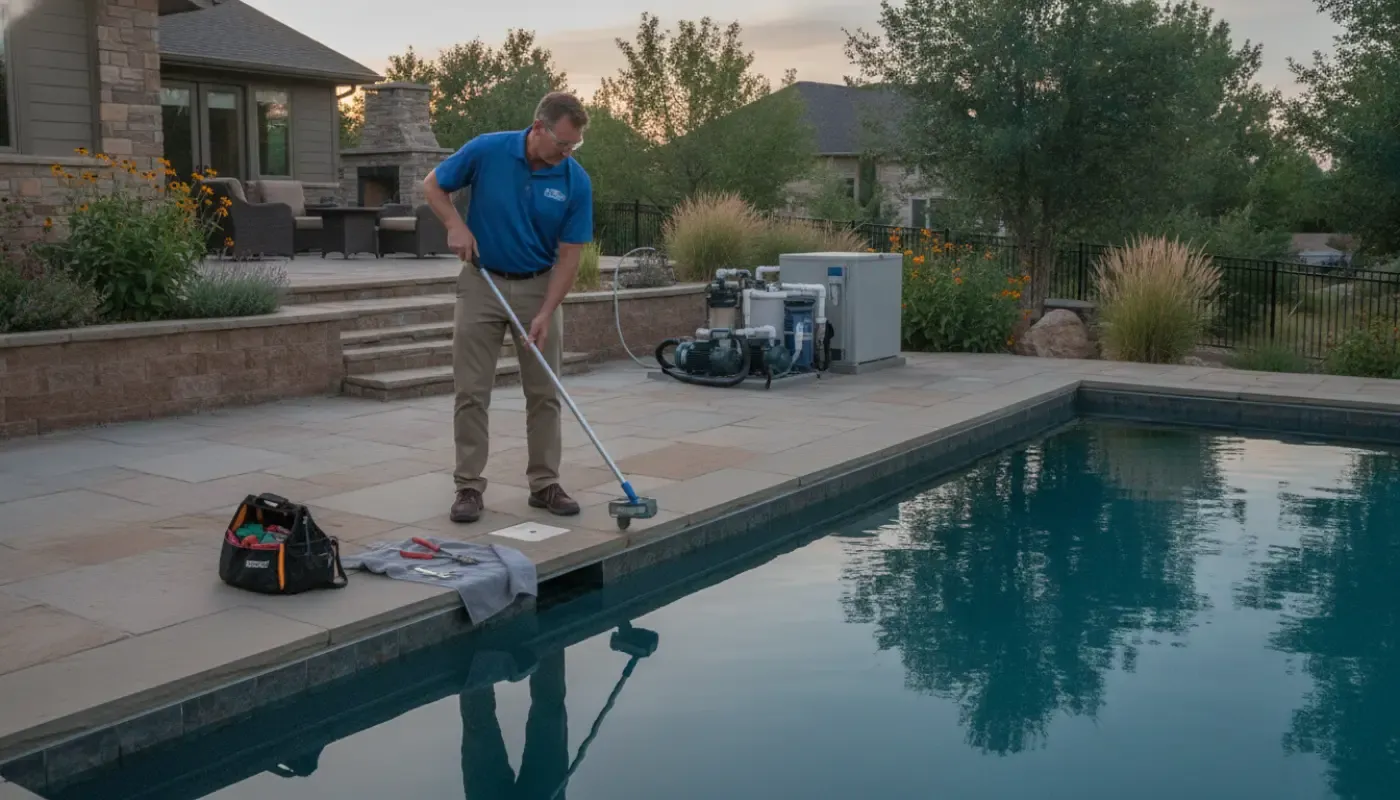
A pool light that has gone dark may need only a compatible bulb, or it may need a sealed fixture, cord, niche inspection, or a different lighting system. Pool light replacement is not the same project in every pool. The safest choice depends on the light type, voltage, housing condition, and what caused the original failure. In a Denver pool, winter moisture, freeze-thaw exposure, hard water, and aging seals can make a careful diagnosis more important than choosing the brightest bulb.
Schedule a pool equipment inspection with Neptune Pools before replacing an underwater light.
Pool light replacement starts with the right diagnosis
Pool light replacement means restoring an underwater light by changing a bulb, replacing a sealed light assembly, replacing a nicheless fixture, or correcting the supporting electrical connection. The visible symptom, such as a dark light or flicker, does not identify the failed part by itself. A qualified technician checks the fixture, gasket, cord, transformer when present, junction box, breaker, and ground-fault protection before recommending a part.
Start by documenting the symptom without entering the pool or opening the light. Note whether the light is completely dark, flickers, changes color, trips a breaker, shows moisture behind the lens, or works only when another switch is used. Take a photo of the face ring and any readable model information from the dry deck. These details help match the replacement without guessing.
What are the main pool light replacement options?
The best pool light replacement option depends on whether the existing equipment can be safely resealed and whether the new light matches the niche, voltage, cord length, controls, and transformer. A bulb-only change can preserve a serviceable housing, while a complete fixture or nicheless replacement may be safer when seals, lenses, or wiring are deteriorated.
| Replacement option | When it may fit | Important checks |
|---|---|---|
| Compatible bulb | The housing, lens, cord, and gasket are in good condition. | Bulb type, wattage, base, voltage, and gasket compatibility. |
| LED retrofit bulb | A sound existing housing can accept a compatible LED replacement. | Voltage, dimensions, controls, color mode, heat management, and seal. |
| Complete light fixture | The lens, housing, cord, or seal is cracked, corroded, or repeatedly leaking. | Niche fit, cord length, voltage, junction box, bonding, and GFCI protection. |
| Nicheless LED fixture | A compatible nicheless system is appropriate for the pool shell and installation layout. | Manufacturer requirements, wall thickness, cord route, transformer, and controls. |
| Low-voltage lighting system | The pool is designed or approved for a properly matched low-voltage system. | Transformer rating, listed components, bonding, grounding, and local requirements. |
Bulb-only replacement
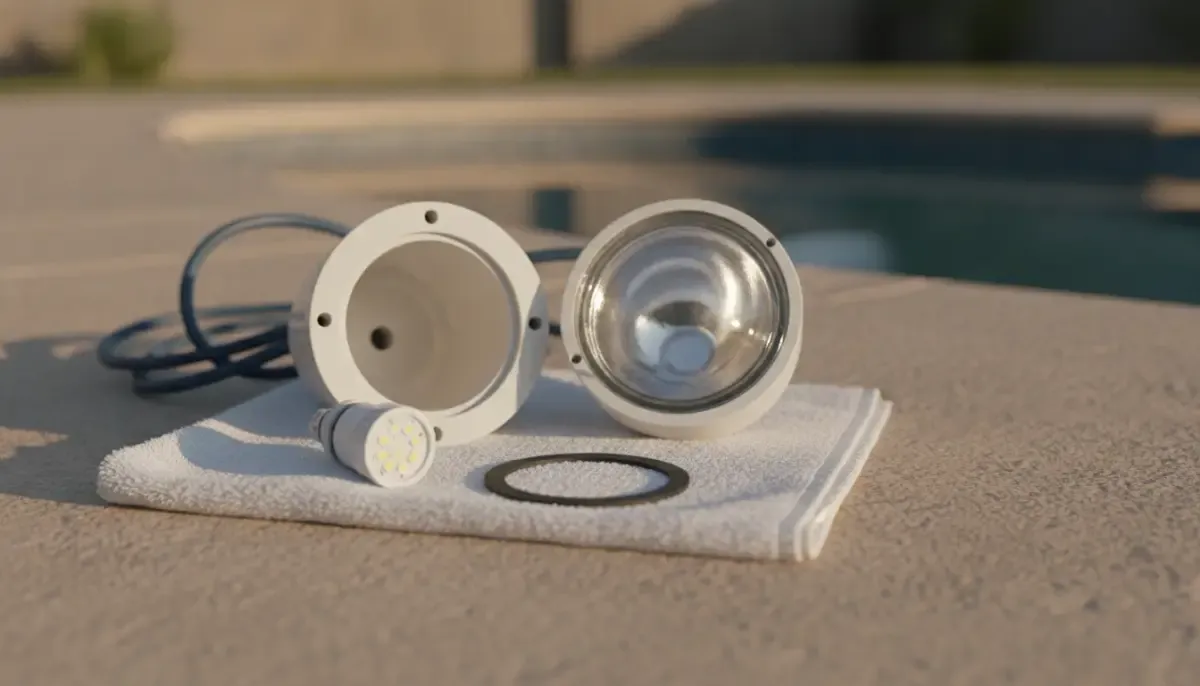
A bulb-only replacement is the narrowest repair. It can make sense when the light housing remains dry, the lens is intact, the gasket can form a watertight seal, and the replacement bulb is approved for that fixture. The bulb must match the fixture's specifications. A bulb that fits physically but has the wrong voltage, wattage, base, or heat characteristics can create a new failure.
Replacing the gasket at the same time is often part of a proper bulb service because an old gasket may be flattened, brittle, stretched, or damaged during disassembly. The lens screws also need even, correct tightening. Over-tightening can distort the seal or crack the lens; under-tightening can allow water into the housing.
LED retrofit or complete LED fixture
LED replacements may offer longer service life, lower operating demand, and color or dimming features, but compatibility matters more than the label. Some LED bulbs are intended for specific housings, transformers, controls, or remote systems. A color-changing LED may not behave as expected when paired with an older switch or automation setup.
A complete LED fixture is a better candidate when the old housing has corrosion, a damaged lens, repeated moisture intrusion, a deteriorated cord, or a history of nuisance trips. The new unit still needs to match the niche and electrical design. Do not assume that a universal-looking face ring makes every fixture interchangeable.
How do you know whether to replace the bulb or the whole fixture?
Choose a bulb replacement only when the existing fixture is mechanically sound and remains watertight after service. Choose a complete fixture evaluation when there is moisture, cracking, corrosion, a damaged cord, repeated breaker trips, or a failure that returns after a new bulb. A dark light with a healthy fixture is a different job from a light that is dark because water reached the wiring.
- Bulb is the likely starting point: the light failed once, the lens is clear, there is no visible moisture, the housing is not cracked, and the fixture has a known compatible replacement.
- Gasket or lens service may be needed: the seal is flattened or brittle, the lens is cloudy or cracked, or the housing was opened during prior work.
- Whole fixture inspection is warranted: the light flickers, trips GFCI protection, shows water inside, has corrosion, or has a damaged cord.
- Electrical diagnosis is required: the breaker trips immediately, the light affects other equipment, the switch behaves unpredictably, or the light has no reliable power source.
Do not use a replacement bulb as a diagnostic experiment when an electrical protection device is tripping. Repeatedly resetting a breaker or GFCI can keep a dangerous fault energized. Turn the circuit off and arrange an inspection. For a related look at warning signs, see Neptune Pools' pool light repair safety guide, which covers symptoms that should not be ignored.
Pool light safety checks to complete before service
Electrical work near an occupied pool requires a conservative approach. The U.S. Consumer Product Safety Commission warns that electricity in and around pools can cause serious injury or death and recommends attention to ground-fault protection and electrical safety. Review the CPSC pool and spa electrical safety guidance for a plain-language overview.
Before anyone removes a fixture, the correct circuit must be shut off at the breaker and verified de-energized with appropriate test equipment. A wall switch alone is not proof that the circuit is safe. The person servicing the light also needs to know whether the pool uses a transformer, multiple circuits, automation, or a shared equipment panel.
- Keep swimmers out: Do not let anyone use the pool while the light or its electrical circuit is being evaluated.
- Stop if there is water in the lens: Moisture indicates a failed seal or damaged housing and should be treated as a safety concern.
- Turn off the correct breaker: Identify the pool-light circuit rather than relying only on a switch or timer.
- Verify the absence of voltage: Use an appropriate tester and safe work procedure before touching conductors or opening a housing.
- Do not defeat protection: Never bypass a GFCI, remove a bonding connection, substitute an unlisted part, or keep resetting a tripped device.
- Protect the seal: Keep the lens, gasket, screws, and mating surfaces clean and use only parts approved for the fixture.
- Test before returning to service: Confirm that the fixture is correctly seated and sealed, and have a qualified professional evaluate any electrical irregularity.
What symptoms mean you should call a pool professional?
Call a qualified pool technician when the problem involves wiring, a breaker, GFCI protection, bonding, a damaged cord, water in the fixture, or repeated failure. These are not good candidates for trial-and-error part swapping. The National Fire Protection Association's pool electrical safety guidance explains why compliant electrical installation is a key part of swimmer safety around pools, which is why a light replacement should account for the complete circuit, not just the visible bulb.
- Water behind the lens: Shut off the circuit and do not swim until the fixture and electrical system have been evaluated.
- Flickering or intermittent light: The cause may be a bulb, socket, control, connection, cord, or moisture-related fault.
- Breaker or GFCI trips: Leave the protection device off rather than repeatedly resetting it.
- Burning smell, heat, discoloration, or melted parts: Do not operate the light or open the housing.
- Unknown voltage or model: Match the system from its equipment information instead of buying a part based only on appearance.
- Replacement cord or junction-box work: This is electrical work in a wet-area system and should be handled by a qualified professional.
- Colorado winter exposure: Ask for an inspection if freeze damage, cracked conduit, or moisture intrusion may have affected the light or equipment.
Neptune Pools serves Denver Metro homeowners with equipment troubleshooting, repair, replacement, and upgrade guidance. Its certified technicians work with major pool equipment categories and can help determine whether a repair, retrofit, or full replacement is the responsible next step.
LED versus legacy pool lights: which option makes sense?
LED and legacy incandescent or halogen-style systems can both be appropriate in the right fixture. The decision should balance compatibility, electrical condition, expected use, controls, appearance, and the condition of the existing niche. Replacing a working housing with an incompatible LED can create more trouble than keeping a correctly matched legacy bulb.
| Decision factor | LED replacement | Legacy-style replacement |
|---|---|---|
| Best fit | Owners seeking a modern retrofit or fixture upgrade when the system supports it. | Owners preserving a compatible existing housing and control setup. |
| Compatibility | Must match fixture, voltage, transformer, controls, and niche or mounting method. | Must match bulb base, wattage, voltage, lens, gasket, and housing. |
| Color features | May offer color or programming features when the controls support them. | Usually provides a fixed light output. |
| Repair scope | May be a bulb retrofit or a full fixture replacement. | Often a bulb and gasket service, unless the housing is damaged. |
| When to pause | Unknown wiring, moisture, repeated trips, or uncertain compatibility. | Cracked lens, corrosion, damaged cord, or a failed seal. |
Ask for the model number, voltage, cord length, niche type, transformer details, and control requirements to be documented before ordering. Those details reduce the risk of receiving a part that looks right but cannot be installed safely.
How Denver weather can affect pool light replacement
Denver pools experience dry air, strong UV exposure, rapid temperature changes, and freeze conditions outside the active swim season. Those conditions can accelerate gasket aging, dry out exposed components, and make small cracks or moisture problems more consequential. Winterization and spring startup should include a visual equipment check, especially if the light has already shown flicker, condensation, or intermittent operation.
Neptune Pools' local service model includes Colorado-specific freeze protection and equipment knowledge. When a light problem appears near a seasonal closing or opening, include it in the seasonal pool maintenance service rather than waiting for the next swim season. A light that is not used in winter can still have a compromised seal or wiring condition that should be addressed before the pool reopens.
Schedule qualified pool equipment service for a safe pool light replacement in Denver.
Frequently Asked Questions About Pool Light Replacement
Can I replace a pool light bulb myself?
A homeowner may be able to identify a bulb model from the dry deck, but an underwater pool light replacement involves a watertight housing and an electrical circuit near water. If the fixture has moisture, the voltage is unknown, the breaker trips, or the housing must be opened, use a qualified pool professional instead of treating it as a routine bulb change.
How do I know if a pool light needs a new gasket?
A gasket may need replacement when it is flattened, brittle, stretched, cracked, or unable to create an even seal. Moisture inside the lens is a warning that the existing seal has failed or another fixture component is damaged. A new gasket does not make a cracked lens, corroded housing, or damaged cord safe.
Are LED pool lights compatible with older fixtures?
Some LED bulbs are compatible with specific older housings, but compatibility is not universal. Check the fixture model, bulb base, voltage, wattage, transformer, niche, controls, and manufacturer requirements. A pool technician can verify whether a bulb retrofit is suitable or whether a complete LED fixture is the safer option.
Why does my pool light keep tripping the GFCI?
A recurring GFCI trip can indicate moisture intrusion, insulation damage, a failing fixture, a cord problem, or another electrical fault. Leave the circuit off and arrange professional diagnosis. Do not keep resetting the GFCI, bypass it, or continue swimming with a light circuit that is not operating safely.
Should I replace a pool light before selling my home?
Replace or repair a pool light before listing the home when it is visibly damaged, does not work, or has a known safety issue. Start with an inspection so the scope is clear. A documented repair or replacement can also help explain what was corrected, but do not conceal a flicker, leak, or tripping circuit with a cosmetic bulb swap.
When is a complete pool light fixture replacement better than a bulb change?
A complete fixture replacement is usually the better path when the housing, lens, cord, or seal is damaged, when water has entered the fixture, or when the light continues to fail after a correctly matched bulb. The replacement still must fit the niche and electrical system, so confirm those details before ordering.
Related Blogs