Pool Pump Freeze Protection for Colorado Pools
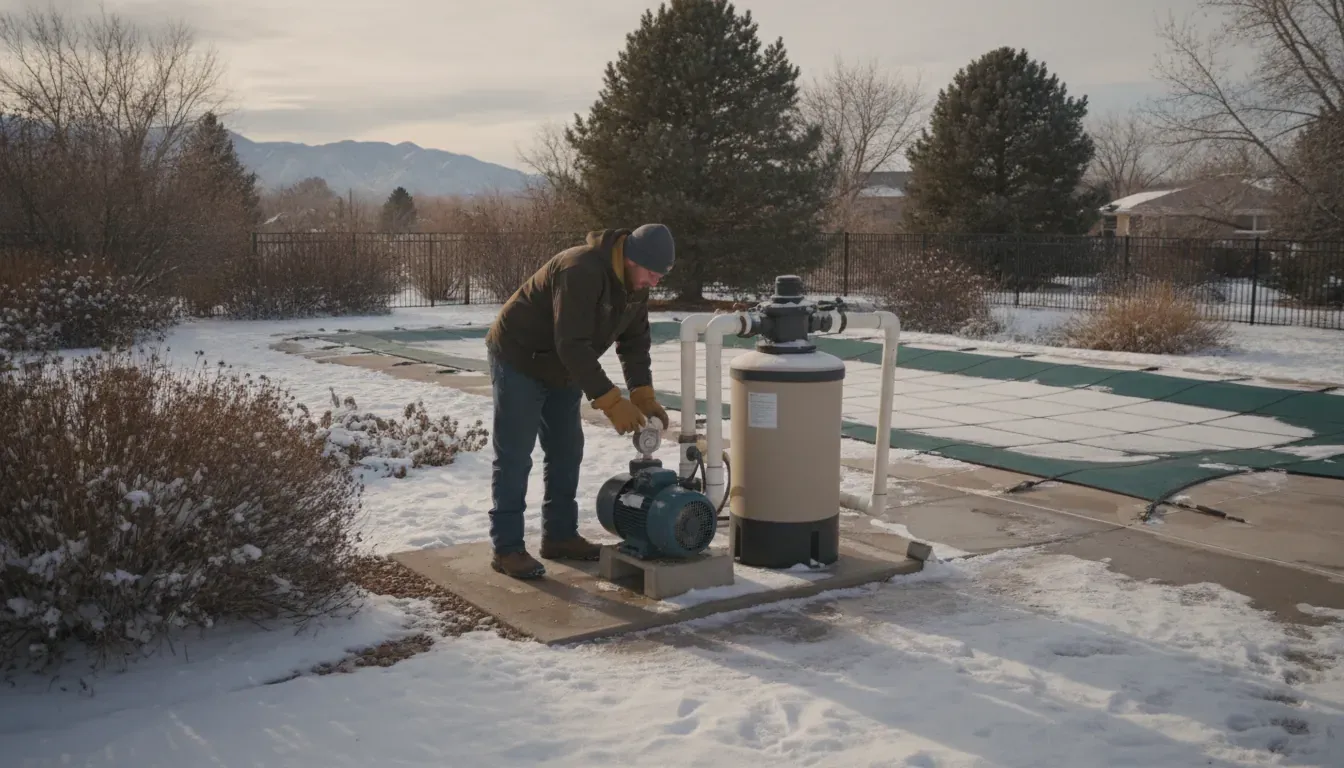
Pool Pump Freeze Protection for Colorado Pools
Colorado cold snaps can turn a small maintenance gap into a damaged pump, cracked plumbing, or an expensive service call. Denver's high-altitude weather often swings sharply between mild afternoons and freezing nights, so waiting for a prolonged deep freeze is risky.
Schedule pool equipment repair service.
Effective pool pump freeze protection starts with keeping water moving when temperatures approach freezing, confirming the freeze sensor and automation are working, clearing the pump basket, and protecting exposed plumbing. If the system will be shut down, it needs thorough winterization rather than a simple power-off.
The pump is only one part of the system. Valves, returns, filters, and connected lines also need protection. A failed sensor, blocked basket, or power outage can leave the circulation circuit vulnerable when you need it most.
Why freeze protection matters for Colorado pool equipment
Pool equipment faces a pattern that is easy to underestimate in the Denver Metro service area: warm afternoons followed by sharp overnight temperature drops. The most serious risk begins when water remains exposed to freezing conditions long enough for ice to form in plumbing or equipment cavities. As water freezes and expands, it can place pressure on fittings, valves, housings, and connected lines.
Moving water is less likely to freeze than stagnant water. When circulation is working, water travels through the pump, filter, valves, and return lines instead of sitting in one isolated section. That is why keeping the system in operation is usually the active defense during a brief cold snap. It does not mean the motor alone is protected. The complete plumbing circuit must be able to move water safely.
A pump that runs while a valve is closed, a line is blocked, or the system has lost its prime is not providing the protection a homeowner expects. The same is true when debris restricts flow or automation fails to send the freeze command. Before cold weather arrives, inspect the conditions that support circulation, not just the on and off state of the motor.
This article focuses on pump-side checks, freeze sensors, pump settings, basket and flow checks, exposed plumbing, outage response, and warning signs that call for a qualified technician. Neptune Pools brings local equipment experience to these Colorado pool-care decisions. If the pool will be taken out of service, use a complete seasonal shutdown plan. Winterization addresses the broader system and the water that may remain in its lines.
How pool pump freeze protection works in Denver
A freeze sensor monitors air temperature near the equipment and can signal an automated control system to start the pump when temperatures approach a programmed threshold. The goal is not to heat the pool. The goal is to keep water moving through the pump, filter, valves, and connected plumbing so ice is less likely to form inside the lines.
Manufacturer guidance from Pentair describes freeze protection as a way to detect cold air and activate circulation to help protect pool pipes. Read Pentair's pool freeze protection guidance for general equipment information.
The temperature threshold is not universal
There is no single setting that applies to every pool. The activation threshold depends on the sensor, automation panel, pump configuration, sensor location, and installation. Available pump speeds and control logic also vary by manufacturer. Follow the instructions for the equipment installed at your home instead of copying a setting from another pool.
Denver's quick temperature changes make testing especially important. A clear night can bring a sudden drop while daytime conditions remain mild. A normal overnight schedule does not necessarily provide freeze protection. Confirm which component controls the sensor, whether the pump is included in the freeze program, and what speed the system uses when protection is active.
Test the sensor before the first cold snap
Test the freeze sensor before temperatures fall. Verify that the sensor is functional, the control panel recognizes it, and the pump responds in the intended freeze mode. Make sure the sensor is clean and has a clear reading of the surrounding air. Check that automation is actually connected to the pump control.
A test gives you time to correct a failed sensor or incorrect setting while conditions are safe. Do not relocate, bypass, or rewire a sensor as a quick fix. A control issue can involve the sensor, wiring, controller, relay, or pump settings, and those parts should be evaluated as a system.
Pump basket and equipment-pad checks before cold weather
A clean basket and visible, steady circulation support the freeze-protection plan. These homeowner checks are limited to safe, external inspection. Neptune Pools also provides pool cleaning and maintenance for recurring inspection support, while pool supplies and chemicals can help homeowners prepare for seasonal care. Never open a pressurized filter, reach into a pump housing, or work on electrical components while equipment is operating.
- Turn off the pump safely. Use the normal control or timer to stop circulation, then wait for moving parts to stop. If the pump is hot, leaking, visibly damaged, or making an unusual sound, stop the inspection and arrange professional help.
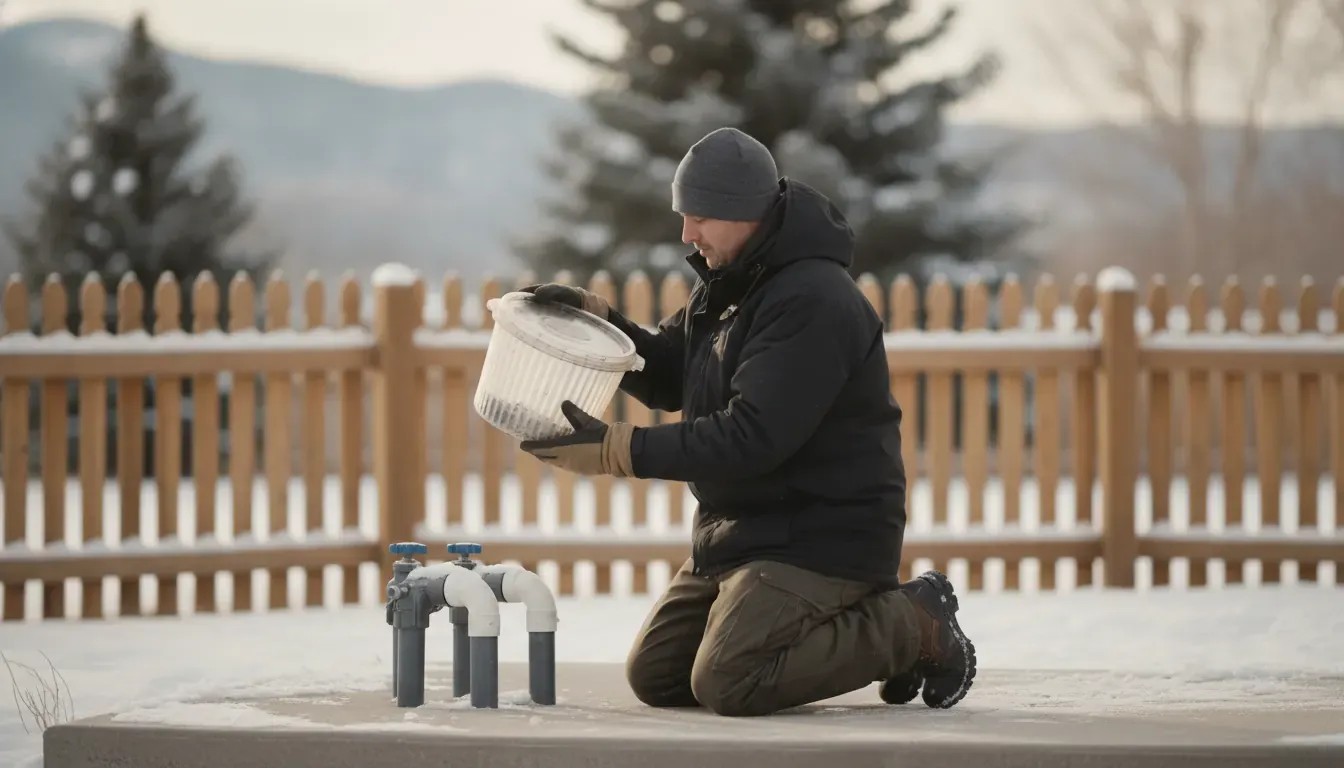
- Clear the pump basket. Remove leaves, pine needles, and other debris. Rinse the basket with a hose and inspect it for cracks, distortion, or a damaged handle before replacing it. Restricted flow makes winter circulation less reliable.
- Keep the pad clear. Remove leaves and storage items from around the pump, filter, valves, and exposed plumbing. Do not pile insulation directly against the motor, controls, or ventilation openings.
- Restart and observe flow. Replace the basket and lid correctly, reopen any valves you closed, and restart the pump using its normal control. Look for steady return flow and confirm that the pump primes normally.
- Compare the pressure reading with normal operation. There is no universal correct gauge reading for every pool. A sudden change from your usual range, especially with weak flow, leaks, or noise, is a reason to shut the system down safely and call a technician.
- Check the freeze sensor area. Keep the sensor clean, dry, and unobstructed. Remove leaves or coverings that could isolate it from outdoor air. Do not change wiring or sensor placement yourself.
- Know when to stop. If flow cannot be restored with a clean basket, or if a Bearcat pump or other equipment needs internal service, use Neptune Pools' equipment repair service rather than repeatedly cycling the equipment.
Arrange a Denver pool equipment inspection before freezing weather.
Insulation and winterization protect different things
Insulation can slow heat loss around exposed plumbing, but it is not a substitute for a working circulation plan. The right approach depends on whether the pool remains in service through a short freeze or is being closed for the season.
| Short cold snap | Seasonal shutdown |
|---|---|
| Keep the pump and connected plumbing circulating when the system is operating safely. Protect exposed pipes with suitable insulation. | Adjust water level, treat the water, shut down equipment, and purge standing water from plumbing lines. |
| Confirm sensor, controls, pump speed, basket, and visible flow are working. | Use a system-specific plan for the pump, filter, valves, returns, cover, and equipment enclosure. |
For a short freeze, keep water moving
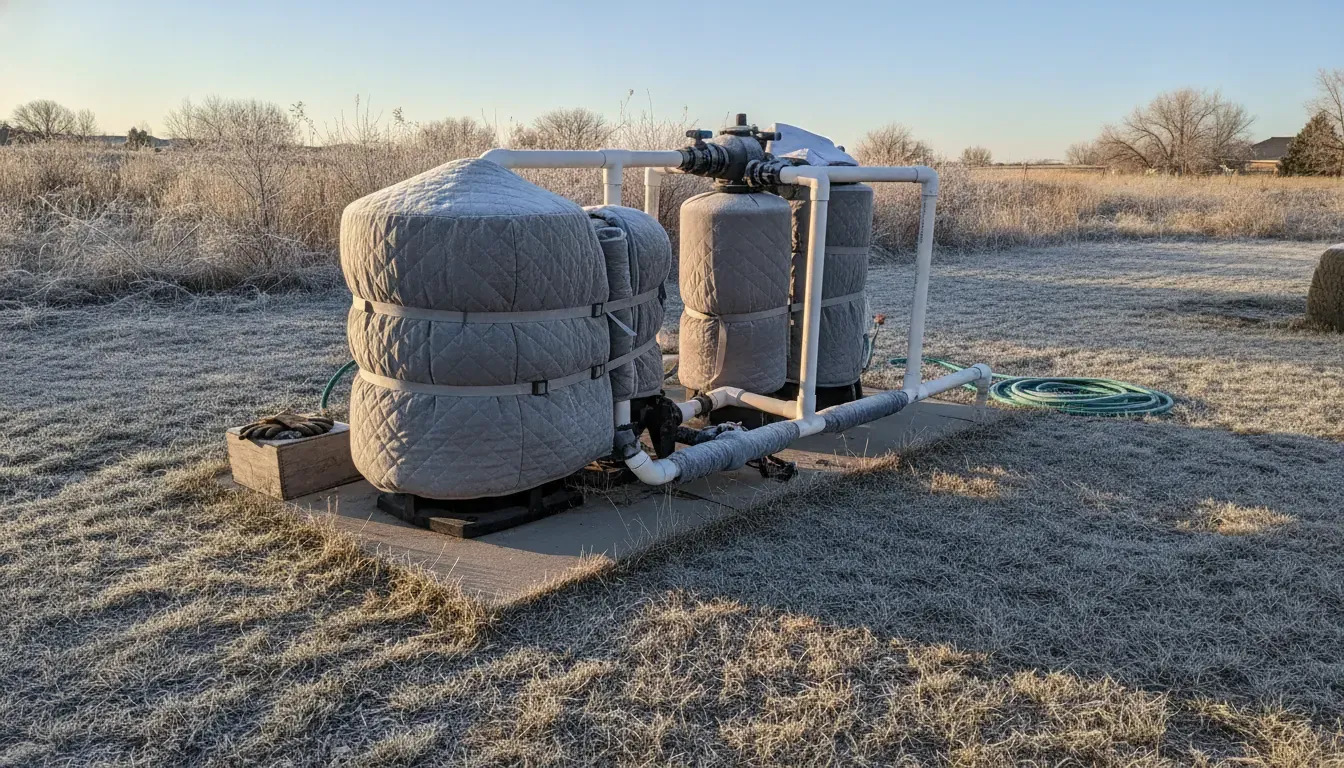
When the pool remains in service, circulation is the primary active defense. Moving water is less likely to freeze inside plumbing when the pump, controls, and full circuit are functioning correctly. Insulate exposed pool pipes with appropriate foam insulation, paying close attention to sections above ground and fittings exposed to open air.
Insulation slows heat loss. It cannot compensate for a stopped pump, blocked line, closed valve, or failed sensor. Confirm that the pump can maintain flow and that no obstruction has developed. A clean basket supports circulation, while the correct pump speed helps the system operate as intended.
Colorado State University Extension also recommends deliberate preparation of outdoor water systems before winter to reduce freezing damage. Its Colorado State winter preparation guidance provides additional context for protecting exposed water systems.
For a seasonal shutdown, remove standing water
Full winterization is different from running freeze protection. When the pool is shut down, a qualified technician typically adjusts the water level, applies winter chemical treatment, and shuts down equipment according to the system design. Plumbing lines are then blown out or purged so standing water is not left where it can freeze and expand.
That work includes the pump, filter, valves, returns, and other connected sections, not just the visible equipment. Do not partially drain or disconnect components without knowing how the system is designed. A poorly planned shutdown can leave trapped water in vulnerable sections or expose equipment to avoidable damage.
A fitted cover adds another layer during the off-season, but it does not replace line blow-out or equipment preparation. The equipment enclosure should also remain appropriately ventilated to limit condensation and moisture buildup. Neptune Pools includes water-level adjustment, winter chemical treatment, equipment shutdown, line blow-out, cover installation, and a winter risk inspection in its seasonal winterization workflow. Review the pool winterization guide for the broader process.
Pool pump freeze protection during a power outage
A power outage changes the freeze-protection plan immediately. Without electricity, the pump cannot circulate water, and the freeze sensor cannot command the pump to run. The pump, filter, valves, returns, and connected lines may all be exposed to freezing conditions.
- Confirm that circulation has stopped. Check the pump and automation panel from a safe position. Do not assume the outage affected only the motor. Controls and monitoring systems may also be offline.
- Keep away from wet or damaged electrical equipment. If there is standing water, visible electrical damage, smoke, or another immediate hazard, do not approach the equipment pad. Contact the appropriate emergency or electrical professional first.
- Do not repeatedly reset breakers. If a qualified professional or the equipment instructions direct you to turn off affected equipment, do so only when it is safe. Do not improvise electrical repairs.
- Call a pool professional for system-specific instructions. Explain that power is out, circulation has stopped, and freezing conditions are present. Depending on the equipment configuration, manual draining of the pump and filter may be necessary.
- Drain equipment only as directed. A technician may identify designated drain points or other protective steps. Do not remove unknown plugs, open pressurized components, or disconnect plumbing based on a generic online instruction.
- Do not restart equipment that may be frozen. Restoring power does not prove that the pump, filter, or plumbing is clear. Have the system assessed before resuming operation if freezing may have occurred.
From a safe distance, note when the outage began, whether the pump was operating beforehand, and whether you see leaks or cracks. Share those details with the technician. Once the immediate risk passes, have the complete freeze-protection setup reviewed so the next outage does not leave the plumbing circuit unprotected.
When should you call a Denver pool equipment professional?
Homeowners can perform limited visual and operational checks, but a pump problem during a Colorado cold snap is not a good time to experiment. Call a qualified professional when the system cannot reliably circulate water, when a control is not responding, or when you see signs of physical damage.
The sensor does not activate the pump
If the sensor does not detect falling temperatures, the pump does not start as expected. Or the automation system shows a fault, arrange service before relying on the system overnight. The sensor, wiring, controller, relay, and programmed pump settings may need evaluation together. Do not bypass a failed control with improvised wiring.
There is no flow, abnormal pressure, or unusual noise
Stop and call for help if the pump is running but there is no visible circulation. The pressure gauge shows an unusual reading, or the equipment makes grinding, rattling, or unfamiliar sounds. Debris can restrict flow, while pressure changes can indicate a blockage or pump-performance issue. Avoid opening pressurized equipment or reaching into the housing.
You see a leak, split, or bulged component
Turn the equipment off and seek professional guidance if water leaks from the pump, filter, unions, or another housing. Also stop if plastic appears split or bulged. Frozen water can damage more than the pump itself, and restarting cracked or partially frozen equipment can worsen the problem.
The pool needs complete winterization
Call a professional when the pool will be shut down. Professional help is also wise when the property will be unattended, or when you are unsure whether partial or full winterization is appropriate. The right strategy depends on the pump, plumbing configuration, equipment exposure, and seasonal conditions.
Get help with pool equipment repair or winterization in Denver.
Frequently Asked Questions
Should I run my pool pump during a Colorado freeze?
Usually, yes, when the pool remains in service and the equipment is operating safely. Moving water is less likely to freeze in the plumbing. Follow the equipment manufacturer's guidance and confirm that valves, returns, exposed lines, and the rest of the circuit can circulate water.
What temperature should I set my pool freeze sensor to?
There is no universal threshold for every pool. The correct setting depends on the controller, sensor location, equipment layout, and local conditions. Follow your system documentation. Test the sensor before the first cold snap. Have a qualified technician check it if the pump does not start as expected.
What should I do if the power goes out during freezing weather?
Keep away from unsafe electrical equipment and do not restart a pump or filter that may be frozen. A power outage can require manual draining of the pump and filter, but the correct steps vary by system. Follow manufacturer or technician guidance promptly.
Does insulating the pump protect the entire pool system?
No. Insulation around exposed plumbing can slow heat loss, but it does not replace circulation or protect every valve, return, filter, and internal component. Keep ventilation clear and inspect the full equipment pad before a forecast freeze.
When is full winterization better than running freeze protection?
Full winterization is generally appropriate when the pool will be shut down. It is also wise when the property will be unattended. Choose it when the equipment cannot reliably maintain circulation. It can include adjusting water level, purging plumbing lines, shutting down equipment, and applying winter treatment.
Protect your pool equipment before the next freeze
A clean basket, tested sensor, working circulation system, and appropriate winterization plan can reduce avoidable cold-weather risk. Neptune Pools serves Denver Metro homeowners with pool equipment repair, maintenance, and seasonal winterization support.
Related Blogs