Pool Vacation Shutdown Checklist for Colorado Owners
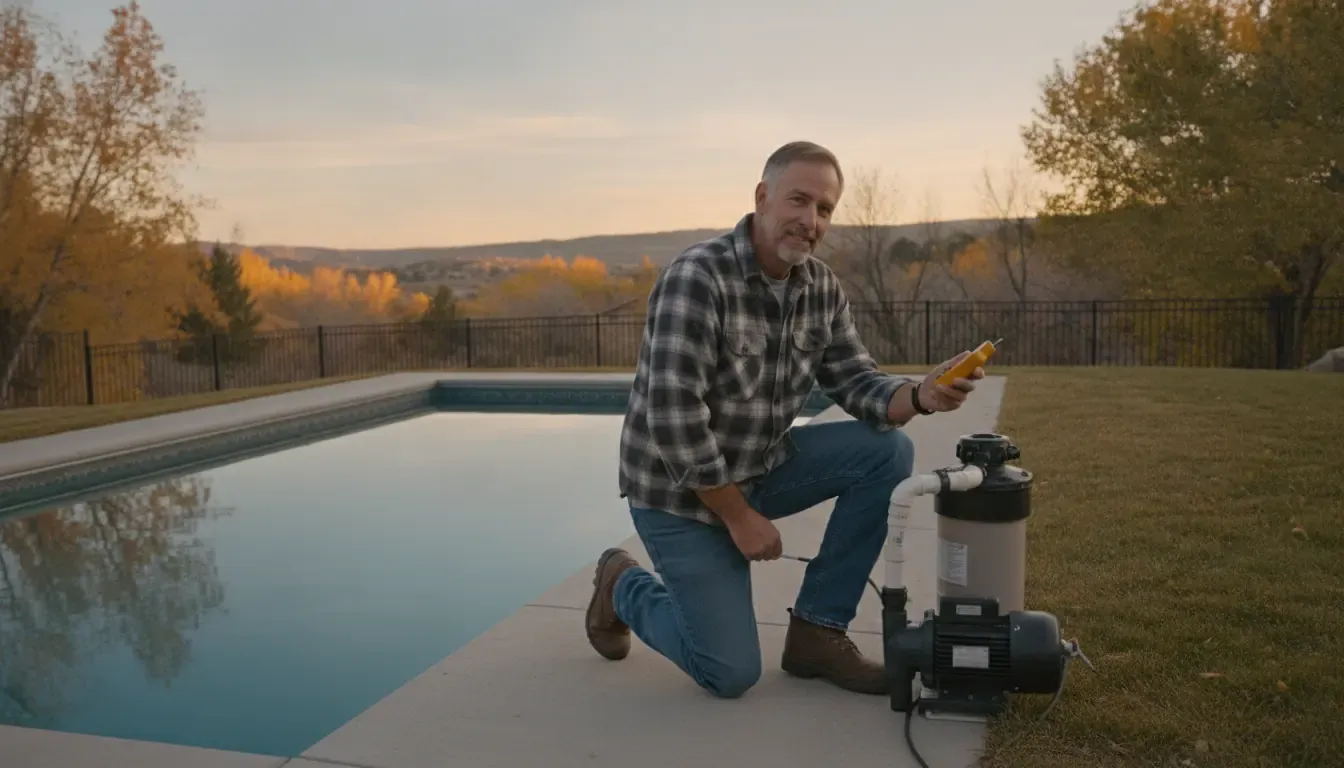
A short trip does not mean your pool should be shut down.
A pool vacation shutdown checklist covers trip dates and forecast, a basic water and equipment check, and a check-in plan. Keep the pool's usual circulation and control settings. Keep the system operating according to its equipment instructions; do not treat a short trip as winterization or apply a universal pump schedule or water-level target.
Colorado weather can shift, so the right preparation depends on your pool, equipment, and timing. Before you go, confirm what is already scheduled, note any existing alerts or concerns, and decide who can check in if needed.
Contact Neptune Pools about arranging a professional pool check.
What a Pool Vacation Shutdown Checklist Should Cover
For a trip during the swimming season, "shutdown" should mean getting the pool ready to operate without your usual attention, not switching off the equipment. Leave circulation, water condition, and basic oversight in a stable state for your pool while you are away. A checklist helps you identify what needs checking. It also helps you decide who can respond if conditions change.
Keep the scope practical: note the pool's current condition, confirm that its normal equipment and controls are operating as intended, and decide whether someone should check on it. The right steps depend on the pool, its equipment, and the length and timing of your absence. Follow the equipment maker's instructions. Avoid generic pump schedules, controller settings, or water-level targets.
In the Denver area, the active pool season is generally described as April through October. The calendar alone does not determine what a particular trip requires. Weather can shift, and local conditions may call for extra attention. If a storm, equipment concern, or freezing forecast is relevant while you are away, consider a qualified visit. A quick checklist cannot replace local judgment.
This is a temporary in-season plan, not a full cleaning routine or a winter closing. Regular maintenance plans have their own visit schedules, and winterization is a separate service for preparing equipment and plumbing for cold weather. Do not apply winter-closing steps to a pool that is meant to remain in normal seasonal operation. For routine care beyond trip preparation, see the monthly pool maintenance checklist.
A useful checklist sets boundaries as much as it lists tasks. Preserve normal operation, tailor checks to the actual system, and get professional help when weather or equipment makes the situation uncertain.
Start With the Trip, Weather, and Pool Setup
Before changing anything, map out what will happen while you are away. Note your departure and return dates, whether anyone will be on the property, and whether a trusted person or pool professional can check in. There is no universal number of days that makes a pool safe to leave unattended. The right plan depends on the pool, its equipment, recent conditions, and the forecast.
Check the Denver-area forecast for your travel window, then consider how exposed the pool and equipment are to local weather. A cold snap or storm in the forecast can change the risk, especially if a pump, heater, controller, or other component is already unreliable. Do not try to turn a short-trip plan into a do-it-yourself winter closing. If freezing conditions or severe weather may affect the system, ask a qualified professional what your specific pool needs.
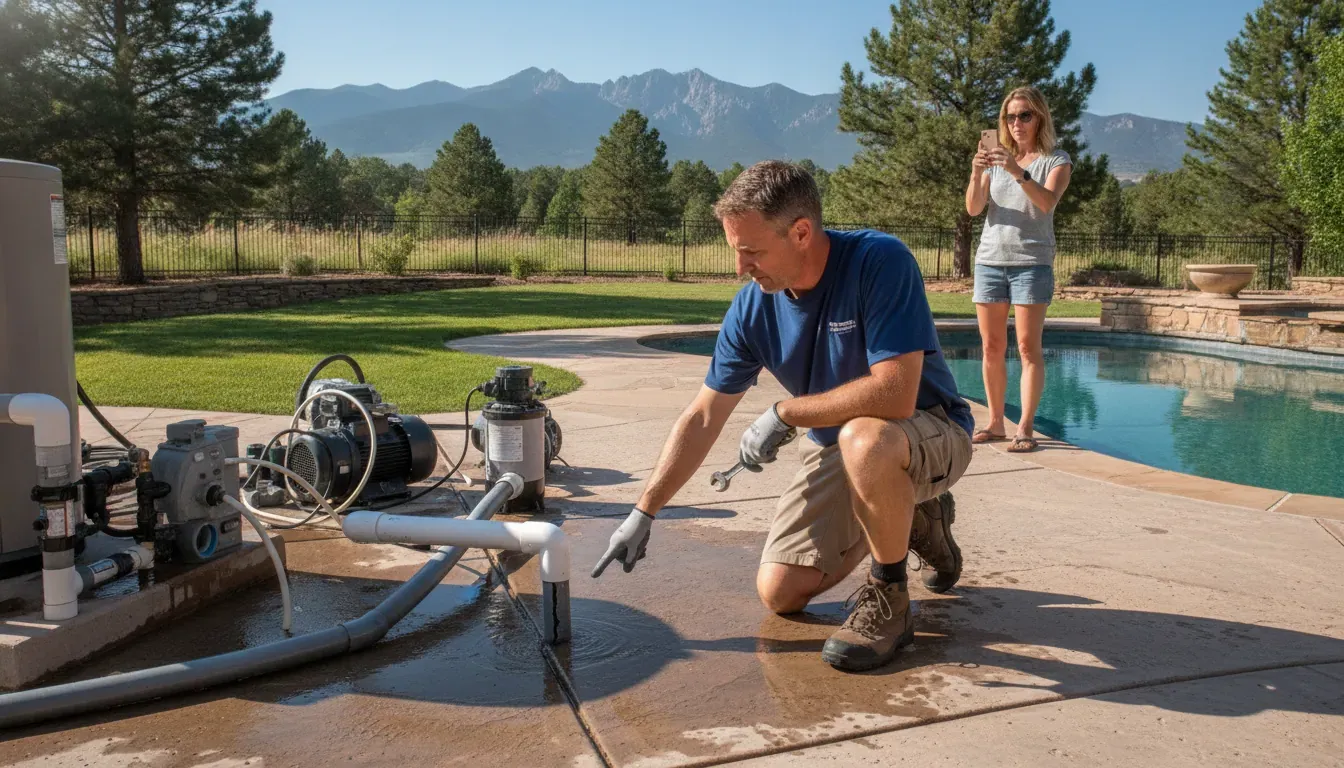
Next, identify what kind of pool and equipment you actually have. The appropriate plan can differ with the circulation system, heater, sanitizer, cover, and any connected automation. Some pools support app access, remote monitoring, schedules, or alerts. Others do not. Neptune Pools offers help with equipment, automation, and controls, but features and settings vary by system. Review your equipment instructions and avoid copying a setting from another pool or a generic vacation checklist.
Make a short handoff note for whoever may check the property. Include where the equipment is, how to contact you, and what unusual sounds, visible leaks, standing water, or system alerts to report. Ask them to observe and report rather than make unfamiliar adjustments. If you already have a maintenance plan, check its scheduled visit dates and contact your provider about any gap that concerns you. A one-time check should not be assumed to replace the service cadence your pool normally relies on.
For more on pool-specific controls and equipment considerations, see Neptune Pools' equipment repair and servicing information.
Check Water, Cleanliness, and Equipment Before Departure
Take a brief look around the pool and equipment area before you leave. The goal is to notice anything that could need attention while you are away, not to repeat every task in a weekly cleaning visit.
Look across the water for an unusual change in clarity, visible debris, or anything that was not there during your last check. Notice whether the waterline and skimmer appear normal for your pool, without trying to force them toward a universal target. If the water looks different or the level raises a concern, make a note. Ask a qualified professional what to do rather than guessing at a chemical dose or adjustment.
- Compare the water and skimmer area with what is normal for your pool.
- Note visible debris, changes in clarity, or equipment alerts.
- Record existing readings and ask a qualified professional about concerns.
From a safe position, check for obvious equipment warnings or changes, such as a display alert. An unfamiliar noise, a visible leak, or equipment that does not seem to be operating as expected. Do not open equipment or alter settings if you are unsure what they control. Neptune Pools' service visits can include equipment inspection, water chemistry testing, filter and skimmer-basket checks, and an electronic report (Denver pool cleaning and maintenance).
Write down your last available water readings and when they were taken. Note any recent observations, such as recurring debris, a warning message, or a change in appearance. These notes are a baseline, not a dosing prescription. They help a trusted checker describe changes or give a pool professional useful context. A record of what was normal for your pool is more useful than relying on memory.
For details on circulation, filtration, and controls specific to Colorado pools, see this guide to Colorado pool equipment maintenance.
Keep Circulation and Pool Controls on the Right Schedule
Before leaving, confirm the pool is operating on its normal, equipment-specific schedule. Do not guess at a new pump runtime, change controller settings, or shut circulation equipment off just because you are taking a trip. Pumps, filters, heaters, sanitizing systems, and automation are configured differently from pool to pool, so the appropriate schedule depends on the installed equipment and its instructions.
If you are unsure what the current program does, review the equipment documentation or ask the technician who services the pool. Neptune's pool pump run time calculator can help explain runtime considerations, but it is not a substitute for the specifications and operating guidance for your particular system. Keep a note of the existing schedule or recent adjustment. A trusted checker can then report whether the equipment appears to follow it.
For pools with automation, verify that the system is online and that any app access or alert delivery you already rely on is working before you go. Some pools do not have remote controls or alerts, and there is no need to add a new setting simply for a short absence. Avoid making unfamiliar changes right before departure. If a control panel shows an error, a pump sounds or behaves differently than usual. Or you cannot confirm that circulation is operating as expected, arrange qualified help rather than experimenting with settings.
Contact Neptune Pools for help checking your pool equipment before your trip.
Denver-area weather can change during a trip. Pair a working circulation plan with a way to hear about equipment concerns or changing conditions. App alerts, where available, are one option; a person visiting the property or an existing service visit may be more appropriate for pools without remote monitoring. Make sure whoever is checking knows how to reach you and what to do if they notice an issue. Do not ask them to reset or reprogram equipment unless they are familiar with the system and its instructions.
If controls, pump operation, or automation need attention, Neptune's pool equipment repair and service team can help assess the system. Keep the pool on its established operating plan unless a qualified professional or the equipment manufacturer advises otherwise.
Set Up a Simple Check-In While You Are Away
A brief check-in can catch a visible change before it becomes a bigger concern. Ask a trusted neighbor or pool professional to look at the pool and equipment area on an agreed day, and make sure they know how to reach you. The goal is observation and prompt communication, not asking an untrained helper to diagnose a pump or adjust chemical settings.
Leave a short note with the pool's normal appearance and the equipment instructions you already follow. Ask the person checking to report:
- Whether the water looks unusually cloudy, discolored, or low compared with its usual level.
- Whether leaves or other debris have accumulated, or a skimmer basket appears full.
- Whether equipment sounds or looks different than usual, or a control panel or supported app shows an alert.
- Any visible leak, storm debris, or other change that may need your attention.
Request a photo and a short written update so you can compare what they see with your normal conditions. If something seems wrong, have them contact you rather than changing controller settings, adding chemicals, or switching equipment off. Use the pool's own instructions and contact a qualified professional when the next step is unclear.
If you already have a Neptune Pools maintenance plan, check its scheduled visit cadence before you leave. Plans use weekly, bi-weekly, or monthly schedules depending on the plan, so do not assume an additional trip-specific visit is included. A service visit can document readings, equipment observations, and photos; ask Neptune Pools what service is appropriate for your situation. For recurring care details, see the Denver pool cleaning and maintenance options.
| Check | What to do before leaving | What not to assume |
|---|---|---|
| Circulation | Confirm the normal program and review equipment instructions. | There is one pump runtime for every pool. |
| Water and skimmer | Note the pool's usual appearance and any concerns. | A universal water-level target fits every setup. |
| Controls | Check existing alerts or app access if available. | Every pool has remote monitoring or alerts. |
| Check-in | Arrange an observer or professional if circumstances call for one. | A one-time visit replaces an existing service plan. |
When a Short Trip Needs a Professional Plan Instead
A simple departure check may be enough when your pool is operating normally and someone can respond if a problem appears. A different plan makes sense when you expect to be away for an extended period. Cannot arrange a reliable check-in, or already have a concern that should not wait until you return. There is no single trip-length cutoff that fits every pool. Consider the equipment, weather, current condition, and whether anyone can act on an alert.
Plan around the forecast and existing problems
In Denver, changing weather can complicate an unattended pool. If a storm is forecast and you are concerned about debris, water conditions, or damage. Ask a qualified pool professional whether a visit before or after the weather event is appropriate. Do not assume a quick checklist can prevent every storm-related issue.
Take equipment alarms seriously. If an app or controller reports a fault, circulation problem, or other equipment failure before departure, arrange an assessment rather than relying on remote monitoring alone. Automation and alerts are available on some systems, but not every pool has the same controls or remote features. Follow the instructions for your own equipment and seek help if its status is unclear. Neptune Pools provides pool equipment repair and service.
Cold forecasts call for pool-specific judgment
If freezing weather is forecast while you are away, contact a qualified local professional promptly to discuss the pool and equipment. Cold-weather needs depend on the setup and conditions, so do not treat a temporary vacation plan as a substitute for professional freeze-protection advice. A seasonal closing is a separate service with its own procedures; it is not something to improvise as a short-trip adjustment. Neptune Pools describes professional pool winterization separately from routine in-season care.
Neptune Pools serves Denver Metro communities and describes its technicians as trained for Colorado climate considerations, including freeze protection and altitude adjustments. A service visit can include equipment inspection, water testing, and a report of observations, helping you make an informed decision without guessing at universal settings.
If you already have a maintenance plan, confirm its scheduled visit dates and who to contact if a concern comes up while you are gone. Regular service can provide continuity, but do not assume an existing schedule includes an extra trip check or emergency response. For a longer absence, make sure a trusted person knows how to reach you and the service provider. And agree on what they should report rather than asking them to adjust unfamiliar equipment.
Contact Neptune Pools to discuss a professional check for your pool before you travel.
Frequently Asked Questions
Should I turn off the pool pump while I am away?
Do not shut the system off just because you are leaving. Circulation and controller needs depend on the pool and equipment, and there is no single short-trip setting that fits every setup. Follow the equipment instructions, and ask a qualified pool professional if the system is unreliable or its schedule is unclear. Neptune's equipment and controls team can help assess pool-specific concerns.
Should I add extra chemicals or shock the pool before a trip?
Do not add an arbitrary dose as a precaution. Test the water and follow the instructions for your pool's treatment system and products. If readings are outside the appropriate range or you are unsure what adjustment is suitable, get the water checked rather than guessing or combining chemicals.
How often should someone check my pool while I am gone?
There is no universal check-in interval for every trip. Consider how long you will be away, the forecast, your equipment, and any alerts or known issues, then arrange a suitable check if needed. Keep any existing maintenance plan in place; an occasional trip check is not a replacement for its scheduled service.
Is a vacation plan the same as winterizing a pool?
No. A short in-season trip calls for keeping the operating pool stable, not closing it. Neptune describes winterization as a separate process involving freeze-protection preparation and equipment shutdown. If a freezing forecast or a longer absence changes your plans, ask a qualified local professional what your pool needs instead of applying winter-closing steps on your own. See Neptune's pool winterization service for that distinct service.
Contact us before your trip
A quick conversation can help you decide whether your equipment, maintenance plan, or expected weather calls for professional support. Keep this plan focused on a temporary absence, not winter closing. The right next step depends on your pool. Contact Neptune Pools to discuss support before your trip.
Related Blogs