Pool Equipment Maintenance: A Colorado Owner's Guide
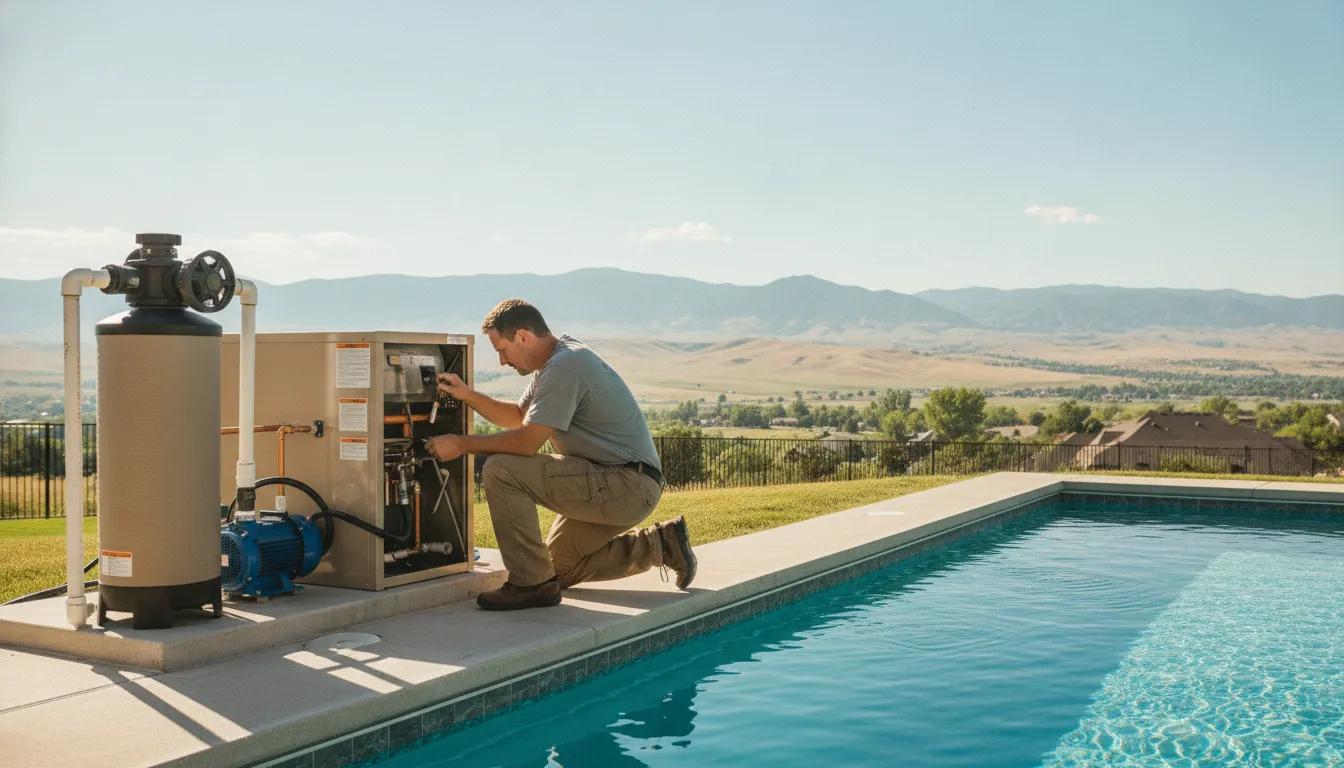
Start with your pool's normal baseline. In Denver, a pool system works through dry air, high-altitude conditions, rapid weather changes, and a short active season that typically runs from April through October. Pumps, filters, heaters, valves, and automation controls all need attention before a small change becomes a leak, freeze-related failure, or unexpected shutdown.
Schedule Neptune Pools equipment repair and servicing.
Pool equipment maintenance protects circulation, filtration, heating, and controls through regular inspection, manufacturer-guided cleaning, timely wear-part replacement, and Colorado-specific freeze protection. Check pumps and filters every one to two weeks. Investigate unusual noise, reduced return flow, leaks, pressure changes, or cloudy water when chemistry is balanced. Qualified technicians should handle electrical, gas, pressurized, and persistent equipment problems.
The right routine depends on the equipment installed, including cartridge, sand, or DE filtration, gas or electric heating, and smart controls. Use the schedule below as a practical framework, while treating each manufacturer's instructions as the final authority for operation and service.
What Pool Equipment Maintenance Covers in a Denver Pool
Pool equipment maintenance is a connected system, not a quick inspection of one pump. Circulation moves treated water, filtration removes debris, heating supports comfort, controls coordinate operation, and chemistry protects the equipment itself. A problem in one area can create symptoms somewhere else.
Pumps and circulation
Inspect the pump, motor, basket, lid, O-ring, valves, fittings, visible seals, and return flow. The goal is steady circulation without unusual vibration, air bubbles, loss of prime, or water around the housing. A pump that sounds different or struggles to maintain flow deserves attention before it stops completely.
Filters and pressure
Cartridge, sand, and diatomaceous earth filters require different cleaning methods. Track your pool's normal pressure and return flow instead of relying on a universal gauge number. Cleaning, rinsing, backwashing, or inspecting the filter should follow the equipment manual and the pressure trend.
Heaters, controls, and chemistry
Gas heaters and heat pumps have different service requirements. Automation adds sensors, relays, schedules, and software settings that must communicate correctly. Water chemistry is also equipment care. Poorly balanced water can contribute to corrosion, scaling, unreliable sensors, and restricted heat transfer.
Neptune Pools supports variable-speed, single-speed, and pump-motor systems, along with gas heaters, heat pumps, solar systems, cartridge filters, sand filters, DE filters, smart controllers, and timers. Matching the inspection to the installed system is more useful than applying a generic checklist.
| System area | Safe owner check | Call a professional when |
|---|---|---|
| Pump and circulation | Listen for new noise and observe prime, return flow, vibration, and visible leaks. | Flow remains low, a leak is significant, or electricity is involved. |
| Filter | Track pressure and follow the correct care method for the filter type. | Pressure changes recur or the tank must be opened. |
| Heater and controls | Observe normal operation and review schedules and alerts. | There is a gas, combustion, electrical, freeze-protection, or shutdown issue. |
How to Maintain Pumps and Filters Before Problems Start
Neptune Pools recommends treating pump and filter care as a repeating observation routine. A visual check every one to two weeks can reveal developing problems before circulation drops. Record normal pressure, return flow, sound, and water level so gradual changes are easier to recognize.
Start with safe pump checks
Look and listen while the pump is operating normally. Do not remove covers or open pressurized equipment. When the system is off and pressure has been safely relieved, inspect the pump basket through its clear lid. Remove debris as needed. Check the lid and O-ring for dirt, flattening, cracks, or uneven seating.
Watch for air bubbles, loss of prime, a damp pump housing, water around fittings, unusual vibration, or a motor sound that has changed. A damaged seal can allow air into the system and reduce performance. Turn the system off before handling a basket or fitting. Never reach into moving equipment.
Match filter care to the filter type
Cartridge filters may need element removal and rinsing. Sand and DE filters may require backwashing or other service steps based on pressure and manufacturer guidance. Do not backwash on an automatic calendar or add DE by guesswork. If a tank, clamp, valve, grid, or cartridge must be opened, use a qualified technician when you are not trained to complete the work safely.
Neptune Pools' pool filter maintenance guide provides additional filter-specific context. Preventive checks should also include seals, O-rings, tubing, sensor probes, and other wear parts. Replacing a worn part at the right time is safer than waiting for a circulation failure.
How Do Colorado Pool Owners Protect Heaters From Freezing?
Neptune Pools treats freeze protection as part of Colorado pool equipment maintenance. Before cold weather, confirm that water circulates, automation schedules operate, and the installed heater and plumbing follow manufacturer instructions. Water left in equipment can expand when frozen, damaging pipes, valves, pumps, or heater components.
Check circulation before a cold snap
During the April through October active season, confirm actual return flow instead of assuming a programmed run time proves circulation. A clogged filter, low water level, air leak, or failing pump can reduce flow. Keep the equipment pad accessible so a developing issue is visible.
Outside the active season, follow the correct shutdown or winterization procedure for the equipment and plumbing layout. Neptune Pools' closing service includes water-level adjustment, winter chemical treatment, equipment shutdown, line blow-out, cover installation, and a winter risk inspection. Do not copy a neighbor's procedure if the systems differ.
Verify automation and heater behavior
Review schedules after a power interruption, software update, daylight-saving change, or service visit. Confirm that the controller communicates with the equipment. If an alert appears, record the message and timing instead of repeatedly resetting the system.
Delayed ignition, repeated shutdowns, error codes, unusual odors, or a heater that runs without producing expected heat require an inspection. Gas connections, combustion components, and electrical systems are not do-it-yourself repairs. Turn equipment off when safe and keep people away from standing water near electrical components.
What Are the Warning Signs of Pool Equipment Wear?
Neptune Pools advises owners to treat a change in sound, water movement, heating, or controls as useful evidence. The following symptoms do not identify a diagnosis by themselves. They do show when safe observation should end and professional pool equipment maintenance should begin.
New sounds or vibration
Rattling, grinding, humming that differs from normal, or unexpected cycling can indicate wear or a circulation problem. Note when the sound occurs and whether return flow changes. Avoid restarting a noisy system repeatedly to see whether the symptom disappears.
Reduced flow, pressure changes, or cloudy water
Weak return flow and sustained pressure changes deserve attention. Cloudy water can also signal a circulation or filtration problem when chemistry is otherwise balanced. Check only safe items, such as a debris-filled basket or changed valve position. If flow remains abnormal, arrange an inspection.
Leaks or water near equipment
Water around the pump, filter, heater, or fittings can indicate a failed seal, loose connection, or plumbing problem. Do not tighten parts while the system operates. A major leak, rapidly falling water level, or water near electrical connections is a safe-stop situation.
Heat, electrical, or automation changes
A heater that takes longer to warm the pool, shuts down repeatedly, or stops following its normal schedule needs evaluation. An electrical smell, scorch mark, tripped breaker, exposed wire, or recurring fault is more urgent. Turn equipment off if safe, and do not remove electrical covers or attempt a gas-heater repair.
For basic troubleshooting context, see Neptune Pools' pool pump troubleshooting guide. Contact the Neptune Pools equipment repair and servicing team when safe checks do not resolve the symptom.
How Does Water Chemistry Affect Pool Equipment?
Neptune Pools includes water chemistry in its equipment-care approach because pH and sanitizer levels affect surfaces, seals, heaters, sensors, and circulation components. Balanced water also makes mechanical symptoms easier to interpret. Test regularly, document changes, and follow product labels and equipment instructions.
The CDC public-pool operating guidance offers reference points for public pools, including pH between 7.0 and 7.8 and a minimum free chlorine level of 1 part per million. Public-pool guidance is not an identical legal schedule for every residential pool. Residential owners should follow their product and equipment instructions, adjusting testing frequency for swimmer load, weather, and water conditions.
Why pH and sanitizer levels matter
Water outside the appropriate pH range can reduce sanitizer performance and contribute to corrosion or scale. Scale can restrict heat transfer and interfere with sensors. Low sanitizer levels can allow organic contamination to build faster than the system can manage, even when the pump and filter are operating.
Denver conditions need closer observation
Denver sits at approximately 5,280 feet. Dry conditions, evaporation, seasonal temperature changes, heavy use, and storms can change water balance and chemical demand. Keep a record of test results, chemical additions, and unusual equipment behavior. Neptune Pools also offers pool chemical delivery in Denver for a more convenient supply routine.
A Practical Pool Equipment Maintenance Schedule for Colorado
Use this schedule as an owner-level framework. Adjust the details for the equipment manual, pool use, debris load, weather, and service history. Neptune Pools identifies April through October as the active season, but equipment needs attention before opening and before freezing weather arrives.
- Daily or weekly during the active season: Check water level, return flow, pump sound, filter pressure, and the equipment area. Look for drips, standing water, air bubbles, vibration, or a pump that struggles to prime. Record changes instead of opening electrical or gas components.
- Every one to two weeks: Check the pump basket, lid, O-ring, visible fittings, and filter condition. Compare pressure and flow with your normal baseline. Use the correct cleaning method for a cartridge, sand, or DE filter.
- Monthly: Review service notes for rising pressure, longer heating times, water loss, or recurring alarms. Record work completed and parts that may need replacement. Electronic service reports can help homeowners, property managers, and HOAs track conditions.
- Before opening: Arrange startup work before regular swimming begins. The system may need fittings reinstalled, equipment reassembled, circulation primed, chemistry balanced, and operation verified after winterization.
- Before freezing weather: Confirm circulation, automation, valves, and heater behavior. Schedule professional winterization when required by the equipment and plumbing layout. Do not wait for a freeze-related failure to reveal a circulation problem.
Neptune Pools' Denver pool maintenance plans can provide a consistent service cadence when checks should not depend on memory. A service visit can include equipment inspection, filter and skimmer basket cleaning, water testing, chemical adjustments, and an electronic service report.
FAQs About Pool Equipment Maintenance
How often should pool equipment be maintained?
Neptune Pools recommends checking pumps, filters, flow, pressure, and the equipment area every one to two weeks during the active season. Cleaning intervals vary by filter type, pool use, debris, and water conditions. Follow the equipment manual, and keep notes so gradual changes are easier to spot.
How do I maintain my pool pump?
Keep the pump basket clear, inspect the lid and O-ring when the system is off, and watch for normal prime and return flow. Neptune Pools advises owners not to open pressurized equipment or electrical covers. Air bubbles, leaks, unusual noise, or loss of prime should prompt a professional inspection.
What are signs that pool equipment needs repair?
New noise, vibration, visible leaks, reduced return flow, pressure changes, repeated shutdowns, unusual heating, or cloudy water despite balanced chemistry can indicate a problem. Neptune Pools recommends safe owner checks only. Persistent symptoms, significant leaks, and electrical or gas concerns need qualified service.
When should I call a professional for pool equipment repair?
Call Neptune Pools for electrical concerns, major leaks, gas-heater issues, pressurized filter work, recurring alarms, or a pump or heater that remains unreliable after safe checks. Professional service is also appropriate when you cannot identify the cause of declining flow or repeated equipment shutdowns.
Why is freeze protection important for a Colorado pool?
Freezing water can damage pipes, valves, pumps, and heater components. Neptune Pools recommends confirming circulation, schedules, sensors, and valves before cold weather. Follow the installed equipment's instructions, and arrange service when a pump, heater, or control problem could leave water standing in vulnerable equipment.
Ready to Keep Your Pool Equipment Reliable?
Routine checks help Denver Metro owners recognize changes in circulation, filtration, heating, chemistry, and freeze protection. When equipment behaves differently, an inspection can identify the source before a small concern disrupts the season.
Contact Neptune Pools to discuss equipment servicing for your Denver Metro pool.
Related Blogs