Pool Winterizing Chemicals: Colorado Selection Guide
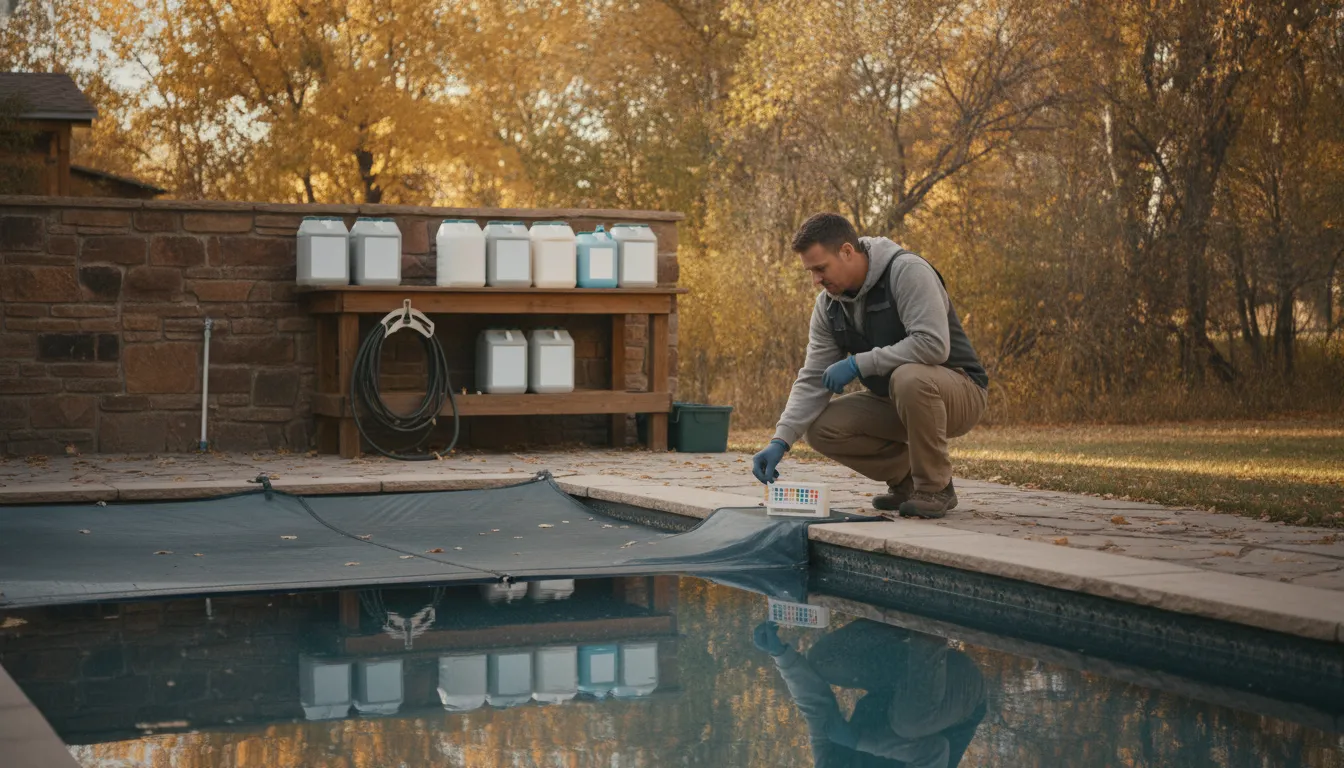
Colorado pool owners do not have to choose winter chemicals by copying a product list from another climate. Denver Metro's rapid temperature changes, hard-water concerns, intense UV exposure, and freeze risk can all affect what your water needs before the pool sits unused.
The right pool winterizing chemicals depend on measured water readings, pool volume, temperature, equipment, and each product's label. Start with balanced water, then consider the distinct roles of sanitizer or oxidizer, algaecide, and stain or scale treatment. Chemical treatment helps manage water quality, but it does not protect plumbing or equipment from freezing.
Get help choosing pool chemicals and supplies.
That distinction makes winterizing decisions more useful and safer. The goal is not to add every available product, but to understand what each category can address. What it cannot solve, and when testing or mechanical work calls for professional support.
What Are Pool Winterizing Chemicals Actually Supposed to Do?
Pool winterizing chemicals have a narrower job than many owners expect. They help put the water into a more stable condition while the pool is not being used. But they do not replace testing, cleaning, equipment shutdown, or freeze-risk inspection. The right product depends on the pool's current readings, water volume, temperature, surface, sanitizer system, and the label directions.
Water-balance products create a better starting point
Before adding a seasonal treatment, test the water and record the results. Water-balance chemicals are used to adjust pH, total alkalinity, and calcium hardness. These measurements affect water quality and help identify conditions that may contribute to corrosion, scale, or surface problems. A fixed winterizing formula is not reliable for every Colorado pool. An in-ground pool in Lakewood, a smaller pool in Littleton, and a saltwater system may require different decisions.
Sanitizers and oxidizers address contaminants
Sanitizer supports disinfection, while an oxidizer or shock treatment can address organic contaminants before the pool is closed. These products are not interchangeable with a winter algaecide or stain-and-scale treatment. Some closing guidance recommends using an oxidizer before closing, but the timing and product compatibility must come from the product label and the measured condition of the water.
Algaecide and stain treatments manage specific risks
Algaecide or a labeled winter treatment is intended to help manage algae risk during the inactive season. Stain-and-scale products address mineral buildup that can affect surfaces or equipment. They are not universal requirements. Hard-water conditions, prior staining, pool surfaces, and the chemistry of the fill water should guide the decision. Very high chlorine can also disrupt some algaecide or stain-and-scale products, so adding several chemicals together without checking compatibility can undermine the treatment.
The limit that matters most in Colorado
Chemicals protect water quality, not plumbing or equipment from freezing. Denver Metro pools can face rapid temperature changes and freeze damage. And chemical treatment alone cannot clear water from vulnerable lines or verify that equipment has been properly shut down. Mechanical winterization and a winter risk inspection remain separate parts of a complete closing plan. Neptune's closing service combines chemical treatment with equipment shutdown, line blowout, cover installation, and inspection when those tasks are needed. Learn more about Colorado pool freeze protection.
Get help choosing pool chemicals and supplies for your pool.
Handle every product according to its label. Never mix concentrated chlorine products, acids, oxidizers, or other chemicals unless the instructions specifically permit the combination. If test results are unclear or the pool has persistent algae, staining, or possible freeze exposure, pause before dosing and get a professional assessment.
How Should You Balance Water Before Adding Winter Chemicals?
Start with a current water test, not with a winterizing kit or a guessed dose. The goal is to understand the pool's condition before adding products that may remain in the water for an extended off-season. Test and record pH, total alkalinity, and calcium hardness, then review sanitizer or oxidizer readings as appropriate for the pool's setup. Standard water-balance chemicals are used to adjust pH, total alkalinity, and calcium hardness, but the correct adjustment depends on the actual test results.
Check the three core balance measurements
pH affects swimmer comfort, sanitizer performance, and the potential for corrosion or scale. Total alkalinity influences how resistant the pH is to change. Calcium hardness matters because an unsuitable level can contribute to surface or equipment concerns, including mineral buildup. These measurements should be considered together rather than corrected independently. A change to one may affect how you interpret or adjust another.
Colorado conditions make careful testing especially useful. Denver Metro pools may face hard-water staining, rapid temperature changes, and the chemistry challenges that come with high altitude. A reading that looks acceptable in isolation may still call for a different product choice or sequence when pool surfaces, equipment, water source, and closing conditions are considered.
Measure volume and temperature before dosing
Pool volume is one of the most important inputs on any chemical label. An estimate that is too high can lead to unnecessary treatment, while an estimate that is too low can result in ineffective dosing or an avoidable second adjustment. Confirm the volume as accurately as practical, especially for irregular shapes, attached spas, or pools with multiple bodies of water.
Record water temperature at the time of testing. Temperature can affect water behavior, product instructions, and the timing of treatment. Do not assume that a dose that worked at the end of one season will be appropriate for a different pool, water temperature, or set of test results.
Use the label as the final dosing authority
Read the complete label for the specific product, including the stated pool-volume range, application method, timing, compatibility warnings, and any circulation instructions. There is no universal dose for pool winterizing chemicals. Product concentration, pool volume, water temperature, test results, and equipment differences all matter.
Keep products separate during handling. In particular, do not combine concentrated chlorine products, acids, oxidizers, or other chemicals unless the label explicitly directs a compatible application. The CDC notes that mixing pool chemicals or handling them without appropriate protective equipment can cause injury. If readings are unclear, unstable, or outside the product's guidance, pause before dosing and have the water evaluated by a qualified pool professional.
Which Pool Winterizing Chemicals Match Your Pool's Needs?
There is no single winter chemical list that fits every pool. The right combination depends on the latest test results, water volume, pool surface, sanitizer system, water temperature, and the product label. Start by identifying the problem each product is meant to address, then confirm that the products are compatible before adding anything.
| Category. | Purpose. | Best fit. | Verify. |
|---|---|---|---|
| Water-balance chemicals | pH, total alkalinity, and calcium hardness. | Before other winter treatments, when testing shows the water is outside the intended range. | Fresh test readings, pool volume, surface type, and label instructions. |
| Sanitizer or oxidizer | Sanitation and organic contaminants. | After cleaning and testing, when the pool needs final treatment. | Sanitizer level, water temperature, filter condition, and product compatibility. |
| Algaecide or winter treatment | Algae risk during the closed period. | When the label supports the pool's sanitizer system and closing conditions. | Active ingredients, pool type, timing, and chlorine compatibility. |
| Stain and scale treatment | Mineral buildup and potential staining. | When testing or pool history indicates hard water, scaling, or recurring discoloration. | Calcium hardness, metals, surface material, and sanitizer compatibility. |
| Optional clarifiers or specialty products | Specific water-quality concerns. | Only when a measured condition gives the product a clear purpose. | Whether it solves a current problem or adds unnecessary chemical load. |
Water-balance products come first because pH, alkalinity, and calcium hardness influence corrosion, scaling, and overall water quality. Sanitizer or oxidizer products serve a different purpose: they help address sanitation and contaminants, but they do not replace balanced water or mechanical winterization. Algaecide and winter treatments are also not interchangeable with sanitizer. They should be selected for the pool's conditions and applied exactly as directed.
Pay particular attention to sequencing. Some guidance warns that very high chlorine can disrupt or destroy certain algaecide and stain-and-scale treatments. Do not stack products simply because they appear in the same winterizing kit or product category. Record the test results, read each label, and confirm the required interval between treatments. The CDC also warns that mixing pool chemicals can cause injury, so never combine concentrated chlorine products. Acids, oxidizers, or other chemicals in the same container or without clear label instructions. Review CDC pool chemical safety guidance.
If you are unsure which pool winterizing chemicals suit your water or equipment, Neptune Pools can help with testing, product selection, and seasonal service through its pool chemicals and supplies resources. Remember that chemical treatment alone does not protect plumbing or equipment from freezing. That requires the appropriate mechanical steps and a winter risk inspection, as outlined in Neptune's professional pool closing in Denver service.
What Changes for Colorado Pools?
Colorado conditions make winter chemical decisions less predictable than a one-size-fits-all product list suggests. In the Denver Metro area, temperatures can shift quickly. So a pool may move from mild fall weather to meaningful freeze exposure before an owner has finished preparing it. That timing affects when water is tested and when products are applied. But it does not change the basic rule that every dose must follow current test results, pool conditions, and the product label.
Altitude can also create chemistry confusion. It is not a reason to guess at a higher or lower dose. Pool volume, water temperature, sanitizer readings, and the condition of the water remain more useful decision points than a generic altitude adjustment. If readings do not make sense, retest with reliable equipment or ask for professional testing before adding more chemicals.
Hard water and mineral staining
Colorado pool owners may also need to watch for hard-water staining and scale. Water-balance decisions involving calcium hardness matter because mineral buildup can affect surfaces and equipment. A stain and scale product may have a role when testing and the label support its use. But it is not a substitute for correcting an ongoing balance problem. Adding more product without identifying the source of the staining can waste chemicals and make the diagnosis harder.
UV exposure and changing weather
Intense Colorado UV exposure, along with changing temperatures, can influence sanitizer demand and algae risk while the pool remains open or during a delayed closing. That is one reason chemical treatment should be based on a fresh reading rather than an old calendar reminder. The goal is controlled water care, not simply adding every available winter product.
Most importantly, pool winterizing chemicals protect water quality and help manage contaminants, algae, scale, or staining when used correctly. They do not protect plumbing, pumps, filters, or heaters from freezing. Chemical treatment is not mechanical freeze protection. For the equipment, circulation, and exposure issues that chemicals cannot address, review Colorado pool freeze protection and treat mechanical winterization as a separate decision.
How Do You Handle Pool Chemicals Safely?
Safe handling matters just as much as choosing the right pool winterizing chemicals. Before adding anything, test and document the water, confirm the product label, and check that the product is appropriate for your pool type and current chemistry. Do not rely on a standard dose copied from another pool. Volume, test results, water temperature, equipment, and label directions all affect the correct application.
Never mix pool chemicals in a bucket, container, feeder, or storage area. Keep concentrated chlorine products separate from acids, oxidizers, and other chemical products. Even products that are each safe when used correctly can create dangerous reactions when combined. The CDC warns that mixing pool chemicals, or handling them without appropriate personal protective equipment, can cause injury. Review the CDC's pool chemical safety guidance.
Use the label and the right protective equipment
Read the entire label before opening a container. Follow its instructions for application, ventilation, compatible products, waiting periods, and disposal. Wear the protective equipment specified by the label, such as chemical-resistant gloves and eye protection. Keep the original labels intact, and do not transfer chemicals into unmarked containers. If you are unsure whether two products can be used in the same closing plan, pause and verify their compatibility rather than guessing.
Secure storage prevents avoidable exposure
Store chemicals in a cool, dry, well-ventilated area away from direct sunlight, moisture, food, fuels, and incompatible products. Keep the area locked or otherwise secured from children and animals. Store containers upright and closed when not in use. Keep current safety data sheets, or SDSs, and the required PPE easy to access near the storage or use area. This is especially important for HOAs, rental properties, and commercial pools where more than one person may handle the products.
Know what to do after a spill or exposure
Do not improvise a cleanup or attempt to neutralize a spill with another chemical. Keep people and pets away, follow the product's emergency instructions, and use the appropriate spill-response procedure. For skin or eye exposure, follow the label and SDS first, then seek medical or emergency assistance as appropriate. A written plan should identify spill cleanup, exposure response, evacuation, communications, and emergency contacts. Chemical treatment also does not protect plumbing or equipment from freezing, so safe chemical use must remain separate from mechanical winterization and freeze-risk inspection.
When Should You Ask a Professional for Help?
Choosing a winter treatment is reasonable when your water readings are clear, your pool volume is known, and you can follow the product label safely. It becomes a professional-service question when the chemistry is difficult to interpret or when the pool needs protection that chemicals cannot provide.
Unclear test results or unstable water
If pH, alkalinity, sanitizer, or calcium readings keep moving outside the range recommended for your pool and product system, do not keep adding chemicals by guesswork. Repeated adjustments can waste product and make the water harder to diagnose. A professional can test the water, review recent additions, and document a treatment plan based on the pool's volume and condition.
Algae, stains, or scale before closing
Winterizing chemicals are not a substitute for correcting an active water problem. Persistent algae, cloudy water, metal staining, or scale may require a different sequence of testing and treatment. Adding more of a closing product without understanding the cause can make the opening problem more expensive and may leave a finish or equipment issue unresolved.
Freeze exposure or mechanical winterization
Pool chemicals help manage water quality. They do not clear water from plumbing, protect a pump, or confirm that a heater and filter are ready for freezing weather. If equipment or exposed lines may freeze, arrange an inspection and the appropriate mechanical work. Neptune's fall and winter pool-closing service includes water-level adjustment, winter chemical treatment, equipment shutdown procedures, line blowout, winter-cover installation, and a winter risk inspection.
Unsafe storage or handling conditions
DIY treatment is not a good fit when chemicals cannot be stored securely, personal protective equipment is unavailable, or household members and animals could reach the storage area. A professional can handle the products with appropriate procedures and help you avoid combining incompatible chemicals.
Neptune Pools serves Denver Metro homeowners and property managers with precision testing, professional-grade chemicals, documented dosages, and seasonal service rooted in Colorado conditions.
Schedule pool testing and seasonal maintenance help.
What Should You Check Before You Close the Pool?
Use this short decision checklist to confirm that your chemical plan is based on the pool in front of you, rather than a generic closing kit. It is a chemistry check, not a replacement for the complete mechanical closing process.
- Record the basics. Confirm pool volume, pool type, sanitizer system, water temperature, recent chemical additions, and any known equipment concerns.
- Test before treating. Record pH, total alkalinity, calcium hardness, sanitizer, and any other readings relevant to your pool and product labels.
- Address water condition first. Do not use a winter treatment to hide active algae, cloudy water, stains, or scale. Resolve the underlying condition or ask for testing help.
- Match each product to a job. Identify whether a product balances water, oxidizes contaminants, manages algae risk, or helps with stain and scale concerns. Follow the label for your pool volume and system.
- Check compatibility and timing. Review label directions before adding products, and never mix chemicals. Pay particular attention when using concentrated chlorine, acids, or oxidizers.
- Confirm safe handling. Keep products secured from children and animals. Have the required protective equipment and current safety information available.
- Separate chemistry from freeze protection. Decide how pumps, filters, heaters, plumbing, and the cover will be protected. Chemical treatment alone cannot complete mechanical winterization.
If any answer is unclear, professional testing or closing service can prevent a chemistry decision from becoming an equipment problem.
Learn about professional pool closing in Denver.
Frequently Asked Questions
What chemicals do I need to winterize my pool?
Start with water-balance products selected from measured pH, total alkalinity, and calcium-hardness readings. Depending on the pool and test results, you may also need a sanitizer or oxidizer, an algaecide or winter treatment, and a stain-and-scale product. The right combination depends on pool volume, water condition, temperature, equipment, and each product label. A winterizing kit is not automatically appropriate for every Colorado pool.
Do I need to shock my pool before winterizing?
Often, an oxidizer or shock is considered when the water needs help addressing contaminants before closing, but it should not be added by habit. Test the water first and follow the product label. Very high chlorine can interfere with some algaecide and stain-and-scale products, so product compatibility and timing matter. If the pool has active algae or cloudy water, resolve that condition before relying on a seasonal treatment.
What chemicals should I use to winterize my above-ground pool?
Above-ground pools still need the same decision process: balance the water, address sanitation or oxidation needs, and choose algae or mineral-control products only when appropriate. Do not assume an above-ground kit provides the correct dose for your pool. Pool volume, liner or surface type, sanitizer system, water temperature, and label directions all affect the choice. Chemical treatment also does not replace protecting lines and equipment from Colorado freezes.
When should I ask a professional to handle winterizing chemicals?
Ask for help when readings are unclear or unstable, algae or staining persists. Equipment or plumbing may be exposed to freezing, or you cannot store and handle chemicals safely. Professional help is also appropriate when closing requires line blowout, equipment shutdown, water-level adjustment, or a freeze-risk inspection. Chemicals support water care, but they cannot perform mechanical winterization.
Contact Neptune Pools for Winterizing Help
Colorado pool chemistry can vary with water conditions, product labels, and freeze-related equipment concerns. If you want help choosing pool winterizing chemicals, testing your water, or deciding whether professional closing service is appropriate, contact Neptune Pools. Share what you are seeing and what kind of pool or spa you have, and the team can help identify a practical next step.
Related Blogs