How to Reduce Calcium Hardness in a Pool
If you are searching for how to reduce calcium hardness in pool water, do not start by adding acid or another general balancing chemical. First confirm the reading, then lower the concentration by replacing some water or consider a professional treatment option when draining is impractical. That distinction matters for Colorado owners, where source water, evaporation, dry weather, and seasonal water changes can gradually push dissolved calcium higher.
Contact Neptune Pools to discuss available water-analysis options and a practical next step.
What calcium hardness means in pool water
Calcium hardness is the concentration of dissolved calcium in the water. A pool needs some calcium. Water that is too low in calcium can be more likely to draw minerals from plaster, grout, or metal components. Water that is too high can contribute to cloudy water and calcium carbonate scale, especially when pH, alkalinity, temperature, and circulation also favor precipitation.
Calcium hardness is different from total alkalinity, pH, and sanitizer. Shocking the pool can change sanitizer levels, but it does not remove dissolved calcium. Baking soda can raise alkalinity, but it is not a calcium hardness reducer. Lowering pH can help control scale-forming conditions, but it does not remove the calcium already dissolved in the pool.
Neptune Pools' broader Colorado pool chemistry guide discusses about 200 to 400 ppm as a practical reference for many pool surfaces and equipment. Treat that as a starting point, not a universal prescription. The appropriate result depends on the finish, water temperature, pH, alkalinity, source water, and overall saturation balance.
How do you know calcium hardness is actually high?
Do not choose a treatment based only on a white ring, rough tile, or cloudy water. Those symptoms can have several causes. Start with a reliable water test and a complete set of supporting readings.
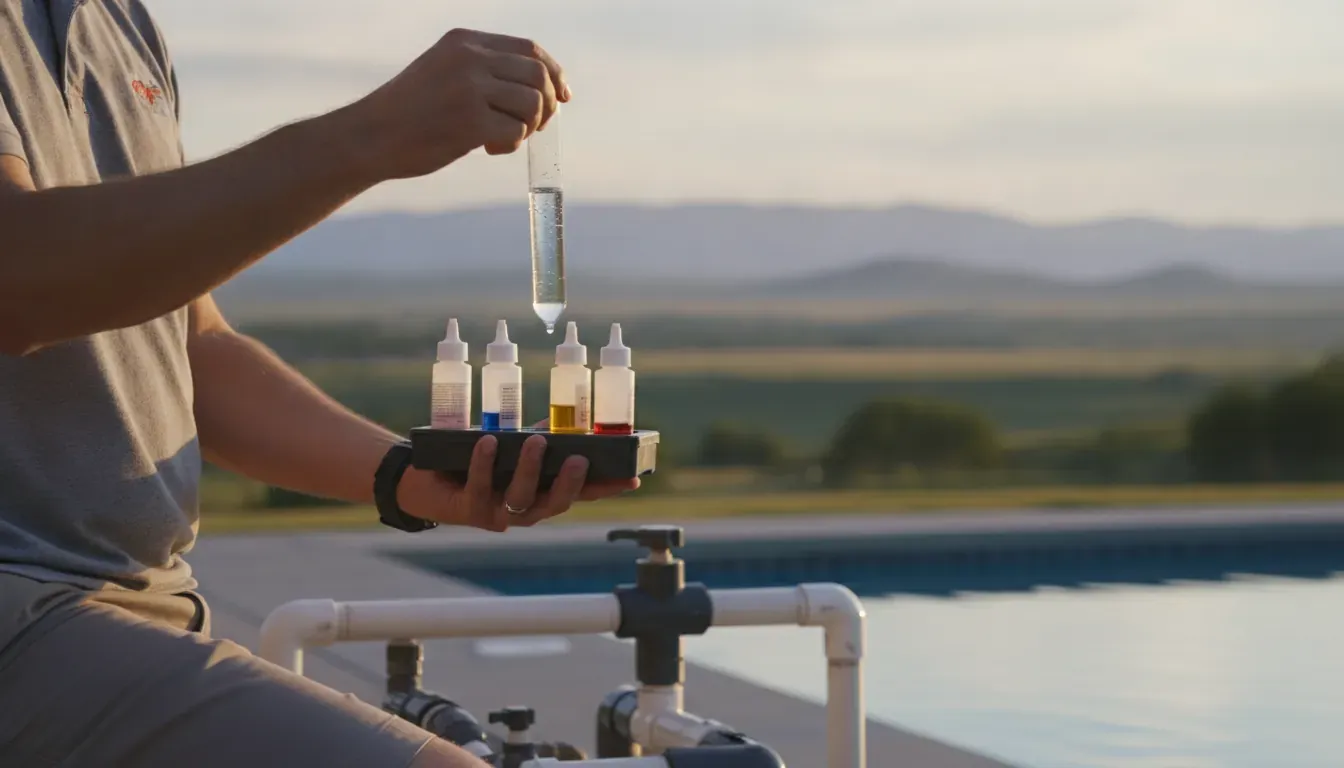
- Collect a representative sample. Take water from elbow depth, away from return jets and the skimmer. Use a clean sample container and follow the testing provider's instructions.
- Confirm calcium hardness. If the result is unexpected, have the sample checked with a quality test method before changing water.
- Record pH and total alkalinity. These readings affect whether calcium carbonate is likely to come out of solution and form scale.
- Check temperature and recent water changes. Note whether the pool was recently opened, topped off, partially drained, or exposed to unusually high evaporation.
- Inspect the pool and equipment. Look for deposits on tile, heaters, salt cells, waterline surfaces, and fittings, but do not assume every deposit is calcium.
For swimmer protection, continue to monitor the basics while diagnosing hardness. The CDC identifies pH and free chlorine as primary defenses for home pools and recommends maintaining pool pH from 7.0 to 7.8. A calcium correction should not replace routine sanitizer and pH testing.
Why Colorado pools can develop high calcium hardness
Calcium enters a pool primarily through its fill water and materials that dissolve into the water. Evaporation removes water but leaves dissolved minerals behind. When an owner repeatedly tops off a pool without removing water, the calcium concentration can rise over time.
Denver Metro owners should also account for local operating conditions. Dry air, strong sun, wind, high-altitude conditions, and large seasonal temperature changes can increase water loss and make chemistry less stable. Hard Front Range source water can add to the starting calcium load. These factors do not mean every Colorado pool will have high calcium, but they make testing more useful than guessing.
High calcium hardness is not automatically an emergency. A mildly elevated result with no scaling may call for closer monitoring and better control of pH and alkalinity. A substantially elevated result, recurring scale, cloudy water, or deposits inside a heater or salt cell deserves a complete diagnosis before the next treatment.
How to reduce calcium hardness in pool water
Option 1: Replace some pool water
Partial water replacement is the most direct way to reduce dissolved calcium. You remove a measured portion of the pool water and replace it with water that has a lower calcium concentration. The new reading depends on both the pool's starting value and the calcium level of the replacement water.
In an idealized mixing calculation, the approximate replacement fraction is:
Replacement fraction = (current calcium hardness - desired calcium hardness) / (current calcium hardness - replacement-water calcium hardness)
For example, a pool at 600 ppm cannot be expected to reach 300 ppm by replacing half its water if the replacement water also contains meaningful calcium. The calculation is only a planning estimate. Actual results can vary with water left in plumbing, uneven mixing, testing variation, pool shape, and the chemistry of the fill water.
Before draining, confirm the pool's construction, groundwater conditions, drain route, local restrictions, and the manufacturer's requirements for the finish and equipment. A pool should not be drained casually. Hydrostatic pressure, an elevated water table, or an incorrect water level can create serious damage risks. Never send pool water where it can harm landscaping, storm drains, neighboring property, or local waterways.
Option 2: Use a professional water-treatment service
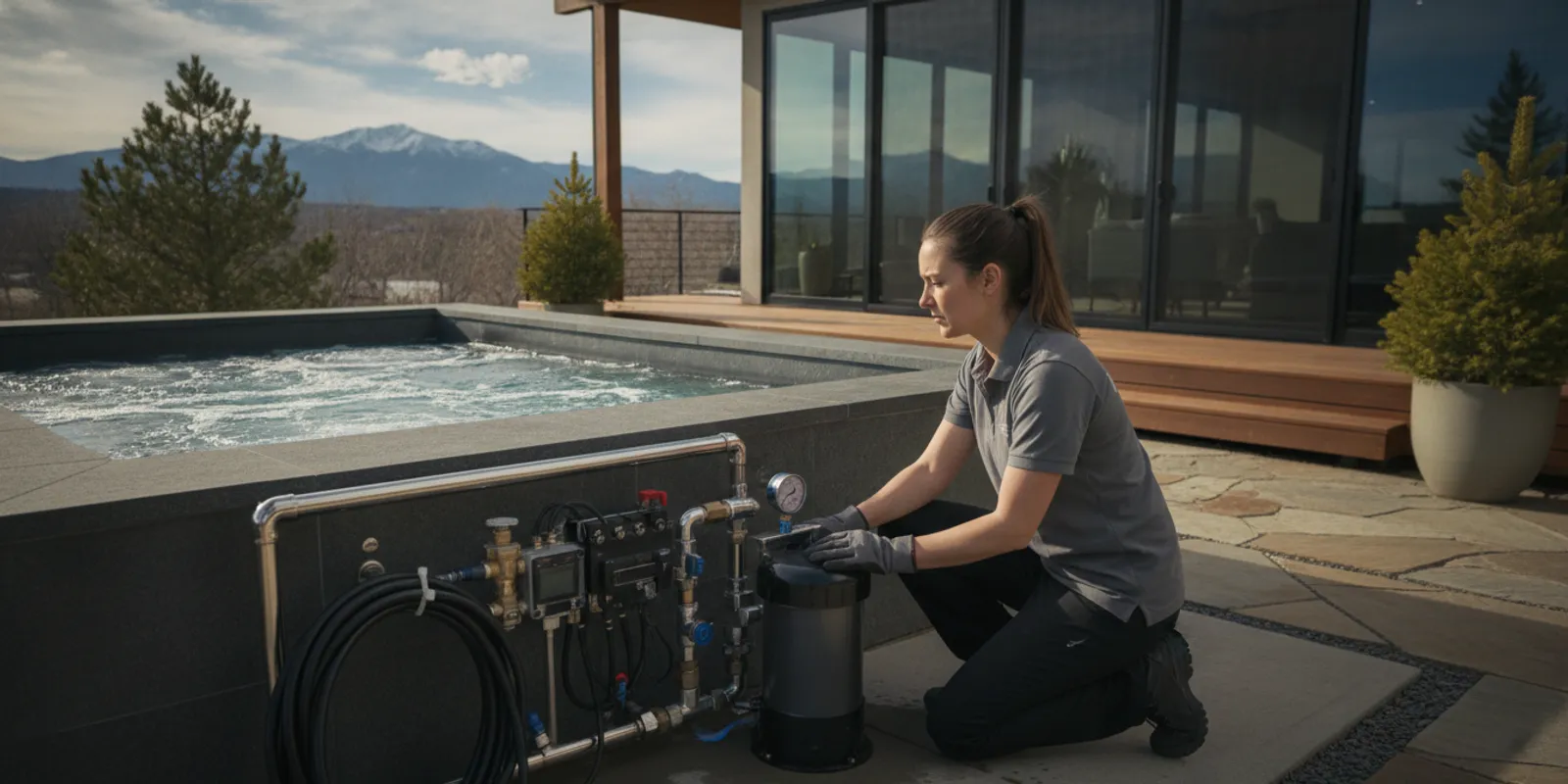
Some owners use mobile reverse osmosis or another professional water-treatment process to lower dissolved minerals without a full drain. This can be useful when water conservation, access, pool construction, or local conditions make draining a poor choice. Availability, cost, treatment capacity, and the final water balance vary by provider and location.
Ask the provider what the process removes, how the discharge is handled, whether the pool remains safe during treatment, and what post-treatment balancing is included. Do not assume that a product labeled as a calcium reducer will remove dissolved calcium from the pool. Review the treatment method and expected post-treatment test rather than relying on a marketing label.
Option 3: Correct the conditions that make scale worse
Adjusting pH and alkalinity does not lower calcium hardness, but it can reduce the tendency for calcium to precipitate while you plan the correct correction. Keep readings in the range recommended for your pool and product labels. Maintain circulation and filtration, clean the filter as needed, and check heaters, salt cells, tile, and other areas where scale can build.
Do not chase a scale problem by repeatedly adding acid without a test plan. Very low pH can damage surfaces and equipment. A pool can have a normal-looking calcium number and still form scale if the broader water balance is unfavorable.
What to do after replacing water
Water replacement is not finished when the pool reaches its normal level. The new water needs to circulate and be tested before final adjustments.
- Run the circulation system according to the pool and equipment instructions so the new water mixes thoroughly.
- Retest calcium hardness, pH, total alkalinity, sanitizer, and any other readings relevant to the pool system.
- Adjust one chemistry variable at a time, following the product label and safe chemical-handling practices.
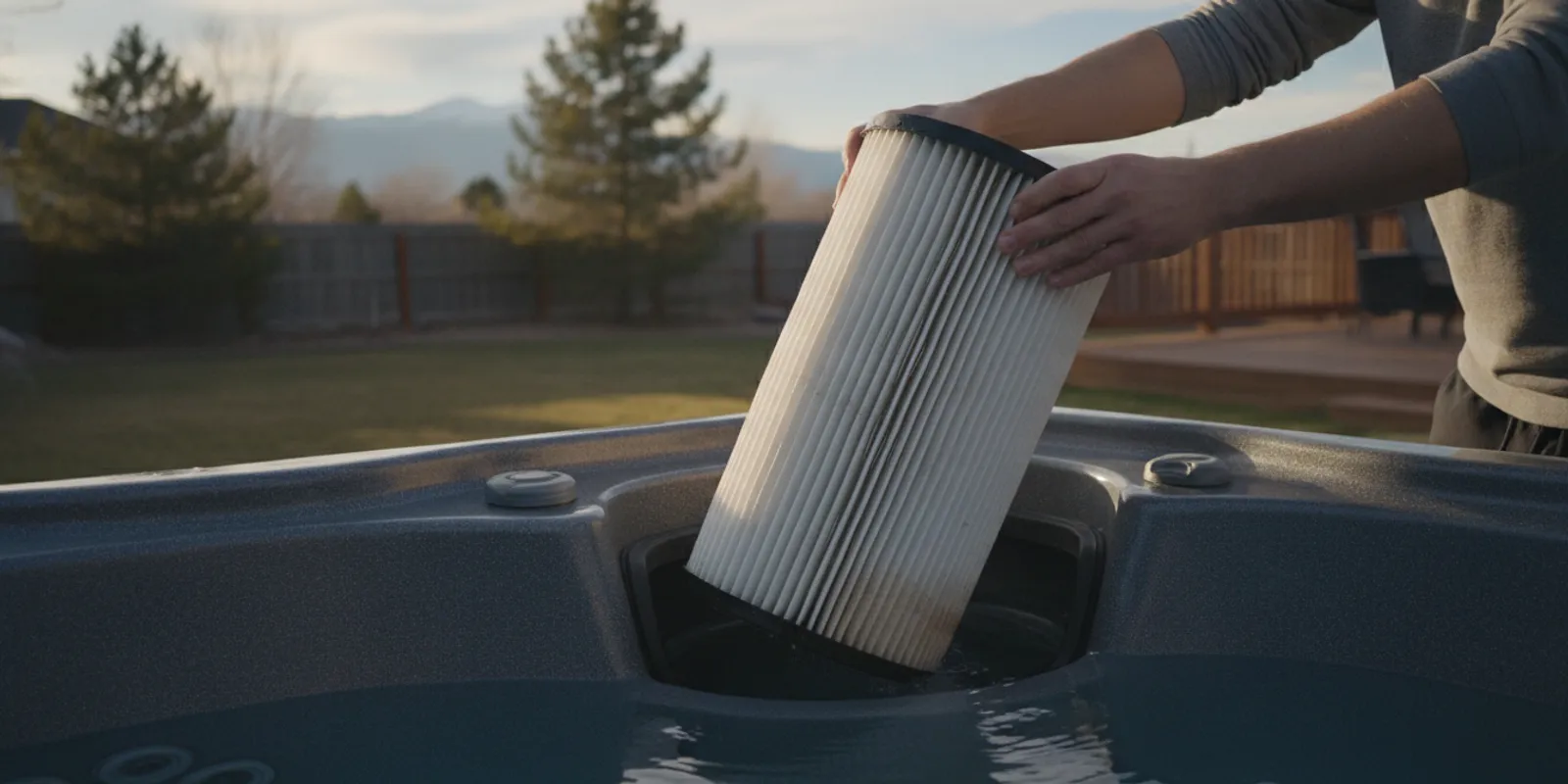
- Inspect the filter, heater, salt cell, tile, and waterline for existing scale or debris.
- Document the source-water test and the post-treatment result so future top-offs can be interpreted correctly.
Do not use winter water-level guidance as a general calcium-hardness correction. Lowering water for freeze protection and replacing water to change mineral concentration are different decisions. Colorado winterization also depends on the pool design, plumbing, cover, equipment, and freeze-protection plan.
When should a Colorado pool owner call a professional?
Professional help is appropriate when the reading conflicts with the pool's appearance, the result is far outside the pool's working range, scale is returning quickly, the pool has a plaster or specialty finish, a heater or salt cell is affected, or you are considering a substantial drain. It is also sensible when the replacement water has not been tested, discharge is difficult, or you are unsure whether the white deposit is calcium.
If you want local guidance, contact Neptune Pools to ask about available water-analysis options and a practical treatment plan. The right evaluation compares calcium hardness with pH, alkalinity, temperature, circulation, and equipment condition instead of treating one number in isolation. For equipment concerns, pool equipment repair and servicing can help evaluate heaters, pumps, filters, and related components.
Frequently asked questions
Does shocking a pool raise calcium hardness?
Routine shocking changes sanitizer chemistry, not the concentration of dissolved calcium. Some chlorine products can add other substances to the water, so review the product label and retest as part of a complete water analysis.
Does baking soda raise calcium hardness?
Baking soda is commonly used to increase total alkalinity. It does not serve as a reliable way to increase or reduce calcium hardness. Test both readings and use the product intended for the specific adjustment.
What happens if pool calcium hardness is high?
High calcium can contribute to cloudy water and scale on tile, plaster, plumbing, heaters, or salt cells when the overall water balance favors precipitation. The result is not determined by calcium alone, so check pH, alkalinity, temperature, and circulation as well.
Can I lower calcium hardness by adding acid?
Acid can lower pH and, depending on the situation, help manage scale-forming conditions. It does not remove the dissolved calcium already in the pool. To reduce calcium concentration, use measured water replacement or a suitable professional treatment.
Is draining a pool always the best solution?
No. The right option depends on the calcium result, replacement-water quality, pool construction, groundwater conditions, discharge requirements, water availability, and the condition of the equipment and finish. Confirm the plan before draining.
Talk with Neptune Pools about available Colorado water-analysis options and a practical next step.
Related Blogs