Hot Tub Cover Guide for Colorado Weather
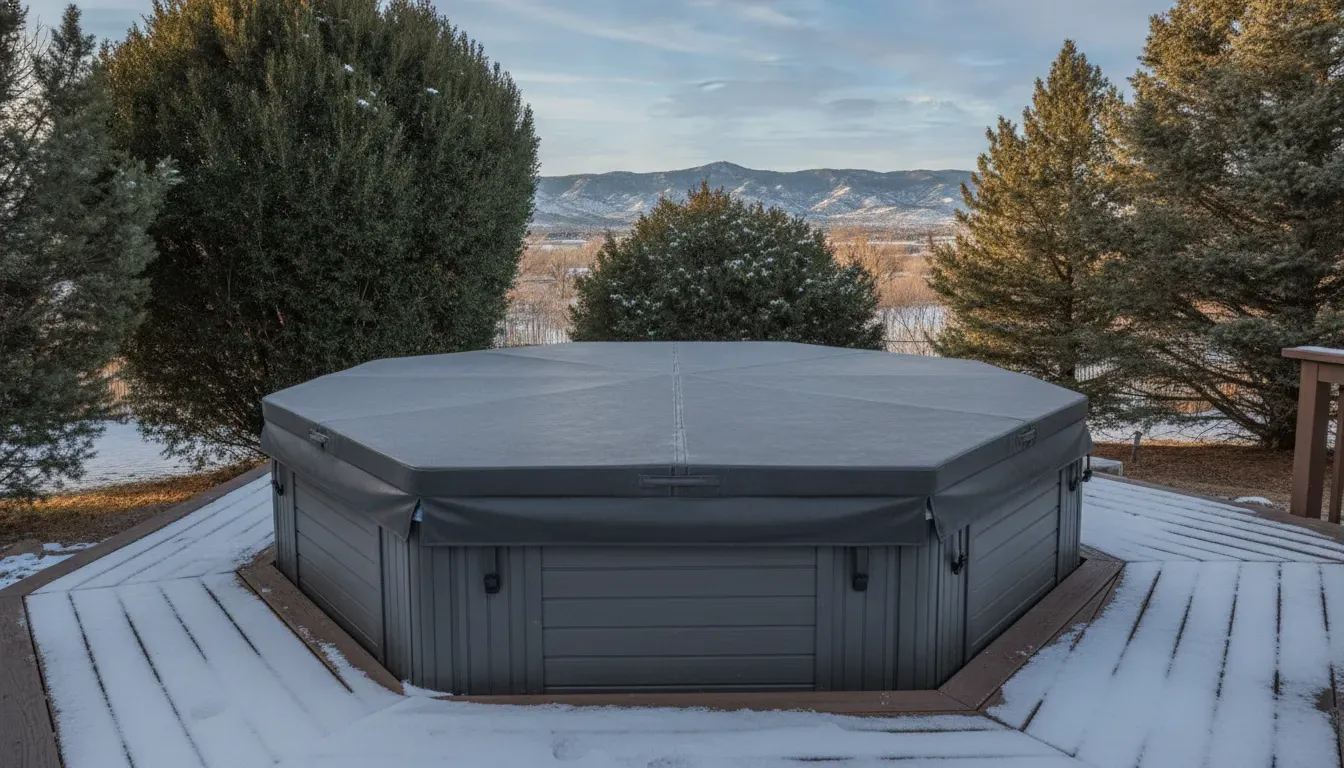
A hot tub cover does more than keep leaves out. It helps protect the water, reduce heat loss, and shield the spa from Colorado's sun, snow, wind, and rapid temperature changes. The right hot tub cover must fit the shell closely, match the way you use the spa, and be manageable enough that you will actually put it back after every soak.
Explore Neptune Pools' hot tub cleaning and repair services.
What makes a hot tub cover fit correctly?
A properly fitted hot tub cover matches the spa's outside dimensions, follows the shell's corners and radius, and lets the skirt hang evenly around the cabinet. It should sit flat without being forced into place, leave no large gaps around the rim, and open without scraping the shell or surrounding deck.
Measure the spa itself rather than relying on a model name or an old cover label. Record the outside length and width at the widest points, corner shape, radius, skirt drop, and hinge position. If the spa has unusual steps, a raised control panel, a handrail, or nearby construction, note those obstacles before ordering.
- Length and width: Measure the outside lip or acrylic shell, not just the inside soaking area.
- Corner shape: Identify square, rounded, or clipped corners. A small radius difference can leave a gap.
- Skirt drop: Measure how far the skirt needs to extend below the cover edge so it can overlap the cabinet consistently.
- Hinge direction: Confirm where the fold should land in relation to the control panel, steps, and the cover lifter.
- Obstructions: Check rails, walls, privacy screens, planters, and the clearance needed to remove or fold the cover.
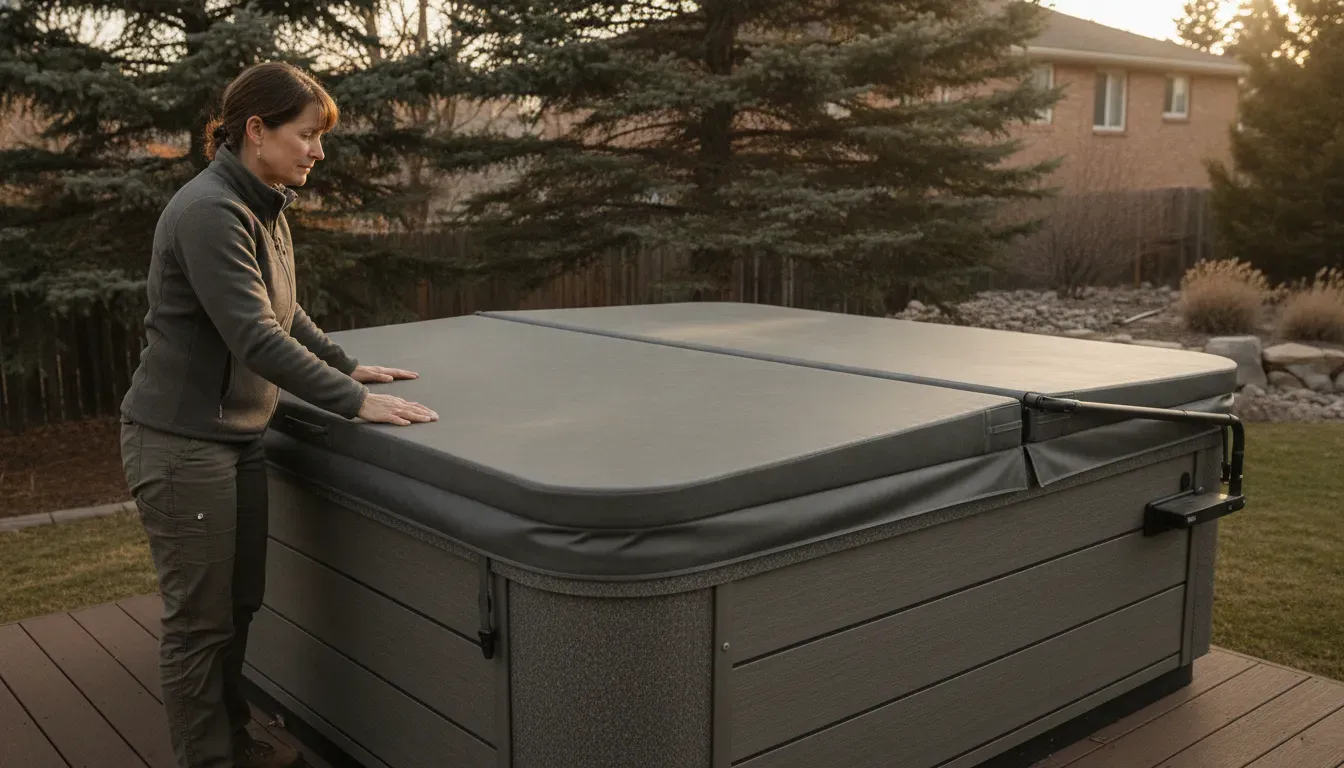
Do not use a cover to correct a spa that is out of level or has a damaged shell edge. If the cover rocks, shifts in the wind, or leaves a persistent opening after careful measuring, inspect the spa rim and cabinet before ordering another cover.
How should insulation be chosen for Colorado weather?
For Colorado homes, insulation should be evaluated as part of the whole cover, not as a single thickness number. A cover that fits tightly, stays dry, and keeps its shape can protect heat and water more effectively than a thicker cover that is poorly fitted or waterlogged.
Denver-area spa owners deal with high UV exposure, hard water, quick temperature changes, and freeze risk during the colder part of the year. Those conditions make the cover's seal, condition, and ability to shed water especially important. Neptune's high-altitude spa water care guide covers the related chemistry considerations.
- Look for a firm, even profile: The cover should not sag into the water or show broad low spots where snow or rain can collect.
- Inspect the center fold: The hinge should close evenly and remain flexible without splitting or separating from the cover body.
- Check the underside: A clean, intact vapor barrier helps keep moisture from reaching the insulation core.
- Prioritize a snug seal: The skirt should meet the spa rim consistently, with no large visible gaps at the corners.
- Plan for snow and wind: Keep heavy accumulation from remaining on the cover, and use the manufacturer's recommended straps or clips when supplied.
Insulation is not a substitute for safe winter operation. A cover can slow heat loss, but it cannot repair a failing heater, protect a leaking fitting, or replace freeze-protection steps for the equipment and plumbing. In Colorado, keep the spa's water level, circulation, and equipment condition on the same seasonal checklist as the cover.
Which hot tub cover features protect water and the spa?
The best hot tub cover balances water protection, durability, safety, and daily usability. Look for a cover with an even seal around the spa, a durable exterior suited to strong sun, reinforced handles, secure fasteners, and a hinge that matches the available space. Avoid features that make the cover too heavy to handle safely.
| Feature | What to check | Why it matters in Colorado |
|---|---|---|
| Fit and skirt | Even overlap and no large rim gaps | Helps limit wind, debris, and heat loss |
| Exterior material | Weather-resistant surface with intact seams | Supports protection from sun, snow, and moisture |
| Vapor barrier | No cracking, peeling, or exposed insulation | Helps prevent waterlogged insulation |
| Hinge and handles | Flexible hinge and secure lifting points | Makes routine opening practical and reduces strain |
| Straps or clips | Fasteners fit the cabinet and close securely | Helps keep the cover in place during wind |
Keep safety in view. A spa cover is not a deck, bench, or play surface. Use the manufacturer's safety hardware as directed, keep fasteners closed when the spa is not in use, and replace damaged straps or locks promptly. If the cover has been exposed to unusually heavy snow, check for sagging or broken support before opening it.
Water protection also depends on the relationship between the cover and the spa. A cover that is dirty on the underside can introduce debris into the water. A cover that is left folded in direct sun can age faster. A cover that is stored on its edge without support can warp. Simple handling habits extend useful life without turning this guide into a full maintenance schedule.
Get professional help with hot tub cleaning, repair, or equipment concerns.
When should you replace a hot tub cover?
Replace a hot tub cover when it no longer stays flat, seals the spa, sheds water, or can be handled safely. The clearest warning signs are persistent sagging, a waterlogged feel, split seams, a damaged vapor barrier, exposed foam, a broken hinge, or a skirt that no longer reaches the rim evenly.
Use this quick inspection after a storm and before the coldest part of the season:
- Lift one side carefully. Does it feel substantially heavier than expected or bend unevenly?
- Press lightly across the top. Does the cover spring back, or does it stay depressed?
- Inspect the fold and corners for cracks, separating stitches, or torn vinyl.
- Look underneath for damp insulation, discoloration, peeling material, or a broken vapor barrier.
- Close the cover and walk around the spa. Are the gaps and skirt drop consistent?
- Check straps, clips, handles, and locks for damage or looseness.
A cover that is merely dirty may need careful cleaning according to its care instructions. A cover that is wet inside, misshapen, or structurally damaged is different. Do not try to hide a sagging cover with extra weight. That can increase stress on the shell, hinge, and lifter.
Do you need a hot tub cover lifter?
A hot tub cover lifter is worthwhile when the cover is difficult to remove, blocks a walkway, or is frequently left folded in the wrong place. By supporting the fold and guiding the cover to a consistent resting position, a lifter can make the cover easier for one person to use and reduce dragging across the deck.
Before choosing one, confirm the lifter's space requirements and mounting method. Some designs need clearance behind the spa, while others need side clearance or a clear path for the folded cover. Compare the lifter's reach with the spa's location, steps, handrails, privacy walls, and nearby furniture.
- Measure the available clearance on the side where the cover will rest.
- Confirm the cover's hinge location and fold direction.
- Check whether the lifter can attach securely to the spa cabinet or requires a separate support.
- Keep the folded cover out of direct sun when possible.
- Never force a lifter against a cover that is already waterlogged or misshapen.
Convenience is a protection feature. If opening the spa requires two people, heavy lifting, or dragging the cover over the ground, the cover may be used less often. A manageable cover and a suitable lifter make it easier to close the spa after every use, which protects water quality and limits unnecessary heat loss.
How does a hot tub cover fit into Colorado spa care?
A hot tub cover is one part of a complete spa-care plan. It helps protect the water between uses, but it does not replace water testing, filter care, equipment checks, or professional repair. Neptune Pools provides year-round spa services in the Denver Metro area, including cleaning, maintenance, equipment diagnosis, and repairs.
Connect cover checks to the seasons without duplicating a full maintenance calendar. Before winter, confirm the cover fits, fastens, and sheds water. After a heavy snow or wind event, look for new sagging, torn straps, or shifted corners. In spring, inspect the underside and hinge before regular use increases. For the broader cadence, see Neptune Pools' Denver hot tub maintenance schedule. If water becomes cloudy, heat or circulation changes, or a leak appears, treat those as spa-service questions rather than cover-selection problems.
Neptune Pools' spa team can help with documented cleaning and maintenance work, as well as repairs involving heat, flow, leaks, pumps, heaters, and controls. That distinction matters: a new cover may improve protection, while a recurring equipment symptom needs diagnosis. Review the signs that call for professional hot tub service in Denver when the issue goes beyond the cover itself.
Talk with Neptune Pools about year-round spa cleaning, repair, and care.
Hot Tub Cover FAQs
Most hot tub cover decisions come down to accurate measurements, a snug seal, durable materials, manageable weight, and the weather conditions around the spa. Colorado owners should also inspect the cover after snow and wind, keep the hinge and vapor barrier intact, and get equipment problems assessed separately from cover replacement.
How do I measure for a hot tub cover?
Measure the spa's outside length and width at the widest points, then record the corner shape, corner radius, skirt drop, and hinge direction. Also note handrails, steps, control panels, and walls that affect the fold or lifting path. Use the spa shell and rim as your reference, not the water surface.
What is the most important hot tub cover feature?
Accurate fit is the starting point. A cover that matches the shell, seals evenly, and hangs consistently around the rim can help protect the spa from debris and unnecessary heat loss. After fit, evaluate water resistance, UV durability, hinge condition, safety hardware, and whether the weight is practical for regular use.
How often should a hot tub cover be replaced?
Replace a cover based on condition rather than a calendar alone. Persistent sagging, waterlogged insulation, split seams, exposed foam, a damaged vapor barrier, broken straps, or large gaps around the rim are stronger signals than age by itself. Inspect the cover at the start of the cold season and after severe weather.
Can a hot tub cover protect against Colorado snow?
A properly fitted cover can protect the spa between uses, but it is not designed to carry unlimited snow or standing water. Follow the cover manufacturer's care instructions, remove accumulation safely, and inspect for sagging or structural damage after a storm. Do not use a damaged cover as a winter safeguard.
When should I call a spa professional instead of replacing the cover?
Call a spa professional when the cover problem occurs with cloudy water, loss of heat, weak circulation, unusual pump noise, a leak, or repeated water-balance problems. Those symptoms can involve the heater, pump, filter, plumbing, or controls. A new cover will not correct an equipment fault that needs diagnosis.
Related Blogs