Pool Equipment Enclosure Ideas for Denver Pools
A pool equipment enclosure can make a Denver backyard look more finished, but its first job is protecting the pump, filter, valves, and controls without creating a new equipment problem. The best design blocks direct sun, snow, windblown debris, and accidental contact while leaving heat, moisture, and service access under control.
Ask Neptune Pools to evaluate your pool equipment pad.
What should a pool equipment enclosure protect against?
Pool equipment sits outdoors through dry air, intense sun, dust, rapid temperature changes, and winter freezes. In the Denver Metro area, a cover or screen should reduce exposure to those conditions, but it should not pretend to turn outdoor equipment into indoor equipment. A sound enclosure protects the system in several practical ways:
- Weather exposure: A roof or properly positioned screen can reduce direct rain, snow, and sun on pump housings, filter tanks, wiring, and control equipment.
- Blowing debris: Panels can limit leaves, grass, and windblown grit around the pump basket, fan openings, valves, and filter connections.
- Moisture-related wear: A thoughtful design directs water away from the equipment pad instead of creating a damp box around it.
- Accidental contact: A barrier can keep children, pets, yard tools, and stored items away from moving, hot, pressurized, or electrical components.
- Noise and visual clutter: Slatted screens, carefully placed walls, and sound-conscious materials can make the pad less noticeable without sealing it shut.
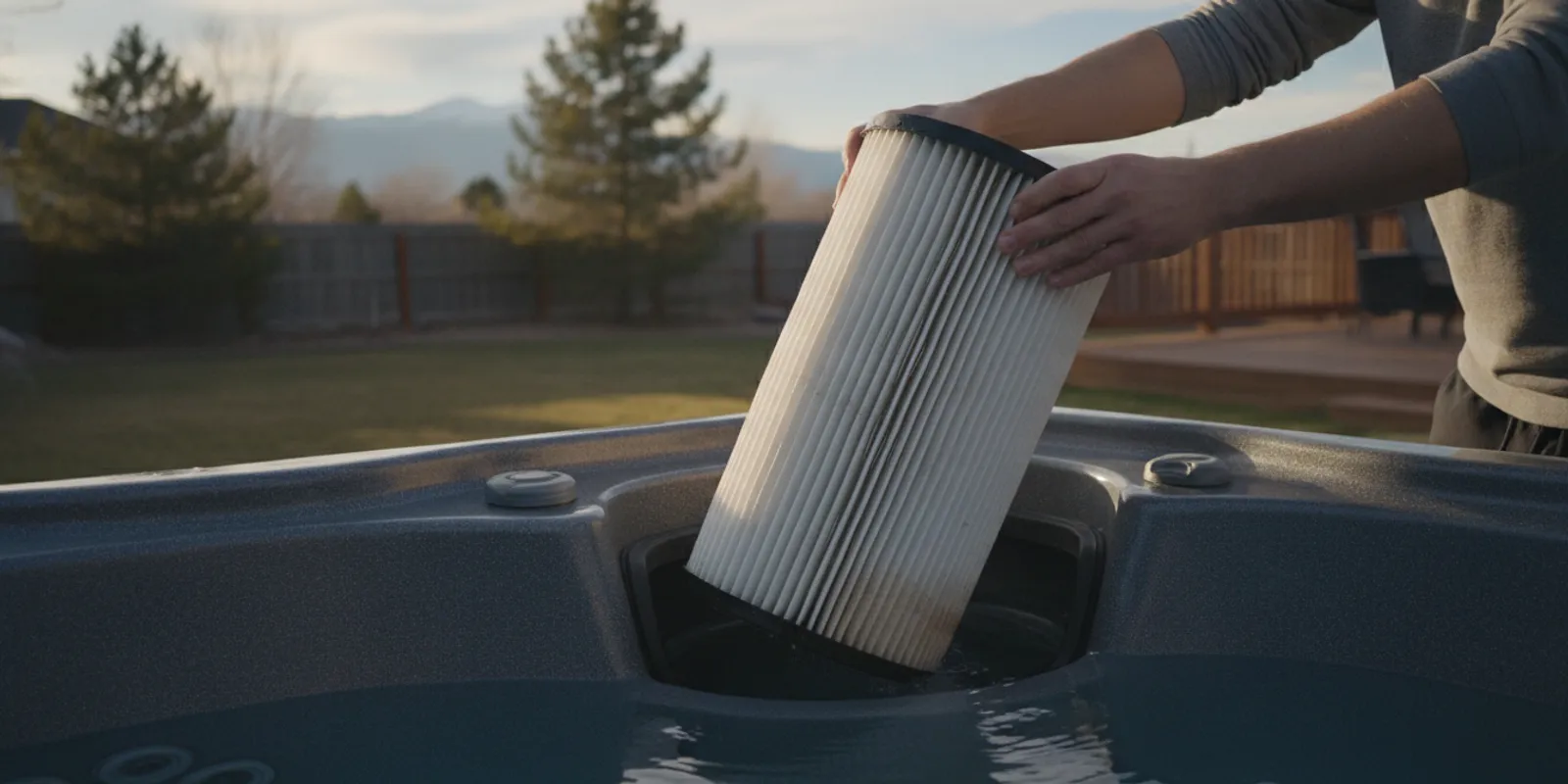
Protection is not the same as complete concealment. A pump needs air movement. A filter needs room for cleaning or element removal. Valves, unions, breakers, automation panels, and shutoffs must remain visible and reachable. If a design hides every component but makes inspection difficult, it is not protecting the system over the long term.
For the broader care routine behind an enclosure, see Neptune Pools' pool equipment maintenance guide for Colorado owners.
Pool equipment enclosure ideas that balance appearance and access
Different equipment pads call for different solutions. Start with the location, equipment list, drainage, and service path before choosing a finish. The following options cover most residential situations.
1. Open slatted screen
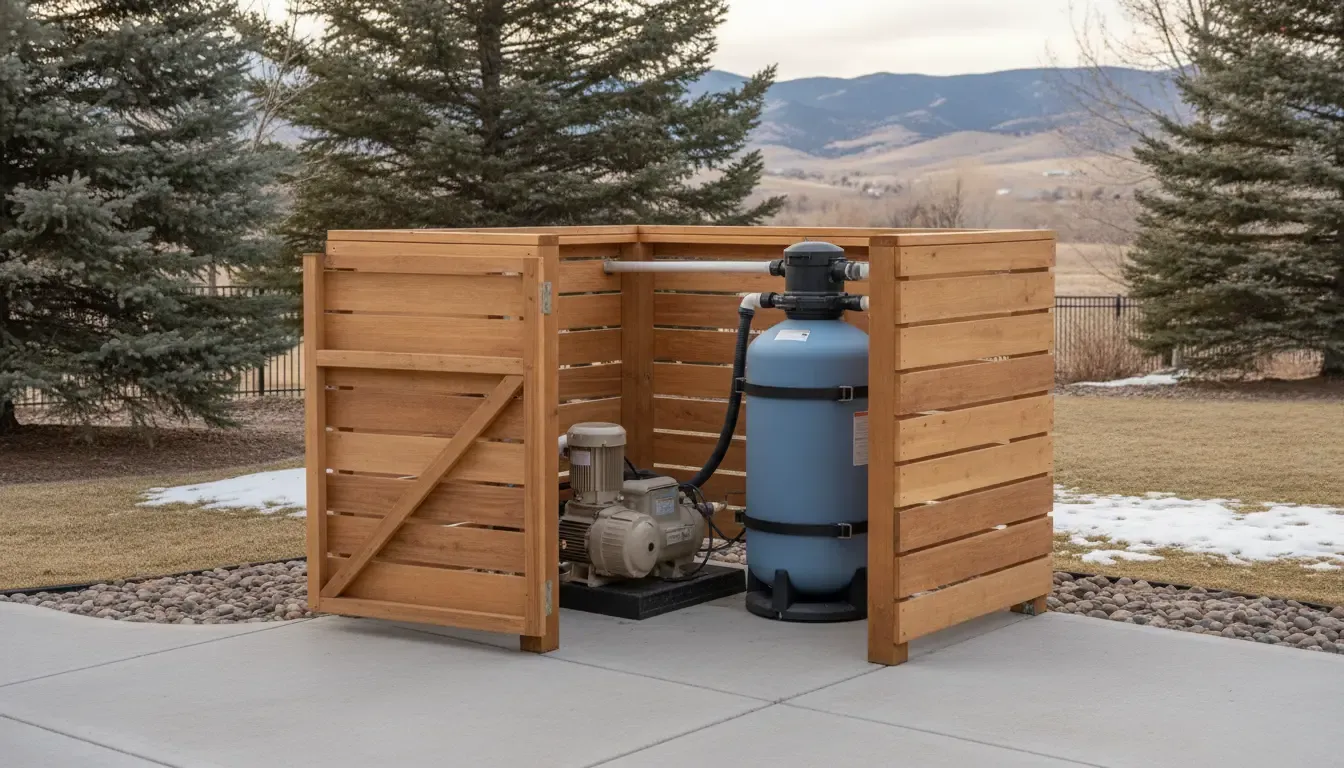
A three-sided slatted screen is often the simplest way to hide a pump and filter from the main view. Gaps between boards allow air to pass through, while the panels create a visual boundary. This approach works well when the equipment already has a roof or sits beside a protected wall.
Use an exterior-rated material and keep the screen stable in wind. Wood should be sealed or painted for the local moisture and freeze-thaw cycle. Keep the panel removable or use a gate so a technician can reach the equipment from the front and at least one side.
2. Louvered cabinet or hinged surround
A louvered cabinet offers a cleaner, more furniture-like appearance. Hinged doors or removable panels can conceal the pad when it is not being serviced and open fully when the pump basket, filter lid, valves, or controls need attention. Louvers are important because a solid cabinet can trap heat and moisture.
Before building a cabinet, map where the filter clamp, cartridge, pressure gauge, pump lid, electrical disconnect, and plumbing connections sit. A door that opens only halfway may look adequate during installation but fail when a filter element or motor needs to come out.
3. Small roof or shade structure
A roofed shelter protects equipment from direct overhead sun and precipitation while leaving the sides open. It can be a practical choice for a pad that does not need visual screening on every side. The roof should shed water away from the pad and should not create a low ceiling over a heater or restrict required exhaust.
Check the equipment manufacturer's instructions before adding a roof. Gas heaters and other combustion equipment have specific combustion-air and exhaust requirements. A roof or wall that interferes with those requirements can be unsafe, even if the pump and filter beneath it remain easy to reach.
4. Pergola-style or integrated landscape screen
A pergola, trellis, or coordinated fence can make the enclosure feel like part of the backyard instead of an add-on. This is useful when the pool pad sits near a patio, entertaining area, or a prominent line of sight. It still needs the same technical checks as a cabinet: airflow, drainage, clearances, access, and material durability.
Plants can soften the view, but do not place dense shrubs directly against motors, vents, control panels, or service doors. Roots, irrigation overspray, fallen leaves, and trapped humidity can create more maintenance than the landscape solves.
5. Walk-in equipment room
A larger pool room can make sense for multiple pumps, large filters, heaters, chemical systems, or commercial and HOA equipment. A walk-in design provides better service access and space for labeled valves and controls. It also requires more careful planning for ventilation, drainage, electrical safety, and water management.
Do not size a room only around the equipment's footprint. Plan the path for removing a filter element, replacing a motor, opening an electrical enclosure, and carrying tools. Leave the final layout to a qualified installer when the pad includes gas, high-voltage, chemical feed, or pressurized systems.
How much ventilation does pool equipment need?
There is no universal vent size that is safe for every pump, filter, heater, and control combination. The correct airflow depends on the equipment, enclosure material, sun exposure, and manufacturer requirements. The useful design principle is simple: screen the equipment without trapping the heat and moisture it produces.
- Use slats, louvers, or intentionally open sides instead of sealing the pad in a solid box.
- Keep the pump motor and control equipment from sitting in a pocket where hot air collects.
- Do not cover a motor's cooling openings or place panels directly against vents.
- Keep irrigation spray and roof runoff out while allowing incidental moisture to escape.
- Follow every clearance and ventilation instruction for a heater, heat pump, salt system, or automation component.
Hayward's guidance on covering pool equipment also emphasizes ventilated sides and access while describing screens, storage boxes, landscaping, and custom structures as different concealment options. Use that as a starting point, then follow the manual for the exact equipment installed at your home. A manufacturer guide is not a substitute for a local evaluation when the enclosure changes airflow around a heater or electrical component.
How do you preserve service access?
Design the enclosure around the service actions, not just the equipment's appearance. Make a simple access map before construction. Mark the direction each lid, clamp, door, filter element, panel, and valve needs to move. Then confirm that the enclosure can open far enough for the action to happen without dismantling the structure.
Important access points include:
- The pump basket lid and strainer basket.
- The filter lid, clamp, cartridge, grids, or multiport valve.
- Pressure gauges, unions, drain plugs, and isolation valves.
- Electrical disconnects, automation controls, and service panels.
- Heater or heat-pump service areas, with their required open-air clearances.
- Plumbing connections that may need leak diagnosis or replacement.
Use a full-width gate, removable front panel, or hinged side when a narrow access door would force a technician to work from an awkward angle. Keep the route to the pad clear of stored chemicals, garden tools, and decorative objects. A serviceable enclosure can still look polished, but it should never require a demolition project for routine maintenance.
What materials work well for Denver weather?
Material choice should follow the exposure and the equipment, not just the color of the fence. Exterior-rated wood can coordinate with a deck or privacy fence, but it needs protection from moisture and regular inspection for swelling, splitting, and rot. Powder-coated metal can provide a clean, durable screen, provided the coating, fasteners, and cut edges are suited to outdoor use.
Composite or synthetic panels may reduce some maintenance, while masonry can provide a durable visual barrier. Every material has tradeoffs. Solid masonry can restrict airflow if placed too close to the equipment. Metal can transmit pump vibration or become hot in direct sun. Wood can absorb moisture if it is left unsealed. The best material is one that remains stable, drains well, and can be removed or opened for service.
Build on a stable, well-drained equipment pad. Do not use the enclosure to hide standing water, a cracked pad, sagging plumbing, or a leaking filter tank. Those conditions should be corrected first. Water that collects under or around the equipment can create problems that a new screen simply conceals.
Denver-specific enclosure mistakes to avoid
Colorado's seasons make small design shortcuts more consequential. An enclosure that seems fine during a mild summer may perform poorly after a snowstorm, a hard freeze, or a week of dry wind and dust.
Sealing the pump and filter in a solid box
A sealed box can trap motor heat and humidity. It can also make it harder to notice leaks, pressure changes, or a pump that is running abnormally. Choose ventilation and inspection over total visual concealment.
Blocking a heater's combustion air or exhaust
Never assume a general pump cover is safe around a gas heater. Heater exhaust and combustion air requirements are equipment-specific. Do not box in a heater, add a low roof, or redirect exhaust without reviewing the model instructions and having the arrangement evaluated by a qualified professional.
Leaving no path for winter checks
Freeze protection depends on the broader circulation system, sensors, automation, exposed plumbing, and winterization plan. A screen that blocks the control panel or valves makes it harder to confirm that the system is ready before a cold snap. Keep those points accessible, especially when temperatures can change quickly in Denver. Neptune Pools' pool pump freeze-protection guidance covers the circulation and sensor checks that an enclosure cannot replace.
Building too close to filter or motor components
Manufacturers specify the clearances needed for operation and service. There is no responsible one-size-fits-all measurement for every pad. Measure your exact equipment and allow room for the largest removal task, not just today's smallest repair.
Using the enclosure as chemical storage
Pool chemicals should be stored according to their labels and the applicable safety requirements, in a dry, secure, well-ventilated area away from incompatible materials. Do not place chemical containers beside a pump, electrical control, or heater simply because the screen makes the area look organized. Chemical vapors and spills can accelerate corrosion and create a safety issue.
When should you call a pool equipment professional?
An enclosure project is a good time to request an equipment-pad evaluation if the pump is noisy, the filter pressure is changing unexpectedly, the pad holds water, a pipe connection is leaking, or the equipment is already difficult to reach. It is also wise to get help when the design affects a gas heater, heat pump, electrical disconnect, automation panel, chemical feeder, or pressurized filter.
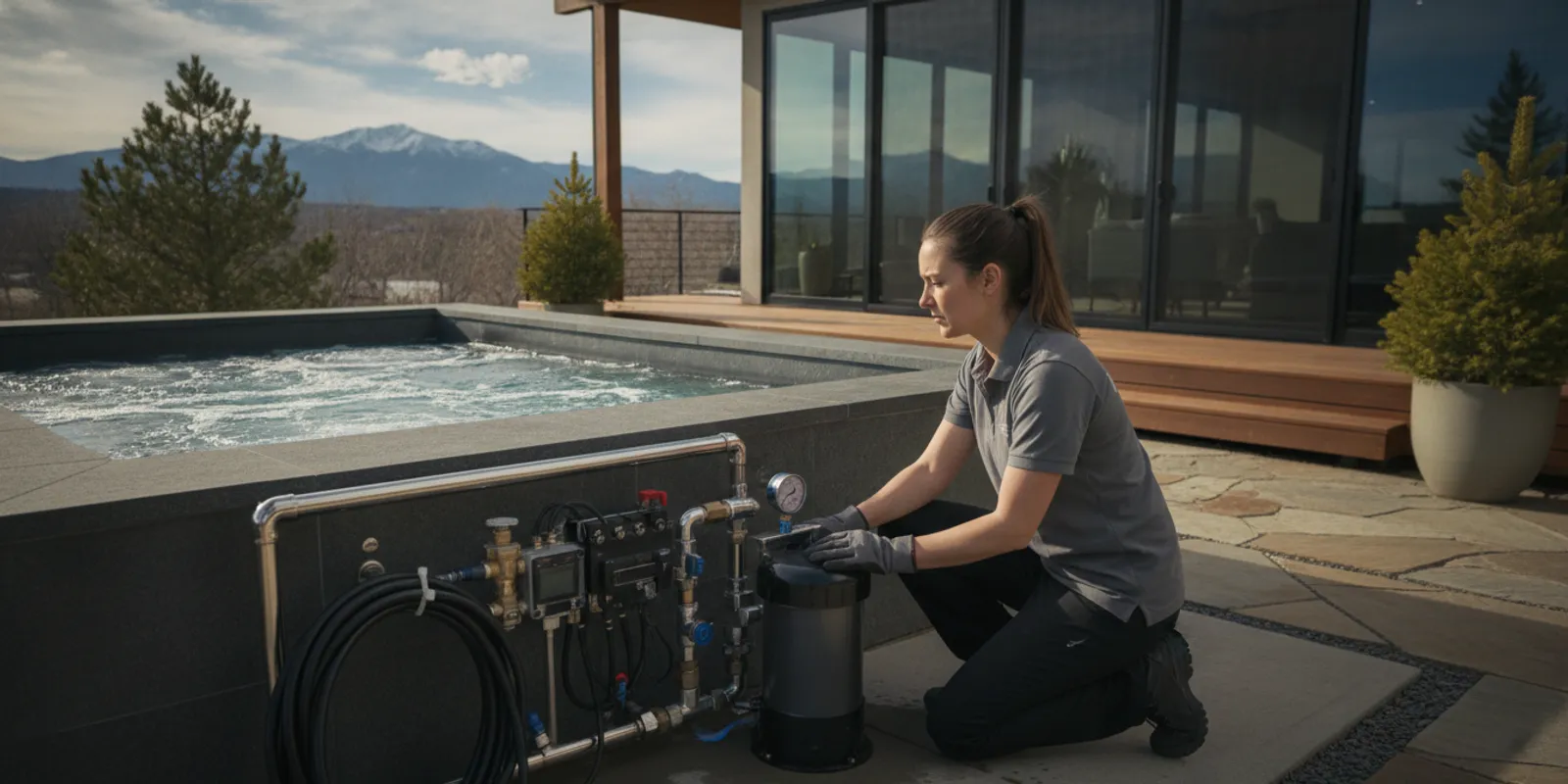
Neptune Pools supports pool equipment repairs and servicing in the Denver Metro area. A technician can review the equipment layout, identify service constraints, and help you distinguish a cosmetic screen from a design that supports safe long-term operation. The goal is not to sell the biggest enclosure. It is to protect the system while keeping future inspection and repair practical. If you also need recurring visits, review the pool cleaning and maintenance service options.
Talk with Neptune Pools about a serviceable equipment enclosure.
Pool equipment enclosure checklist
Before you approve a design or start a DIY project, confirm each item below:
- The enclosure blocks the specific weather exposure you are trying to reduce.
- Air can move around the pump and controls, and heat cannot collect in a sealed pocket.
- Any heater or heat pump has its required open-air clearances and unobstructed exhaust or airflow.
- The pump basket, filter, valves, gauges, controls, disconnects, and plumbing can be reached.
- At least one panel, gate, lid, or side opens fully for inspection and equipment removal.
- The structure is stable in wind and made from materials rated for outdoor exposure.
- Roof runoff and irrigation do not drain onto the equipment pad.
- The pad is sound and drains properly, without using the enclosure to hide a leak or standing water.
- Chemicals are stored separately and safely, not beside electrical or mechanical equipment.
- The finished design follows the equipment manuals and local requirements.
Have a Denver pool technician review your enclosure plan before you build.
Frequently asked questions
Can I fully enclose my pool equipment?
You can screen or shelter many pumps and filters, but fully enclosing the pad is not automatically safe. The enclosure must preserve ventilation, drainage, manufacturer clearances, and service access. Gas heaters, heat pumps, electrical equipment, and chemical systems may have additional requirements. Review the exact equipment manual and use a qualified evaluation when the structure changes airflow or access.
What can I put around my pool pump and filter?
Common options include an open slatted screen, louvered cabinet, hinged panels, a small roof, a pergola-style shelter, or a larger walk-in equipment room. The right option depends on the pad location, weather exposure, equipment type, service path, and drainage. Avoid a decorative box that traps heat or prevents a technician from reaching the filter and controls.
Should a pool equipment enclosure have a door?
A door or removable panel is usually helpful because it creates a clear service path. It should open wide enough for the pump lid, filter element, valves, controls, and any component that may need replacement. A narrow door can be worse than an open screen if it forces service from an unsafe or awkward position.
How much does a pool equipment enclosure cost?
There is no reliable single average for every pool equipment enclosure. The price varies with dimensions, materials, the number and type of components, the condition of the pad, drainage work, access requirements, and whether heating or electrical systems are involved. A site evaluation produces a more useful estimate than choosing a price from a generic kit listing.
Will an enclosure protect my equipment from a Colorado freeze?
An enclosure can reduce some exposure to wind, snow, and direct weather, but it is not a substitute for freeze protection. Brief cold snaps may require reliable circulation, working sensors, clear baskets, and exposed-pipe protection. A seasonal shutdown requires complete winterization. Keep freeze-protection controls and valves accessible so their operation can be checked before cold weather.
Contact Neptune Pools for pool equipment enclosure and repair guidance.
Related Blogs