Pool Filter Sizing: Cartridge, Sand, or DE?
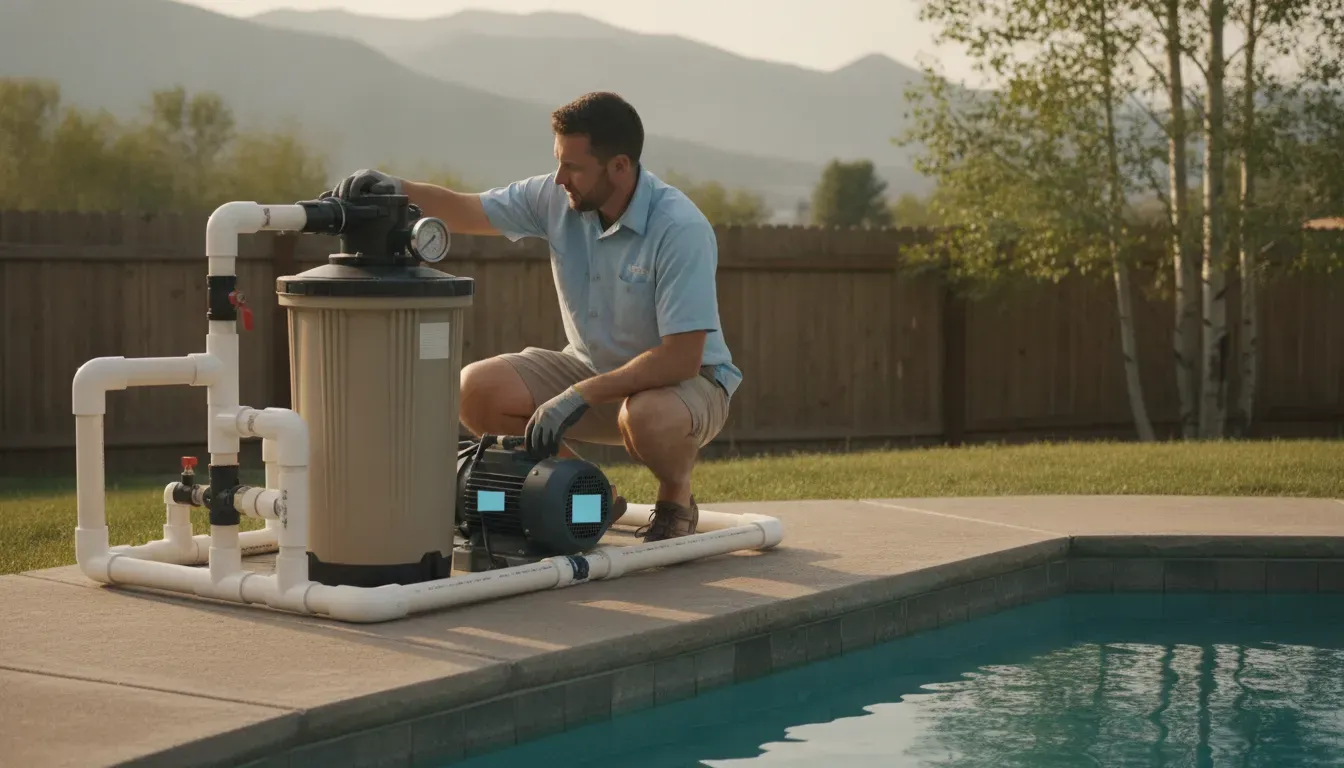
A pool filter has to do more than fit the equipment pad. It must handle the water your pool sends through it, work within the pump and plumbing limits, and remain practical to clean through Denver's changing seasons.
Request pool equipment repair and filter sizing guidance.
Pool filter sizing means matching the filter type and rated capacity to the pool's volume, measured system flow, pressure, plumbing, and manufacturer requirements. The right choice is not determined by gallons alone. The EPA compares filters by filtration ability, maintenance, and water efficiency, while noting that smaller micron ratings indicate finer filtration.
That distinction matters when you compare cartridge, sand, and diatomaceous earth filters. Each handles debris differently, and each creates different maintenance and replacement considerations. Start by understanding what the filter rating measures, then use those details to evaluate the pump, flow, and operating conditions already present in your pool system.
What Does Pool Filter Sizing Actually Measure?
Pool filter sizing is not simply a matter of matching a filter to the number of gallons in the pool. It is the process of matching the filter's cleaning capacity to the water flow, pressure, filter type, plumbing, and operating requirements of the complete circulation system.
Filter area and capacity
Filter area describes how much filter surface is available to catch suspended debris. Capacity describes how the filter is rated to handle water moving through it while maintaining effective filtration. The correct figures depend on the specific cartridge, sand vessel, or DE filter model. A larger-looking filter is not automatically compatible with an existing pump or plumbing.
Flow and pressure are part of the measurement
Measured flow is the amount of water the circulation system actually moves, not merely the pump's advertised maximum. Pressure is the resistance recorded by the system's gauge under its operating conditions. Together, these readings help show whether the pump, filter, valves, and plumbing are working within their rated limits. A filter should be selected using the manufacturer's flow and system specifications, rather than a universal sizing chart.
The U.S. Environmental Protection Agency evaluates pool filtration using factors that include filtration ability, maintenance, and water efficiency. Its guide also explains that a smaller micron rating represents finer filtration. Read the EPA pool filtration guide.
What about a 30,000-gallon pool?
A 30,000-gallon pool does not have one universally correct filter size. Volume is useful starting information, but the decision also requires the filter type, model rating, measured flow, operating pressure, pump specifications, and plumbing configuration. Check the filter and pump manufacturer's requirements together before choosing equipment. If those details are unavailable, record the equipment model numbers and have the system evaluated rather than relying on a generic chart.
How to Match Filter Capacity to Pump Flow
Good pool filter sizing starts with the entire circulation system, not a pool-gallon estimate alone. A filter must handle the flow produced by the pump while staying within its rated capacity, the plumbing limits, and the manufacturer's operating requirements. Use this workflow before selecting a replacement or changing filter types.
- Document the pool and operating conditions. Record the pool's approximate volume, whether it is residential, shared, or commercial, and how the system is used. Note features that affect circulation, such as spas, water features, heaters, long pipe runs, or multiple returns. Pool volume provides useful context, but it does not identify the correct filter by itself.
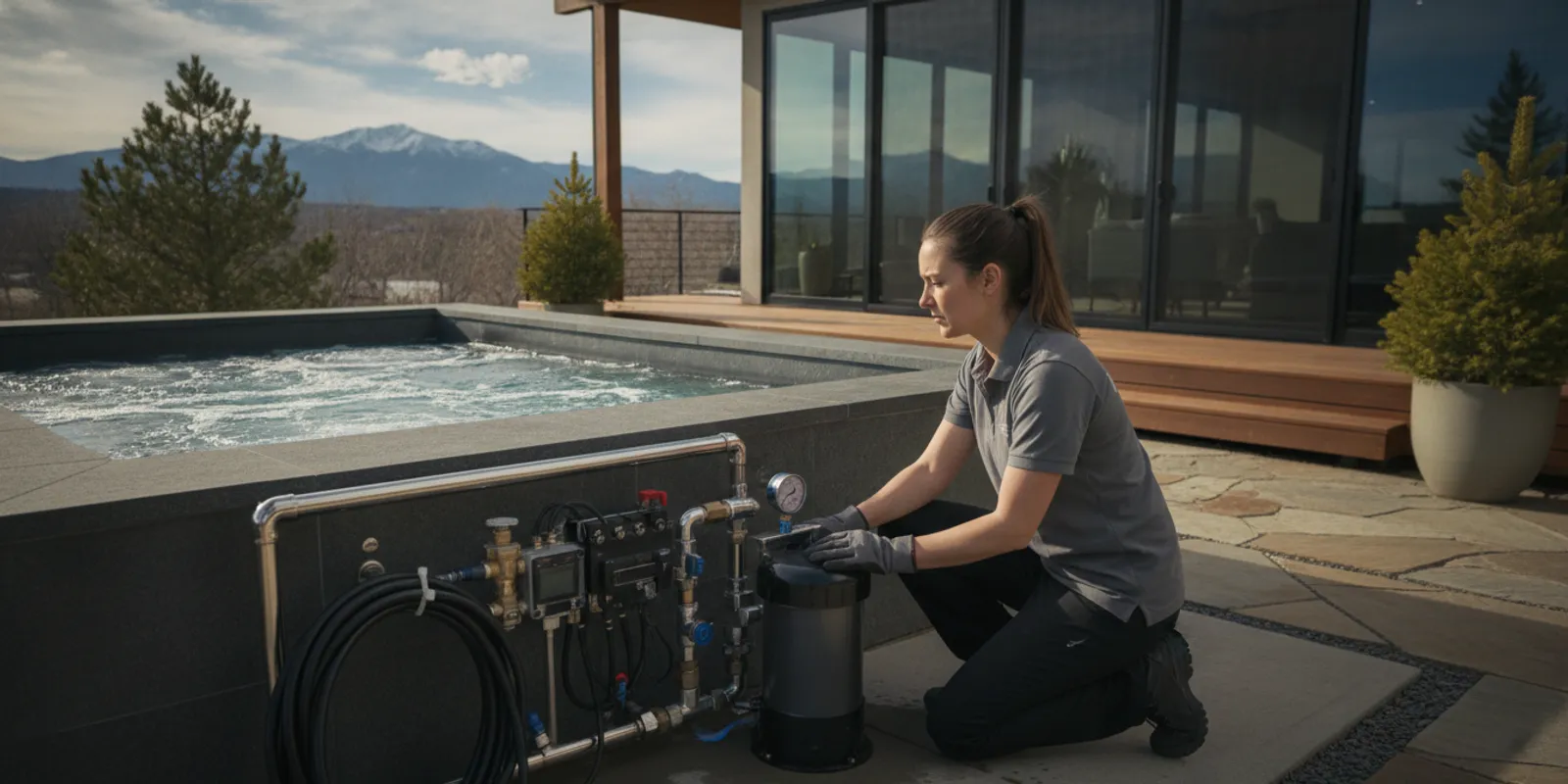
- Measure flow and pressure at the installed system. Record the pump's operating setting, filter pressure, and any available flow reading while the system is clean and running normally. A measured reading is more useful than relying on the pump's label or a nominal horsepower figure. If the pressure is already elevated, clean or inspect the system before treating that reading as a normal baseline.
- Compare the readings with both equipment ratings. Check the pump's performance information at the actual operating conditions, then compare that flow with the filter's manufacturer-rated flow and capacity. Do not assume that a larger pump automatically calls for the largest available filter, or that a filter marketed for a similar pool will work with every pump. The ratings must agree for the specific model and installation.
- Check the plumbing and related equipment. Confirm pipe size, valves, fittings, heater, chlorinator, and other components can support the intended flow. Changing from one filter type to another may require plumbing alterations for efficient operation. The filter is one part of a pressure-producing system, so upgrading it without reviewing the rest can create poor circulation or unnecessary strain.
- Confirm the final choice with the manufacturer or a qualified technician. Ask for the model-specific flow range, capacity, installation requirements, and any warranty conditions. A qualified technician can verify the equipment configuration for the installed pool. For background on evaluating pump performance and system requirements, use this pool pump selection guide.
This process keeps pool filter sizing tied to measured conditions rather than a universal chart. It also creates a useful record for future maintenance, troubleshooting, or equipment replacement.
Cartridge, Sand, or DE: Which Filter Fits Your Pool?
Filter choice affects water use, maintenance, and how easily the equipment fits the rest of the circulation system. The U.S. Environmental Protection Agency compares filter types by filtration ability, maintenance practices, and water efficiency. A smaller micron rating indicates finer filtration, but the finest option is not automatically the best match for every pool or pump.
Pool filter comparison based on EPA guidance| Filter type | Filtration approach | Maintenance and water use | Planning tradeoff |
|---|---|---|---|
| Cartridge | Captures debris in a removable cartridge. The EPA does not assign one universal micron figure for all cartridge designs. | Clean by spraying with a hose. No backwashing is required, making cartridges the most water-efficient filter type in the EPA guide. An appropriately oversized cartridge may also reduce cleaning frequency. | Review cartridge area, rated flow, access space, and cleaning requirements together. A larger cartridge is not a substitute for confirming pump and plumbing compatibility. |
| Sand | Filters water through a bed of sand. The EPA lists sand filtration at 20 to 40 microns. | Backwashing removes accumulated debris, so the process uses pool water and requires a suitable waste route. A pressure gauge can help identify when backwashing is due. | Sand is commonly used in residential pools because maintenance is straightforward. Confirm the filter's rated flow and the installation's backwash requirements. |
| DE | Uses diatomaceous earth as the filtering medium. The EPA lists DE filtration at 5 microns. | Backwashing is followed by replenishing the DE media. Handle the material carefully because the EPA cautions that DE can be harmful if inhaled. | DE offers high filtration performance, but it adds media-management and safety steps. Verify the manufacturer's loading and operating requirements. |
These figures and maintenance distinctions come from the EPA pool equipment guide. For pool filter sizing, compare the selected filter's rated specifications with measured system flow, pressure, plumbing, and the pump's requirements. Switching filter types may require plumbing alterations for efficient operation, so treat a replacement as a system decision rather than a simple tank swap.
For Denver owners, water conservation and seasonal service can influence the practical choice. A cartridge may reduce water lost through backwashing, while sand or DE may better fit an existing layout or maintenance plan. The right recommendation should follow the installed equipment and the owner's service priorities. See more guidance on energy-efficient pool equipment.
Request pool equipment repair and servicing guidance.
Can a Pool Filter Be Too Big?
Yes. A larger filter is not automatically a better match for a pool. The filter must work within the pump's rated flow range, the plumbing layout, and the manufacturer's system requirements. An oversized filter can be reasonable in some installations, especially when the goal is to reduce cleaning frequency. But it should be selected as part of the complete circulation system rather than by size alone.
Why compatibility matters
The pump, filter, valves, and plumbing need to operate together. A filter with more capacity may not solve a circulation problem if the pump cannot deliver the required flow or if the existing plumbing and connections are not suitable. Changing equipment can also require plumbing alterations for efficient operation. Check the filter's rated flow, connection requirements, pressure limits, and the pump's specifications before assuming a larger model will improve performance.
Physical size matters as well. A larger tank or cartridge assembly needs adequate clearance for installation, cartridge removal, service access, and winterization. In a tight equipment area, a filter that technically fits the hydraulic requirements may still be impractical to clean or replace. Pressure readings should also be interpreted against the system's normal baseline. A change in pressure can point to loading, a valve issue, restricted flow, or another equipment problem; filter size alone does not explain every pressure symptom.
When extra capacity can help
For cartridge systems, the U.S. Environmental Protection Agency notes that an oversized cartridge filter can reduce water use because cleaning may be needed less often. That benefit depends on the filter, pool conditions, debris load, and maintenance practices. It is not a reason to ignore pump compatibility or to treat the largest available cartridge as the correct choice. Removing leaves and other debris with skimmers or vacuums can also reduce the load reaching the filter.
The practical answer to pool filter sizing is to match capacity and rated flow to the installed system. Then confirm the decision with the manufacturer specifications or a qualified technician. That approach avoids paying for unused capacity while preserving access, reliable circulation, and manageable maintenance. EPA pool filtration guidance provides useful background on filtration, maintenance, and water efficiency.
Maintenance and Replacement Planning for Denver Pools
Start with a clean pressure baseline after the filter has been serviced and the pump is operating normally. Record the gauge reading under those conditions, then watch for meaningful increases rather than relying on a calendar alone. The EPA says a pressure increase of 10 psi usually indicates that a sand or DE filter needs backwashing. But the equipment manual and the system's normal readings should remain the final reference. A sudden change at a lower reading can still point to a blocked basket, dirty media, a valve issue, or a circulation problem.
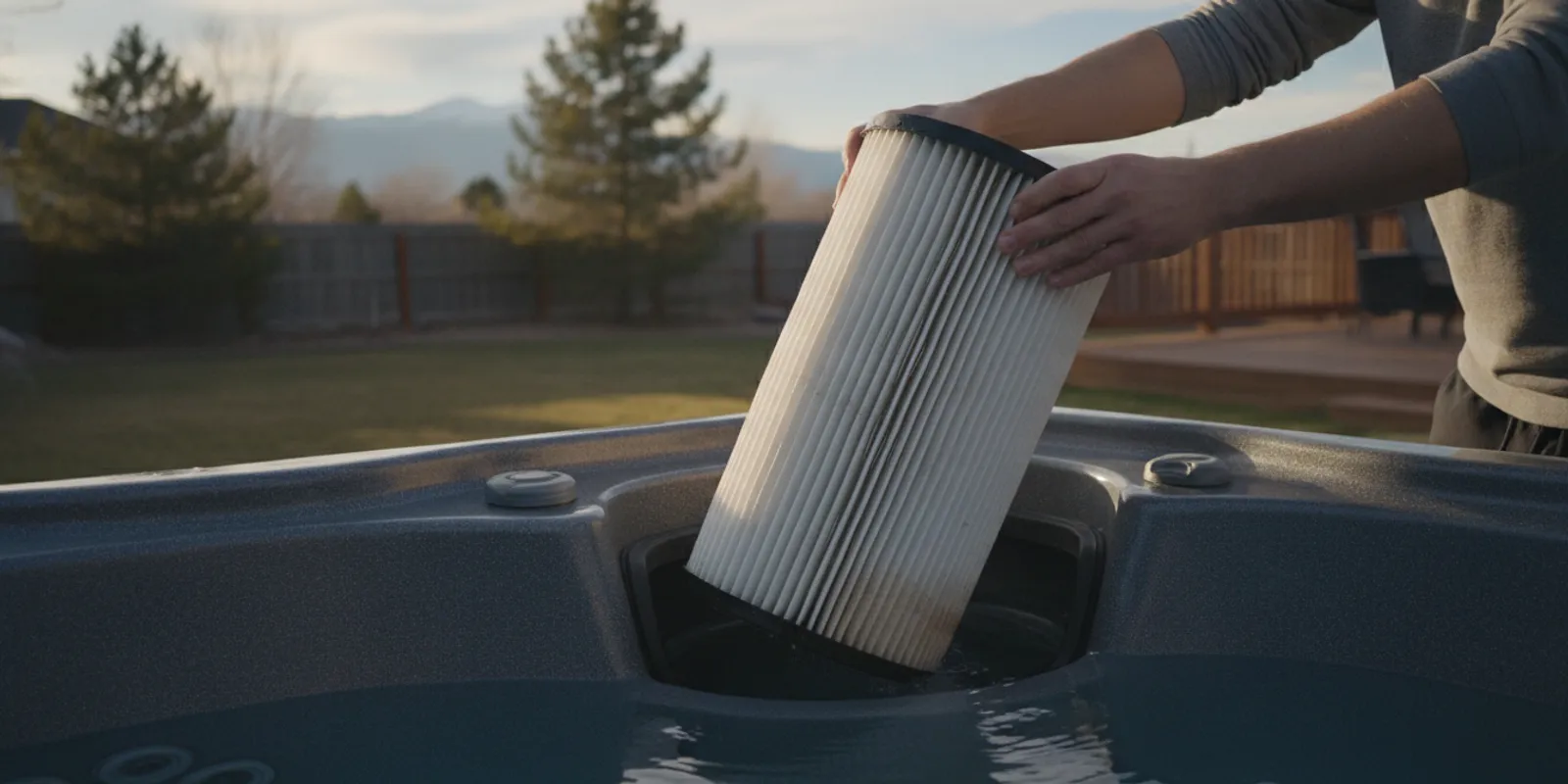
Remove leaves and other debris from skimmer baskets and the pool before the filter carries that load. Skimming and vacuuming can reduce filter loading and extend the time before a backwash is needed. For cartridge systems, remove the cartridge and rinse it with a hose when cleaning is due. Cartridge filters do not require backwashing, which makes them the most water-efficient filter type in the EPA guide. A pool filter maintenance guide can serve as a useful companion for the routine steps.
Sand and DE systems require a different plan. Backwashing a sand filter removes trapped debris from the media, while a DE filter also needs fresh DE added after each backwash. Follow the filter manufacturer's procedure, including any requirements for handling DE safely. The EPA guide lists ranges of 3 to 6 years for sand media and 2 to 3 years for DE grids. These are planning ranges, not guarantees. Water chemistry, cleaning practices, pressure conditions, and the specific equipment can shorten or extend useful life.
Denver's active pool maintenance season generally runs from April through October. Schedule closer attention during startup and periods of heavy use, then plan winterization rather than leaving the system on an assumed schedule. In Denver, winterization may include equipment shutdown and line blow-out to help reduce freeze damage, depending on the pool's equipment and service plan. Before replacing media, grids, or an entire filter, confirm the existing pump, plumbing, rated flow, and manufacturer requirements. A filter change can affect more than the tank itself, and changing filter types may require plumbing alterations for efficient operation. That review is especially important when a replacement is being considered as part of broader pool filter sizing.
When Should a Technician Check Your Filter Sizing?
Ask for a filter-sizing review when the equipment no longer behaves consistently, especially if the pressure stays high after cleaning, circulation seems weak, or the filter needs attention unusually often. Those symptoms can come from debris, a damaged component, a gauge problem, plumbing restrictions, or a mismatch between the filter and pump. A technician can evaluate the complete system instead of replacing one part based on pool volume alone.
A review is also worthwhile when you replace the pump, filter, valves, or major plumbing. Rated flow, filter capacity, connections, and the manufacturer's operating limits need to work together. Switching from cartridge to sand or DE, or changing in the other direction, may require plumbing alterations for efficient operation, as the EPA guide explains. Confirming the configuration before installation can prevent an expensive component from becoming the limiting part of the system.
Leaks are another reason to look beyond the visible symptom. Water escaping around the filter tank, valve, unions, or pressure-relief components may indicate a seal or fitting issue, but it can also appear alongside an incorrectly configured system. Repeated cleaning, unexplained pressure changes, poor return flow, or air entering the circulation system should be documented and discussed during the inspection.
Denver owners should include seasonal operation in that conversation. The local active maintenance season generally runs from April through October, while winterization involves equipment shutdown and line blow-out to help reduce freeze damage. A sizing or replacement review should confirm that the equipment configuration and freeze-protection plan suit the property, rather than treating winter setup as an afterthought. Neptune Pools can inspect the installed equipment and recommend a filter service or replacement path based on the system's condition. For broader seasonal upkeep, see Colorado pool equipment maintenance.
Frequently Asked Questions
What size filter do I need for a 30000 gallon pool?
Pool gallons alone do not determine the right filter. Confirm the pump's measured flow, the filter's rated flow and capacity, plumbing limits, and the manufacturer's system requirements. A technician can also check whether the existing equipment can meet circulation needs without forcing an oversized pump or undersized filter. There is no universal filter size that fits every 30000 gallon pool.
Can a pool filter be too big for a pool?
Yes. A larger filter may reduce cleaning frequency, and the EPA notes that an oversized cartridge filter can reduce water use, but bigger is not automatically compatible or practical. Check the pump, plumbing, pressure range, equipment footprint, and replacement-part availability together. The filter must be matched to the complete circulation system, not selected from pool volume alone. EPA guidance supports evaluating filtration, maintenance, and water efficiency as part of the decision.
How big of a sand filter do I need for a 5000 gallon pool?
Do not choose a sand filter from the 5000 gallon figure alone. Start with the pool's required circulation rate, then compare the pump's actual flow with the sand filter's rated flow and the plumbing specifications. The EPA lists sand filtration at 20 to 40 microns, but that range describes filtration ability, not a universal tank size. Manufacturer requirements and the installed system should control the final selection.
When should I replace pool filter media or grids?
Replace media or grids based on condition, performance, pressure behavior, and manufacturer guidance rather than a calendar promise. As general EPA guide ranges, sand media may last 3 to 6 years and DE grids 2 to 3 years. But water chemistry, cleaning practices, and operating conditions affect actual life. Persistent pressure changes, poor circulation, or repeated cleaning are good reasons to arrange an inspection.
Ready to Get Started With the Right Filter Plan?
Proper pool filter sizing can help align your filter, pump, and plumbing with the way your Denver pool operates. If you are planning a replacement, troubleshooting pressure changes, or comparing cartridge, sand, and DE options, Neptune Pools can help you evaluate the next step. Contact Neptune Pools for pool equipment repair and filter sizing guidance.
Related Blogs